


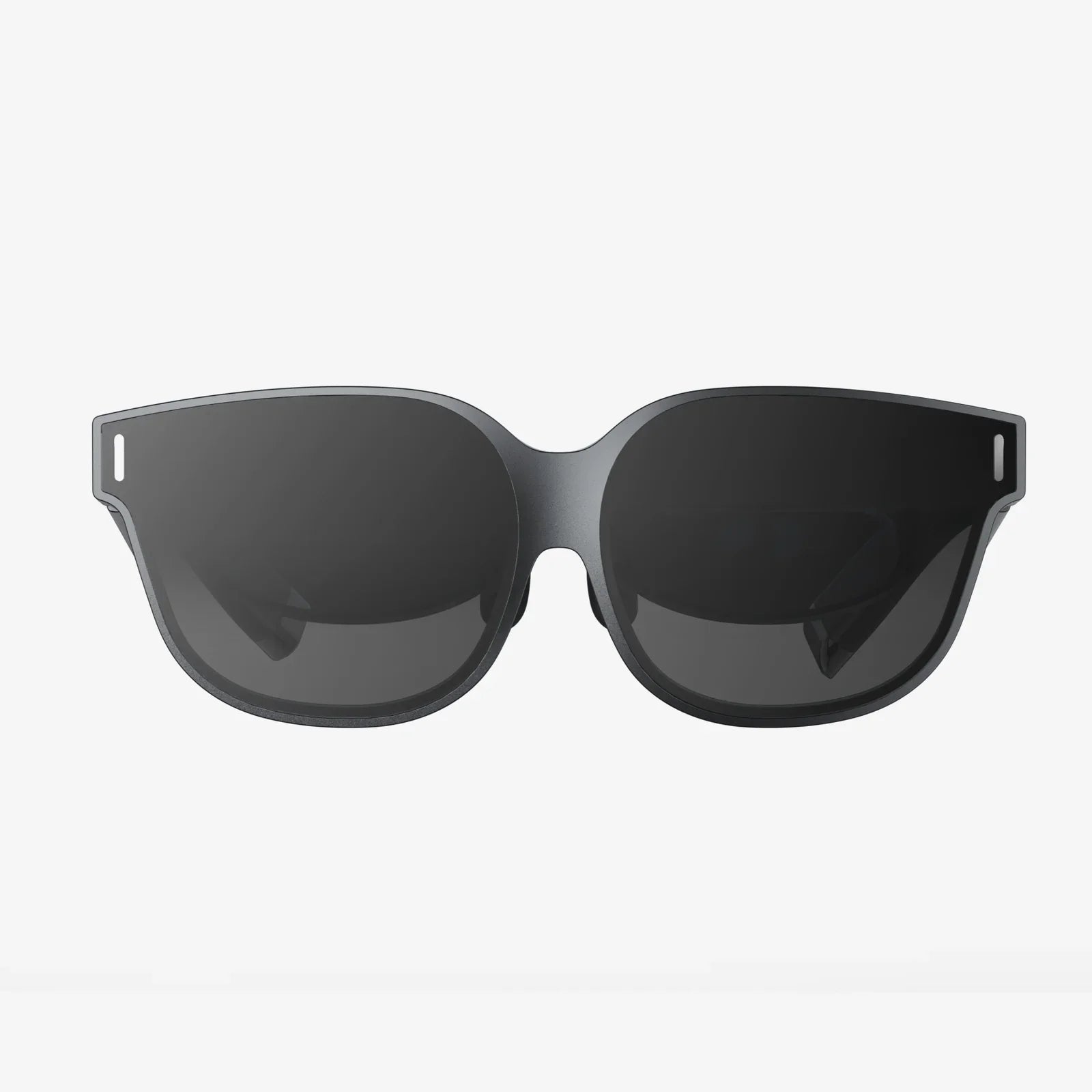
Imagine a world where the digital and the physical are no longer separate realms, viewed through the isolating window of a smartphone screen, but a single, unified experience. A world where information, guidance, and wonder are painted directly onto the canvas of your reality. This is the promise held within the sleek, unassuming frames of AR overlay glasses, a technology not merely vying for a place in your pocket, but for a fundamental rewrite of human perception itself. We are standing on the precipice of the next great platform shift, moving from mobile-first to an ambient-first reality, and it will change everything.
The Architectural Blueprint: How AR Glasses See and Think
At first glance, AR overlay glasses might appear to be simple displays mounted on your face. In truth, they are among the most sophisticated consumer devices ever conceived, a symphony of advanced technologies working in perfect harmony. The core magic lies in their ability to understand and interact with the physical world in real-time.
This process begins with a suite of sophisticated sensors. Cameras, both standard and depth-sensing, continuously scan the environment. These aren't for taking pictures; they are the device's eyes, capturing the geometry, objects, and surfaces of the space around you. Simultaneously, inertial measurement units (IMUs)—including accelerometers and gyroscopes—track the precise movement and orientation of your head, down to the millimeter.
This torrent of raw data is then processed by onboard algorithms and specialized processors. This is where the true intelligence resides. Through a combination of simultaneous localization and mapping (SLAM) and machine learning-powered computer vision, the glasses construct a live 3D map of your environment. They can identify a table, recognize a specific product on a shelf, or understand that a flat, vertical surface is a wall. This spatial awareness is the foundational layer upon which the digital overlay is built.
Finally, the digital content is rendered. Using waveguides, holographic mirrors, or other micro-display technologies, miniature projectors beam light into specially designed lenses. These lenses then direct this light into your eyes, superimposing high-resolution, life-like holograms onto your view of the real world. The result is a seamless blend where a navigation arrow appears to sit on the road ahead, a virtual screen floats steadily on your wall, and a digital character peeks out from behind your sofa.
Beyond Novelty: The Practical Revolution in Enterprise and Industry
While consumer applications often capture the imagination, the most immediate and transformative impact of AR glasses is occurring in the workplace. Across manufacturing, logistics, field service, and healthcare, they are solving real-world problems, boosting efficiency, and enhancing safety.
- The Empowered Technician: A field service engineer arrives to repair a complex piece of machinery. Instead of fumbling with paper manuals or a tablet, their AR glasses overlay step-by-step instructions directly onto the equipment. They can see animated guidance showing which bolt to turn next, have safety warnings highlighted, and even connect with a remote expert who can see their view and draw annotations directly into their field of vision. This reduces errors, cuts training time, and drastically shortens repair cycles.
- The Streamlined Warehouse: In a vast distribution center, a picker wearing AR glasses is guided along the most efficient route. As they approach the correct bin, a digital highlight flashes over the required item, and the exact quantity needed is displayed. This "vision picking" system eliminates guesswork, reduces walking time, and improves inventory accuracy to near-perfect levels.
- The Surgical Theater: In medicine, the stakes are the highest. Surgeons can use AR overlays to see critical patient data—like heart rate or blood pressure—without ever looking away from the operating field. More advanced applications can project 3D reconstructions of a patient's anatomy from CT or MRI scans directly onto their body, essentially giving them X-ray vision to guide incisions and navigate complex procedures with unprecedented precision.
In these professional contexts, AR glasses are not a gimmick; they are a powerful tool for augmenting human capability, turning every worker into a super-powered expert with instant access to the information they need, precisely when and where they need it.
Redefining Daily Life: The Consumer Experience Reimagined
The journey into the consumer sphere is where the technology's potential becomes truly personal and pervasive. It promises to dissolve the barriers between us and our digital lives, making technology an intuitive extension of our natural behavior.
- Contextual Navigation: Forget holding your phone out in front of you. With AR glasses, directions are integrated into the world. A graceful path or arrow appears on the sidewalk, guiding you to your destination. Look at a train station, and the schedule and platform information float beside it. Glance at a restaurant, and its reviews and today's specials materialize by the door.
- Ambient Computing and Multitasking: Virtual screens become persistent and position-locked. You could have a news feed floating next to your morning coffee machine, a video call with a relative appearing to sit on your living room couch, or a recipe displayed right above your mixing bowl, keeping your hands free and your focus intact.
- Enhanced Social Connection: Remote collaboration moves beyond video chats. You could help a friend assemble furniture from across the country by drawing circles around parts and arrows pointing to screws in their real-world view. Shared virtual experiences, from watching a movie on a giant virtual screen to playing a board game on your actual table, could make digital interactions feel profoundly more present and personal.
- Interactive Learning and Storytelling: Museums could come alive with historical figures reenacting events beside exhibits. Learning a new language? Labels on everyday objects could display their translated names. The world itself becomes an interactive, informative textbook.
The Invisible Elephant in the Room: Navigating the Challenges
For all their promise, the path to ubiquitous AR glasses is fraught with significant hurdles that extend far beyond technical challenges. The most pressing among these is the issue of privacy. A device that is always-on, always-seeing, and always-listening represents a paradigm shift in data collection. The potential for constant surveillance, either by corporations or governments, is a legitimate and profound concern. Robust, transparent data policies, on-device processing, and clear user controls over what is recorded and stored are not optional features; they are absolute prerequisites for public trust and adoption.
Furthermore, the social acceptance of wearing such devices is not guaranteed. Early adopters may be willing to look like cyborgs, but for mass adoption, the technology must become socially invisible. This means overcoming the "glasshole" stigma through designs that are genuinely fashionable, lightweight, and unobtrusive. They must be as acceptable to wear in a business meeting or a dinner party as a standard pair of eyeglasses is today.
Finally, there are the human factors of attention and safety. While designed to be less distracting than phones, an environment saturated with digital notifications vying for our visual field could lead to new forms of cognitive overload. Ensuring that augmented reality enhances our experience of the real world rather than eclipsing it will be a critical design and philosophical challenge.
A Glimpse into the Crystal Ball: The Future Powered by AR
Looking ahead, the evolution of AR overlay glasses will likely converge with other transformative technologies, creating capabilities that sound like science fiction. The development of more advanced and compact batteries or wireless power solutions will be key to all-day wearability. AI will become the invisible engine, moving from recognizing objects to understanding context and intent, proactively offering information before we even know we need it.
The ultimate endpoint may be a move away from physical glasses altogether. Research into direct retinal projection and even more futuristic brain-computer interfaces suggests a future where the digital overlay is directly written onto our perception, with no hardware required. While this remains distant, it underscores the direction of travel: technology becoming increasingly integrated with our human experience until the line between user and tool vanishes completely.
The true potential of AR overlay glasses is not to replace reality with a virtual one, but to make our existing reality richer, more efficient, and more deeply connected. It’s a tool for enhancing human intelligence, not replacing it. We are not building a world to escape into; we are building a layer of understanding onto the world we already inhabit. The transition will be complex, raising questions we are only beginning to ask, but the destination is a future where technology fades into the background, and a more empowered, informed, and awe-inspired human experience moves into the foreground.
The next time you instinctively reach for your phone to check a message, look up a fact, or find your way, pause for a second. Now, imagine that same action, but without the device. The message appears in the corner of your eye. The fact is displayed on the object you're curious about. The path forward is laid at your feet. This isn't a distant fantasy; it's the logical endpoint of our digital journey. The age of looking down at a screen is closing, and a new era of looking up and out into an augmented world is dawning, offering a promise of a reality where we are more present, more capable, and more connected to the world around us than ever before.
Share:
Consumer AR Glasses: The Invisible Revolution Reshaping Our Daily Lives
Digital Products World: Navigating the Ecosystem That Defines Our Era