


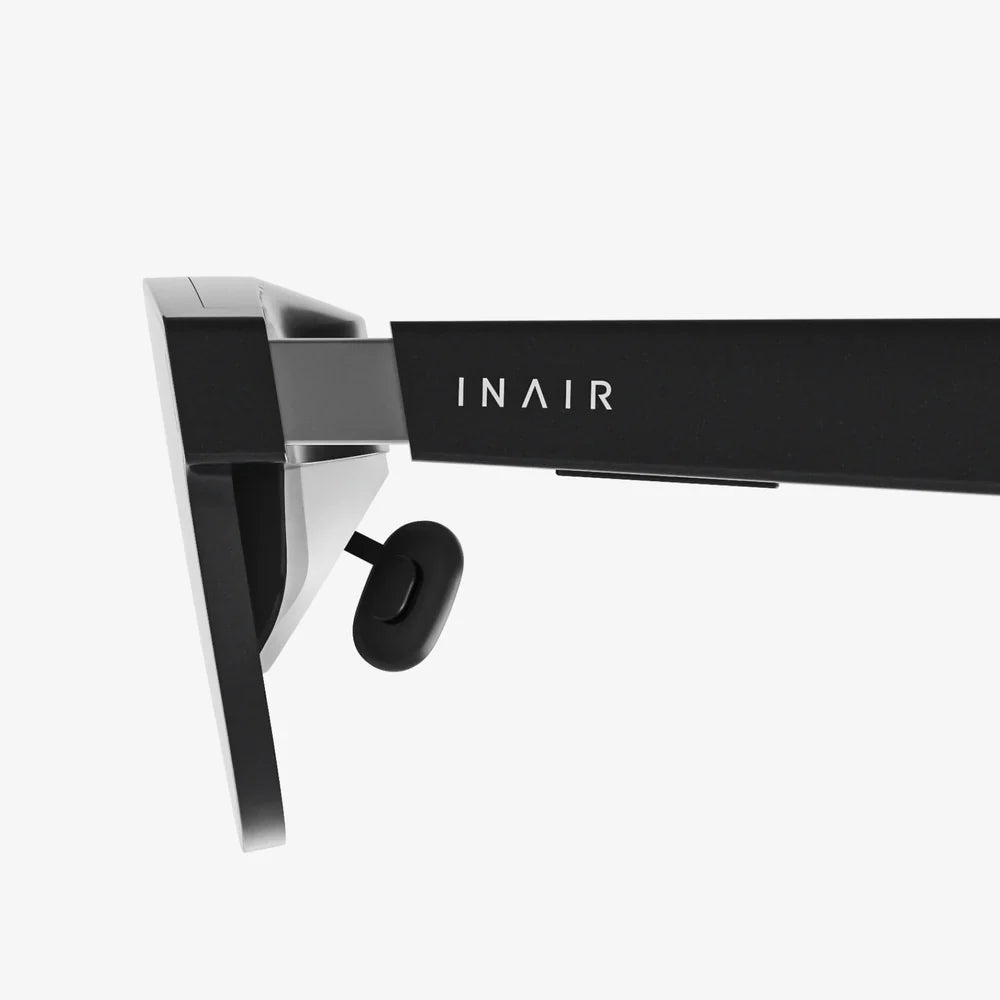
Imagine a world where digital information doesn't just appear on a screen but blends seamlessly with your physical environment, where holographic surgeons guide real operations, virtual training simulations respond to your actual workshop, and historical figures can walk into your living room to tell their stories. This isn't science fiction—this is the emerging realm of Mixed Reality, and it's poised to fundamentally change how we interact with technology, information, and each other.
The Spectrum of Reality: Understanding Where MR Fits
To truly grasp what Mixed Reality is, we must first place it on the broader spectrum of reality technologies. This spectrum extends from the completely real environment we inhabit to a fully virtual, computer-generated world.
On one end lies our natural reality. On the opposite end exists Virtual Reality (VR), which immerses users in a completely digital environment, typically accessed through a headset that blocks out the physical world. Somewhere in the middle sits Augmented Reality (AR), which overlays digital information—like images, text, or simple animations—onto the user's view of the real world through devices like smartphones or smart glasses.
Mixed Reality is the most advanced point on this continuum. It goes beyond merely overlaying information; it enables seamless interaction between real and digital objects. In a true MR experience, a virtual ball can bounce off your real table, a digital character can sit on your actual sofa, and your physical movements can directly manipulate complex 3D holograms. The key differentiator is that the digital content is spatially aware and anchored to the real world.
How Mixed Reality Works: The Magic Behind the Scenes
The creation of a convincing Mixed Reality experience is a technological ballet involving sophisticated hardware and complex software algorithms working in perfect harmony.
The Hardware: Your Window to a Blended World
MR headsets, often called holographic devices, are marvels of modern engineering. They are equipped with a suite of sensors and components that traditional computing devices lack:
- Advanced Optics: High-resolution, transparent displays project light into your eyes, allowing you to see both the digital holograms and the world around you simultaneously.
- Depth-Sensing Cameras: These specialized cameras, often using technologies like time-of-flight sensors, continuously scan the environment to create a detailed 3D map of the room, understanding the geometry of walls, floors, furniture, and other objects.
- Spatial Sound: Immersive audio systems make sounds seem like they are emanating from specific points in your physical space, further blurring the line between real and virtual.
- Precision Tracking: An array of cameras and inertial measurement units (IMUs) track the precise movement and rotation of your head and, often, your hands and controllers, in six degrees of freedom (6DoF). This ensures that digital objects remain locked in place as you walk around them.
The Software: The Brain That Understands Reality
The raw data from the sensors is meaningless without intelligent software to interpret it. This is where the true magic happens. The device's software constructs a live digital twin of your environment. This model understands not just the shape of objects, but also their surfaces and properties. It can perform spatial mapping to know where the floor is, and plane detection to identify your desk as a viable surface for digital content.
This environmental understanding allows for occlusion, a critical MR phenomenon where a real-world object can pass in front of and block a virtual object from view, just as it would a real one. This is a primary factor in selling the illusion that the two worlds are one.
Transforming Industries: The Practical Power of MR
While consumer applications are exciting, the most profound impact of Mixed Reality is currently being felt across various professional sectors, revolutionizing workflows, enhancing safety, and unlocking new possibilities.
Healthcare: Revolutionizing Patient Care and Medical Training
The medical field is embracing MR to improve outcomes and enhance education. Surgeons can now don headsets to visualize complex patient anatomy, such as CT or MRI scans, projected directly onto the patient's body during pre-surgical planning or even in the operating room. This provides an X-ray vision-like capability, allowing for more precise and less invasive procedures.
Medical students can practice procedures on hyper-realistic holographic patients, making mistakes and learning in a risk-free environment. Furthermore, remote experts can see what a local surgeon sees and provide guidance by drawing holographic annotations into the shared field of view, democratizing access to specialized knowledge.
Manufacturing and Design: Prototyping in a New Dimension
In manufacturing, MR is streamlining design and production. Engineers and designers can collaborate around a full-scale, interactive 3D hologram of a prototype, examining it from every angle and making changes in real-time without the cost and time associated with physical model creation. This process, known as virtual prototyping, accelerates innovation and reduces waste.
On the factory floor, technicians performing complex assembly or maintenance can have holographic instructions and diagrams overlaid directly onto the machinery they are working on, guiding them through each step hands-free. This reduces errors, shortens training times, and improves overall efficiency.
Education and Training: Learning by Doing, Virtually
MR is creating immersive, interactive learning experiences that were previously impossible. History students can walk through ancient Roman streets recreated in their classroom. Chemistry students can manipulate and combine dangerous virtual elements without any risk. Astronomy classes can turn into journeys through the solar system.
This experiential learning model boosts engagement and retention by allowing students to learn through doing and exploring, rather than just reading or listening.
Remote Collaboration: Closing the Physical Gap
One of the most powerful applications of MR is in remote collaboration. Using avatars and shared holograms, distributed teams can meet in a virtual space as if they were standing in the same room, interacting with 3D models and data. A architect in one city and a client in another can walk through and modify a life-size holographic model of a new building together, making decisions in real-time. This "being there" without traveling has immense implications for global teamwork, reducing travel costs and carbon footprints while enhancing communication.
Challenges and Considerations on the Road to Adoption
Despite its immense potential, the widespread adoption of Mixed Reality faces several significant hurdles that technologists are actively working to overcome.
Hardware Limitations: For MR to become mainstream, devices need to become smaller, lighter, more comfortable, and less obtrusive—ideally moving toward a form factor resembling everyday eyeglasses. Battery life remains a constraint for untethered mobility, and achieving photorealistic holograms with a wide field of view requires displays with incredibly high resolution and brightness.
User Experience and Interaction: Designing intuitive interfaces for a 3D spatial medium is a novel challenge. How do users navigate vast virtual spaces? How do they manipulate complex data with gestures? Establishing common design languages and interaction paradigms is crucial for creating comfortable and accessible experiences.
Social and Ethical Implications: As with any transformative technology, MR raises important questions. How do we manage privacy when devices with always-on cameras are continuously scanning our homes and workplaces? What are the psychological effects of long-term immersion in blended realities? Establishing ethical guidelines and robust data security measures will be essential for building public trust.
The Future is Blended: What Lies Ahead for MR
The trajectory of Mixed Reality points toward a future where the technology becomes increasingly pervasive and integrated into our daily lives. We are moving toward a world of ambient computing, where intelligence is everywhere, available on demand, and doesn't require us to look down at a handheld device.
Future advancements in artificial intelligence will supercharge MR, enabling systems to understand context and intent at a deeper level. Imagine an MR headset that can recognize your stress levels based on biometric data and subtly alter your environment to promote calm, or one that can instantly translate foreign language signs and conversations in real-time as you travel.
The convergence of MR with other emerging technologies like 5G/6G connectivity, which provides the high bandwidth and low latency needed for streaming complex holographic content, and the semantic web, which will allow devices to understand the meaning of objects in the world, will unlock applications we can only begin to imagine.
We are standing at the precipice of a new era of human-computer interaction. Mixed Reality is not just another gadget; it is the beginning of a fundamental shift in how we perceive and augment our own reality. It promises to enhance our abilities, bridge gaps between people and information, and unlock new forms of creativity and problem-solving. The boundary between what is real and what is digital is becoming beautifully, and productively, blurred.
Share:
Digital Contents The Currency of the Modern World Reshaping Reality and Redefining Value
Glasses with Hearing: The Revolutionary Tech Merging Sight and Sound