


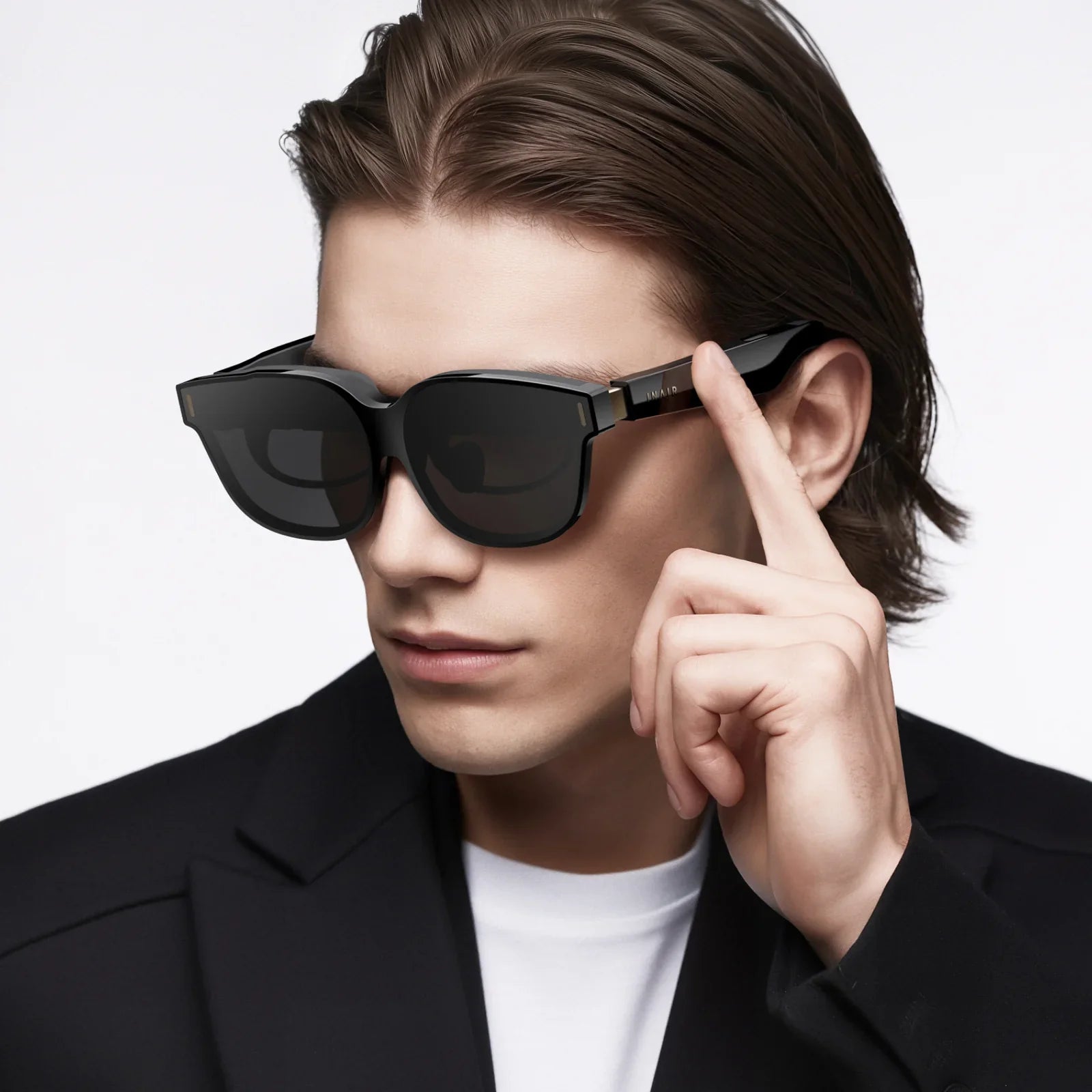
Reality eyewear is quietly rewriting the rules of how we see, work, learn, and play, turning ordinary moments into immersive experiences that once belonged only in science fiction. Whether you are curious about augmented overlays on the real world or fully virtual environments that transport you elsewhere, this new generation of wearable displays is poised to reshape your daily routine in ways that go far beyond simple screens and traditional glasses.
At its core, reality eyewear refers to a broad category of head-worn devices that blend or replace what you see with digital imagery. Instead of staring down at a phone or sitting in front of a monitor, the content appears directly in your field of view. This can range from subtle navigation arrows floating above the sidewalk to richly rendered 3D worlds that shut out the physical environment entirely. The result is a spectrum of visual experiences that can be practical, entertaining, or deeply transformative.
What Is Reality Eyewear?
Reality eyewear is a family of devices designed to change how your eyes perceive the world by overlaying or substituting digital content. These devices typically resemble glasses, goggles, or headsets and use integrated displays, optics, and sensors to project images into your eyes while tracking your movements and surroundings.
Unlike traditional eyewear, which corrects vision or protects your eyes, reality eyewear is focused on information, interaction, and immersion. It turns your field of view into a dynamic canvas for data, graphics, and experiences that respond to where you are looking and what you are doing.
Key Characteristics Of Reality Eyewear
- Visual augmentation: The device adds or replaces visual elements in your environment, from simple text overlays to complex 3D objects.
- Spatial awareness: Sensors such as cameras, depth sensors, and motion trackers allow the device to understand the physical space around you.
- Head and eye tracking: The system responds to your gaze and head movements, making digital content appear stable in the world or follow your eyes.
- Hands-free interaction: Many devices support gestures, voice commands, or controllers, reducing the need to hold a phone or tablet.
The Main Types Of Reality Eyewear
Reality eyewear can be divided into several categories based on how it blends the digital and physical worlds. Understanding these types helps you choose the kind of experience that fits your goals.
1. Augmented Reality (AR) Glasses
Augmented reality glasses overlay digital information onto the real world without blocking it entirely. You still see your surroundings, but they are enhanced by graphics, text, or interactive elements.
Common uses include:
- Navigation: Arrows or markers on the road or sidewalk guiding you to your destination.
- Notifications: Incoming messages, calls, and alerts displayed in a corner of your vision.
- Contextual information: Details about landmarks, products, or objects appearing as you look at them.
- Hands-free instructions: Step-by-step directions for tasks such as repairs or cooking, floating in front of you as you work.
2. Mixed Reality (MR) Headsets
Mixed reality headsets go beyond simple overlays by anchoring digital objects into the physical world in a way that respects depth, surfaces, and occlusion. A digital object can appear to sit on your desk, hide behind your couch, or bounce off your walls.
Defining features of mixed reality include:
- Environmental mapping: The headset builds a 3D model of your space so virtual objects can interact with real surfaces.
- Persistent digital content: Virtual items remain in place when you leave and return, as if they physically exist.
- Advanced interaction: You can walk around, inspect, grab, and manipulate digital objects in a natural way.
3. Virtual Reality (VR) Headsets
Virtual reality headsets fully replace your view of the real world with a digital environment. When you wear VR, you are visually transported into a different place, whether that is a realistic simulation or a stylized fantasy world.
Key aspects of VR eyewear include:
- Full immersion: The device blocks your view of the physical world to focus entirely on the virtual scene.
- High presence: Accurate tracking of head movement and wide field of view create a strong sense of “being there.”
- Interactive experiences: Hand controllers, body tracking, or hand tracking allow you to interact with virtual objects and characters.
4. Assisted Reality Devices
Assisted reality devices provide information in your field of view without heavy integration into the environment. They are often simpler and more rugged, designed for practical tasks rather than entertainment.
Typical characteristics include:
- Small display: A compact screen near the eye that shows text, images, or video.
- Task-focused use: Ideal for checklists, instructions, or remote guidance in industrial or field settings.
- Durability: Often built to withstand dust, moisture, and rough handling.
How Reality Eyewear Works
Reality eyewear relies on a blend of optics, sensors, computing, and software to synchronize digital content with your vision. While designs vary, most devices share several core components.
Optics And Displays
The optical system determines how images are delivered to your eyes. Common approaches include:
- Waveguides: Thin transparent layers that channel light from a tiny display into your eyes, often used in lightweight AR glasses.
- Lens-mounted displays: Screens positioned in front of the eyes inside a headset, common in VR and some MR devices.
- Projection systems: Micro-projectors that bounce images off reflective surfaces or directly into the eye.
These optics are paired with miniature displays such as OLED or LCD panels, or more advanced technologies like microLED. Resolution, brightness, and color accuracy all influence how realistic and comfortable the visuals feel.
Sensors And Tracking
To make digital content appear stable and believable, the device must know where you are, where you are looking, and what is around you. This is handled by a combination of sensors:
- Inertial measurement units: Accelerometers and gyroscopes detect head movement and orientation.
- Cameras: Outward-facing cameras capture the environment for mapping, hand tracking, and positional tracking.
- Depth sensors: Specialized sensors estimate distances to objects, enabling accurate placement of virtual elements in space.
- Eye tracking: Some devices track the position of your eyes to improve rendering efficiency and enable gaze-based interaction.
Onboard Computing And Connectivity
Reality eyewear includes processors and graphics hardware to render scenes, process sensor data, and run applications. Some devices are fully self-contained, while others rely on a connected phone, console, or computer for additional power.
Wireless connectivity such as Wi-Fi and Bluetooth allows the eyewear to stream content, sync with other devices, and access cloud-based services. This connectivity is essential for collaborative experiences and real-time data.
Interaction Methods
Interacting with digital content in your field of view can feel more natural than tapping a screen. Common input methods include:
- Hand gestures: Recognized by cameras and interpreted as commands such as grabbing, pinching, or swiping.
- Controllers: Handheld devices with buttons and motion sensors for precise control, often used in VR.
- Voice commands: Spoken instructions for navigation, search, and system control.
- Eye-based interaction: Gaze detection that lets you highlight or select items by looking at them.
Applications Of Reality Eyewear In Everyday Life
Reality eyewear is not just a novelty for enthusiasts; it is steadily moving into everyday activities. From entertainment to productivity, the potential use cases are expanding quickly.
Entertainment And Gaming
One of the most visible uses of reality eyewear is in entertainment. VR headsets offer deeply immersive games where you can explore fantastical worlds, solve puzzles, or engage in competitive matches with others. The sense of presence is much stronger than watching a game on a flat screen.
Mixed and augmented reality open new possibilities for interactive storytelling and location-based experiences. Imagine characters appearing in your living room, or game elements that respond to the layout of your home. These devices can also transform how you watch movies and concerts, placing you in virtual theaters or giving you front-row views from your couch.
Work And Productivity
Reality eyewear can fundamentally change how we work, especially in environments where hands-free access to information is valuable. In offices and remote work setups, virtual screens can replace or supplement physical monitors, allowing you to arrange multiple displays around you without taking up desk space.
For professionals in fields such as design, architecture, and engineering, mixed reality enables life-size visualization of models within real spaces. You can walk around a virtual prototype, inspect details, and collaborate with colleagues who see the same content from different locations.
In industrial and field settings, assisted reality and AR devices provide step-by-step instructions, remote expert guidance, and real-time data overlays. This can reduce errors, speed up training, and improve safety by keeping workers focused on their tasks rather than juggling tools and paper manuals.
Education And Training
Education is another area where reality eyewear is starting to have a profound impact. Instead of passively reading about historical events or scientific concepts, learners can experience them in immersive form. Virtual field trips can transport students to ancient cities, distant planets, or inside the human body.
For vocational training, simulation-based learning in VR and MR allows learners to practice complex procedures in a safe, controlled environment. For example, trainees can rehearse emergency responses, technical repairs, or surgical techniques without putting anyone at risk.
Interactive 3D visualizations also help learners grasp abstract concepts. Seeing molecules in 3D, walking through mathematical graphs, or manipulating virtual machinery can make difficult subjects more accessible and engaging.
Healthcare And Wellbeing
Reality eyewear is increasingly being explored in healthcare settings. Surgeons can use AR overlays during procedures to access imaging data, anatomical guides, or real-time vital signs without looking away from the patient. This can support precision and situational awareness.
In mental health and therapy, VR environments are used for exposure therapy, relaxation, and rehabilitation. Carefully designed virtual scenarios can help patients confront fears, manage pain, or practice social interactions in a controlled way.
Physical therapy and fitness programs can also benefit from immersive guidance and real-time feedback. Exercises become more engaging when wrapped in game-like experiences that encourage adherence and track progress.
Retail And Shopping
Reality eyewear is changing how people discover and evaluate products. AR experiences can show how furniture would look in your home, how clothing might fit, or how different colors and styles suit your space. Instead of relying on imagination or static images, you see virtual items in context.
Stores and showrooms can layer information over products, offering details, comparisons, and interactive demonstrations as you walk around. This adds depth to the shopping experience without requiring you to pick up a phone or tablet.
Navigation And Tourism
When used outdoors, AR glasses can provide turn-by-turn directions superimposed on streets and paths, reducing the need to glance down at a phone. Landmarks can be labeled with historical facts, reviews, or recommendations as you approach them.
Guided tours powered by reality eyewear can transform sightseeing. Virtual guides, reconstructed historical scenes, and multilingual overlays can enrich your understanding of a place without the clutter of printed maps or handheld devices.
Benefits Of Reality Eyewear
The growing interest in reality eyewear is driven by a range of benefits that appeal to individuals, businesses, and institutions.
Deeper Immersion And Engagement
By placing content directly in your field of view, reality eyewear creates experiences that feel more immediate and engaging than those on traditional screens. This heightened immersion can make learning more effective, entertainment more compelling, and training more memorable.
Hands-Free Convenience
Hands-free access to information is a powerful advantage. Whether you are repairing machinery, cooking, exercising, or traveling, having instructions and data floating in your view allows you to stay focused on the task while still receiving guidance.
Spatial Understanding
Being able to see digital information anchored to physical objects and locations can improve comprehension and decision-making. For example, seeing energy usage data overlaid on equipment, or design changes visualized in a real room, helps bridge the gap between abstract information and tangible reality.
Remote Collaboration
Reality eyewear enables new forms of remote collaboration. Colleagues can share virtual workspaces, view the same 3D models, or see what another person sees through their device. Remote experts can annotate a worker’s field of view, guiding them through complex tasks as if standing beside them.
Personalized Experiences
Because these devices can track your gaze, preferences, and environment, they can tailor experiences to you. Interfaces can adapt in real time, highlighting relevant information and hiding distractions. Educational content can adjust difficulty based on your progress and engagement.
Challenges And Concerns
Despite its promise, reality eyewear faces important challenges that must be addressed for widespread adoption and long-term comfort.
Comfort And Ergonomics
Wearing a device on your face for extended periods raises questions about weight, balance, and fit. Heavy or poorly balanced headsets can cause neck strain and fatigue. Even lightweight glasses must accommodate different head shapes and vision needs while keeping displays aligned with the eyes.
Designers are working to reduce bulk, improve padding and straps, and integrate adjustable features. However, users should still pay attention to how long they wear these devices and take breaks to avoid discomfort.
Visual Fatigue And Motion Sickness
Some people experience eye strain, headaches, or motion sickness when using VR or AR for extended periods. Causes include low frame rates, latency between movement and display updates, and mismatches between visual cues and inner ear signals.
Higher quality displays, better tracking, and careful content design can reduce these effects, but individual sensitivity varies. It is important for users to ease into longer sessions, adjust settings, and stop if they feel unwell.
Privacy And Data Security
Reality eyewear often uses cameras and sensors to capture the environment, which can raise privacy concerns for both users and bystanders. The device may collect information about your surroundings, behavior, and interactions.
Responsible use requires clear policies about data collection, storage, and sharing. Users should understand what information is being gathered and have options to control or limit it. Public use of camera-equipped eyewear should be considerate of others, especially in sensitive spaces.
Social Acceptance
Wearing visible technology on your face can feel awkward in social settings. Some people may feel self-conscious, while others may be uncomfortable interacting with someone whose device could be recording or distracting them.
As designs become more discreet and social norms evolve, this may change. For now, it is helpful to be transparent about when the device is active and to respect social cues and context when choosing to wear reality eyewear.
Cost And Accessibility
Advanced reality eyewear can be expensive, especially devices that offer high-end displays and sensors. This can limit access for individuals and organizations with constrained budgets.
Over time, competition, component improvements, and economies of scale are likely to reduce costs. In the meantime, users can explore more affordable entry-level devices, shared equipment models, or institutional programs that provide access.
How To Choose Reality Eyewear For Your Needs
Selecting the right reality eyewear depends on your goals, budget, and environment. Instead of focusing on technical jargon, consider practical questions about how you plan to use the device.
Clarify Your Primary Use Cases
Ask yourself what you want reality eyewear to do for you. Common goals include:
- Immersive gaming and entertainment: Prioritize VR or high-end MR headsets with strong graphics and tracking.
- Productivity and virtual screens: Look for devices that support comfortable long-term wear and clear text rendering.
- Field work and hands-free guidance: Consider assisted reality or rugged AR devices designed for industrial use.
- Education and training: Evaluate content ecosystems and ease of management for multiple users.
Evaluate Comfort And Fit
Comfort can make or break your experience. When possible, try devices in person to assess:
- Weight distribution: The headset should feel balanced, not front-heavy.
- Adjustability: Straps, nose pads, and lens spacing should be adjustable to fit your head and eyes.
- Compatibility with prescription lenses: Check whether the device supports inserts or has enough space for glasses.
Check Visual Quality
Visual clarity is essential for both comfort and usability. Consider:
- Resolution: Higher resolution reduces the “screen door” effect and improves text readability.
- Field of view: A wider field of view enhances immersion, particularly in VR and MR.
- Brightness and contrast: Important for AR use in bright environments and for vivid colors.
Assess Tracking And Interaction
Accurate tracking and intuitive interaction methods contribute significantly to how natural the experience feels. Look at:
- Head and positional tracking: Smooth, low-latency tracking reduces motion sickness and improves presence.
- Hand tracking and controllers: Determine which input methods are supported and how well they work.
- Voice and gaze control: These can be valuable for accessibility and hands-free use.
Consider Content And Ecosystem
The best hardware is limited without compelling content. Investigate:
- Available apps and experiences: Games, productivity tools, training modules, and industry-specific software.
- Developer support: If you plan to create custom applications, check tools and documentation.
- Update cadence: Regular software updates can improve performance and add features over time.
Budget And Total Cost Of Ownership
Beyond the initial purchase price, factor in:
- Required accessories: Controllers, straps, protective cases, or external sensors.
- Software licenses: Paid apps, subscriptions, or enterprise management tools.
- Maintenance and support: Warranty coverage and repair options.
Practical Tips For Using Reality Eyewear Safely
To get the most from reality eyewear while protecting your health and comfort, it helps to follow a few practical guidelines.
Start With Short Sessions
If you are new to immersive devices, begin with brief sessions and gradually increase duration. This allows your eyes and body to adapt and helps you notice any discomfort early.
Adjust Settings For Comfort
Most devices offer settings that can reduce strain, such as:
- Interpupillary distance adjustment: Aligns lenses with your eyes for clear focus.
- Brightness control: Lower brightness in dark rooms to reduce eye fatigue.
- Text size and contrast: Make information easier to read.
Maintain Awareness Of Your Surroundings
Even with passthrough or transparent displays, it is important to stay aware of your environment, especially when moving. Clear space before using VR, and be cautious when walking with AR glasses in crowded or hazardous areas.
Respect Others’ Privacy
When using reality eyewear in public or shared spaces, be mindful of how cameras and sensors might affect others. Avoid recording without consent and follow any posted policies about wearable devices.
Keep Devices Clean And Hygienic
Because eyewear sits close to your face, cleanliness matters. Use appropriate cleaning materials for lenses and surfaces, and disinfect shared devices between users, especially in educational or workplace settings.
The Future Of Reality Eyewear
The trajectory of reality eyewear points toward devices that are more comfortable, more powerful, and more seamlessly integrated into daily life. Advances in display technology, battery efficiency, and miniaturization are gradually shrinking bulky headsets into sleeker, more glasses-like form factors.
On the software side, improvements in spatial computing, artificial intelligence, and connectivity will enable richer experiences that better understand context and user intent. Digital assistants may appear as persistent companions in your field of view, offering proactive help as you move through your day.
As these technologies mature, we can expect reality eyewear to move from occasional novelty to everyday tool for many people. The boundary between physical and digital spaces will continue to blur, creating new possibilities for creativity, collaboration, and expression.
For now, exploring reality eyewear gives you a front-row seat to a shift in how humans interact with information and with each other. Whether you are drawn to immersive entertainment, practical productivity, or transformative learning, stepping into this emerging world of visual computing can be both exciting and empowering. Choosing the right device, using it thoughtfully, and staying aware of its impact on your life will help you turn reality eyewear from a curiosity into a powerful extension of your vision and imagination.
Aktie:
Gesture Control And The Touchless Future Of Human Computer Interaction
Gesture Control And The Touchless Future Of Human Computer Interaction