


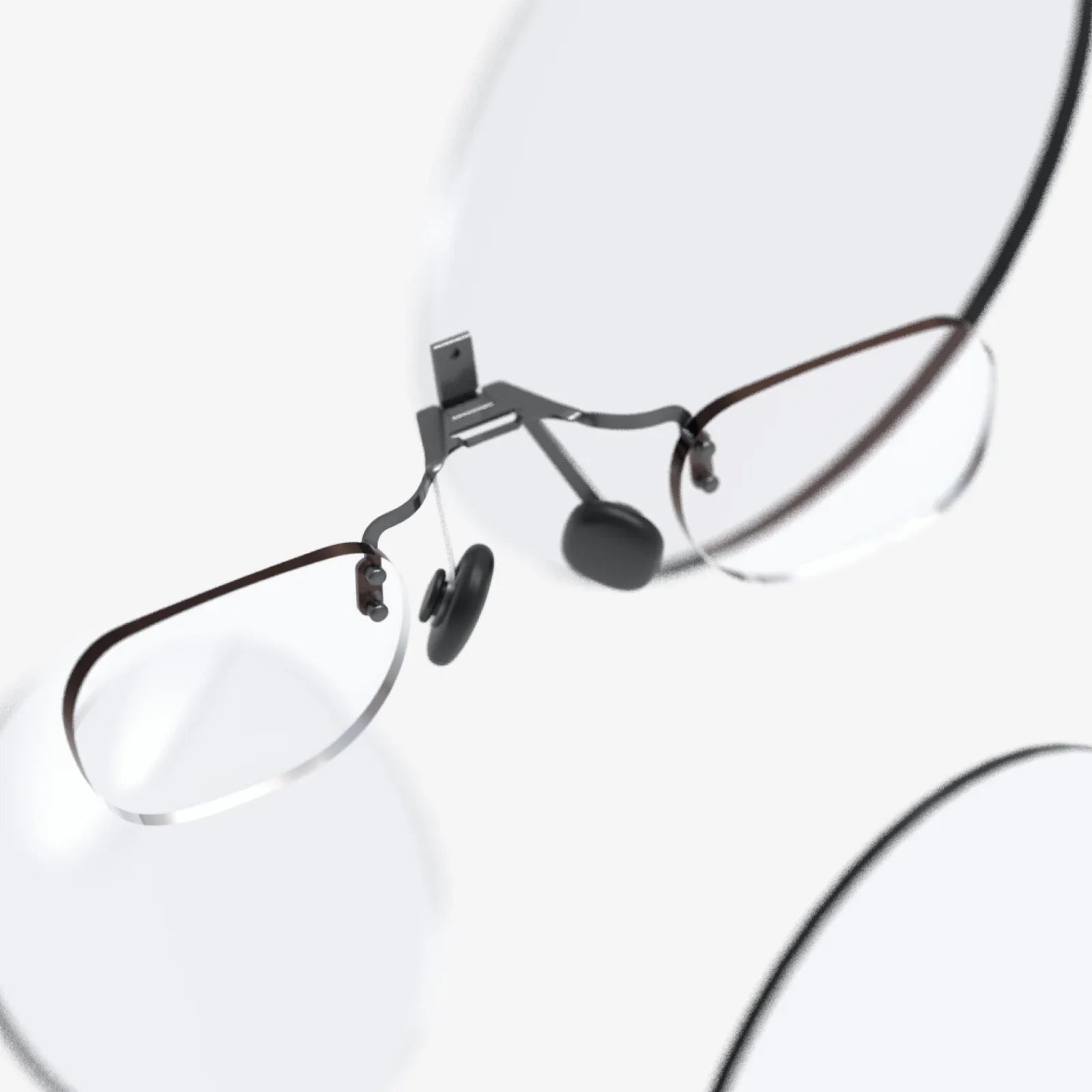
Imagine a world where digital information doesn't just live on a screen but is seamlessly woven into the fabric of your physical reality, enhancing everything you see, do, and experience. This is no longer the stuff of science fiction; it is the burgeoning promise of augmented reality (AR), a technology poised to unlock a new era of human-computer interaction and create a seismic shift across every major industry. The opportunities in augmented reality are not merely incremental improvements but foundational changes to how we work, learn, play, and connect, representing one of the most significant technological frontiers of our time.
The Foundation: Understanding the AR Landscape
Before delving into the specific opportunities, it's crucial to understand what we mean by augmented reality. Unlike virtual reality (VR), which creates a completely immersive, digital environment, AR overlays digital content—images, video, 3D models, data points—onto the user's view of the real world. This blend creates a composite view that augments the real world with contextual, computer-generated information.
The technology is primarily delivered through a few key modalities:
- Smartphone and Tablet AR: The most accessible form, using a device's camera and screen to display augmented content. This has been the primary driver of initial consumer adoption.
- Smart Glasses and Headsets: Wearable devices that project information directly into the user's field of vision, offering a hands-free, immersive experience. This is considered the endgame for AR, enabling constant ambient computing.
- Static AR Displays: Systems like heads-up displays (HUDs) in vehicles or smart mirrors in retail stores that augment a specific context.
The convergence of several technological advancements has brought AR to this tipping point. Improvements in computer vision, spatial mapping, and object recognition allow digital content to understand and interact with the physical environment. Simultaneously, the miniaturization of processors, sensors, and displays has made powerful AR hardware increasingly feasible and affordable. The rollout of high-speed, low-latency 5G networks is another critical enabler, ensuring that complex AR data can be streamed and processed in real-time without lag, which is essential for a convincing experience.
Revolutionizing Enterprise and Industrial Workflows
While consumer applications often grab headlines, the most immediate and profound opportunities in augmented reality are emerging within the enterprise and industrial sectors. Here, AR is solving real-world problems, driving efficiency, reducing errors, and enhancing safety.
Remote Expertise and Assistance
One of the killer applications for AR is remote expert guidance. A field technician facing a complex repair can wear AR glasses that allow a senior engineer, thousands of miles away, to see exactly what they see. The remote expert can then annotate the technician's field of view with arrows, diagrams, and instructions, literally guiding their hands. This drastically reduces downtime, cuts travel costs for specialists, and empowers less-experienced workers to perform complex tasks correctly the first time. This application is transformative for industries like manufacturing, energy, and field services.
Complex Assembly and Manufacturing
On assembly lines, AR is replacing cumbersome paper manuals and stationary computer monitors. Workers can see digital work instructions overlaid directly onto the components they are assembling. A highlighted outline can show where a part needs to be placed, an animation can demonstrate the correct installation procedure, and a checklist can confirm each step is completed. This not only speeds up production but also significantly reduces error rates and improves quality control. It also shortens the training time for new employees, as the AR system guides them through complex processes.
Design and Prototyping
Engineers and designers are using AR to visualize and interact with 3D prototypes at a 1:1 scale before any physical object is built. A car designer can project a full-scale model of a new vehicle into an empty room and walk around it to assess its form. An architect can project a building's blueprint onto a physical construction site, and interior designers can place virtual furniture into a client's empty living room. This ability to "see the impossible" saves millions in prototyping costs, accelerates iteration, and leads to better final products.
Logistics and Warehouse Management
In massive warehouses, AR is supercharging logistics. Warehouse operatives wearing AR glasses can have the most efficient picking route displayed in their vision, with digital arrows guiding them to the correct aisle and bin. When they arrive, the system can highlight the exact item and quantity to be picked, while simultaneously updating inventory systems. This leads to dramatic gains in order fulfillment speed and accuracy, a critical advantage in the age of e-commerce.
Transforming the Consumer Experience: Retail, Gaming, and Beyond
On the consumer side, the opportunities in augmented reality are reshaping how we shop, play, and interact with information, blurring the lines between online and offline experiences.
The Future of Retail and E-Commerce
AR is tackling one of the fundamental limitations of online shopping: the inability to try before you buy. Shoppers can now use their smartphones or AR mirrors to virtually try on clothes, accessories, and makeup. They can project life-sized virtual furniture into their homes to see if it fits and matches their décor, or visualize how a new appliance would look on their kitchen counter. This immersive preview capability reduces purchase hesitation and, crucially, lowers return rates, which is a massive cost sink for retailers. It creates a more confident and engaging shopping journey that bridges the digital and physical divide.
Interactive Gaming and Immersive Entertainment
The viral success of a certain location-based AR game proved the massive consumer appetite for this technology. It demonstrated that AR could turn the entire world into a playground, encouraging exploration and social interaction. The future of AR gaming extends beyond catching creatures to include immersive tabletop games that come to life on your living room floor, interactive storybooks where characters leap off the page, and location-based narratives that turn a city into an adventure game. In live events and sports, AR could overlay stats and player information for viewers at home or in the stadium, creating a deeply enriched viewing experience.
Navigation and Contextual Information
AR is set to replace the 2D map. Instead of looking down at a phone, pedestrians and drivers will see directional arrows and street names overlaid onto the road ahead. This heads-up, contextual navigation is far more intuitive and safer. Beyond directions, imagine pointing your phone at a restaurant to see its reviews and menu pop up, or at a landmark to get a historical overview. This layer of dynamic information on top of the real world creates a new paradigm for accessing knowledge on the go.
Redefining Education and Healthcare
The opportunities in augmented reality have profound implications for sectors dedicated to human development and well-being.
Interactive and Engaging Learning
AR can turn abstract concepts into tangible, interactive experiences. Students studying anatomy can explore a full-scale, beating human heart they can walk around. History classes can witness historical events unfold in their classroom. Chemistry students can combine virtual elements to see the reactions without any physical risk. This move from passive learning to active exploration boosts engagement, improves knowledge retention, and caters to diverse learning styles.
Advancing Medical Training and Patient Care
In healthcare, the stakes are high, and the opportunities are immense. Medical students can practice complex surgical procedures on virtual patients, reducing risk and providing invaluable rehearsal. Surgeons can use AR during actual operations to visualize critical information, such as the location of tumors or blood vessels, projected directly onto the patient's body, improving precision and outcomes. AR can also assist in patient education, helping them understand their condition or procedure through interactive 3D models, and in rehabilitation, by creating engaging exercises that motivate patients.
The Creator Economy and New Digital Frontiers
As the underlying platforms mature, a new wave of opportunity is emerging for creators, artists, and developers—the architects of the AR world.
The Rise of the AR Cloud and Spatial Computing
The next evolutionary step is the development of a persistent AR cloud—a digital copy of the real world that allows AR experiences to be anchored to specific locations and shared across users and time. This means a digital sculpture placed in a town square by one user could be seen days later by another. This shared, persistent layer of information unlocks social experiences, persistent games, and location-specific art and information on an unprecedented scale, forming the foundation for true spatial computing.
New Avenues for Artists and Developers
This new medium creates entirely new professions and business models. 3D artists will design the digital objects and characters that inhabit our world. Developers will build the applications and games that leverage this spatial canvas. Brands will hire creators to design immersive AR marketing campaigns and virtual showrooms. The demand for skills in 3D modeling, spatial design, and AR-specific development is skyrocketing, creating a new and vibrant digital economy.
Navigating the Challenges on the Path to Adoption
Despite the immense potential, the path forward is not without obstacles. For the opportunities in augmented reality to be fully realized, several challenges must be addressed:
- Hardware Limitations: For widespread adoption, AR glasses need to become as socially acceptable, comfortable, and affordable as regular eyeglasses, with all-day battery life and high-resolution displays. We are still years away from this ideal form factor.
- User Experience (UX) Design: Designing intuitive interfaces for a 3D, spatial world is a completely new discipline. Avoiding information overload and creating interactions that feel natural is a significant challenge.
- Privacy and Security: AR devices, with their always-on cameras and microphones, collect unprecedented amounts of data about a user's environment and behavior. Establishing robust ethical frameworks, data policies, and security measures is paramount to earning public trust.
- Digital Divide: Ensuring that the benefits of AR are accessible and do not exacerbate existing social and economic inequalities is a critical consideration for developers and policymakers.
The journey to overcome these hurdles is already underway, with intense research and development focused on making AR more powerful, intuitive, and secure.
We are standing at the precipice of a fundamental shift in our relationship with technology. The opportunities in augmented reality extend far beyond novelty filters and simple games; they represent a new layer of reality itself, ripe with the potential to enhance human capability, redefine industries, and create experiences we are only beginning to imagine. The future is not just something we will watch on a screen—it is something we will step into and shape with our own hands, and it will change absolutely everything.
Share:
VR Headset for Augmented Reality: The Ultimate Portal to a Blended World
AI Glasses Release 2025: The Dawn of a New Visual Computing Era