


- von INAIR Official
A Day in the Life (2030): The Transcendent Experience of the Spatial Worker
- von INAIR Official
Morning: The Gentle Wake-Up
It's 2030. You wake up, not to a screaming alarm, but to a subtle, virtual sunrise projected by your bedside lamp. You don't rush to a desk. Instead, you sip your coffee on the balcony, wearing your lightweight AR glasses. As you look at the horizon, your "Morning Dashboard" appears—your schedule, key news, and a summary of your team's progress, all floating in the clear morning air. You've finished your "admin" work before the rest of the world has even opened their laptops.
Mid-Day: The Global Collaboration
At noon, you join a "Space-Share" meeting. You're in your garden, but your colleagues from London and Tokyo are sitting in virtual chairs across from you. You're all looking at a 3D simulation of a new sustainable energy grid that's "sitting" on your lawn. You walk around the model, pointing out a design flaw in real-time. There is no lag, no "screen sharing," just the intuitive feeling of people working together in a shared reality. You finish the meeting feeling energized by the human connection, not drained by a screen.
Evening: The Total Disconnection
The most important part of the 2030 workday is how it ends. Because your office was made of light, when you take off your glasses, the office completely disappears. There are no laptops on the dining table, no chargers in the bedroom, no physical reminders of work cluttering your home. Your environment returns to being a sanctuary for family and relaxation. By using AR glasses for work, you've finally achieved the ultimate goal: technology that empowers your professional life without ever invading your personal space.
Start Living This Way Today
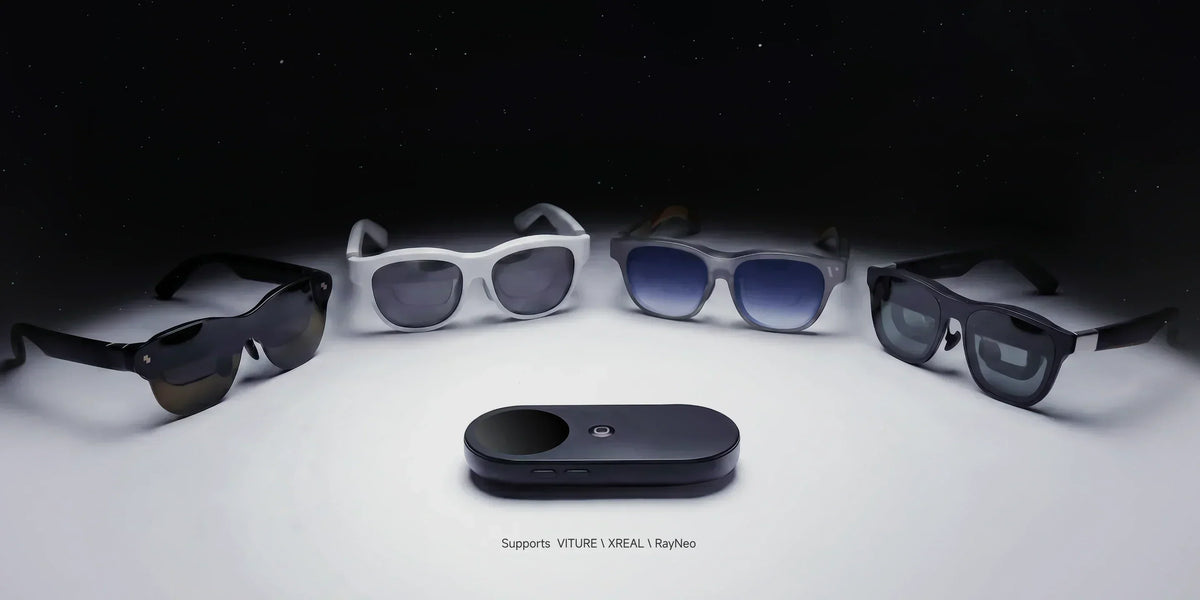
You don't have to wait until 2030. The INAIR 2 Go Pack fits your entire spatial office—glasses, Pod, and a foldable keyboard—into one portable case, so your workspace can move from the balcony to the garden to anywhere else your day takes you.
The future in this story isn't science fiction—it's a direction we're already building toward. At INAIR, we're closing the gap between the office you have and the one you actually want. Take a look at how.