


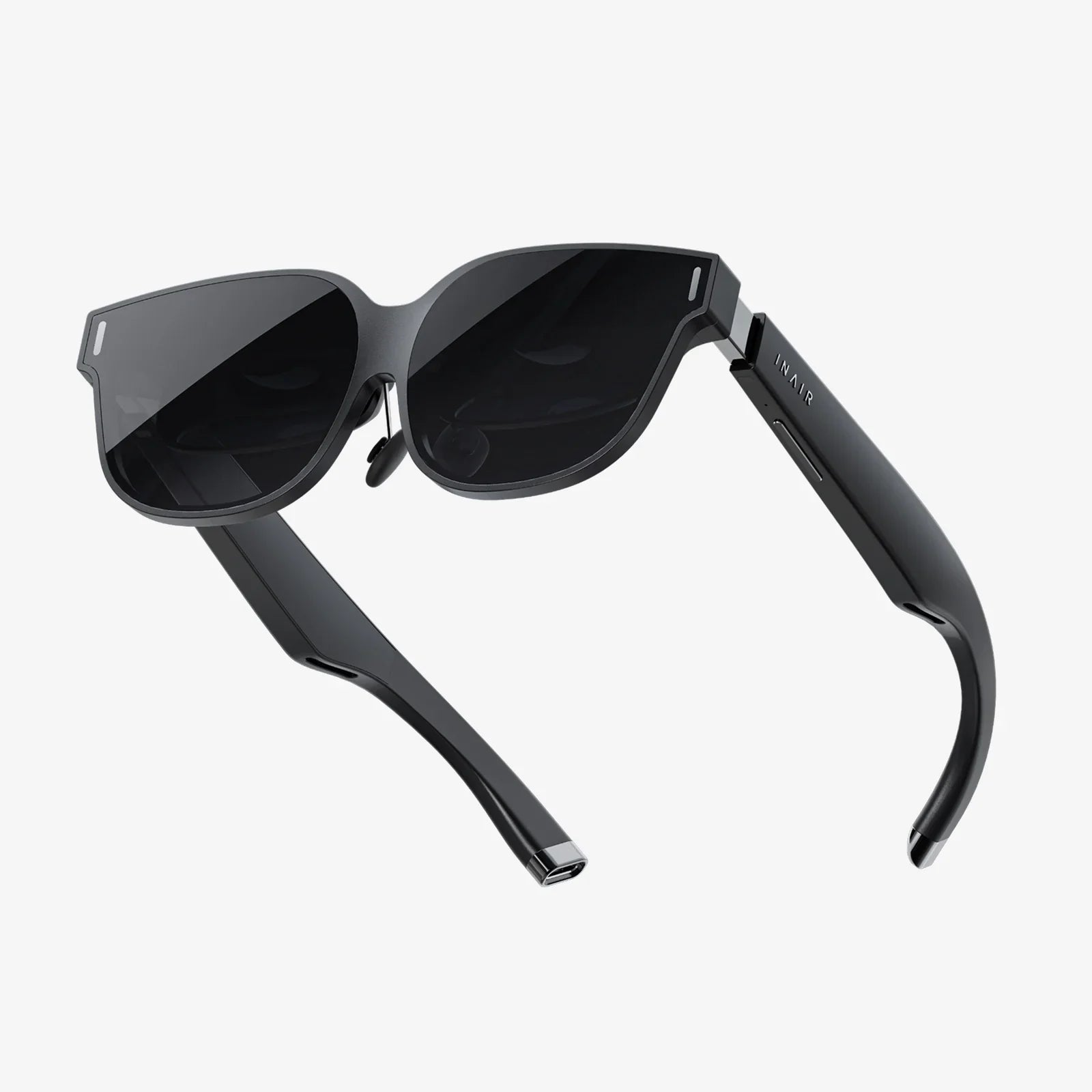
- von wangfred
ar glasses ios Integration: The Complete Guide You Need Now
- von wangfred
ar glasses ios is quickly becoming one of the most exciting combinations in personal technology, and if you are not paying attention yet, you are about to miss a major shift. Imagine glancing up from your iPhone and seeing your apps, maps, messages, and work tools layered seamlessly over the real world through a lightweight pair of glasses. That is no longer just science fiction; it is the direction the entire ecosystem is moving, and learning how to take advantage of it now can put you far ahead of the curve.
When people talk about ar glasses ios, they are usually referring to two tightly connected ideas:
In practical terms, this means AR glasses acting as a new type of display and sensor array, while your iPhone or iPad serves as the brain that runs apps, connects to the internet, and manages your content. Over time, more processing will move into the glasses themselves, but the tight integration with iOS will remain the backbone of the experience.
The combination of AR glasses and iOS is powerful because it merges three strengths:
Instead of starting from scratch, ar glasses ios can build on top of familiar tools, interfaces, and workflows. That means faster innovation, more polished apps, and a smoother path from early experiments to everyday use.
To understand what is possible now and in the near future, it helps to know the key technologies that power ar glasses ios experiences.
AR requires knowing exactly where you are and what is around you. iOS devices already use a combination of:
When paired with AR glasses, this spatial understanding allows virtual objects to stay anchored to real tables, walls, or floors, and lets interfaces feel stable instead of floating randomly in space.
iOS devices are optimized for high-quality graphics. For ar glasses ios, that translates into:
Over time, expect more of this rendering to be handled directly on the glasses, but tightly integrated with iOS graphics frameworks for consistency and performance.
Beyond simply placing objects in space, ar glasses ios relies on understanding what the camera sees. That includes:
This scene understanding makes experiences smarter. For example, instructions can attach themselves to the exact knob you need to turn, or translation overlays can appear directly on top of foreign-language signs.
The most compelling part of ar glasses ios is not just the technology, but what it allows you to do in daily life. Here are the areas where impact is already emerging and where it will grow fastest.
Turn-by-turn directions on a phone are useful, but they still require you to look down at a screen. With ar glasses ios, navigation becomes far more intuitive:
Instead of guessing which way to turn based on a flat map, you simply follow the visual cues in your field of view. This is especially powerful in dense cities, large campuses, airports, and unfamiliar locations.
With ar glasses ios, communication becomes less about staring at a phone and more about staying engaged with your surroundings:
This approach lets you keep your head up while still staying connected, which is more natural and, in many cases, safer.
Fitness tracking on iOS is already strong, but ar glasses ios can push it further:
For outdoor enthusiasts, AR overlays can highlight trail paths, elevation changes, or points of interest, all powered by data from your iOS device.
Gaming is often the first place new display technologies truly shine, and ar glasses ios is no exception.
Using AR glasses, your living room becomes a game board:
Because iOS already supports spatial anchors and room mapping, developers can create games that adapt to your unique space instead of requiring a fixed layout.
Entertainment is not limited to traditional games. ar glasses ios can enable:
These experiences can be delivered through familiar iOS apps, making it easier to discover and share them without learning completely new platforms.
While games grab attention, the long-term value of ar glasses ios may be even greater in productivity and professional use.
One of the most practical uses of AR glasses is creating virtual screens anchored in your environment. Integrated with iOS, this can look like:
Your iPhone or iPad remains the central device, but your glasses become the primary way you see and organize information. This can dramatically reduce clutter while increasing flexibility.
ar glasses ios can also transform how teams work together remotely:
Because iOS already supports secure communication, screen sharing, and collaboration tools, AR layers can be added on top of workflows people already use instead of forcing them into entirely new systems.
For complex tasks, ar glasses ios can provide step-by-step guidance that is far more useful than a flat manual:
This is powerful in fields like maintenance, manufacturing, healthcare, and technical support, but it also applies to everyday tasks like assembling furniture or learning new tools.
Education is another area where ar glasses ios can have a deep impact, both in formal classrooms and informal self-learning.
In a classroom setting, AR glasses connected to iOS devices can enable:
Teachers can manage these experiences through familiar iOS apps, controlling what appears and when, and tracking participation and progress.
Outside of formal education, ar glasses ios supports self-paced learning:
The key advantage is context: information appears exactly where and when you need it, rather than being separated into a book or video you have to constantly look away to consult.
Shopping experiences are already changing with mobile apps, but ar glasses ios pushes them into a new dimension.
Inside a store, AR glasses can connect to iOS apps to provide:
This reduces friction and makes physical shopping more informative and efficient, especially in large or unfamiliar stores.
At home, ar glasses ios can help you make better decisions before buying:
Since many retailers already offer iOS apps, extending them to AR glasses is a natural next step that can significantly reduce returns and buyer uncertainty.
If you are a developer, designer, or product creator, understanding how to build for ar glasses ios is crucial. The rules are not the same as traditional mobile apps.
Good AR design respects the user’s environment and attention. Key principles include:
Designers need to think in 3D and consider how content will feel when it is part of the user’s physical space, not just a flat screen.
With ar glasses ios, interaction is no longer just tapping on a touchscreen. Common methods include:
Effective apps often blend these methods, letting users choose what feels most natural for the situation.
AR is demanding, and ar glasses ios must balance performance with comfort and battery life:
Developers who optimize early will create experiences that feel smooth and usable instead of impressive but impractical demos.
AR glasses introduce new privacy and safety challenges, and iOS integration plays a key role in addressing them.
AR devices can potentially see and analyze a lot of your environment. Responsible ar glasses ios design involves:
Users should always know when their surroundings are being recorded or analyzed and have straightforward controls to limit or disable that behavior.
Wearing AR glasses in public raises social questions similar to early smartphones and wearables. ar glasses ios experiences should consider:
Thoughtful design can help AR feel less intrusive and more socially acceptable, especially in shared spaces.
Because AR overlays the real world, there is a risk of distraction. ar glasses ios should prioritize:
Balancing immersion with awareness is essential to prevent accidents and ensure long-term acceptance.
Whether you are a user, a business owner, or a creator, you can start preparing for the ar glasses ios future today.
If you want to be ready as AR glasses become more common, consider:
The more you experiment now, the easier it will be to adopt AR glasses when they fit your needs and budget.
Businesses should view ar glasses ios as a new interface layer for customers and employees:
Early pilots and prototypes can reveal high-impact areas before large investments are required.
Developers can position themselves at the forefront of ar glasses ios by:
As AR glasses become more capable, those who already understand the constraints and opportunities will be able to deliver the most compelling experiences.
The evolution of ar glasses ios will not happen overnight, but the trajectory is clear: from short novelty experiences on phones to persistent, context-aware overlays on glasses that you can wear for hours at a time. Along the way, new forms of creativity, productivity, and communication will emerge, and entirely new categories of apps and services will be born.
If you want to be more than just a spectator in that transformation, now is the time to start exploring what ar glasses ios can do. Whether you are imagining new games that unfold across your living room, designing tools that guide people through complex tasks, or simply looking for ways to make daily life more seamless, this is your moment to experiment. The next wave of innovation will belong to those who understand how to blend the physical and digital worlds gracefully, and ar glasses ios is one of the most powerful toolsets available to make that vision real.