


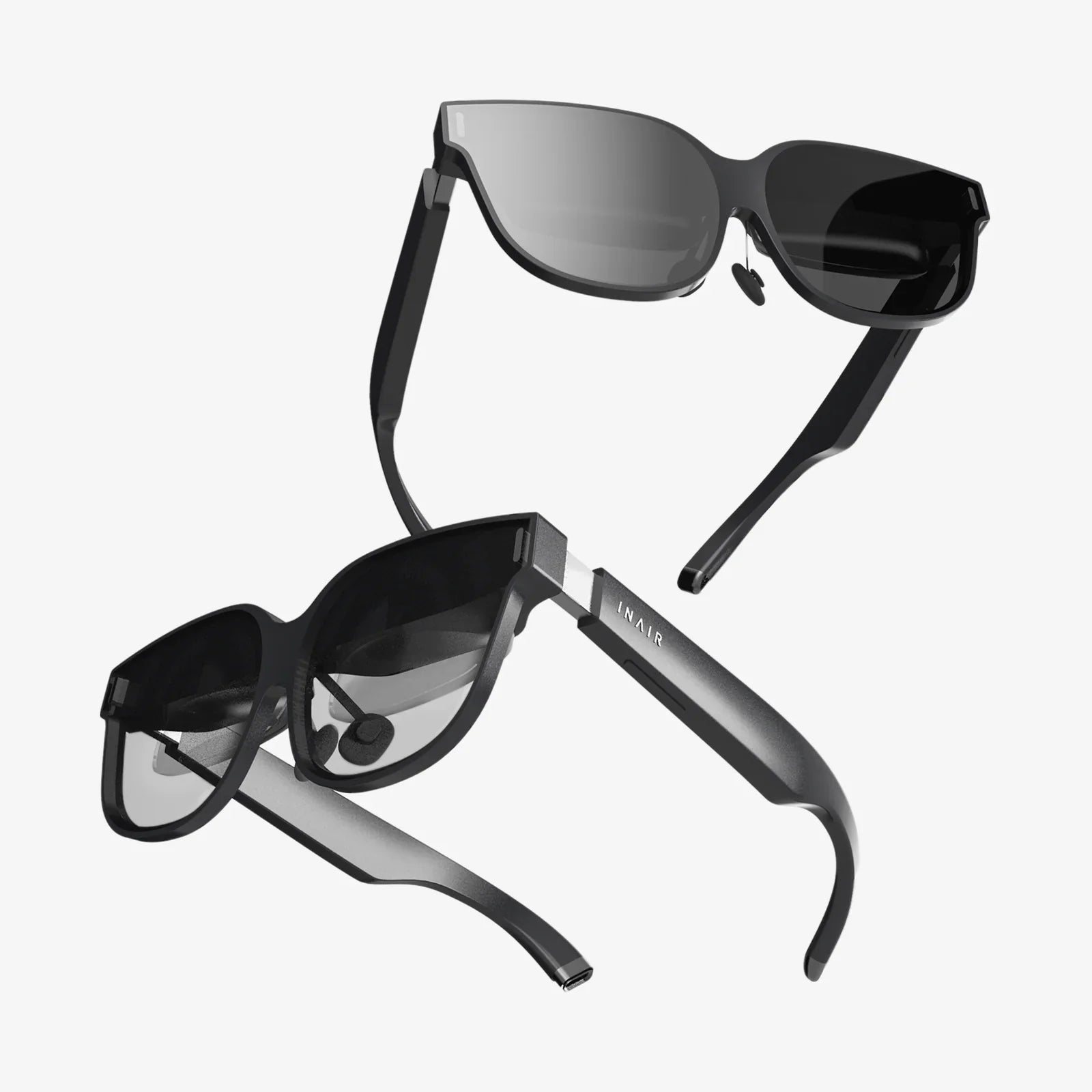
Imagine slipping on an AR headset and instantly seeing your living room turn into a command center, a classroom, or a game arena layered with digital information that reacts to your every move. This is not distant science fiction anymore; it is the rapidly approaching normal for work, learning, entertainment, and even everyday errands. If you are curious about how augmented reality will actually change your life, and not just your screen, now is the time to understand what these headsets can really do.
To get the most out of this revolution, you need more than marketing buzzwords. You need a clear, practical view of how AR headsets work, what they are good at, where they fall short, and how they are likely to evolve over the next few years. That is exactly what this guide will walk you through, so you can decide when and how to bring AR into your world.
What Is an AR Headset?
An AR headset is a wearable device that overlays digital content onto your view of the real world. Instead of replacing reality, as virtual reality headsets do, AR headsets blend the physical and digital into a single, interactive experience.
At a basic level, an AR headset typically includes:
- Transparent or semi-transparent displays that let you see the real world while projecting digital images or information.
- Sensors and cameras that track your head position, hand movements, and the surrounding environment.
- Onboard computing that processes sensor data and renders graphics in real time.
- Audio components such as speakers or spatial audio to add sound to the experience.
- Input methods like hand tracking, controllers, eye tracking, or voice commands.
Instead of looking at a phone screen or tablet, you see digital objects anchored to the world around you. A floating to-do list on your wall, navigation arrows on the sidewalk, or a 3D blueprint hovering over a desk are all examples of AR in action.
AR Headset vs. VR Headset: Key Differences
People often confuse AR with VR, but they serve very different purposes. Understanding this difference helps you decide which technology fits your needs.
| Feature | AR Headset | VR Headset |
|---|---|---|
| View of the real world | Visible; digital layers added on top | Blocked; you see only virtual environments |
| Primary use | Enhance real-world tasks and environments | Full immersion for gaming, training, or simulation |
| Typical scenarios | Work, navigation, collaboration, productivity, education | Gaming, virtual meetings, immersive training |
| Awareness of surroundings | High; you still see people and objects around you | Low; environment is fully virtual |
Because AR headsets keep you connected to your surroundings, they are especially suited for work, social interaction, and tasks that require awareness of the real world.
Core Technologies Inside an AR Headset
To deliver convincing augmented reality, an AR headset relies on several advanced technologies working together seamlessly.
Optics and Displays
The display system is what makes digital objects appear in your field of view. Common approaches include:
- Waveguide displays that channel light from tiny projectors into transparent lenses, creating images that seem to float in front of you.
- Optical see-through lenses where digital images are reflected into your eyes while you see the real world through clear glass or plastic.
- Video see-through where cameras capture the real world and the device shows a combined video feed with digital overlays.
Display quality is measured by factors like resolution, field of view, brightness, and color accuracy. A wider field of view makes digital objects feel more natural and less like small stickers in your vision.
Sensors and Environmental Tracking
To accurately anchor digital objects in your environment, an AR headset needs to understand the 3D layout of the space around you. It does this through:
- Depth sensors that measure distance to surfaces and objects.
- Inertial measurement units (IMUs) that track head movement and orientation.
- Cameras that capture visual details for mapping and object recognition.
The combination of these sensors allows the device to perform spatial mapping, building a virtual model of your room so digital objects can remain fixed in place even as you move.
Processing Power and Connectivity
AR experiences are computationally intensive. The headset must:
- Process sensor data in real time.
- Render 3D graphics at high frame rates.
- Handle voice recognition, hand tracking, and sometimes eye tracking.
Some AR headsets are fully self-contained, while others offload processing to a connected computer or mobile device. Connectivity through Wi-Fi or other wireless standards allows for multi-user experiences and cloud-based applications.
Interaction: How You Control an AR Headset
Interacting naturally with digital content is crucial. Common input methods include:
- Hand and gesture tracking to grab, rotate, or resize virtual objects.
- Voice commands for hands-free control and system navigation.
- Eye tracking to select items simply by looking at them.
- Physical controllers for precise input in games or specialized applications.
The more intuitive these controls are, the easier it is for new users to feel comfortable and productive in AR.
How AR Headsets Are Changing Work
One of the most powerful impacts of AR headset technology is in the workplace. By overlaying information directly into a worker’s field of view, AR can reduce errors, speed up training, and make complex tasks more manageable.
Remote Collaboration and Virtual Meetings
Traditional video calls keep everyone locked into flat screens. With an AR headset, remote collaboration can become more dynamic:
- Colleagues can appear as life-sized avatars sitting around your room.
- Shared 3D models can be placed on a table for everyone to inspect from different angles.
- Annotations and drawings can be pinned to real-world objects, visible to all participants.
This makes it easier to work together on physical products, architecture, design, or any task where spatial context matters.
Field Service and Maintenance
Technicians working on machinery, infrastructure, or complex systems can benefit significantly from AR:
- Step-by-step instructions appear directly on the equipment they are repairing.
- Remote experts can see what the technician sees and guide them in real time.
- Safety warnings and checklists can be overlaid in critical areas.
This reduces the need for specialized experts to travel and helps less experienced workers perform complex tasks more confidently.
Design, Engineering, and Architecture
Designers and engineers can use AR headsets to visualize concepts before anything is built:
- 3D prototypes can be walked around, inspected, and modified at full scale.
- Architectural designs can be overlaid onto construction sites to check alignment and feasibility.
- Interior layouts can be previewed with virtual furniture and fixtures.
Seeing a design in real space, at real size, often reveals issues or opportunities that are invisible on a flat screen.
AR Headsets in Education and Training
Learning becomes far more engaging when students can interact with content instead of just reading about it. AR headsets are opening new doors in education and professional training.
Interactive Classrooms
With an AR headset, a classroom can be transformed into a living textbook:
- Historical events can be reenacted in the room with life-sized 3D figures.
- Biology students can examine virtual organs or cells layered over physical models.
- Physics concepts like forces and fields can be visualized as dynamic overlays.
This kind of immersive learning can help students grasp abstract concepts more quickly and retain information longer.
Professional and Safety Training
In fields where mistakes are costly or dangerous, AR training is especially valuable:
- Medical trainees can practice procedures on realistic virtual models.
- Industrial workers can rehearse emergency responses without real-world risk.
- Pilots, drivers, and operators of heavy machinery can train with simulated scenarios blended into their environment.
Because AR headsets keep learners aware of their surroundings, they are ideal for training that must transition smoothly to real-world tasks.
Gaming and Entertainment with AR Headsets
Gaming is often the first thing people think of when they hear about AR. While mobile AR games have provided a taste, dedicated AR headsets can take entertainment to another level.
Room-Scale AR Games
Instead of sitting on a couch, you might move around your living room as it transforms into a game level:
- Creatures could hide behind your furniture or climb your walls.
- Puzzles might require you to walk around objects, look under tables, or collaborate with others in the same space.
- Fitness-oriented games can turn exercise into an interactive adventure.
Because the real world provides the stage, every room becomes a unique game environment.
Immersive Media and Storytelling
AR headsets also enable new forms of storytelling:
- Interactive narratives can unfold around you, with characters appearing in your home.
- Concerts and performances can project virtual stages or visual effects into your space.
- Sports broadcasts can overlay live statistics, player trajectories, and replays onto your view of the game.
This blurring of fiction and reality can create deeply memorable experiences that traditional screens cannot match.
Everyday Use Cases: How AR Headsets Fit Daily Life
Beyond work and entertainment, an AR headset can quietly enhance everyday routines. As devices become lighter and more stylish, they are likely to be used for subtle, always-available assistance.
Navigation and Wayfinding
Instead of glancing down at a phone, you might see arrows and labels directly on the world:
- Turn-by-turn directions overlaid on sidewalks or roads.
- Indoor navigation in airports, malls, or large office buildings.
- Contextual information about landmarks, public transport, or nearby services.
This kind of guidance can reduce stress and help you get where you need to go more efficiently.
Productivity and Personal Organization
AR headsets can function as an ever-present digital assistant:
- Virtual screens can appear around you, letting you multitask without a physical monitor.
- Reminders and calendar events can be anchored to locations, such as a note floating near your front door.
- Language translation can overlay subtitles on conversations or signs.
As interactions become more natural, AR may become a primary interface for managing digital life.
Shopping and Home Improvement
AR can also change how you shop and manage your living space:
- Preview furniture, decor, or appliances in your home at true scale before buying.
- See measurements and layout suggestions overlaid onto your walls and floors.
- Follow step-by-step instructions for assembling or installing products, with visual guides attached to the real objects.
These capabilities reduce guesswork and make home projects more accessible to non-experts.
Key Benefits of Using an AR Headset
When used thoughtfully, an AR headset offers several compelling advantages:
- Context-rich information: Data appears exactly where and when you need it, reducing mental effort.
- Hands-free operation: Ideal for tasks where you need both hands free, such as repairs or medical procedures.
- Improved learning and retention: Interactive, visual experiences help people understand and remember complex information.
- Enhanced collaboration: Colleagues can share a common view of data, models, or instructions, even across distances.
- Reduced errors: Real-time guidance and visual cues can prevent costly mistakes in critical tasks.
These benefits explain why industries from manufacturing to healthcare are actively exploring AR headset deployments.
Challenges and Limitations of AR Headsets
Despite their promise, AR headsets are not without challenges. Understanding these helps set realistic expectations.
Comfort and Design
Wearing a headset for long periods can cause:
- Physical discomfort due to weight or poor balance.
- Eye strain from focusing on near-field displays.
- Heat buildup from internal components.
Design improvements are steadily reducing these issues, but long-term comfort remains a key area of development.
Battery Life and Performance
High-performance AR requires significant processing power, which drains batteries quickly. Users often face a trade-off between:
- Lightweight, mobile designs with limited battery life.
- More powerful systems that are heavier or tethered.
Advances in chip efficiency and battery technology will be crucial for mainstream adoption.
Privacy and Social Acceptance
Because AR headsets often include cameras and sensors, they raise privacy questions:
- People around you may not want to be recorded.
- Organizations must protect sensitive data captured by devices.
- Users need clear control over what is stored, shared, or analyzed.
Social norms around wearing headsets in public are still evolving, and transparent policies will be essential.
Software Ecosystem and Content
For many potential users, the biggest question is: what can I actually do with it? The value of an AR headset depends heavily on the availability of:
- High-quality applications tailored to real needs.
- Developer tools that make it easier to create AR experiences.
- Standards that ensure compatibility across devices and platforms.
As more developers and organizations invest in AR, the ecosystem is likely to grow rapidly.
How to Evaluate an AR Headset for Your Needs
If you are considering adopting an AR headset for personal or professional use, focus on practical criteria rather than hype.
Use Case First, Hardware Second
Start by defining what you want to achieve:
- Are you aiming to improve training, remote support, design, or entertainment?
- Will the device be used in an office, factory, field, or home environment?
- Do you need multi-user collaboration or primarily solo use?
Once your use case is clear, you can compare hardware based on how well it supports those specific tasks.
Key Specifications to Consider
Important factors include:
- Field of view: wider fields feel more immersive and natural.
- Resolution and clarity: critical for reading text and detailed graphics.
- Comfort and ergonomics: weight, balance, and adjustability.
- Battery life: how long it can run under your typical workload.
- Tracking quality: stability of digital objects and responsiveness to movement.
- Software support: availability of apps, updates, and developer tools.
Evaluating these factors in real-world scenarios, not just on spec sheets, gives the most accurate picture.
Future Trends Shaping the AR Headset Landscape
The AR headset you see today is only a glimpse of what is coming. Several trends are likely to reshape the market and capabilities over the next few years.
Sleeker, More Wearable Designs
Expect AR headsets to become:
- Smaller and lighter, closer to everyday glasses.
- More stylish and customizable, blending into normal fashion.
- More energy-efficient, with better battery life and cooler operation.
As devices become less intrusive, people will be more comfortable wearing them in public and for longer periods.
Better Spatial Understanding and AI Integration
Future AR headsets will likely feature:
- More accurate mapping of environments, including dynamic objects.
- Improved object recognition, allowing the device to identify tools, equipment, or products.
- Smarter assistants that anticipate needs based on context and history.
By combining AR with advanced AI, headsets can move from being simple display devices to proactive partners in daily tasks.
Richer Multi-User and Cross-Platform Experiences
As standards emerge, it will become easier to:
- Share AR experiences between different headset models.
- Collaborate across devices, including phones, tablets, and computers.
- Host persistent digital spaces that multiple people can revisit over time.
This will make AR a more social and integrated part of digital life, rather than a series of isolated experiences.
Preparing Yourself and Your Organization for AR
Whether you are an individual user, a business leader, or an educator, you can take practical steps now to get ready for AR adoption.
For Individuals
If you are personally interested in AR headsets:
- Experiment with AR apps on your phone to understand basic concepts.
- Follow developments in hardware and software to time your purchase.
- Think about which daily tasks could benefit from hands-free, contextual information.
This groundwork helps you make informed decisions instead of buying based on novelty alone.
For Businesses and Organizations
Organizations should approach AR strategically:
- Identify high-impact use cases such as training, maintenance, or design review.
- Run small pilot projects to test assumptions and measure results.
- Develop guidelines for privacy, data security, and acceptable use.
- Invest in content creation capabilities or partnerships for AR applications.
By starting small and learning quickly, organizations can capture the benefits of AR while minimizing risk.
Why Now Is the Time to Pay Attention to AR Headsets
The idea of wearing an AR headset all day may still feel futuristic, but the underlying technologies are advancing fast, and practical use cases are already delivering value in the real world. From technicians fixing complex machines to students exploring interactive lessons, people are discovering that augmented reality is not just a novelty; it is a new way of seeing and interacting with information.
If you wait until AR headsets are completely mainstream, you may find yourself scrambling to catch up with new workflows, expectations, and opportunities that others have already mastered. By exploring the possibilities now, you put yourself in a position to shape how this technology fits your life or organization instead of simply reacting to it.
The next time you hear about an ar headset, do not just picture a gadget; picture a new layer of reality that can make work more efficient, learning more engaging, and entertainment more immersive. The question is no longer whether AR will matter, but how you will choose to use it. Those who start experimenting and learning today will be the ones defining what tomorrow’s augmented world looks like.
Aktie:
No Built-in Processor Glasses: The Next Frontier of Wearable Tech
Offers AR Experiences That Transform Everyday Life And Business