


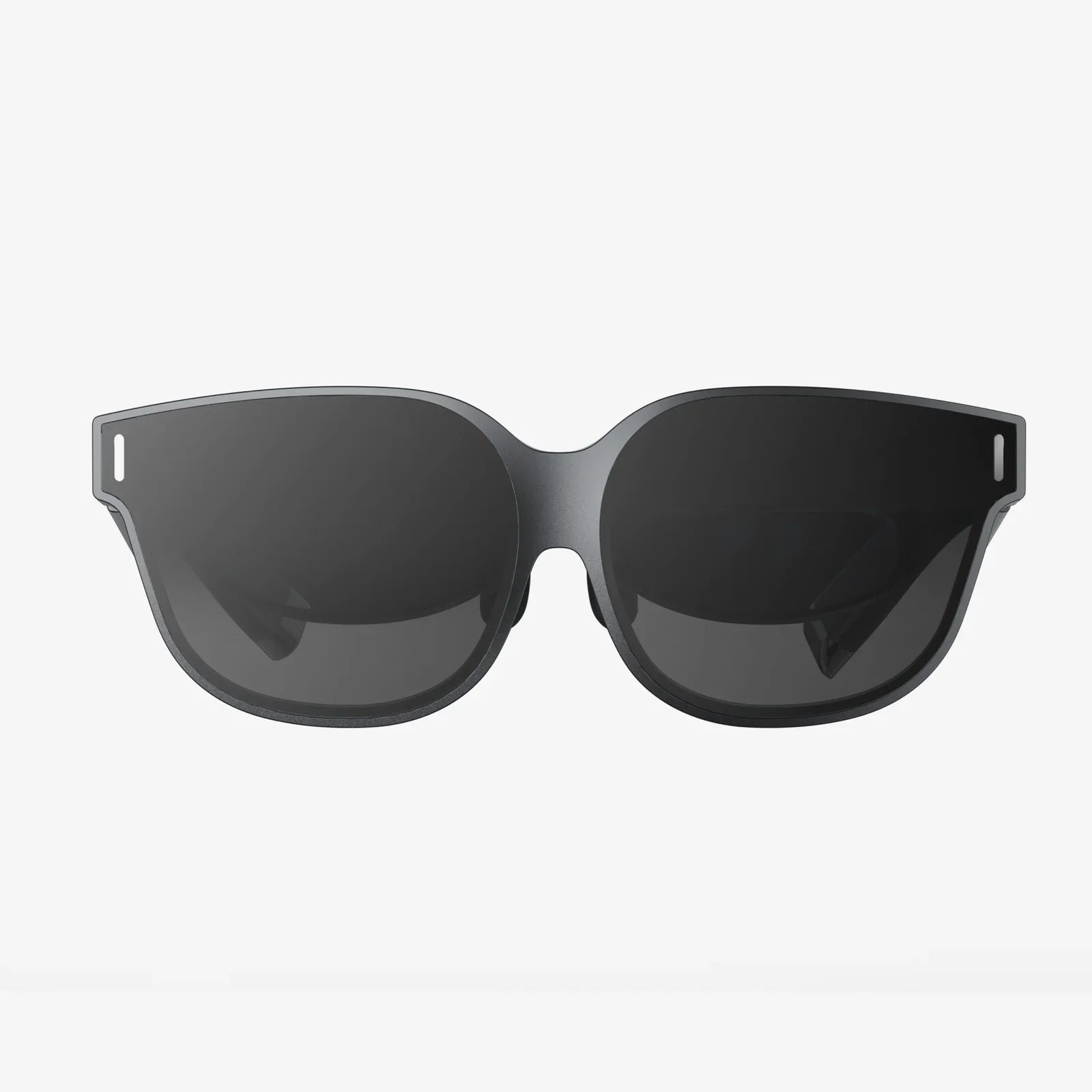
- von wangfred
Best Value AR Glasses 2025: Smart Buying Guide For Everyday Users
- von wangfred
Best value AR glasses 2025 is not just a trendy search phrase; it is the key to unlocking a new way of seeing your digital life. As augmented reality moves from science fiction into everyday reality, the challenge is no longer finding AR glasses, but finding ones that are actually worth your money. With dozens of models competing for attention, confusing spec sheets, and marketing buzzwords everywhere, you need a clear, practical guide that shows you how to get maximum performance without overspending.
This article breaks down the AR glasses landscape in 2025 in simple, practical terms. You will learn what really matters in specs, which features are worth paying for, how to match glasses to your lifestyle, and how to avoid common traps that lead to buyer regret. If you are ready to turn AR from a curiosity into a tool you use every day, this guide will help you identify the true best value AR glasses 2025 has to offer for your needs and budget.
Value is not the same as “cheapest” or “most advanced.” When we talk about the best value AR glasses in 2025, we are talking about the sweet spot where price, performance, comfort, and long-term usefulness intersect.
To define value clearly, think in terms of four pillars:
High-end AR headsets might deliver stunning visuals but be too bulky or expensive for everyday use. Ultra-budget models might look attractive initially but disappoint with dim displays, poor tracking, or weak battery life. The best value AR glasses 2025 are the ones that fit your real life: affordable enough to justify, comfortable enough to wear, and capable enough to feel exciting every time you put them on.
To find the best value option, start by understanding the main categories of AR glasses you will encounter in 2025. Each category has its own strengths and trade-offs.
These glasses connect to a smartphone, computer, or small compute pack via cable or wireless link. The glasses handle display and sensors, while the external device provides processing power.
These are self-contained devices with built-in processors, storage, and connectivity. They do not require a constant connection to another device, though they may sync with one.
These devices focus on heads-up information rather than fully immersive 3D environments. Think notifications, navigation arrows, translation overlays, and simple widgets.
These are designed for field technicians, manufacturing, healthcare, and other professional environments. They emphasize durability, hands-free workflows, and integration with enterprise systems.
For most everyday users, the best value AR glasses 2025 will likely fall into either the tethered category or the light AR smart glasses category, depending on how immersive you want your experience to be.
Once you know which category fits you, the next step is to understand the core features that actually affect daily use. Ignore the marketing fluff and focus on these fundamentals.
The display is the heart of any AR device. In 2025, pay attention to:
Value tip: For productivity and everyday use, prioritize clarity and brightness over maximum FOV. For gaming and immersive experiences, you will appreciate a wider FOV even if it costs more.
Even the most advanced AR glasses are useless if you cannot wear them for more than 20 minutes. Comfort is often the deciding factor in whether a device becomes part of your daily routine or ends up in a drawer.
Key comfort considerations include:
Value tip: Try to test-fit similar styles before buying, or choose models with generous return policies. Comfort often matters more than minor spec differences.
Battery life determines whether your AR glasses are a daily companion or a short-session gadget. Consider:
Value tip: If you plan to use AR mainly in short bursts (commutes, meetings, workouts), you may not need all-day battery life. For field work or travel, prioritize endurance.
AR glasses rely on sensors to understand your environment and track your movements. In 2025, common sensors include cameras, depth sensors, accelerometers, gyroscopes, and sometimes eye-tracking.
Focus on:
Value tip: For light AR use (notifications, navigation), you do not need the most advanced tracking. For gaming, design, or remote assistance, better tracking and interaction options are worth paying for.
AR glasses become far more valuable when they integrate smoothly with your existing devices and apps. Consider:
Value tip: If you are heavily invested in a particular mobile or desktop platform, AR glasses that integrate tightly with that ecosystem will usually deliver more value, even if raw specs look similar to competitors.
Understanding the typical price tiers can help you set realistic expectations and avoid overpaying for features you will not use.
These devices are often the least immersive but the easiest to adopt. They may focus on simple overlays, notifications, and basic media viewing.
Value perspective: If your needs are modest, these can deliver excellent value by giving you the core AR experience without a large investment.
This is where many of the best value AR glasses 2025 will be found. These models balance performance, comfort, and price.
Value perspective: For most users, mid-range devices offer the best long-term satisfaction. They are powerful enough to feel futuristic without the steep price of ultra-high-end models.
At the top end, you will find devices aimed at enthusiasts, professionals, and specialized use cases.
Value perspective: These devices can be worth the cost if you rely on AR for work or advanced creative tasks. For casual users, they are often overkill and not the best value.
The best value AR glasses 2025 for you will depend heavily on what you want to do with them. Identify your primary use cases and match them to the right feature set.
If your focus is on productivity, you might use AR glasses for:
What matters most:
Best value angle: Look for mid-range tethered or standalone glasses that emphasize display clarity and office integration over extreme immersion.
For media consumption, AR glasses can act as personal cinema screens or immersive viewing devices.
What matters most:
Best value angle: Tethered glasses that prioritize display quality and comfort can offer outstanding value for media lovers, especially if you already own a capable phone or laptop.
For active and everyday use, AR glasses can become a subtle digital assistant.
What matters most:
Best value angle: Light AR smart glasses are ideal here. You do not need high-end mixed reality; instead, seek durable, comfortable designs with strong battery performance.
For gaming, AR glasses blur the line between digital and physical worlds.
What matters most:
Best value angle: If gaming is your main use, you may need to step into mid-range or even high-end territory. Focus on devices that emphasize tracking and immersion rather than office features.
Before you commit to any AR glasses in 2025, run through this practical checklist to ensure you are getting real value.
Decide what matters most: Is it price, comfort, immersion, battery life, or ecosystem integration? Rank your top three priorities and use them to filter options.
Look for reviews from people who use the glasses in ways similar to you. Pay attention to:
Hardware may catch your eye, but software determines daily satisfaction. Ask:
With AR evolving rapidly, you want glasses that will stay relevant for at least a few years.
If you can try a demo unit or a similar model, do it. Wear them for at least 15–20 minutes, focusing on:
AR glasses are still a relatively new category, and your first choice might not be perfect. A flexible return policy and solid warranty add to the overall value by reducing risk.
Many buyers fall into predictable traps that lead to disappointment. Avoid these mistakes to protect your budget and your experience.
It is easy to get excited about the highest resolution or widest field of view, but if you mainly want to check messages and follow navigation, those specs may not justify the cost.
Focus on how you will actually use the glasses day to day, not just on the numbers.
If you feel self-conscious wearing the glasses or they hurt after 30 minutes, you will not use them often. Style and comfort are not superficial; they are central to real-world value.
Some AR glasses work best within specific ecosystems. If you are not committed to that ecosystem, you might find yourself limited or forced to change other devices.
There is a big difference between light AR smart glasses and full mixed reality headsets. Know what you are buying so your expectations match the device’s capabilities.
A device with great hardware but clunky software will feel frustrating. Smooth, reliable software often matters more than raw hardware performance for everyday users.
To understand the real value of AR glasses, imagine how they might fit into a typical day in 2025.
Morning: You put on your light AR glasses as you prepare for the day. A subtle overlay shows your schedule, weather, and commute time. As you walk or ride public transport, navigation arrows guide you, and you can quickly glance at messages without pulling out your phone.
Workday: At your desk, tethered AR glasses give you a virtual multi-monitor setup without needing physical screens. You can pin reference documents to one side, a video call window to another, and your main work in front of you. During meetings, real-time captions and translation appear in your field of view.
Afternoon: You take a break and watch a show or short film on a large virtual screen, even if you are in a small space. The glasses provide private, immersive viewing without disturbing others.
Evening: During a workout, stats like heart rate and pace float in your field of view. Later, you experiment with an AR game that overlays challenges in your living room, blending the digital and physical worlds.
In each of these moments, the right AR glasses enhance your experience without demanding your full attention. That is where real value lies: not in occasional wow moments, but in subtle, repeated usefulness.
Several trends are pushing AR glasses toward better value for everyday users.
Manufacturers are moving away from bulky headsets toward frames that resemble traditional eyewear. This makes AR glasses easier to wear in public and more comfortable for extended use.
Advances in display technology and processors are improving battery life without increasing weight. This directly boosts value by extending daily usability.
As more developers build for AR platforms, users get a wider range of experiences: productivity tools, educational apps, navigation aids, fitness companions, and more. A richer app ecosystem makes each pair of glasses more versatile and valuable.
AR glasses are increasingly designed to work seamlessly with smartphones, laptops, and cloud services. This reduces friction and helps them feel like a natural extension of devices you already own.
As the market matures, competition is driving prices down while pushing quality up. In 2025, you can find capable AR glasses at price points that would have been unthinkable just a few years earlier.
To make this even more concrete, consider a few typical profiles and what kind of AR glasses would offer them the best value in 2025.
You want navigation help, quick access to messages, and maybe some media viewing on the go. You care about comfort, battery life, and subtle design.
Best value choice: Light AR smart glasses in the lower to mid price range, focusing on heads-up information and long battery life.
You spend hours in virtual meetings, juggle multiple documents, and want more screen space without a cluttered desk.
Best value choice: Mid-range tethered AR glasses with a strong focus on virtual screen quality, comfort, and integration with office tools.
You work with 3D models, design, or complex workflows that benefit from spatial computing. You may also be interested in developing AR experiences.
Best value choice: Mid to high-end AR glasses with robust mixed reality capabilities, precise tracking, and a strong developer ecosystem.
You want real-time stats during workouts, route guidance, and maybe some safety alerts while cycling or running.
Best value choice: Lightweight AR glasses with good outdoor visibility, durable design, and strong integration with fitness apps.
To narrow down your options and find the best value AR glasses 2025 can offer you personally, follow these steps:
By following this structured approach, you shift from impulse buying to intentional selection, dramatically increasing your chances of ending up with AR glasses that feel like a natural extension of your daily life.
AR technology has been promising big changes for years, but 2025 is a turning point where the promises finally align with practical, everyday value. Displays are clearer, devices are lighter, software is more polished, and prices are more accessible.
If you have been waiting for the right moment to step into augmented reality, this is the year when AR glasses can genuinely improve how you work, learn, travel, and relax without demanding that you become a tech expert or spend a fortune.
The best value AR glasses 2025 are not just about hardware specs; they are about giving you superpowers that fit comfortably into your daily routine. By focusing on your real needs, understanding the trade-offs between categories, and evaluating devices based on comfort, ecosystem, and long-term usefulness, you can choose a pair of AR glasses that feels less like a gadget and more like an upgrade to your everyday life.
If you are ready to move beyond flat screens and bring digital information into your real-world surroundings, now is the perfect time to explore your options, build a smart shortlist, and claim your place in the augmented future without overpaying for it.