


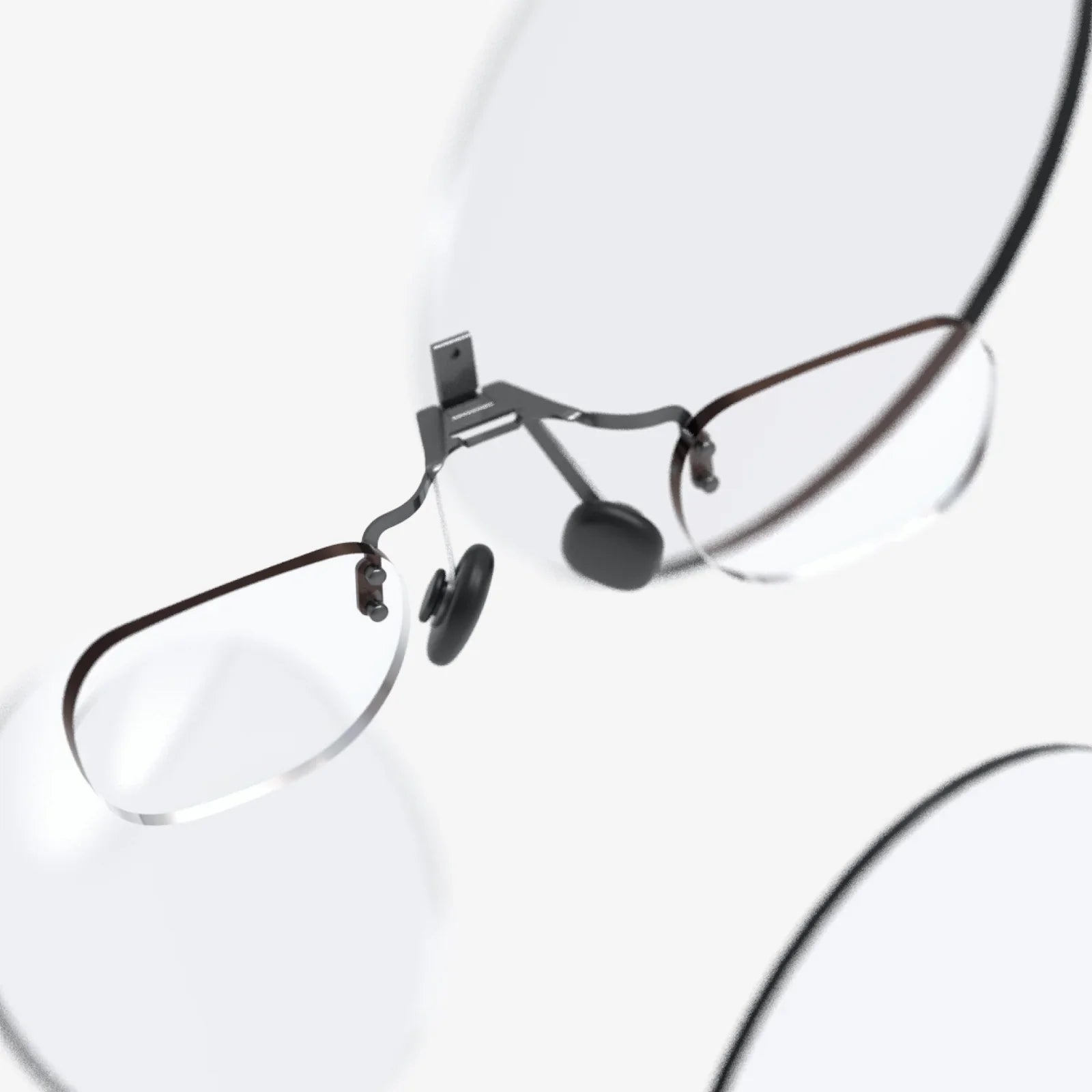
Imagine slipping on a pair of glasses that quietly understands your world, answers your questions, and enhances your vision of reality without demanding your full attention. That is the promise of ai spectacles: lightweight, everyday eyewear with the power of artificial intelligence built into the frame. As these devices move from experimental gadgets to mainstream tools, they are poised to change how we see, learn, work, and connect with others in ways that are as exciting as they are disruptive.
The rise of ai spectacles is not just another tech trend; it is a shift in how we interact with information. Instead of constantly reaching for a phone, we are entering an era where knowledge, guidance, and digital experiences float seamlessly in our field of view. Whether you are curious, cautious, or already eager to try them, understanding what ai spectacles can do, how they work, and where they are headed will help you decide how they fit into your future.
What Are ai spectacles?
Ai spectacles are smart glasses that integrate artificial intelligence into a wearable form factor. They look similar to regular eyewear but contain a combination of sensors, miniature displays, microphones, speakers, and processors. Their goal is to provide real-time assistance, information, and augmented reality (AR) overlays without requiring you to hold a device or stare at a screen in your hand.
Instead of being just a display, ai spectacles behave like an intelligent assistant that can:
- Listen to voice commands and questions
- Recognize objects, scenes, and sometimes people in your environment
- Display contextual information in your field of view
- Translate text or speech on the fly
- Guide you through tasks step by step
- Record photos, videos, and audio hands-free
These capabilities are powered by a mix of on-device processing and cloud-based AI models. The spectacles can respond quickly to simple tasks while offloading heavier computation to remote servers when needed.
Key Technologies Inside ai spectacles
To understand why ai spectacles are such a leap forward, it helps to look at the technologies that make them possible.
Miniature Displays and Optics
Ai spectacles rely on tiny displays integrated into the lenses or just outside the frame of view. These displays project images onto your retina or onto transparent surfaces in front of your eyes. The result is a heads-up display that can show:
- Text, icons, and notifications
- Navigation arrows and maps
- AR overlays on real-world objects
- Subtitles for real-time translation
Advanced optics ensure that the display remains clear while allowing you to see the real world without obstruction.
Sensors and Cameras
Most ai spectacles include one or more cameras and sensors such as:
- Forward-facing cameras for capturing photos, videos, and recognizing objects
- Depth sensors for understanding the distance and shape of objects
- Inertial sensors (accelerometers, gyroscopes) for tracking head movements
- Ambient light sensors for adjusting brightness and contrast
These sensors feed data into AI models that interpret what you are seeing and doing, enabling context-aware assistance.
On-Device AI and Edge Computing
To keep experiences smooth and responsive, ai spectacles use on-device AI processing. Tiny, efficient chips handle tasks like:
- Wake word detection for voice activation
- Basic speech recognition
- Simple object detection
- Gesture recognition
More complex tasks, such as full scene understanding or advanced language processing, may be sent to the cloud, but the trend is toward more intelligence running locally for speed and privacy.
Voice, Gesture, and Gaze Control
Since ai spectacles are hands-free, interaction relies on natural inputs:
- Voice commands to ask questions, take photos, or start navigation
- Touch gestures on the frame, such as swipes or taps
- Head movements to scroll or select items
- Gaze tracking in advanced models to highlight what you are looking at
This combination allows you to control the device discreetly and intuitively, without disrupting your surroundings.
Everyday Uses of ai spectacles
The real power of ai spectacles lies in how they can quietly enhance everyday activities. Here are some of the most compelling use cases that are emerging.
Navigation and Travel Assistance
Ai spectacles can transform how you navigate cities and new environments:
- Turn-by-turn walking directions overlaid on the real world
- Highlighting landmarks, transit stops, and points of interest
- Real-time translation of street signs, menus, and notices
- Contextual information about buildings, monuments, and neighborhoods
Instead of staring down at a phone while crossing streets, you can keep your head up and your focus on the world around you.
Hands-Free Productivity
For professionals, ai spectacles can act as a personal assistant that floats just above your field of view:
- Subtle notifications for messages, calls, and calendar events
- Quick access to to-do lists and reminders
- Voice-controlled note taking and dictation
- Reference information, such as formulas, diagrams, or instructions, visible while you work
This can be especially powerful in environments where hands are occupied, such as warehouses, workshops, laboratories, and medical facilities.
Real-Time Language Support
One of the most transformative features of ai spectacles is real-time language assistance:
- Live subtitles for conversations in foreign languages
- Instant translation of printed text in your field of view
- Pronunciation guidance and vocabulary hints
This lowers barriers for travel, international collaboration, and multicultural communication, making it easier to connect with people across language boundaries.
Health, Fitness, and Safety
Ai spectacles can play a role in monitoring health and promoting safety:
- Displaying heart rate, pace, and distance during workouts
- Guided exercise routines with posture cues
- Alerts about environmental hazards, such as approaching vehicles or obstacles
- Assistance for people with visual impairments, such as reading signs or identifying objects
As sensors improve, ai spectacles may integrate with other wearables to offer a more holistic view of health and activity.
Education and Skill Building
Learning can become more immersive and practical with ai spectacles:
- Step-by-step overlays for complex tasks, such as repairs or assembly
- On-demand explanations of concepts you are reading or observing
- Interactive language learning in real-world settings
- Virtual annotations layered over physical textbooks, tools, or lab equipment
This style of learning by doing, supported by real-time guidance, can dramatically shorten the time it takes to acquire new skills.
Accessibility and Inclusive Design
Ai spectacles hold special promise for accessibility. They can assist people who have:
- Visual impairments, by describing scenes or reading text aloud
- Hearing impairments, through real-time captioning of speech
- Cognitive challenges, via simplified prompts and visual cues
When thoughtfully designed, ai spectacles can help make physical and digital spaces more inclusive and navigable.
How ai spectacles Change Social Interaction
Wearing AI on your face has obvious social implications. It changes not only how you see the world but also how the world sees you.
Blurring the Line Between Online and Offline
Ai spectacles merge digital information with physical spaces. This can lead to:
- Instant lookups of facts during conversations
- Subtle prompts about names, past interactions, or shared interests
- Context-aware suggestions, such as nearby venues or events while you talk
While this can make interactions smoother, it also raises questions about authenticity and the extent to which we rely on AI to manage our relationships.
Privacy and Consent in Social Settings
One of the most discussed issues around ai spectacles is privacy. When glasses can record or analyze what they see, people around you may worry about:
- Being recorded without their knowledge
- Facial recognition or identity tagging
- Behavioral tracking and profiling
Responsible design and regulation are essential. Clear visual indicators of recording, robust privacy settings, and restrictions on certain uses in sensitive spaces can help address these concerns.
New Etiquette for Wearable AI
Just as smartphones led to new social norms, ai spectacles will require fresh etiquette. Some possible norms include:
- Removing or disabling spectacles during private conversations
- Announcing when you are recording or using transcription features
- Respecting no-device zones in workplaces, schools, or social venues
Over time, societies will negotiate what is acceptable and comfortable, balancing convenience with respect for personal boundaries.
Benefits of ai spectacles
Despite the challenges, ai spectacles offer a range of advantages that explain their growing momentum.
Reduced Screen Dependence
By shifting interactions away from handheld screens, ai spectacles can:
- Encourage more eye contact and situational awareness
- Reduce the need to constantly pick up and unlock a phone
- Deliver information in short, context-aware bursts instead of long scrolling sessions
This may help mitigate some of the negative effects associated with prolonged smartphone use.
Cognitive Offloading and Memory Support
Ai spectacles can act as an external memory and thinking aid:
- Reminding you of tasks at the right place and time
- Helping recall names, dates, and important details
- Providing quick access to reference information without disrupting your activity
This cognitive offloading can free mental resources for creativity, problem-solving, and deeper engagement.
Enhanced Safety and Efficiency at Work
In professional settings, ai spectacles can improve safety and productivity:
- Guided workflows that reduce errors in complex tasks
- Hands-free access to manuals, checklists, and diagrams
- Remote expert support, where specialists see what you see and offer guidance
- Real-time hazard alerts based on environmental analysis
Industries such as manufacturing, logistics, healthcare, and field service are already exploring these benefits.
More Natural Human-Computer Interaction
Because ai spectacles rely on voice, gaze, and gestures, interaction feels more like a conversation than operating a machine. This can make technology more accessible to:
- Children and older adults
- People unfamiliar with complex interfaces
- Users who find traditional devices intimidating or distracting
As AI models become more capable of understanding context, these interactions will feel increasingly fluid and human-like.
Risks and Challenges of ai spectacles
For all their promise, ai spectacles come with significant challenges that must be addressed thoughtfully.
Privacy and Surveillance Concerns
The combination of cameras, microphones, and AI analysis raises serious privacy issues:
- Continuous data collection in public and private spaces
- Potential misuse of facial recognition or behavioral analysis
- Data breaches exposing sensitive recordings
Strong encryption, on-device processing, data minimization, and transparent policies are critical. Users should have clear control over what is stored, shared, and analyzed.
Information Overload and Cognitive Strain
If poorly designed, ai spectacles can overwhelm users with constant notifications and overlays. This may lead to:
- Reduced ability to focus on tasks or conversations
- Mental fatigue from nonstop micro-interactions
- Dependence on prompts rather than independent thinking
Thoughtful interface design, customizable settings, and context-aware restraint are essential to avoid turning ai spectacles into a source of distraction.
Bias and Fairness in AI Perception
Ai spectacles rely on computer vision and language models that can inherit biases from their training data. This may affect:
- How accurately different people or environments are recognized
- What information is highlighted or prioritized
- How certain behaviors are interpreted or flagged
Developers must rigorously test and audit AI systems for fairness and inclusivity, and users should be aware that AI-generated insights are not infallible.
Security and Unauthorized Access
Because ai spectacles can see and hear what you do, they are sensitive targets for attackers. Risks include:
- Remote access to cameras and microphones
- Tracking of location and behavior over time
- Manipulation of displayed information
Security features such as secure boot, regular updates, biometric authentication, and granular permissions are necessary to protect users.
Social and Psychological Effects
Long-term use of ai spectacles may have subtle psychological impacts:
- Shifts in how users perceive reality versus augmented content
- Changes in attention spans and memory strategies
- New forms of social comparison or pressure based on enhanced capabilities
Researchers, designers, and policymakers will need to study these effects and develop guidelines that support healthy use.
Design Principles for Responsible ai spectacles
To unlock the benefits of ai spectacles while minimizing harm, several design principles should guide their development.
Privacy by Design
Privacy should be integrated from the start, not added later. This includes:
- Default settings that favor minimal data collection
- Clear indicators when recording or analysis is active
- Easy-to-understand privacy controls for users
- Local processing whenever possible to avoid unnecessary data transmission
Transparency and Explainability
Users should understand what their ai spectacles are doing and why. Helpful practices include:
- Readable summaries of what data is collected and how it is used
- Explanations for key AI decisions or suggestions
- Logs that allow users to review past interactions and stored data
This transparency builds trust and empowers users to make informed decisions.
Human-Centric Interaction
Ai spectacles should enhance human abilities, not replace them. This means:
- Supporting, rather than dominating, attention and decision-making
- Allowing easy opt-out and manual control at any moment
- Designing interfaces that respect social context and human emotions
The goal is to create a partnership between human and machine that feels natural and respectful.
Accessibility and Inclusivity
From the outset, ai spectacles should be designed with diverse users in mind:
- Adjustable displays and audio for different sensory needs
- Interfaces that work across languages and cultures
- Features that assist users with disabilities rather than excluding them
Inclusive design not only expands the potential user base but also leads to more robust and adaptable products.
The Future of ai spectacles
Ai spectacles are still in the early stages, but several trends are shaping their evolution and hinting at what the next decade might bring.
Lighter, More Stylish, More Invisible
As components shrink and become more efficient, ai spectacles will look increasingly like regular eyewear. Future models may feature:
- Thinner frames with longer battery life
- Prescription lenses integrated with displays
- Customizable styles for fashion and comfort
The more they blend into everyday life, the more widely they will be adopted.
Richer Augmented Reality Experiences
Advances in AR will allow ai spectacles to place virtual objects and information more precisely in the real world. This will enable:
- Shared AR experiences for collaboration and entertainment
- Context-aware overlays that adapt to your tasks and location
- Immersive training and simulation environments
Over time, the distinction between digital and physical tools will blur further.
Deeper Integration with Other Devices and Services
Ai spectacles will increasingly connect with other technologies you use daily:
- Syncing with phones, laptops, and smart home devices
- Drawing on personal data, such as calendars and preferences, to offer proactive assistance
- Coordinating with health trackers and sensors for holistic insights
This ecosystem approach will make ai spectacles a central node in a broader intelligent environment.
More Capable and Personalized AI
As AI models grow more powerful, ai spectacles will become better at understanding individual users. They may:
- Learn your habits, preferences, and goals
- Offer personalized suggestions and coaching
- Adapt interfaces based on your mood or context
With personalization comes responsibility, however, and users will need clear controls over how their data shapes these experiences.
Regulation and Social Norms Catching Up
Governments and institutions are already starting to consider rules for AI and wearable devices. In the coming years, we can expect:
- Guidelines for acceptable use in public and private spaces
- Standards for data protection and transparency
- Debates about the boundaries of augmented perception and recording
These frameworks will influence how quickly and in what ways ai spectacles become part of everyday life.
How to Prepare for the Age of ai spectacles
Even if you do not plan to wear ai spectacles immediately, they will likely affect your environment, workplaces, and social interactions. There are practical steps you can take now.
Build Awareness and Digital Literacy
Understanding the basics of AI, AR, and data privacy will help you evaluate new devices and services. Consider:
- Learning how AI models work at a high level
- Reading privacy policies with a critical eye
- Following news about regulations and ethical debates
This knowledge will help you make informed choices about when and how to use ai spectacles.
Set Personal Boundaries and Norms
Think ahead about your comfort levels:
- When would you feel comfortable being recorded by someone wearing ai spectacles?
- What rules would you want in your home, classroom, or workplace?
- How will you communicate your preferences to others?
Having clear boundaries in mind makes it easier to navigate future situations respectfully and confidently.
Experiment Thoughtfully When You Try Them
If you decide to adopt ai spectacles, start with mindful experimentation:
- Begin with limited features and gradually expand
- Pay attention to how they affect your focus, relationships, and routines
- Adjust settings to reduce unnecessary notifications and data sharing
Treat the first weeks as a learning period where you evaluate not only what the device can do but also how it changes your behavior.
ai spectacles as a New Lens on Human Potential
Ai spectacles are more than just another gadget; they represent a new lens on what humans can do when intelligence is woven directly into perception. They offer the possibility of navigating the world with richer context, learning faster through guided experience, and connecting across languages and abilities with unprecedented ease. At the same time, they challenge us to rethink privacy, attention, and authenticity in a world where what we see and know is increasingly mediated by algorithms.
As this technology matures, the most important choices will not be about which model to buy but about how we design, regulate, and personally use ai spectacles to amplify the best parts of being human. The people and organizations that start asking those questions now will be the ones shaping a future where intelligent eyewear is not just impressive, but genuinely empowering. If you are curious about where the next wave of computing will live, look not at your desk or your pocket, but at the space just in front of your eyes—because that is where ai spectacles are quietly building the next interface to our shared reality.
Aktie:
Digital Content Strategies To Grow, Engage, And Monetize Your Audience
ai glasses and the Future of Everyday Augmented Intelligence