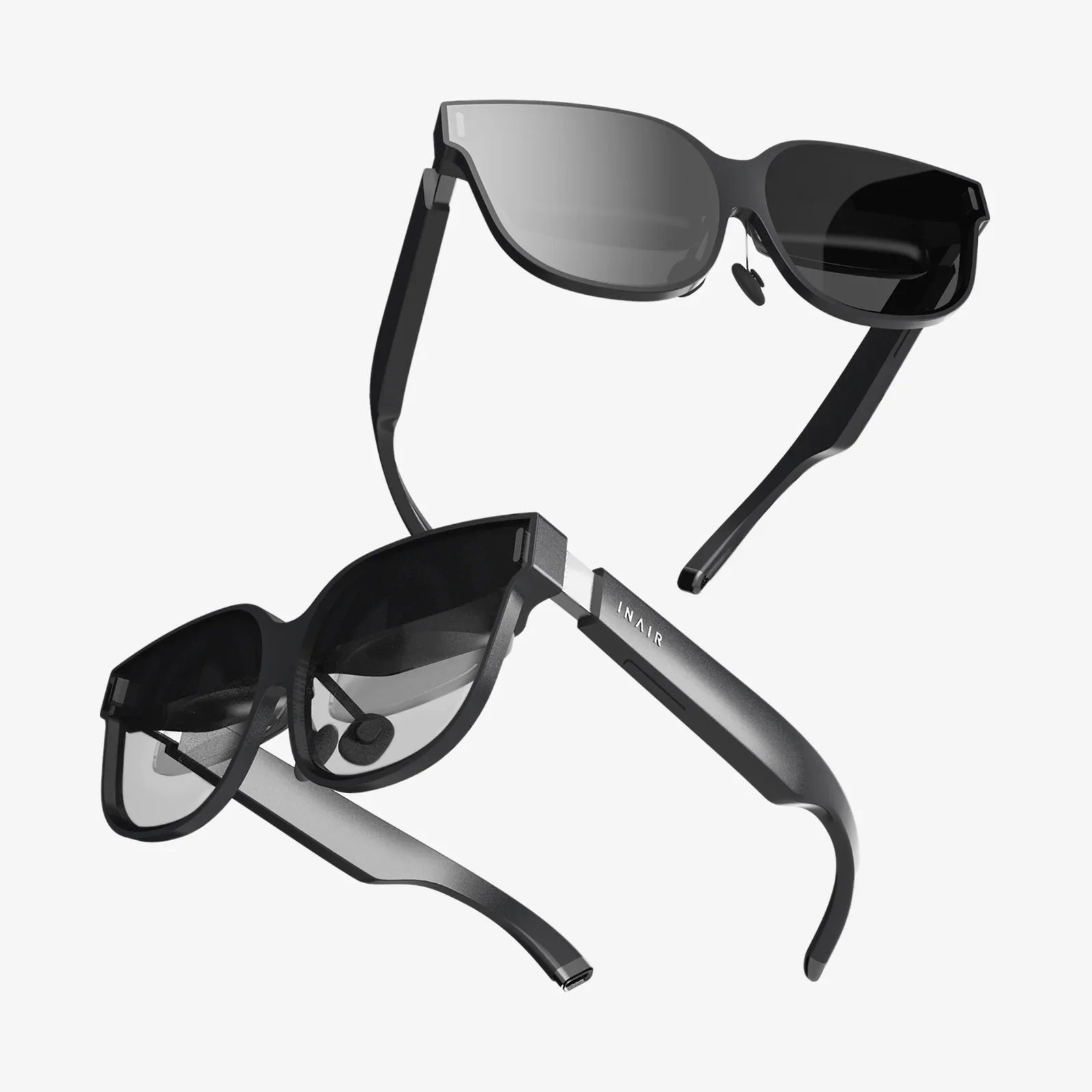
Imagine walking down the street wearing ar glass with 8k resolution and seeing digital objects so sharp and lifelike that your brain can barely distinguish them from reality. Road signs translate themselves in real time, virtual assistants stand beside you with crisp facial expressions, and 3D instructions float over your tools with microscopic precision. This is not just another gadget upgrade; it is a profound shift in how human beings will see, learn, work, and connect.
As display technologies, sensors, and processors accelerate, ar glass with 8k resolution is emerging as a powerful symbol of the next computing era. The jump to such extreme clarity is about far more than pixels; it is about comfort, realism, productivity, and an entirely new visual language. To understand what this means, we need to unpack both the promise and the complexity of putting ultra-high-resolution augmented reality directly in front of our eyes.
Why Resolution Matters So Much in AR
When people compare screens, they often look at size and brightness, but resolution is the foundation of how believable an image feels. In augmented reality, resolution is even more critical than on a phone or TV because digital content is layered on top of the real world.
Several factors make high resolution essential for ar glass with 8k resolution:
-
Text readability: Interfaces in AR will use small text floating in space. Low resolution makes text fuzzy, causing eye strain and limiting how much information can be displayed at once.
-
Edge clarity: To blend with reality, virtual objects need sharp edges that do not shimmer or flicker when you move your head.
-
Fine detail: Applications like engineering, medical visualization, and design require precise lines and textures that low-resolution displays simply cannot render accurately.
-
Reduced screen-door effect: When pixels are too large or too sparse, users see a grid-like pattern. High resolution minimizes this, making images feel continuous and natural.
In AR, the display is not just something you glance at; it is a persistent overlay on your world. Any visual flaw quickly becomes irritating. That is why the push toward ar glass with 8k resolution is about more than bragging rights; it is about reaching a level of fidelity where the technology can truly disappear into everyday life.
What 8K Resolution Means for AR Glass
When people hear "8K," they often think of large living room televisions. In that context, 8K usually refers to about 7680 x 4320 pixels. For AR glasses, the situation is more complex, because the display is very close to your eyes and may be split between two lenses.
Key considerations for ar glass with 8k resolution include:
-
Per-eye resolution: Many AR systems use separate displays for each eye. An 8K-class system might deliver something like 4K per eye or a full 8K per eye, depending on how the term is used in marketing and engineering.
-
Pixels per degree (PPD): This measures how many pixels you see within one degree of your field of view. Human visual acuity is often cited around 60 PPD in ideal conditions. To minimize visible pixels, AR glasses aim to approach or exceed this threshold.
-
Field of view (FOV): A wide FOV lets you see more virtual content at once, but spreading pixels across a large FOV can reduce sharpness unless resolution is very high. 8K helps balance wide FOV with crisp detail.
-
Subpixel structure: The arrangement of red, green, and blue subpixels affects clarity. Advanced layouts can make images appear sharper even at the same nominal resolution.
In practical terms, ar glass with 8k resolution aims to deliver a visual experience where you can read fine text at arm’s length, inspect tiny details in virtual objects, and feel as if the digital layer is truly part of the physical world, not a grainy overlay.
Core Technologies Behind AR Glass With 8K Resolution
Achieving such high resolution in a lightweight wearable device is not trivial. It requires progress across several interconnected technologies:
Advanced Microdisplays
At the heart of ar glass with 8k resolution lies the microdisplay. Several approaches are competing:
-
Micro-OLED panels: These can offer high contrast, deep blacks, and very high pixel densities. They are well-suited for compact optics but must handle brightness requirements for outdoor use.
-
Micro-LED arrays: Promising exceptional brightness and longevity, micro-LEDs are attractive for AR in bright environments. However, manufacturing them at 8K resolution with high yields is extremely challenging.
-
LCOS and other reflective technologies: These can deliver high resolutions but may struggle with brightness, color, or compactness compared with emerging micro-LED and micro-OLED solutions.
Optical Systems and Waveguides
High-resolution images are only useful if they reach your eyes without distortion. The optical system in ar glass with 8k resolution must handle:
-
Waveguides: Thin transparent layers that guide light from the microdisplay to your eyes while remaining see-through. They must preserve clarity and color across the field of view.
-
Lens design: Lenses must focus the image properly while minimizing aberrations like blur, color fringing, and warping.
-
Eye-box and alignment: The system needs to maintain sharp images even as the glasses shift slightly on your face or as your eyes move.
As resolution increases, any optical imperfection becomes more visible. Designing optics that can handle 8K-class imagery while staying slim, light, and stylish is one of the toughest engineering challenges.
Graphics Processing and Rendering
Rendering 8K content at high frame rates is computationally demanding. For ar glass with 8k resolution, the device must process:
-
High frame rates: Smooth motion often requires 60 frames per second or more to avoid discomfort and motion sickness.
-
Low latency: Head movements must be reflected in the display almost instantly. Any lag between motion and visual update can cause nausea and break immersion.
-
Complex 3D scenes: Realistic lighting, shadows, and physics all demand serious computing power, especially at 8K resolutions.
To cope with this, AR systems use techniques such as:
-
Foveated rendering: Only the area you are directly looking at is rendered at full resolution, while peripheral regions are rendered at lower resolution to save processing power.
-
Edge computing and streaming: Some of the heavy computation can be offloaded to nearby devices or cloud servers, with results streamed to the glasses over high-speed wireless connections.
-
Hardware acceleration: Specialized chips optimized for graphics, AI, and sensor fusion reduce power consumption while sustaining performance.
Battery and Thermal Management
All this processing and high-brightness display output consume energy. For ar glass with 8k resolution to be practical, battery technology and thermal design must keep pace.
Key issues include:
-
Battery density: Users expect several hours of active use, but bulky batteries would make glasses heavy and unattractive.
-
Heat dissipation: The device must remain comfortable on the face. Excess heat is not only uncomfortable but can also damage components.
-
Power-efficient components: Every part of the system, from display drivers to wireless chips, must be optimized for low power consumption.
Balancing performance, battery life, and comfort is a constant trade-off and a major factor in determining when ar glass with 8k resolution will become mainstream.
Immersive Entertainment With 8K AR Glass
One of the most compelling applications of ar glass with 8k resolution is entertainment. Ultra-high-resolution AR can transform how we experience games, movies, and live events.
Gaming and Interactive Worlds
Imagine playing a game where lifelike characters appear in your living room, rendered with such detail that you can see subtle textures on their clothing and tiny reflections in their eyes. With ar glass with 8k resolution:
-
Realistic characters: High pixel density allows for detailed facial expressions and body language, making interactions feel more human.
-
Precise tracking: Combined with accurate motion sensors, virtual objects can stay locked to real surfaces without jitter, even as you move rapidly.
-
Mixed-reality gameplay: Games can blend seamlessly with your environment, using your furniture, walls, and outdoor spaces as part of the level design.
As resolution increases, the line between AR gaming and reality becomes thinner, drawing players deeper into the experience without the visual compromises that break immersion.
Movies, Sports, and Live Performances
Ar glass with 8k resolution can also revolutionize how we watch media:
-
Virtual cinema: Users can project a massive virtual screen into their field of view, with 8K clarity making it feel like a premium theater experience.
-
Enhanced sports viewing: Real-time stats, player trajectories, and tactical overlays can appear directly on top of the action, all rendered with fine detail that does not obscure the view.
-
Live concerts and theater: Remote performances can be experienced as if they are happening in your room, with high-fidelity visuals capturing subtle gestures and stage design.
Because AR overlays the real world instead of replacing it, viewers can keep awareness of their surroundings while still enjoying rich, immersive content.
Transforming Work and Productivity
Beyond entertainment, ar glass with 8k resolution has the potential to transform how we work and collaborate. The clarity of 8K is especially valuable for tasks that involve detailed visual information.
Virtual Monitors and Workspaces
Instead of being limited by the physical size of a laptop or desktop monitor, workers can use AR glasses to create multiple virtual screens in their environment. With ar glass with 8k resolution:
-
Crystal-clear text: Documents, spreadsheets, and code can be read comfortably even at small font sizes.
-
Flexible layouts: Users can pin windows to different parts of their room, organizing information spatially rather than stacking it on a single screen.
-
Portable office: Any location can become a fully equipped workspace, as long as the user has their glasses and a keyboard or input method.
This could reduce dependence on physical monitors, giving workers more freedom and potentially boosting productivity by allowing more efficient use of space and attention.
Remote Collaboration and Telepresence
Ar glass with 8k resolution can make remote collaboration feel more natural and effective:
-
High-fidelity avatars: Colleagues can appear as realistic 3D representations, with detailed facial expressions and body movements that convey nuance.
-
Shared 3D models: Teams can examine complex designs together, pointing to specific features and seeing changes in real time.
-
Contextual annotations: Notes, arrows, and highlights can be overlaid directly on physical objects or machinery, aiding remote troubleshooting and training.
As resolution improves, subtle cues like eye contact and micro-expressions become easier to perceive, making virtual meetings feel closer to face-to-face interactions.
Education and Training in 8K AR
Education is another domain where ar glass with 8k resolution could have a profound impact. Learning becomes more engaging and effective when students can see and interact with high-detail visualizations.
Interactive Classrooms and Labs
With ultra-high-resolution AR, classrooms can be transformed:
-
3D visualizations: Complex concepts like molecular structures, historical architecture, or planetary systems can be displayed in front of students with intricate detail.
-
Hands-on simulations: Students can manipulate virtual objects, dissect digital organisms, or build models that respond realistically to their actions.
-
Personalized overlays: Each student can see different annotations or guidance tailored to their learning level, without cluttering the shared physical space.
Because ar glass with 8k resolution can display fine text and intricate structures clearly, it supports advanced learning materials that would be unreadable on lower-resolution devices.
Professional and Industrial Training
In fields like aviation, medicine, energy, and manufacturing, training often involves complex procedures and high-risk environments. Ar glass with 8k resolution enables:
-
Step-by-step guidance: Detailed instructions can be overlaid on equipment, with arrows and labels that remain sharp even when small.
-
High-fidelity simulations: Trainees can practice procedures on virtual systems that look and behave like real ones, reducing risk and cost.
-
Remote mentorship: Experts can see what trainees see and add precise overlays or corrections, leveraging the clarity of 8K to spot subtle issues.
Such training systems could improve safety, reduce errors, and shorten the time required to reach proficiency in complex tasks.
Healthcare and Medical Visualization
Few fields stand to benefit more from ar glass with 8k resolution than healthcare. Medicine is inherently visual, and small details can be the difference between success and failure.
Surgical Assistance
Surgeons can use AR glasses to see patient data and imaging overlaid directly on the body:
-
High-resolution imaging: 3D scans, vascular maps, and organ models can be displayed with fine detail, helping surgeons navigate complex anatomy.
-
Real-time guidance: Critical information like margins, depth, and instrument position can be shown clearly without forcing the surgeon to look away from the operative field.
-
Team coordination: Other team members can see the same overlays, improving communication and shared understanding.
With ar glass with 8k resolution, subtle structures and boundaries are easier to see, potentially improving surgical precision and outcomes.
Diagnostics and Patient Education
Outside the operating room, AR can support diagnostics and patient communication:
-
Enhanced imaging review: Clinicians can view high-resolution scans in 3D, rotating and slicing them with minimal loss of detail.
-
Patient-friendly explanations: Visual overlays can help patients understand their conditions and treatment options, improving adherence and satisfaction.
-
Telemedicine: Remote specialists can examine detailed visual data and guide local clinicians, leveraging the clarity of 8K AR to avoid missing important signs.
By making complex medical information more visible and understandable, ar glass with 8k resolution could support better decisions and more informed patients.
Design, Architecture, and Engineering
Design disciplines thrive on visual detail. Whether it is an architect refining a facade or an engineer inspecting a mechanical assembly, clarity matters.
Architectural Visualization
Ar glass with 8k resolution allows architects and clients to walk around a physical site while seeing a proposed building overlaid in place:
-
Realistic materials: High resolution makes textures like wood grain, stone, and glass reflections appear more convincing.
-
Fine structural details: Window frames, railings, and other small elements are visible and accurately represented.
-
Instant iteration: Changes to design elements can be visualized immediately, helping teams make decisions faster.
This can reduce misunderstandings, speed up approvals, and bring stakeholders into the design process in a more tangible way.
Engineering and Manufacturing
In engineering, ar glass with 8k resolution supports:
-
Detailed CAD overlays: Digital models can be aligned with physical prototypes, allowing precise comparison and inspection.
-
Assembly guidance: Workers can follow exact instructions with clear visual cues, reducing assembly errors.
-
Quality control: Inspectors can see tolerances, measurement data, and defect markers overlaid on components, even when the details are small.
By bringing high-fidelity digital information into the physical workspace, AR can bridge the gap between design and production.
Everyday Life and Social Interaction
While professional and industrial uses are important, the long-term impact of ar glass with 8k resolution will also be felt in everyday life. As the technology matures, it could reshape how we navigate, communicate, and perceive our surroundings.
Navigation and Contextual Information
Walking through a city with ar glass with 8k resolution, you might see:
-
Turn-by-turn directions: Arrows and route lines overlaid directly on the streets, sharp enough to read at a glance.
-
Contextual labels: Building names, transit information, and points of interest appearing naturally in your field of view.
-
Language translation: Signs and menus instantly translated and re-rendered in your language with crisp typography.
Because the text and graphics are high-resolution, they can be subtle and non-intrusive while still being legible, preserving the beauty of the real environment.
Social Presence and Communication
Ar glass with 8k resolution can also augment social interactions:
-
Visual cues: Status indicators, shared notes, or reminders can appear near people you are talking to, helping you remember names, roles, and previous conversations.
-
Shared experiences: Friends can see the same virtual objects and effects in the same physical space, from digital art installations to collaborative games.
-
Expressive avatars: In remote conversations, high-resolution avatars can convey subtle emotions and reactions, making interactions feel more authentic.
The challenge will be balancing these capabilities with etiquette and privacy, ensuring that AR enhances rather than distracts from genuine human connection.
Technical Challenges and Limitations
Despite the exciting possibilities, ar glass with 8k resolution faces significant hurdles before it can become a commonplace tool.
Hardware Constraints
The biggest challenges are physical:
-
Size and weight: Fitting high-resolution displays, powerful processors, batteries, and sensors into a device that looks and feels like ordinary glasses is difficult.
-
Durability: Everyday wear means exposure to drops, weather, and rough handling. Components must be robust without becoming bulky.
-
Cost: Advanced displays and optics are expensive to produce, especially at 8K resolutions. Achieving mass-market pricing will take time.
Software and Content
Even if the hardware is ready, software ecosystems must catch up:
-
Optimized interfaces: Traditional 2D app designs do not translate directly into AR. New interface paradigms are needed to take advantage of spatial computing.
-
Content creation tools: Developers, designers, and educators need accessible tools to create 8K-ready AR experiences without specialized knowledge.
-
Standards and interoperability: Without common frameworks, AR experiences may be fragmented across devices and platforms.
Human Factors
Ar glass with 8k resolution must also respect human limitations:
-
Eye strain and fatigue: Even high-resolution displays can cause discomfort if brightness, contrast, and motion are not carefully managed.
-
Cognitive load: Bombarding users with too much visual information can be overwhelming. Designers must prioritize clarity and relevance.
-
Accessibility: AR experiences must accommodate diverse users, including those with visual impairments or sensitivity to motion.
Solving these issues requires collaboration between engineers, designers, psychologists, and ergonomics experts.
Privacy, Ethics, and Social Impact
As ar glass with 8k resolution becomes more capable, it also raises serious questions about privacy and ethics.
Always-On Cameras and Sensing
To understand the environment, AR glasses rely on cameras and sensors that constantly scan surroundings. This can lead to concerns such as:
-
Unintentional recording: People nearby may be captured without consent.
-
Data collection: Detailed visual data about homes, workplaces, and public spaces could be stored and analyzed.
-
Facial recognition: If combined with identification systems, AR glasses could enable real-time recognition of individuals, raising surveillance concerns.
Policies, regulations, and technical safeguards will be essential to ensure that ar glass with 8k resolution does not become a tool for intrusive monitoring.
Digital Overload and Reality Filtering
Another concern is how AR might change our perception of reality:
-
Selective overlays: Users might filter out certain types of information or people, creating personalized bubbles that reduce shared reality.
-
Advertising saturation: High-resolution AR could tempt businesses to flood our field of view with targeted ads.
-
Dependence: Constant reliance on AR for navigation, memory, and decision-making could weaken certain cognitive skills.
Society will need to negotiate norms and boundaries around acceptable uses, just as it has with smartphones and social media, but on an even more intimate visual level.
Path to Mainstream Adoption
For ar glass with 8k resolution to move from futuristic concept to everyday tool, several steps are likely:
-
Professional and industrial adoption: Early versions will probably find use in specialized fields where the benefits justify high costs and bulk.
-
Refinement of hardware: Over time, components will shrink, battery life will improve, and designs will become more fashionable.
-
Growth of content ecosystems: As more developers create compelling AR experiences, consumer demand will grow.
-
Regulation and standards: Governments and industry groups will establish rules and best practices for privacy, safety, and interoperability.
-
Gradual social normalization: As more people see and use AR glasses, they will become a familiar part of daily life, much like smartphones did.
The transition will not happen overnight, but the trajectory is clear: as resolution and comfort improve, AR glasses will move closer to becoming a primary interface for digital information.
How 8K AR Could Redefine Human-Computer Interaction
At a deeper level, ar glass with 8k resolution is about redefining how we interact with computers altogether.
-
From screens to spaces: Instead of staring at rectangles, we will interact with information embedded in our environment.
-
From typing to gestures and voice: Natural inputs like speech, gaze, and hand movements will become primary control methods.
-
From apps to ambient computing: Rather than opening separate apps, context-aware services will appear when and where they are needed.
High resolution is a key enabler of this shift because it allows digital content to be subtle, legible, and aesthetically pleasing enough to live comfortably alongside the physical world.
Preparing for a World Enhanced by 8K AR Glass
The rise of ar glass with 8k resolution will not just change technology; it will change careers, industries, and everyday expectations. Designers will need to learn spatial interface principles, educators will experiment with immersive curricula, and businesses will rethink how they present information and experiences to customers and employees.
For individuals, the most important step is awareness. Understanding both the potential and the pitfalls of ultra-high-resolution AR will help you make informed choices about when to adopt it, how to use it, and what boundaries to set. The future of augmented reality is not just about sharper pixels; it is about a sharper, more intentional relationship with the digital world that is about to surround us. As ar glass with 8k resolution moves from prototype labs into public spaces, those who are ready to navigate this new visual frontier will shape how seamlessly it blends into our lives—and how powerfully it can transform them.