


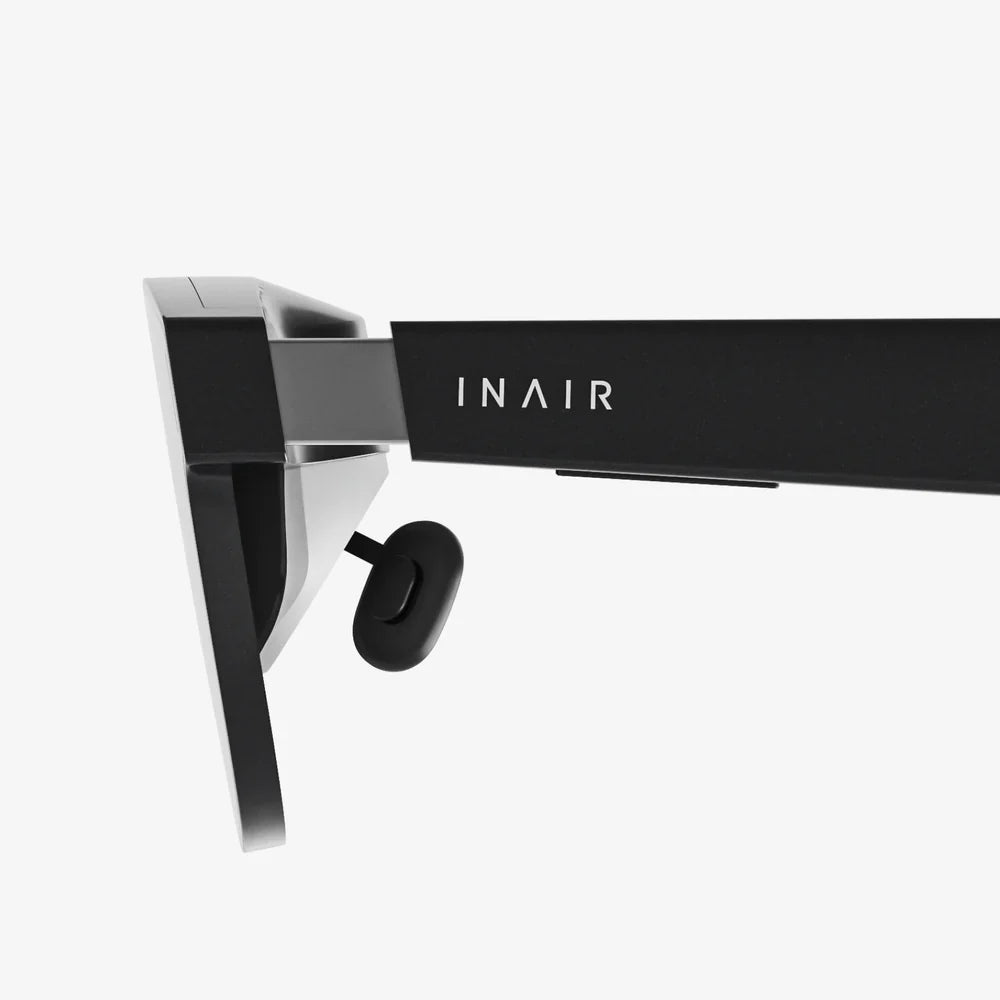
Augmented glasses are quietly preparing to do for your eyes what smartphones did for your hands: put a living layer of digital intelligence on top of everything you see. Imagine walking into a store and instantly seeing product details beside each item, navigating a new city while directions float naturally at the edge of your vision, or collaborating with a remote teammate who appears as a realistic overlay in your living room. These scenarios are no longer science fiction experiments; they are the foundation of a new computing era that is getting closer to everyday reality with each hardware and software breakthrough.
What Are Augmented Glasses, Really?
Augmented glasses are wearable devices shaped like ordinary eyewear that overlay digital content onto the real world. They belong to the broader category of augmented reality, or AR, which enhances what you see rather than replacing it completely. Unlike virtual reality headsets that immerse you in a fully digital environment, augmented glasses keep you connected to your surroundings while adding context-sensitive information, graphics, and interactive elements.
At their core, these devices consist of four key elements:
- Optical system: Transparent or semi-transparent lenses that project or reflect digital images into your field of view.
- Sensors: Cameras, depth sensors, accelerometers, gyroscopes, and sometimes eye-tracking sensors that understand your environment and head movements.
- Processor and connectivity: Onboard computing hardware or a tethered connection to a phone or external device, plus wireless connectivity for cloud services.
- User interface: Voice commands, touch controls on the frame, hand tracking, or eye-tracking to interact with digital content.
The result is a wearable display that feels increasingly natural, allowing digital information to appear anchored to objects, places, and people in your real-world view.
How Augmented Glasses Work Behind The Scenes
To appreciate why augmented glasses are such a big deal, it helps to understand the technology that makes them possible. Several layers of hardware and software must work together in real time, often within milliseconds, to create a convincing and useful experience.
Optics And Display Technologies
There are several main approaches to getting digital imagery into your eyes while preserving a clear view of the real world:
- Waveguide displays: Light from tiny displays is routed through a transparent waveguide embedded in the lens, then redirected into the eye. This approach can be thin and lightweight, making glasses look more like normal eyewear.
- Birdbath or combiner optics: A small display reflects off a partially reflective surface in front of the eye. This can provide bright images but often requires bulkier frames.
- Microprojector systems: Miniature projectors beam images onto the lens or directly onto the retina. These systems can be powerful but must balance brightness, clarity, and eye safety.
Display technologies might use tiny LCD, OLED, or microLED panels. The challenge is to deliver images that are bright enough to see in daylight, sharp enough for text, and aligned well enough that digital objects appear stable and properly anchored in the environment.
Spatial Awareness And Tracking
To overlay digital content realistically, augmented glasses must understand where you are, where you are looking, and what is around you. This involves a combination of:
- Head tracking: Sensors track the orientation of your head so that digital content stays fixed relative to the real world even as you move.
- World mapping: Cameras and depth sensors build a 3D map of your surroundings. Surfaces like walls, tables, and floors are recognized so digital objects can sit on them or hide behind them.
- Positional tracking: The system estimates your position in the environment over time, often using techniques similar to simultaneous localization and mapping (SLAM).
- Eye tracking (in some devices): By following where you are looking, the system can sharpen images in that region or use gaze as an input method.
All of this must happen in real time. If the system lags or misaligns, digital overlays will jitter or drift, breaking the illusion and causing discomfort.
Interaction And User Interface
Because augmented glasses are hands-free by design, interaction methods differ from those of phones or laptops. Common approaches include:
- Voice commands: Ideal for quick tasks like launching apps, searching for information, or controlling playback.
- Touch controls: Small touch-sensitive areas on the frame allow swipes and taps to navigate menus or adjust settings.
- Hand and gesture tracking: Cameras detect hand movements so you can grab, move, or resize virtual objects in mid-air.
- Eye-based interaction: Looking at an interface element can highlight it; a blink or small gesture can confirm a selection.
The most successful augmented glasses will likely blend these methods, using context to choose the most natural interaction style at any given moment.
Key Use Cases Transforming Daily Life
While the technology is fascinating, the true power of augmented glasses lies in how they change day-to-day experiences. Several areas are already seeing practical, measurable benefits.
Work And Productivity
In professional environments, augmented glasses can serve as always-available heads-up displays, reducing the need to look down at screens or paper documents. Some compelling scenarios include:
- Hands-free instructions: Technicians can see step-by-step repair guides overlaid directly on equipment, cutting down on errors and training time.
- Remote assistance: Experts can see what a worker sees and annotate the view in real time, guiding them through complex tasks without traveling on-site.
- Live data overlays: Warehouse staff can see optimal routes through aisles, inventory locations, and stock levels as they move.
- On-the-go dashboards: Professionals can glance at key metrics, schedules, or notifications without pulling out a phone or laptop.
These capabilities can translate into faster workflows, fewer mistakes, and safer operations, especially in industries like manufacturing, logistics, field service, and construction.
Navigation And Travel
Navigation is one of the most intuitive uses for augmented glasses. Instead of looking down at a map, directions can appear as subtle arrows or lines on the road or sidewalk ahead. Additional enhancements include:
- Contextual points of interest: Restaurants, landmarks, and transit stops can be highlighted with ratings, hours, and brief descriptions.
- Indoor navigation: In airports, malls, or large offices, digital markers can guide you to gates, shops, or meeting rooms.
- Language translation: Foreign signs can be automatically translated and displayed in your native language directly on top of the original text.
- Accessibility enhancements: People with certain visual or cognitive challenges can receive simplified directions, high-contrast overlays, or audio cues.
By keeping your eyes on your surroundings, augmented glasses can make navigation not only more convenient but also safer.
Entertainment And Gaming
Entertainment is one of the most visible and imaginative frontiers for augmented glasses. Instead of limiting games and media to rectangular screens, digital experiences can spill into your environment:
- Location-based games: Characters and objects can appear in your living room, park, or city streets, responding to your real-world movements.
- Enhanced sports viewing: Live stats, player information, and tactical overlays can appear while you watch a game, whether in person or on a nearby screen.
- Interactive storytelling: Narratives can unfold around you, with characters appearing at your side and scenes adapting to your space.
- Ambient entertainment: Subtle visualizations, art, or data can decorate your environment without demanding full attention.
These experiences hint at a future where entertainment is less about consuming content on a fixed screen and more about living inside dynamic, responsive stories.
Education And Training
Augmented glasses can transform learning from passive observation into active, spatially anchored experiences. Some possibilities include:
- Interactive science lessons: Students can see 3D models of molecules, planets, or historical artifacts floating in the classroom, manipulated with gestures.
- Skill training: Trainees can practice procedures on virtual overlays before performing them on real equipment or patients.
- Field learning: On-site visits to historical locations, factories, or ecosystems can be enriched with contextual information, quizzes, and guided exploration.
- Personalized pacing: Digital tutors can adapt overlays and instructions to each learner’s speed and understanding.
By tying information to physical context, augmented glasses can help learners remember more and understand complex concepts more intuitively.
Healthcare And Medical Applications
In healthcare, precision and real-time information can be a matter of life and death, making augmented glasses particularly valuable. Current and emerging uses include:
- Surgical assistance: Surgeons can see patient imaging data, vital signs, and planned incisions overlaid on the body, improving accuracy and reducing the need to look away from the operative field.
- Remote consultations: Specialists can guide procedures remotely, seeing the clinician’s perspective and annotating their view.
- Medical training: Students can practice procedures on simulated overlays or watch annotated live operations from a first-person perspective.
- Patient support: Individuals managing chronic conditions might receive medication reminders, visual guidance for exercises, or real-time metrics.
These applications must meet strict safety and privacy standards, but the potential benefits for accuracy, efficiency, and education are substantial.
Accessibility And Inclusive Design
One of the most meaningful promises of augmented glasses is their potential to improve accessibility. When designed thoughtfully, they can serve as powerful assistive tools:
- Visual assistance: People with low vision can benefit from magnification, contrast enhancements, edge detection overlays, or text-to-speech conversion for signs and documents.
- Audio cues: Spatial audio can complement visual overlays, helping users locate objects, paths, or people.
- Real-time captioning: Spoken conversation can appear as text in the user’s field of view, supporting those with hearing impairments.
- Environmental alerts: The system can highlight obstacles, moving objects, or important signals like alarms and traffic lights.
By embedding assistive features into mainstream devices, augmented glasses can help reduce stigma and broaden social participation for people with disabilities.
Technical And Design Challenges
Despite rapid progress, several hurdles still stand between current prototypes and truly ubiquitous augmented glasses. These challenges are as much about comfort and social acceptance as they are about raw computing power.
Comfort, Weight, And Battery Life
People will only wear augmented glasses for long periods if they feel like normal eyewear. That means:
- Lightweight frames: Heavy hardware quickly causes fatigue and discomfort.
- Balanced weight distribution: Components must be arranged so the glasses do not slide down the nose or pinch behind the ears.
- Efficient power use: High-performance processors and bright displays consume a lot of energy, but users expect all-day battery life.
- Thermal management: The device must stay cool enough against the skin, even under heavy workloads.
Advances in chip design, battery density, and optical efficiency are gradually addressing these issues, but they remain central obstacles.
Display Quality And Visual Comfort
To be truly useful, digital overlays must be easy on the eyes and legible in varied environments. Key requirements include:
- Brightness and contrast: Overlays must remain visible in bright sunlight without being blinding in dim settings.
- Resolution and clarity: Text and fine details should be sharp enough for extended reading.
- Field of view: A narrow viewing window can feel like peering through a small rectangle; a wider field feels more natural but is harder to engineer.
- Focus and depth cues: Mismatches between where your eyes focus and where they converge can cause eye strain; advanced optics aim to reduce this.
Manufacturers must balance these demands against size, cost, and power constraints.
User Experience And Social Acceptance
Beyond hardware, augmented glasses must fit comfortably into social norms and daily routines. Important considerations include:
- Discreet design: Bulky, conspicuous devices discourage everyday use and may make others uncomfortable.
- Clear signaling: People around the wearer should be able to tell when cameras or recording features are active.
- Non-intrusive notifications: Constant pop-ups and overlays can quickly become overwhelming; intelligent filtering is essential.
- Learning curve: Interactions should feel intuitive, with minimal training needed for basic tasks.
Ultimately, augmented glasses must earn trust not only from users but from everyone sharing space with them.
Privacy, Security, And Ethical Questions
Any device that combines cameras, sensors, and cloud connectivity raises important questions about privacy and ethics. Augmented glasses amplify these concerns because they can be worn continuously and used in sensitive spaces.
Continuous Sensing And Data Collection
To function effectively, augmented glasses may capture vast amounts of data about the environment and the people in it, including:
- Images and video of public and private spaces
- Audio from conversations and ambient sounds
- Location and movement patterns over time
- Biometric information such as gaze patterns or physical reactions
This data can be extremely valuable for personalization and functionality but also potentially sensitive. Robust safeguards are needed to prevent misuse, unauthorized access, or unnecessary retention.
Consent And Social Boundaries
One of the thorniest issues is consent. People nearby may not want to be recorded or analyzed by someone else’s augmented glasses. To address this, potential measures include:
- Visible indicators when cameras or microphones are actively recording
- Clear policies for where and when devices can be used, especially in workplaces, schools, or private venues
- Opt-out mechanisms for individuals or organizations who do not want to be captured
- Norms around respectful use, similar to existing expectations for phone cameras
Striking the right balance between utility and respect for privacy will shape public acceptance more than any single technical feature.
Digital Overlays And Information Integrity
When digital content can be seamlessly overlaid onto reality, questions of accuracy and bias become more urgent. For example:
- Information about people or places might be incomplete, outdated, or unfairly skewed.
- Malicious actors could attempt to inject misleading overlays into public spaces.
- Over-personalized filters might create divergent realities where people see very different versions of the same environment.
Addressing these risks requires transparent data sources, robust security, and thoughtful design of how overlays are labeled and verified.
Preparing For A World Of Augmented Vision
As augmented glasses evolve from early adopters’ gadgets into mainstream tools, individuals and organizations can begin preparing to use them effectively and responsibly.
For Individuals
People interested in augmented glasses can take several practical steps:
- Clarify your goals: Decide whether you care most about productivity, navigation, entertainment, fitness, or accessibility, and evaluate devices accordingly.
- Experiment with AR apps: Even on a phone, augmented reality apps can give a preview of what spatial interactions feel like.
- Set boundaries: Plan when and where you would feel comfortable wearing such devices, especially around family, friends, and colleagues.
- Monitor your attention: Be aware of how constant overlays might affect focus, presence, and mental well-being.
By approaching augmented glasses thoughtfully, you can enjoy their benefits without letting them dominate your perception.
For Businesses And Organizations
Companies and institutions can begin exploring how augmented glasses might enhance operations and customer experiences:
- Identify high-impact workflows: Look for tasks where hands-free access to information could significantly reduce errors or delays.
- Prototype and pilot: Start with small, well-defined projects to understand practical challenges and employee reactions.
- Develop usage policies: Address privacy, safety, and acceptable use before deploying devices widely.
- Invest in content and training: Effective overlays require accurate 3D models, instructions, and data integrations tailored to your environment.
Early adopters who learn to integrate augmented glasses responsibly may gain a competitive edge while shaping best practices for their industries.
Looking Ahead: The Long-Term Potential Of Augmented Glasses
The current generation of augmented glasses is only a hint of what is possible. As components shrink, displays improve, and software becomes smarter, several long-term trends are likely to emerge.
Toward All-Day Wearable Computing
Over time, augmented glasses may become the primary way many people access digital information. Instead of pulling out a phone, you will simply glance, gesture, or speak. Potential developments include:
- Seamless integration with other devices: Glasses will coordinate with phones, watches, and home systems to share context and tasks.
- Context-aware assistance: Digital overlays will adapt to what you are doing, offering help only when needed and in appropriate forms.
- Personal knowledge layers: Your glasses might remember where you left items, what you discussed in previous meetings, or which routes you prefer.
- Adaptive interfaces: Layouts and interaction modes will adjust to your habits, preferences, and even your current level of fatigue or stress.
If done well, this could feel less like wearing a gadget and more like having a quiet, ever-present assistant that understands your environment.
Blending Physical And Digital Spaces
As more people adopt augmented glasses, public and private spaces may be designed with digital overlays in mind. For example:
- Smart architecture: Buildings could include markers and surfaces optimized for AR navigation and information display.
- Shared digital decor: Families or teams might decorate rooms with digital art, dashboards, or collaborative boards visible only through glasses.
- Layered signage: Physical signs could be minimal, with rich details available as overlays that adapt to language and user needs.
- Dynamic work environments: Offices and factories could reconfigure visual instructions and workflows on the fly through digital layers.
In such a world, reality would not be replaced but richly annotated, with each person choosing which layers to see at any moment.
Human-Centered Design As The Deciding Factor
Ultimately, the success of augmented glasses will not be determined solely by processing power or display resolution. The crucial question is whether they make people’s lives genuinely better without eroding privacy, attention, or human connection. Designs that respect context, minimize distraction, and give users control over what they see and share are far more likely to gain lasting acceptance.
Augmented glasses have the potential to become the most personal of personal technologies, sitting at the intersection of what you perceive and how you act. That makes them powerful, but it also demands a higher standard of responsibility from designers, developers, and users alike.
If you are curious about where computing is headed next, watch what happens on the bridge of your nose. The shift from screens in your pocket to information woven into your vision may define the next decade of digital life, and those who understand augmented glasses early will be better prepared to shape, rather than just react to, the realities they create.
Aktie:
AR Lenses Transforming How We See, Shop, Learn, and Play
eyeglass direct: How Online Frames Are Changing the Way You Buy Glasses