


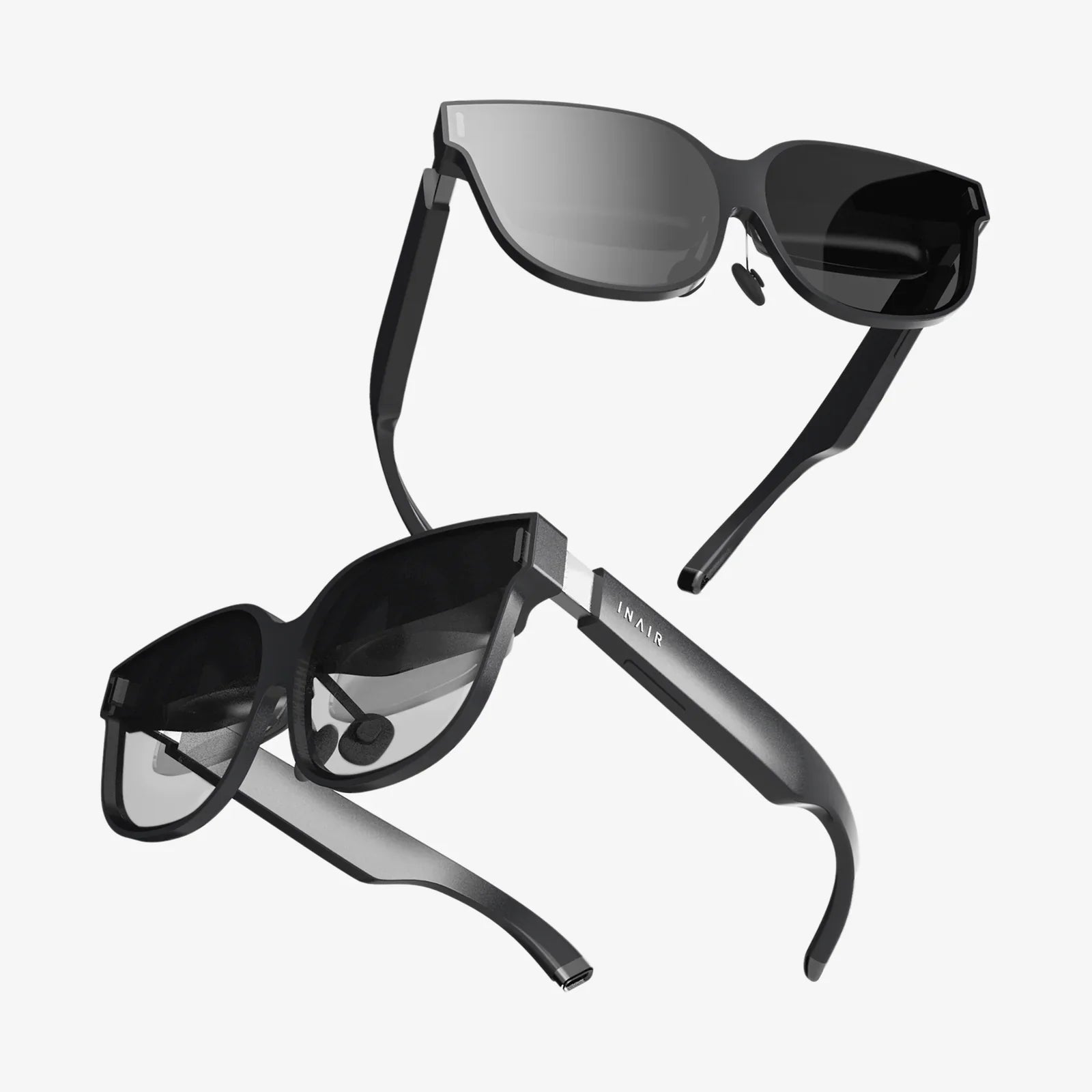
If you are exploring the best practices for training global workforce with AR VR, you are standing at the edge of one of the most powerful shifts in corporate learning. Organizations that master immersive training are not just cutting costs and boosting engagement; they are building a competitive advantage that is very hard to copy. Yet many companies still struggle to move beyond flashy pilots into scalable, global programs that actually change behavior and deliver measurable business results.
This guide breaks down the best practices for training global workforce with AR VR into concrete steps you can follow, even if you are just starting. You will learn how to align immersive learning with business goals, design content that works across cultures, deploy it at scale, and prove its impact to leaders who care about numbers, not novelty.
Why AR and VR Matter for a Global Workforce
Before diving into best practices, it helps to understand why AR and VR are uniquely suited for global training. Traditional e-learning and classroom methods struggle with three big challenges: engagement, consistency, and access. Immersive technologies address each of these in ways that are particularly valuable for distributed teams.
Higher Engagement and Retention
AR and VR create a sense of presence and interactivity that is difficult to achieve with slides or videos. Learners do not just watch; they perform tasks, make decisions, and see the consequences in real time. This active involvement leads to:
- Higher attention and reduced multitasking
- Better knowledge retention over time
- Stronger emotional connection to the material
For a global workforce that may be taking training outside of regular hours or in low-engagement environments, this extra pull matters.
Consistent Training Across Locations
When employees are spread across countries and time zones, training quality can vary wildly from site to site. AR and VR allow you to standardize experiences:
- Every learner sees the same scenario, instructions, and feedback
- Complex procedures can be simulated identically worldwide
- Updates can be pushed centrally, ensuring everyone is aligned
This consistency is critical in industries where safety, compliance, and quality cannot be left to chance or local interpretation.
Safe Practice for High-Risk or Rare Scenarios
Some of the most important skills are also the hardest to practice: emergency responses, high-risk procedures, complex machinery operations, or sensitive interpersonal situations. VR, in particular, allows learners to make mistakes without real-world consequences, while AR can guide them step-by-step in real environments:
- Simulate dangerous or costly situations safely
- Practice rare events that might never occur during on-the-job training
- Give new hires confidence before they touch real equipment or interact with real customers
Scalable Access for Distributed Teams
Travel costs, instructor availability, and facility constraints often limit who can attend training. AR and VR can be delivered:
- On headsets, tablets, or smartphones
- Asynchronous, so learners can access them on their schedule
- With minimal reliance on physical training centers
For a global workforce, this means training can reach remote locations without building new classrooms or flying trainers around the world.
Strategic Best Practices: Start with Business Outcomes
The first best practice for training global workforce with AR VR is to resist the temptation to start with the technology. Instead, anchor your initiative in business outcomes and work backward.
Define Clear, Measurable Objectives
Identify specific problems you want to solve or metrics you want to move. Examples include:
- Reducing onboarding time for new hires by a certain percentage
- Decreasing error rates in a particular process or location
- Improving safety compliance metrics or reducing incident rates
- Increasing sales conversion or customer satisfaction scores
These objectives will guide content design, technology choices, and measurement strategies.
Prioritize Use Cases Where AR and VR Add Unique Value
Not every training topic needs immersive technology. Focus on areas where AR or VR offers clear advantages over traditional methods. Common high-impact use cases include:
- Technical skills and equipment operation
- Safety and emergency response drills
- Soft skills such as negotiation, leadership, and conflict resolution
- Complex procedures that require step-by-step guidance
- Environmental or site-specific orientation
Ask yourself: would a slide deck or video be almost as effective? If yes, immersive technology may not be the best investment for that topic.
Secure Executive Sponsorship Early
Global AR and VR training initiatives cross boundaries: IT, HR, learning and development, operations, and sometimes legal or compliance. To navigate this complexity, you need visible support from senior leaders who can:
- Champion the vision and justify the investment
- Remove obstacles and align cross-functional teams
- Set expectations that this is not just a short-term experiment
Frame the initiative as a strategic capability, not a one-off project, and tie it directly to business priorities such as productivity, safety, or customer experience.
Design Best Practices: Building Effective Immersive Learning
Once your strategy is clear, the next set of best practices for training global workforce with AR VR focuses on instructional and experience design. Immersive content that is poorly designed can be disorienting, confusing, or even counterproductive.
Use Scenario-Based Learning
AR and VR are at their best when learners are placed in realistic scenarios that mirror their actual work. Instead of simply presenting information, design experiences where learners must:
- Observe a situation
- Make decisions or perform actions
- Receive immediate feedback and consequences
Examples include troubleshooting a malfunctioning machine, handling a difficult customer interaction, or responding to a safety incident. Scenario-based learning builds judgment and confidence, not just memorization.
Chunk Content into Short, Focused Modules
Long, uninterrupted VR sessions can cause fatigue or discomfort, and global employees may only have short windows for training. Design modules that:
- Last 5 to 20 minutes
- Cover one clear objective or skill
- Can be combined into learning paths as needed
This modular approach also makes it easier to update specific parts of the training without rebuilding entire programs.
Balance Guidance and Exploration
Immersive environments invite exploration, but too much freedom can overwhelm learners. Provide structure through:
- Clear instructions at the start of each module
- Visual cues or prompts to guide attention
- Optional hints for learners who get stuck
At the same time, allow room for trial and error. Let learners make mistakes safely and learn from them through immediate, meaningful feedback.
Design for Accessibility and Comfort
Global workforces are diverse in age, physical abilities, and familiarity with technology. To ensure inclusivity:
- Offer adjustable text sizes, audio narration, and subtitles
- Provide seated and standing options where possible
- Avoid rapid camera movements and overly intense visual effects
- Allow users to pause, exit, or take breaks easily
Test experiences with a diverse group of learners to identify discomfort or accessibility issues early.
Integrate Assessment and Feedback
One of the strongest advantages of AR and VR is the ability to capture detailed performance data. Build assessment into the experience by tracking:
- Task completion and accuracy
- Time taken to complete steps
- Choices made in branching scenarios
- Frequency of errors and use of hints
Provide feedback that is:
- Immediate: so learners can correct mistakes in the moment
- Specific: highlighting what was done well and what needs improvement
- Actionable: offering guidance on how to perform better next time
These assessments can feed into broader learning analytics and performance reviews, if appropriate.
Globalization Best Practices: Localizing for a Worldwide Audience
Training that works in one country can fail in another if it ignores language, cultural norms, or regulatory differences. Best practices for training global workforce with AR VR must include thoughtful localization and cultural adaptation.
Plan for Localization from the Start
Retrofitting localization into immersive content is expensive and slow. From the beginning, design your content pipeline to support:
- Separate text and audio layers that can be easily translated
- Configurable user interfaces for different languages
- Modular assets so that region-specific elements can be swapped
Use simple, clear language in the original version to make translation easier and more accurate.
Respect Cultural Differences in Scenarios
Scenarios involving communication, leadership, or customer interaction can be highly culture-dependent. What is considered assertive in one culture may be seen as rude in another. To ensure relevance and respect:
- Consult local subject matter experts during design
- Avoid humor, gestures, or references that may not translate
- Adapt characters, names, and environments to reflect local realities where appropriate
In some cases, it may be better to create multiple variants of a scenario rather than force a single global version.
Address Local Regulations and Compliance
Different countries may have distinct regulations related to safety, data protection, or professional standards. Ensure that your AR and VR training:
- Reflects local laws and required procedures
- Handles learner data in compliance with regional privacy regulations
- Is reviewed by local legal or compliance teams where necessary
Ignoring these differences can lead to confusion at best and legal risk at worst.
Support Multiple Languages and Learning Preferences
Language is more than words; it affects how people think and learn. To support a global workforce:
- Offer multiple language options for text and audio
- Allow learners to switch languages easily within an experience, if possible
- Consider regional variations and terminology, not just direct translation
Combine visual, auditory, and interactive elements to accommodate different learning styles across cultures.
Technology and Infrastructure Best Practices
Even the best-designed content fails if the underlying technology is unreliable or difficult to access. For global deployments, infrastructure planning is a core part of the best practices for training global workforce with AR VR.
Choose the Right Mix of Devices
Different locations may have different budgets, connectivity, and physical environments. Instead of mandating a single device type worldwide, consider a tiered approach:
- High-end VR headsets for training centers or high-impact use cases
- Standalone or mobile-based VR for distributed sites
- AR delivered through smartphones or tablets for on-the-job guidance
Ensure experiences are optimized for each device type, rather than assuming one-size-fits-all.
Plan for Connectivity Constraints
Not all sites will have reliable high-speed internet. To ensure access:
- Allow for offline use, with content downloaded in advance
- Optimize file sizes and streaming quality
- Use local content caching where possible
Design your system so that performance data can sync when connections are available, rather than requiring constant connectivity.
Integrate with Existing Learning Systems
To manage AR and VR at scale, integration with your learning management system or similar platforms is essential. Aim to:
- Enroll learners and assign immersive modules through existing systems
- Track completion, scores, and time spent alongside other training
- Generate unified reports that include both immersive and traditional learning
This integration makes immersive training part of the normal learning ecosystem, not a separate, hard-to-manage island.
Establish Standards for Security and Data Privacy
Immersive training can collect detailed behavioral data. While this is valuable for analytics, it must be handled responsibly, especially in a global context. Best practices include:
- Defining what data is collected and why
- Informing learners clearly about data usage
- Implementing role-based access controls for sensitive data
- Complying with regional data protection regulations
Work closely with IT and legal teams to create policies that balance insight with privacy.
Operational Best Practices: Rolling Out at Global Scale
Even the most elegant AR and VR experiences will not succeed if they are not adopted and supported properly. Operational best practices for training global workforce with AR VR focus on deployment, support, and change management.
Start with Pilot Programs and Iterate
Rather than launching worldwide immediately, begin with targeted pilots in a few locations. Choose sites that:
- Represent different regions or cultures
- Have supportive local leaders
- Are willing to give feedback and experiment
Use these pilots to refine content, identify technical issues, and build internal case studies that demonstrate value.
Train Local Champions and Facilitators
Global rollouts benefit from local advocates who understand both the technology and the work context. Identify and train:
- Local trainers who can introduce AR and VR to learners
- Technical contacts who can handle basic troubleshooting
- Managers who can reinforce the importance of the training
Provide these champions with clear documentation, talking points, and support channels.
Provide Clear Onboarding for Learners
For many employees, AR and VR will be new. Reduce anxiety and increase adoption by offering:
- Short orientation modules on how to use the devices
- Simple, step-by-step instructions in multiple languages
- Guided first sessions, ideally with a facilitator present
Make the first experience positive and low-pressure, focusing on exploration rather than high-stakes assessment.
Set Up Ongoing Support and Maintenance
Devices need to be maintained, software updated, and content refreshed. Establish processes for:
- Regular device checks, cleaning, and storage
- Software updates and content version control
- Help desk support for technical issues
- Feedback collection from learners and managers
Without this operational backbone, enthusiasm can fade as frustrations accumulate.
Measurement and Continuous Improvement
To sustain investment and refine your approach, you need to show impact. Measurement is a central part of the best practices for training global workforce with AR VR, not an afterthought.
Track Both Learning and Business Metrics
Go beyond simple completion rates. Combine learning data with business outcomes to build a compelling picture. Examples include:
- Changes in error rates, rework, or quality metrics after training
- Time to competency for new hires before and after implementation
- Safety incident rates or near-miss reports
- Customer satisfaction or sales performance indicators
Where possible, compare groups that received immersive training with those using traditional methods to demonstrate relative impact.
Use Analytics to Personalize Learning
Immersive platforms often capture detailed interaction data. Use this to:
- Identify common points of failure or confusion
- Recommend additional practice modules for specific skills
- Adjust difficulty levels based on learner performance
Over time, this creates a more adaptive learning ecosystem that responds to actual needs rather than assumptions.
Gather Qualitative Feedback from Multiple Regions
Numbers tell part of the story; learner and manager feedback fills in the rest. Conduct regular surveys, interviews, or focus groups across different regions to understand:
- Perceived relevance of the scenarios
- Ease of use of the technology
- Cultural fit and local acceptance
- Suggestions for new modules or improvements
Use this feedback loop to prioritize updates and new content development.
Change Management and Culture
Implementing the best practices for training global workforce with AR VR is not only a technical and instructional challenge; it is also a cultural shift. Employees and managers need to see immersive learning as a valuable, normal part of work, not a novelty or distraction.
Communicate the Why, Not Just the How
Explain clearly why the organization is investing in AR and VR training. Emphasize benefits such as:
- Faster skill development and career growth
- Safer practice environments
- More engaging and realistic learning experiences
When employees understand the purpose, they are more likely to engage seriously with the training.
Align Managers and Incentives
Managers play a pivotal role in whether employees prioritize training. Help managers by:
- Showing how immersive training supports their team goals
- Providing reports they can use in coaching conversations
- Recognizing teams that effectively use AR and VR to improve performance
If possible, tie training completion and performance to broader development or recognition programs.
Normalize Experimentation and Learning from Mistakes
Immersive scenarios often encourage learners to try different approaches and see the consequences. Reinforce the message that:
- It is safe to make mistakes in training environments
- Exploration and curiosity are valued
- Feedback is a tool for growth, not punishment
This mindset supports not only AR and VR training but also broader organizational learning and innovation.
Future-Proofing Your Immersive Learning Strategy
Technology will continue to evolve, but the core best practices for training global workforce with AR VR can help you build a foundation that adapts over time. To future-proof your approach, focus on principles rather than specific tools.
Design Content to Be Portable and Upgradable
Avoid tying your content too tightly to a single hardware platform or proprietary format. Where possible:
- Use standards-based formats for 3D models and media
- Keep code and content modular so parts can be reused or upgraded
- Document your design decisions and assets thoroughly
This reduces the cost and disruption of migrating to new devices or platforms in the future.
Build Internal Capability, Not Just Vendor Dependencies
External partners can accelerate your early efforts, but long-term success depends on internal capability. Invest in:
- Training for your learning and development team on immersive design principles
- Cross-functional collaboration between instructional designers, technologists, and subject matter experts
- Internal communities of practice where teams share lessons learned
Over time, this internal expertise will help you innovate faster and control costs.
Continuously Scan for New Use Cases
As your organization becomes more comfortable with AR and VR, new opportunities will emerge. Encourage teams across regions and functions to propose ideas where immersive training could:
- Solve persistent performance or safety issues
- Support new product launches or process changes
- Enhance collaboration across borders
Use a structured process to evaluate these ideas against your strategic objectives and resource constraints.
Bringing It All Together for Global Impact
Training a global workforce is one of the hardest challenges in modern business, and the organizations that solve it best will move faster, innovate more, and deliver more consistent quality than their competitors. AR and VR are not magic wands, but when guided by clear strategy and disciplined execution, they can transform how people learn at scale.
The most effective programs combine several elements: a sharp focus on business outcomes, carefully designed immersive scenarios, thoughtful localization, robust technology and support, and a culture that values continuous learning. When these pieces align, immersive training stops being a side project and becomes a core capability that touches every region and function.
If you apply the best practices for training global workforce with AR VR outlined here, you can move beyond scattered pilots and create an integrated, measurable, and future-ready learning ecosystem. Your teams, whether they are on factory floors, in call centers, in field operations, or in offices around the world, will gain skills faster, make fewer costly mistakes, and feel more confident in their roles. That combination does more than modernize training; it reshapes what your organization can achieve on a global stage.
Aktie:
rudy project cycling glasses guide to performance, comfort and protection
Broken Glass Green Screen: Creative Techniques for Stunning Visual Effects