


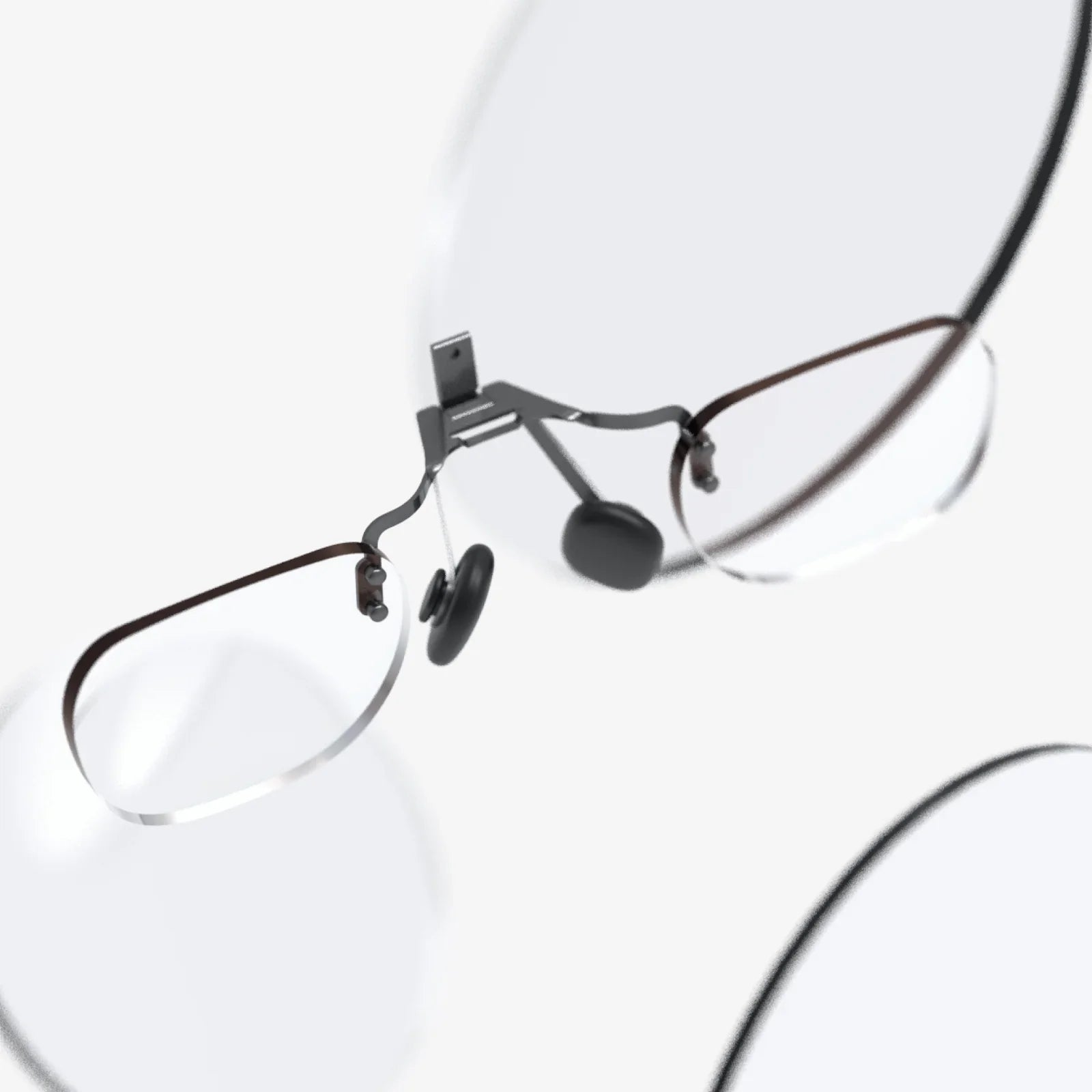
new tec for ai glasses is quietly turning ordinary eyewear into something that feels closer to science fiction than a simple accessory. Imagine glancing at a street sign in another language and instantly seeing the translation, or walking through a city while subtle arrows float in your field of view to guide you. This is no longer just a futuristic fantasy; it is becoming a practical reality, and the pace of change is accelerating faster than most people realize.
Far beyond simple heads-up displays, modern AI glasses are evolving into intelligent companions that can understand the world you see, respond to your voice, and even anticipate your needs. They blend computer vision, on-device machine learning, advanced optics, and connectivity into a wearable form factor that aims to be as natural as putting on ordinary glasses. The most exciting part is that the underlying technology is still in its early stages, meaning the experiences we are seeing today are just the beginning of what will be possible in the next few years.
The Core Foundations of New Tec for AI Glasses
To understand how new tec for ai glasses is changing everyday life, it helps to break down the core components that make these devices work. Although designs vary, most AI glasses share several fundamental building blocks.
Miniaturized Displays and Optical Waveguides
The first challenge is how to place digital information in front of your eyes without blocking your view of the real world. Modern AI glasses rely on a combination of tiny displays and advanced optics:
- Microdisplays: Small, high-resolution displays are embedded in the frame or temple and project images into the lenses.
- Waveguides: Transparent optical layers inside the lenses guide light from the microdisplay into your eyes, creating the illusion that digital content floats in front of you.
- Combiner optics: These ensure that the digital image blends with the real world rather than replacing it, enabling augmented reality experiences.
New tec for ai glasses focuses on making these components thinner, brighter, and more power-efficient so they can be worn comfortably for long periods without feeling heavy or intrusive.
On-Device AI Processing
AI glasses need to understand what you see and hear in real time. To achieve this, they rely on compact processing units, often called edge AI chips, that can run complex algorithms locally:
- Computer vision: Recognizes objects, text, faces (when allowed), and scenes in front of you.
- Speech recognition: Listens to voice commands and conversational cues.
- Natural language understanding: Interprets what you say and provides relevant responses or actions.
By processing data on the device rather than sending everything to the cloud, new tec for ai glasses can respond more quickly while also helping to protect user privacy.
Sensors and Environmental Awareness
AI glasses need rich sensory input to understand the world. Typical sensor arrays include:
- Cameras: For capturing images and video, enabling computer vision and augmented reality overlays.
- Depth sensors: For mapping the environment in 3D, which is crucial for accurate spatial anchoring of digital objects.
- Microphones: For voice input, ambient sound detection, and noise suppression.
- Motion sensors: Accelerometers, gyroscopes, and sometimes magnetometers for head tracking and gesture recognition.
New tec for ai glasses leverages these sensors to build a continuous, real-time model of your surroundings, enabling context-aware assistance and immersive augmented reality experiences.
Everyday Use Cases That Make AI Glasses Truly Useful
While the underlying technology is impressive, the real value of new tec for ai glasses lies in the everyday tasks they can enhance or transform. Many of these use cases are already emerging, with more on the horizon as the technology matures.
Real-Time Translation and Language Support
One of the most compelling uses of AI glasses is real-time language assistance. By combining computer vision and language models, AI glasses can:
- Translate text in your field of view, such as menus, signs, or documents.
- Provide subtitles for spoken language in real time, useful for travel or multilingual meetings.
- Offer pronunciation guidance and vocabulary hints while you converse.
This type of functionality allows users to navigate foreign environments with greater confidence, reducing the friction that language barriers often create.
Navigation and Spatial Guidance
Navigation is another area where new tec for ai glasses shines. Instead of constantly looking down at a phone, users can receive:
- Subtle arrows or lines overlaid on the ground to show walking directions.
- Floating labels for landmarks, streets, or points of interest.
- Contextual prompts, such as reminders of upcoming turns or public transit stops.
By integrating spatial mapping with real-time data, AI glasses can turn any city into a more intuitive environment, especially for visitors or those who struggle with traditional maps.
Hands-Free Assistance and Productivity
New tec for ai glasses is also redefining productivity by enabling hands-free interaction. Typical scenarios include:
- Task guidance: Step-by-step visual instructions for complex tasks, such as repairs, assembly, or cooking.
- Note-taking: Voice-controlled notes and reminders that appear in your field of view.
- Meeting support: Live transcription of conversations, quick access to documents, and contextual information about topics being discussed.
These capabilities are especially valuable in environments where using a phone or laptop is impractical, such as workshops, medical settings, or outdoor work sites.
Accessibility and Inclusive Design
One of the most meaningful impacts of AI glasses comes from their potential to improve accessibility. New tec for ai glasses can support users with various impairments by providing:
- Visual assistance: Descriptions of surroundings, reading text aloud, and highlighting obstacles for users with low vision.
- Hearing support: Real-time captions for spoken words, helping those with hearing impairments follow conversations.
- Cognitive support: Contextual reminders, prompts, and simplified instructions for users who benefit from guidance.
By integrating these features directly into everyday eyewear, AI glasses can offer assistance that feels discreet and natural rather than stigmatizing or cumbersome.
Key Technological Innovations Driving the Next Wave
The practical uses of AI glasses are made possible by a series of technical breakthroughs. New tec for ai glasses is evolving rapidly as researchers and engineers tackle the challenges of power, comfort, and intelligence.
Low-Power AI Chips and On-Device Models
Running AI models on a small, battery-powered device is not trivial. To make this feasible, new tec for ai glasses is relying on:
- Specialized AI accelerators: Chips designed specifically for neural network operations, optimized for low power consumption.
- Compressed models: Techniques like quantization and pruning reduce model size while maintaining performance.
- On-device inference: Keeping most of the processing on the glasses themselves, with optional cloud support when needed.
These advances make it possible to perform tasks like object recognition, translation, and speech understanding in real time without draining the battery within minutes.
Advanced Computer Vision and Scene Understanding
For AI glasses to be truly helpful, they must understand the world in a nuanced way. New tec for ai glasses incorporates cutting-edge computer vision capabilities such as:
- Semantic segmentation: Identifying different parts of a scene, such as roads, sidewalks, furniture, and people.
- Object detection and tracking: Recognizing items like doors, tools, or devices and following their movement.
- Text recognition: Reading printed or digital text in various fonts and lighting conditions.
As these models improve, AI glasses can provide more precise, context-aware assistance, such as highlighting the exact button to press on a device or warning of obstacles ahead.
Spatial Computing and 3D Mapping
Spatial computing is another crucial piece of the puzzle. New tec for ai glasses uses depth sensing and motion tracking to create detailed 3D maps of the environment. This enables:
- Stable AR overlays: Digital objects that remain anchored to real-world positions, even as you move.
- Room-scale interactions: Virtual screens, tools, or notes that appear on walls, tables, or other surfaces.
- Path planning: Visual guidance that accounts for obstacles and real-world geometry.
By merging digital content with physical space, spatial computing turns AI glasses into a gateway to a new type of computing environment that exists all around you, not just on a screen.
Improved Optics, Comfort, and Style
AI glasses will only become mainstream if they are comfortable and visually appealing. New tec for ai glasses focuses on:
- Lightweight materials: Frames made from advanced composites or metals that balance strength and weight.
- Refined lens designs: Optics that reduce distortion, increase brightness, and support prescription lenses.
- Ergonomic fit: Designs that distribute weight evenly and minimize pressure on the nose and ears.
These improvements are critical for transforming AI glasses from a niche gadget into something people are comfortable wearing all day in social and professional settings.
Emerging Interaction Models: Beyond Touch and Voice
Traditional devices rely heavily on touchscreens and keyboards, but AI glasses require new ways of interacting. New tec for ai glasses is exploring a range of interaction models that feel more natural and less intrusive.
Voice-First Interaction with Context Awareness
Voice commands are a natural fit for AI glasses, especially when your hands are busy. However, the latest systems go beyond simple commands by combining voice with context:
- Contextual prompts: The system anticipates what you might need based on what you are looking at.
- Follow-up questions: The AI can ask clarifying questions to refine its responses.
- Ambient listening modes: Optional modes where the system only responds to wake words or specific triggers.
This makes voice interaction more conversational and efficient, rather than forcing users to memorize rigid command phrases.
Subtle Gestures and Head Movements
New tec for ai glasses also takes advantage of micro-gestures and head movements, which can be less disruptive than speaking aloud. Examples include:
- Nodding to confirm a prompt or dismiss a notification.
- Slight head tilts to scroll through information or switch between views.
- Touch-sensitive areas on the frame for quick taps or swipes.
These subtle interactions help users control their glasses discreetly in public or quiet environments.
Gaze-Based Interaction and Eye Tracking
Some advanced designs explore eye tracking to understand exactly where you are looking. This enables:
- Gaze selection: Looking at an item to select it, then confirming with a blink or gesture.
- Adaptive interfaces: UI elements that rearrange themselves based on what you focus on most.
- Attention-aware notifications: Alerts that only appear when they are unlikely to distract you from critical tasks.
While eye tracking raises additional privacy considerations, it also opens the door to highly intuitive, low-effort interaction paradigms.
Privacy, Ethics, and Social Acceptance
As powerful as new tec for ai glasses can be, it also raises important questions about privacy, ethics, and social norms. Widespread use of wearable cameras and AI analysis requires careful design choices.
Privacy by Design
Responsible AI glasses incorporate privacy protections at both the hardware and software levels. Common approaches include:
- Visible recording indicators: Lights or on-screen signals that show when cameras or microphones are active.
- Local processing: Keeping sensitive data on the device, minimizing cloud transmission.
- Selective capture: Limiting recording to specific tasks rather than continuous surveillance.
By making privacy features transparent and user-controlled, designers can help build trust and reduce concerns about constant monitoring.
Ethical Use of AI and Data
New tec for ai glasses must also address how data is used and what the AI is allowed to do with it. Key considerations include:
- Clear policies on what information is stored, for how long, and for what purpose.
- Options for users to delete their data or opt out of certain features.
- Restrictions on sensitive capabilities, such as identifying strangers without consent.
Ethical guidelines and regulations will play an important role in shaping how AI glasses are deployed in workplaces, schools, and public spaces.
Social Dynamics and Everyday Etiquette
Beyond technical and legal issues, AI glasses must fit into social life. New tec for ai glasses is prompting new norms around:
- When it is appropriate to wear AI glasses, especially in private or intimate settings.
- How to signal that recording features are disabled during sensitive conversations.
- Balancing personal convenience with respect for others’ comfort and privacy.
As these devices become more common, social etiquette will evolve, much like it did with smartphones and cameras in earlier decades.
Industry Applications and Professional Workflows
While consumer uses often capture the most attention, new tec for ai glasses is also reshaping professional environments across many industries.
Field Service and Maintenance
Technicians working on complex equipment can benefit from AI glasses that provide:
- Overlayed diagrams and instructions aligned with the actual machinery.
- Remote expert support, where specialists see what the technician sees and offer guidance.
- Automatic documentation of work performed, including photos and timestamps.
This reduces errors, speeds up repairs, and helps less experienced workers handle challenging tasks more confidently.
Healthcare and Medical Training
In healthcare, AI glasses can support both clinicians and students by offering:
- Hands-free access to patient records and imaging during procedures.
- Real-time overlays showing vital signs or anatomical landmarks.
- Immersive training scenarios where students see guided instructions during simulations.
New tec for ai glasses in medical settings must adhere to strict privacy and safety standards, but the potential benefits for precision and education are significant.
Logistics, Warehousing, and Manufacturing
In logistics and manufacturing, AI glasses can streamline workflows by providing:
- Pick-by-vision guidance in warehouses, highlighting the correct items and locations.
- Assembly instructions directly in the worker’s field of view.
- Real-time alerts about safety hazards or process deviations.
These applications demonstrate how new tec for ai glasses can boost efficiency and safety in environments where hands-free access to information is crucial.
Challenges That Still Need to Be Solved
Despite the rapid progress, AI glasses face significant challenges before they can become as ubiquitous as smartphones. New tec for ai glasses is actively tackling several key issues.
Battery Life and Heat Management
Running displays, sensors, and AI processing in a small frame consumes considerable power. Current challenges include:
- Providing all-day battery life without bulky batteries.
- Managing heat so the glasses remain comfortable on the face.
- Balancing performance with energy efficiency.
Innovations in low-power chips, more efficient displays, and better battery materials will be essential to overcoming these constraints.
Display Quality, Brightness, and Eye Comfort
For AI glasses to be pleasant to use, the visual experience must be excellent. This involves:
- Ensuring sufficient brightness for outdoor use in sunlight.
- Reducing glare, distortion, and eye strain.
- Supporting a wide field of view without making the device bulky.
New tec for ai glasses continues to refine optical designs to make digital overlays feel as natural as looking at the real world.
Software Ecosystems and Useful Applications
Hardware alone is not enough; AI glasses need robust software ecosystems. Challenges include:
- Developing intuitive interfaces tailored specifically for wearable AR.
- Encouraging developers to create compelling, practical applications.
- Avoiding feature overload and focusing on truly valuable use cases.
The most successful AI glasses will likely be those that integrate seamlessly with existing services while offering new experiences that are only possible in a heads-up, hands-free form factor.
Future Directions for New Tec for AI Glasses
Looking ahead, the trajectory of new tec for ai glasses suggests even more transformative capabilities on the horizon. Several promising directions are already emerging in research labs and early prototypes.
Deeper Personalization and Contextual Intelligence
Future AI glasses will likely become more personalized, learning from your habits and preferences to provide tailored assistance. Potential features include:
- Adaptive interfaces that rearrange information based on what you use most.
- Proactive suggestions that appear only when they are truly helpful.
- Context-aware reminders triggered by locations, objects, or people you encounter.
This evolution will transform AI glasses from tools you command into companions that understand your routines and goals.
Integration with Smart Environments
As homes, offices, and cities become smarter, AI glasses will serve as a bridge between you and the environment. New tec for ai glasses may enable:
- Visual controls for lights, climate, and appliances you see around you.
- Contextual information about buildings, public transport, or events as you move through a city.
- Collaborative AR experiences shared with other people wearing similar devices.
This tight integration will make the physical world feel more interactive and responsive, blurring the line between digital and real spaces.
More Natural Form Factors and Invisible Technology
Over time, AI glasses are likely to become slimmer and more discreet, eventually resembling ordinary eyewear. Innovations may include:
- Ultra-thin waveguides integrated into standard lenses.
- Flexible electronics that conform to traditional frame designs.
- Modular components that allow users to upgrade processing or sensors without changing the entire device.
As the technology recedes into the background, the focus will shift from the device itself to the experiences it enables.
Preparing for a World Enhanced by AI Glasses
New tec for ai glasses is poised to reshape how people interact with information, environments, and each other. Whether you are a professional looking to streamline complex tasks, a traveler seeking seamless translation, or a creator imagining new forms of storytelling, AI glasses offer a glimpse into a future where digital assistance is always within sight but never in the way.
The most exciting aspect of this shift is how quietly it may unfold. Instead of a single dramatic launch, AI glasses are likely to spread through focused, practical use cases that gradually become indispensable. Step by step, they will change how we navigate cities, learn new skills, collaborate with colleagues, and overcome everyday challenges. Paying attention to new tec for ai glasses today is not just about staying current with gadgets; it is about understanding how the next wave of computing will unfold directly in front of our eyes.
Aktie:
Virtual Display Technology And The Future Of Immersive Digital Experiences
AI Touch Screen Interfaces Reshaping Human Computer Interaction