


- von wangfred
Pro AR Headset Guide: How Advanced Mixed Reality Is Changing Everything
- von wangfred
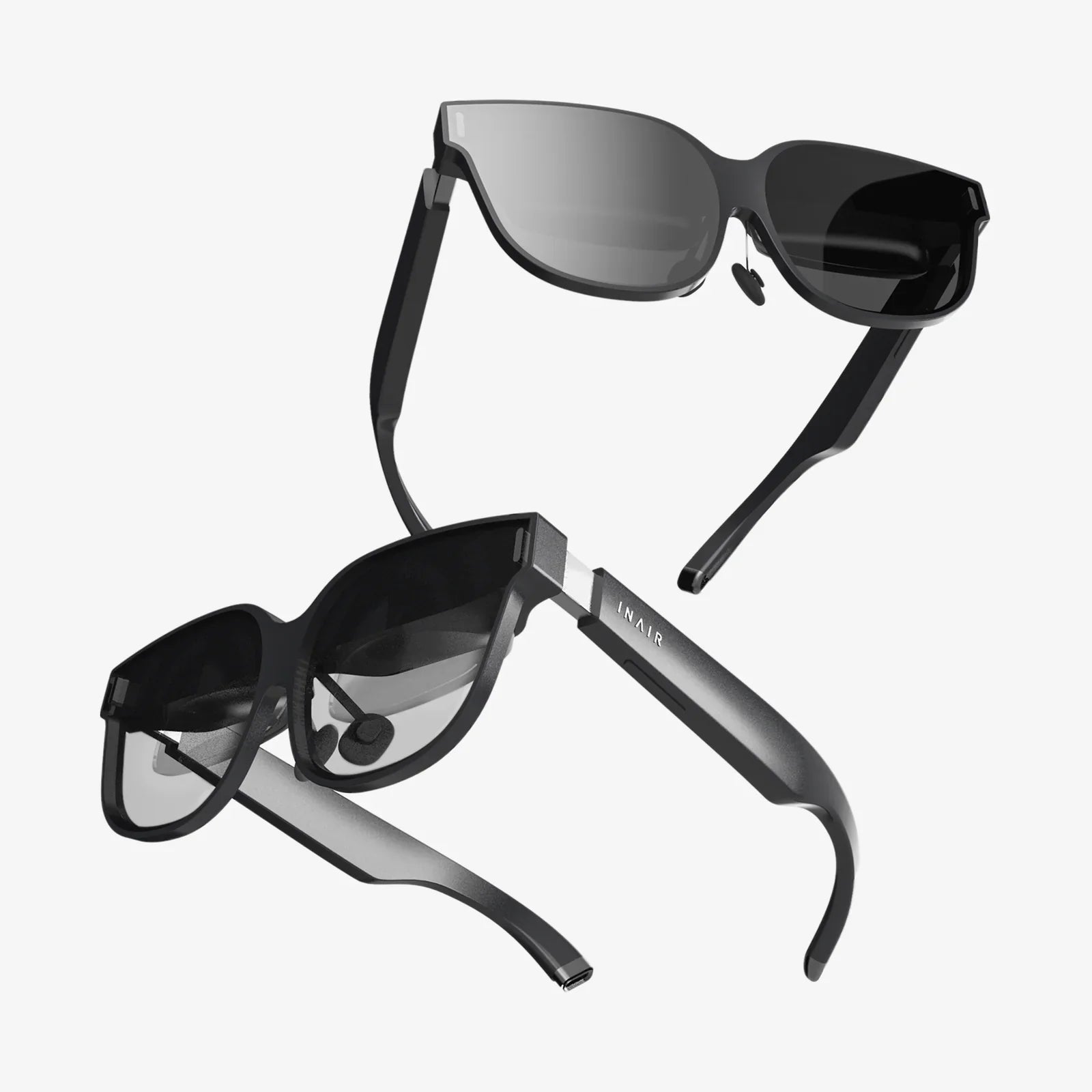
A pro AR headset is no longer a futuristic gadget reserved for tech labs and science fiction films. It is rapidly becoming the centerpiece of how professionals design products, train teams, collaborate remotely, and even perform surgery. If you are wondering whether these advanced augmented reality devices are worth the investment, or how they might reshape your industry, understanding what truly makes a headset “pro” is the first step to not being left behind.
Unlike basic consumer AR experiences that overlay simple filters or navigation cues, a pro AR headset delivers precise, stable, and high-fidelity digital content that feels anchored to the real world. This leap in quality opens the door to serious use cases: engineers inspecting machinery with live data overlays, architects walking clients through full-scale virtual buildings, medical teams rehearsing complex procedures on realistic 3D models, and remote experts guiding on-site workers as if they were physically present.
A pro AR headset is designed from the ground up for demanding, real-world work rather than casual entertainment. While consumer devices focus on fun and simplicity, professional-grade headsets prioritize accuracy, reliability, and integration with existing workflows. Several core characteristics distinguish a pro-level device from its entry-level counterparts.
First, optical quality and field of view are significantly better. Professional headsets aim for crisp text, accurate color reproduction, and minimal distortion so that detailed CAD models, medical images, or technical schematics are easy to read. A wider field of view makes digital overlays more immersive and useful, allowing workers to see more information without constantly turning their heads.
Second, tracking and spatial mapping are far more precise. A pro AR headset uses advanced sensors and algorithms to understand the environment in three dimensions, mapping walls, objects, and surfaces in real time. This spatial awareness ensures that virtual objects stay locked in place, even as the user moves quickly or turns around. For tasks like aligning a virtual engine component to a physical chassis, this level of precision is non-negotiable.
Third, a professional device offers robust input methods and interaction models. Hand tracking, eye tracking, voice commands, and physical controllers can all play a role, depending on the use case. The goal is to allow users to manipulate complex 3D content naturally, whether they are wearing gloves on a factory floor or scrubbing through a timeline of building design revisions in an office.
Fourth, integration and manageability are essential. A pro AR headset is not a standalone toy; it must connect to company networks, authenticate users, protect sensitive data, and integrate with existing software platforms. IT administrators need tools to deploy updates, manage permissions, and monitor device health at scale. Without this foundation, even the most impressive AR experience cannot succeed in an enterprise environment.
Finally, durability and ergonomics matter. Professional users may wear AR headsets for hours at a time in environments that range from operating rooms to construction sites. Adjustable straps, balanced weight distribution, breathable padding, and rugged construction are all crucial. A device that causes fatigue, eye strain, or discomfort will quickly end up unused on a shelf.
The hardware inside a pro AR headset determines how realistic, responsive, and comfortable the experience will be. Several components work together to deliver the illusion that digital content truly belongs in the physical world.
Displays and optics: Professional headsets typically use high-resolution displays paired with sophisticated lenses or waveguides. The goal is to present bright, sharp imagery that remains legible even in well-lit environments. Optical design also affects how large the virtual image appears, how wide the field of view is, and how much visual distortion users experience at the edges of their vision.
Sensors and cameras: Multiple cameras and depth sensors track the user’s head position, hand movements, and surrounding environment. Some devices use inside-out tracking, where all sensors are on the headset itself, while others may rely on external markers or beacons. A pro AR headset often includes depth sensing to accurately perceive distance, enabling occlusion (where virtual objects appear correctly behind real ones) and precise placement.
Processing power: To render complex 3D models, process sensor data, and manage connectivity, a professional headset needs a capable processor. Some devices are fully self-contained, with onboard computing and battery power, while others offload heavy computation to a nearby PC or a network server. The choice affects weight, battery life, and performance, and must be matched to the intended use.
Audio system: Spatial audio is more than a luxury in many professional scenarios. Realistic sound cues can guide attention, indicate the location of virtual collaborators, or simulate machinery noise. Many headsets use open-ear audio solutions that allow users to hear the real environment while still perceiving virtual sound sources accurately.
Connectivity: Wi-Fi, Bluetooth, and sometimes specialized low-latency wireless connections allow the headset to communicate with other devices and cloud services. For remote collaboration, low latency and reliable bandwidth are vital. In industrial settings, support for enterprise-grade security protocols is equally important.
Hardware alone does not make a pro AR headset valuable. The software ecosystem determines how easily developers and enterprises can create, deploy, and maintain AR applications that solve real problems.
Most professional devices support major 3D engines and frameworks that enable the creation of interactive AR experiences. This allows companies to build custom applications tailored to their workflows, whether that means visualizing building information models, overlaying step-by-step maintenance instructions, or simulating emergency response procedures.
Enterprise features such as identity management, access control, and encrypted data transmission are essential. A pro AR headset should integrate with existing authentication systems so that only authorized personnel can access sensitive AR content. Secure storage and transmission of data, especially in healthcare or defense applications, is non-negotiable.
Collaboration tools are another critical piece. Many professional AR platforms include shared sessions where multiple users can see the same virtual content anchored in the same physical space, even if they are in different locations. This capability underpins remote assistance, design reviews, and virtual training sessions.
Finally, analytics and telemetry provide insight into how AR applications are used. Organizations can track which procedures are most frequently accessed, how long training sessions last, and where users encounter difficulties. These insights help refine workflows and justify further investment in AR technology.
Design and engineering teams were among the earliest adopters of professional AR headsets, and for good reason. The ability to see and manipulate full-scale 3D models in real space transforms how products, buildings, and infrastructure are conceived and refined.
In product design, engineers can overlay virtual components onto physical prototypes to check clearances, identify conflicts, and experiment with variations. Instead of waiting for new physical parts to be manufactured, they can iterate virtually, saving time and material costs. A pro AR headset with accurate tracking and high-resolution displays allows teams to examine fine details such as fastener alignment or cable routing.
Architects and construction managers use AR to visualize building designs on-site. By walking through a construction site while wearing a headset, they can compare the planned structure to what has been built so far, spotting deviations early. This reduces costly rework and improves communication between stakeholders. Clients can also experience their future spaces at full scale, making decisions about layouts and finishes with greater confidence.
In infrastructure and industrial engineering, AR assists with planning complex installations such as pipelines, power systems, and manufacturing lines. Engineers can superimpose virtual models onto existing facilities to evaluate how new equipment will fit and interact with current systems. This spatial understanding is difficult to achieve using traditional 2D drawings or even standard 3D models on a flat screen.
Because these tasks demand precision, a pro AR headset’s ability to maintain stable, accurate alignment between virtual and physical elements is critical. Small tracking errors that might be acceptable in a casual game can cause serious issues when evaluating whether a heavy piece of machinery will fit safely into a crowded factory floor.
Training is one of the most compelling and measurable applications for professional AR. A pro AR headset can deliver hands-on, interactive training that closely mimics real-world tasks without requiring expensive equipment, travel, or downtime.
In technical and industrial fields, trainees can practice maintenance procedures on virtual replicas of complex machines. The headset guides them step by step, highlighting components, displaying torque values, or warning them if they attempt an incorrect action. This approach reduces the risk of damaging actual equipment and allows learners to repeat procedures as many times as needed.
Emergency response training also benefits from AR. Trainees can experience simulated fires, chemical spills, or medical emergencies overlaid onto real environments. Because the physical setting is real, the training feels more grounded than a fully virtual simulation, while still allowing trainers to control variables and scenarios. A pro AR headset’s spatial mapping and environmental understanding are essential for making these simulations believable and safe.
Soft skills training, such as customer service or leadership development, can incorporate virtual characters that respond to user behavior. Eye tracking and biometric data may be used to measure engagement, stress, or attention. This data-driven approach helps organizations refine their training programs and provide targeted feedback.
Compared to traditional classroom or video-based training, AR-based training often improves retention and performance because it engages multiple senses and closely resembles real work conditions. Pro-level hardware ensures that the experience is smooth, responsive, and reliable, which is crucial when training large groups or running time-sensitive sessions.
One of the most practical advantages of a pro AR headset is the ability to bring remote expertise directly into the field. Instead of flying specialists to sites around the world, organizations can equip local technicians with AR headsets and connect them to experts in real time.
During a remote support session, the field worker sees instructions, annotations, and diagrams overlaid onto the equipment they are servicing. The remote expert can view the scene from the worker’s perspective, draw arrows, highlight components, and share reference documents. This reduces travel costs, speeds up issue resolution, and allows experts to assist multiple sites in a single day.
In construction and infrastructure projects, teams in different locations can collaborate on shared AR models. An engineer in one city can mark up a structural element while a colleague on-site sees those annotations aligned with the physical structure. This tight feedback loop minimizes misunderstandings and accelerates decision-making.
For knowledge transfer, experienced workers can record AR-guided procedures that new employees can follow later. These recordings capture not just what to do, but where and how to do it, preserving institutional knowledge that might otherwise be lost as staff retire or move on.
To support these scenarios, a pro AR headset must offer reliable connectivity, low-latency streaming, and robust security. It also needs to be comfortable enough for extended use in the field, where workers may be wearing other protective gear and operating in challenging environments.
Healthcare is another domain where professional AR headsets are beginning to make a profound impact. From medical education to surgical planning and intraoperative guidance, AR provides clinicians with new ways to visualize and interact with complex anatomical information.
Medical students can study 3D anatomical models that appear in the room around them, walking around organs and systems to understand spatial relationships that are difficult to grasp from textbooks alone. Interactive AR lessons can highlight blood flow, simulate disease progression, or demonstrate the effects of surgical interventions.
Surgeons and interventional specialists use AR to plan procedures by overlaying patient-specific imaging data onto physical models or even onto the patient’s body. During surgery, a pro AR headset can display critical information such as incision lines, underlying structures, or instrument trajectories, potentially reducing errors and improving outcomes.
In rehabilitation, patients may engage in AR-guided exercises that encourage correct movement patterns and provide real-time feedback. Therapists can monitor progress and adjust programs based on data collected by the headset’s sensors.
Because healthcare involves sensitive data and strict regulatory requirements, professional AR solutions in this space must prioritize privacy, security, and accuracy. A pro AR headset used in a clinical environment must also be easy to clean, comfortable for extended use, and compatible with existing medical workflows and equipment.
Beyond technical and medical fields, pro AR headsets are reshaping how knowledge and culture are experienced and created. Educators, curators, and creative professionals are leveraging advanced AR to make content more immersive and engaging.
In classrooms and laboratories, students can explore interactive simulations that bring abstract concepts to life. Physics experiments, chemical reactions, and historical events can be visualized in three dimensions, allowing learners to manipulate variables and observe outcomes. A pro AR headset’s accurate tracking and high-quality visuals make these experiences more convincing and pedagogically effective.
Museums and cultural institutions are experimenting with AR-guided tours that overlay historical reconstructions or contextual information onto exhibits. Visitors might see a ruined structure restored to its original grandeur or view artifacts in the context of their original settings. Because professional AR systems can handle complex, high-resolution content, these experiences can be rich and detailed without sacrificing performance.
In the creative industries, artists and designers are using AR as a new medium. Performances can incorporate virtual characters and environments that interact with live performers and audiences. Installation art can respond to viewer movement and gaze, creating personalized experiences. A pro AR headset’s ability to precisely align virtual content with physical space is essential for these artistic experiments to feel cohesive and intentional.
Educational publishers and content creators are also exploring how AR can enhance textbooks, documentaries, and online courses. By pairing narrative content with interactive 3D experiences, they aim to increase engagement and improve learning outcomes across a wide range of subjects.
Selecting the right pro AR headset requires more than comparing basic specifications. The ideal device depends on your use cases, environment, and existing technology stack. Several criteria should guide your evaluation.
Use case alignment: Start by defining what you need the headset to do. Precision engineering, surgical guidance, and casual training each place different demands on resolution, tracking, and interaction methods. A device that excels in one context may be overkill or insufficient in another.
Comfort and ergonomics: Test how the headset feels during extended sessions. Consider weight distribution, adjustability, compatibility with glasses or protective gear, and how easy it is to put on and take off. User comfort directly affects adoption and productivity.
Visual quality: Evaluate resolution, field of view, brightness, and color accuracy. Pay attention to how small text appears, how stable virtual objects are, and whether any visual artifacts or eye strain occur. For tasks that involve detailed inspection or reading, visual clarity is critical.
Tracking performance: Assess how well the device tracks head movement, hand gestures, and the environment. Try rapid movements, occluded hands, and challenging lighting conditions. A pro AR headset should maintain stable tracking even in less-than-ideal settings.
Integration and security: Confirm that the headset can connect to your existing systems, software, and authentication methods. Check support for enterprise security features, data encryption, and device management tools. For regulated industries, ensure that the platform can meet compliance requirements.
Developer and content ecosystem: Consider how easy it will be to develop or acquire the AR applications you need. Look for robust SDKs, documentation, and community support. Availability of relevant third-party applications can accelerate deployment and reduce development costs.
Total cost of ownership: Factor in not just the purchase price, but also software licensing, training, support, and potential hardware accessories. Estimate the expected lifespan of the device and the cost of scaling from a pilot program to full deployment.
Adopting pro AR headsets at scale is not without challenges. Organizations must navigate technical hurdles, cultural resistance, and process changes to realize the full benefits of the technology.
One common challenge is integration with existing workflows. If AR experiences are not tightly aligned with how people already work, they may be perceived as extra steps rather than helpful tools. To avoid this, involve end users early in the design process, gather feedback, and iterate on pilot projects before rolling out widely.
Another issue is user acceptance. Some employees may be skeptical of new technology or concerned about being monitored. Transparent communication about the purpose of AR initiatives, clear privacy policies, and training that emphasizes personal benefits can help build trust. Selecting champions within each team who advocate for the technology can also accelerate adoption.
Technical constraints such as battery life, connectivity, and environmental conditions must be addressed. In remote or industrial settings, reliable network coverage may be limited. Solutions might include local processing, offline content, or dedicated network infrastructure. For extended use, spare batteries or charging strategies should be planned.
Content creation is another potential bottleneck. High-quality AR experiences require accurate 3D models, up-to-date documentation, and thoughtful interaction design. Organizations may need to invest in new skills or partner with specialized developers. Starting with high-impact, narrowly scoped applications can demonstrate value quickly while building internal expertise.
Finally, measuring success is essential. Define clear metrics such as reduced training time, fewer errors, faster maintenance, or improved customer satisfaction. Regularly review these metrics and adjust your AR strategy accordingly. A pro AR headset is a powerful tool, but its impact depends on how well it is integrated into the broader goals of the organization.
The capabilities of pro AR headsets are advancing rapidly, and several trends are poised to make them even more integral to professional life. Understanding these trends can help you plan investments that will remain relevant in the coming years.
One major trend is the convergence of AR with artificial intelligence. Future headsets will not only display information but also interpret the environment and user behavior to provide proactive assistance. For example, an AR system might recognize a piece of equipment, detect signs of wear, and suggest maintenance steps before a failure occurs.
Another trend is improved comfort and form factor. As components become smaller and more efficient, AR devices will look and feel more like ordinary eyewear. This shift will make it easier to wear AR throughout the workday, blurring the line between specialized AR sessions and everyday computing.
Network technologies such as 5G and beyond will enable low-latency streaming of complex content from the cloud, reducing the need for heavy onboard processing. This could allow lighter headsets to access highly detailed models and simulations on demand, making advanced AR more accessible across industries.
Standardization efforts are also underway, aiming to create common formats and protocols for AR content and interactions. As standards mature, it will become easier to share AR experiences across different devices and platforms, reducing vendor lock-in and fostering a more vibrant ecosystem.
Finally, as more organizations adopt pro AR headsets and share success stories, the perceived risk of investing in AR will diminish. What is now seen as cutting-edge will become a standard part of digital transformation strategies, much like mobile devices and cloud services before it.
Standing at this crossroads, professionals who understand the potential of a pro AR headset have a rare opportunity: to shape how their industries evolve rather than react after the fact. By exploring targeted use cases, carefully selecting hardware, and building internal expertise, you can turn advanced augmented reality from an intriguing concept into a competitive advantage that attracts talent, delights clients, and reshapes what your organization is capable of achieving.