


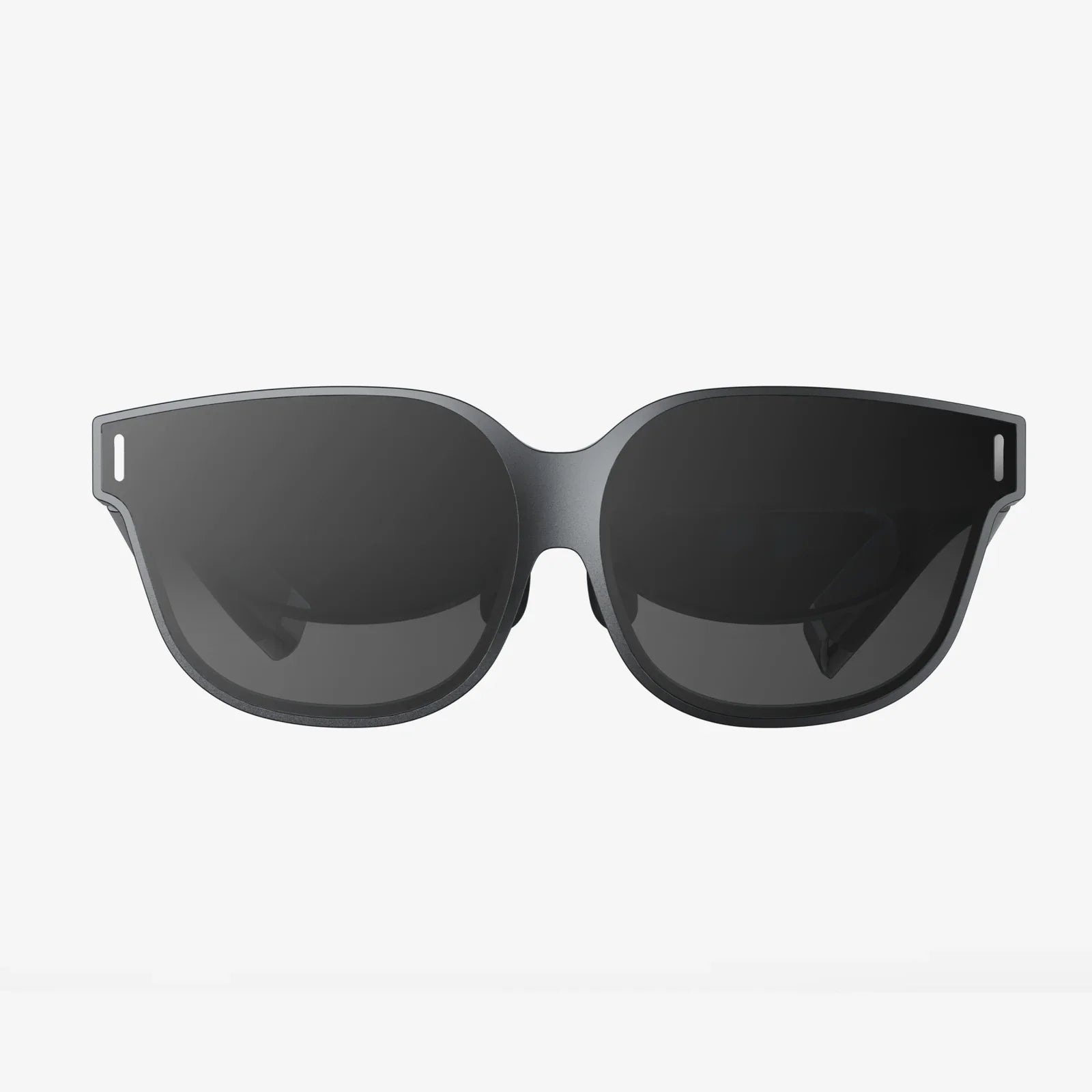
Reality eyeglasses sound like something pulled straight out of science fiction, yet they are rapidly becoming one of the most talked‑about technologies of this decade. Imagine slipping on a lightweight pair of glasses and instantly seeing digital directions floating above the street, real‑time translations hovering next to foreign text, or a virtual screen the size of a cinema display anchored to your living‑room wall. That blend of digital and physical worlds is exactly what reality eyeglasses promise, and the race to define how we will see and interact with information is already underway.
To understand why reality eyeglasses are generating so much attention, it helps to look at how they differ from traditional screens. For decades, our digital lives have been confined to rectangles: computer monitors, laptop displays, tablets, and phones. Reality eyeglasses break that frame. Instead of forcing you to look down at a device, they project information into your field of view or immerse you in a fully virtual environment. This shift from screen‑based interaction to world‑based interaction is as profound as the jump from desktop computers to smartphones, and it brings a new set of opportunities and challenges along with it.
What Are Reality Eyeglasses?
Reality eyeglasses are wearable devices shaped like ordinary glasses that overlay or replace what you see with digital imagery. They are designed to be worn on the face like traditional eyewear, but they contain miniature displays, sensors, processors, and connectivity components that allow them to present and understand digital content in real time.
Instead of staring at a handheld display, you look through transparent or semi‑transparent lenses. Depending on the type of reality experience, the glasses can either add virtual objects to your real surroundings or transport you to a completely virtual world. This makes reality eyeglasses a flexible platform for everything from navigation and communication to entertainment and professional work.
AR, VR, MR: The Spectrum Of Reality
Reality eyeglasses can deliver different levels of immersion, often described with three overlapping terms:
- Augmented Reality (AR): Digital content is layered on top of the real world. You still see your surroundings, but with additional information such as labels, arrows, or 3D objects. AR reality eyeglasses are transparent or semi‑transparent, letting you maintain awareness of your environment.
- Virtual Reality (VR): Your view of the real world is blocked and replaced with a fully digital environment. While many VR devices currently look more like headsets than eyeglasses, the long‑term goal is to compress this experience into lighter, glasses‑like form factors.
- Mixed Reality (MR): A more advanced form of AR where digital objects not only appear in the real world but also interact with it. For example, a virtual ball can bounce off your real table, and a digital character can hide behind your real sofa.
Reality eyeglasses may specialize in one of these modes or support multiple modes, switching between them depending on the task. This flexibility is part of what makes the technology so powerful and so complex to design.
Core Technologies Inside Reality Eyeglasses
Behind the sleek frames of reality eyeglasses lies a dense combination of advanced technologies. Understanding these components makes it easier to see why this category is evolving quickly but still faces engineering hurdles.
Optics And Display Systems
The heart of reality eyeglasses is the display system that brings digital imagery into your field of view. Several approaches are used:
- Waveguide optics: Light from a small projector is injected into a transparent lens and guided through it, then redirected into your eyes. This allows for thin, glasses‑like designs while keeping the lenses mostly clear.
- Birdbath or combiner optics: A semi‑reflective element in front of the eye reflects a projected image while letting real‑world light pass through. This design is bulkier but can deliver brighter images.
- Micro‑displays: Tiny screens, often based on micro‑LED, OLED, or liquid crystal on silicon, generate the image. The challenge is to pack high resolution, brightness, and color performance into very small components.
Because these displays sit so close to the eyes, they must be carefully calibrated to avoid eye strain, distortions, and mismatched focus that can cause discomfort or headaches.
Sensors And Environmental Awareness
For reality eyeglasses to anchor digital objects convincingly in the world, they need a constant stream of data about your surroundings and your movements. Common sensors include:
- Cameras: Capture the environment for mapping, object recognition, and sometimes pass‑through video for VR‑like experiences.
- Depth sensors: Use infrared or other techniques to measure distances, enabling 3D mapping and accurate placement of virtual objects.
- Inertial measurement units (IMUs): Combine accelerometers, gyroscopes, and sometimes magnetometers to track head orientation and motion.
- Eye‑tracking sensors: Monitor where you are looking, allowing for foveated rendering (sharper images where your eyes focus) and more natural interaction.
These sensors work together to build a constantly updated model of the environment and your position within it, which is essential for stable, believable augmented or mixed reality experiences.
On‑Board Computing And Connectivity
Reality eyeglasses must process sensor data, render graphics, and manage connectivity in real time. This requires efficient processors and careful power management. Many designs use:
- Mobile‑class processors optimized for low power consumption.
- Dedicated graphics units for rendering 3D content.
- Wireless connectivity such as Wi‑Fi and Bluetooth to offload some tasks to smartphones or cloud servers.
The balance between on‑device processing and cloud‑based processing is a core design decision. More local processing reduces latency but increases heat and battery demands. Offloading to the cloud can enable more complex experiences but depends on reliable, low‑latency network connections.
How Reality Eyeglasses Change Everyday Life
Beyond the technical details, reality eyeglasses matter because of how they can reshape daily routines. From the way you navigate a city to how you collaborate with colleagues, these devices open new patterns of interaction that traditional screens cannot match.
Navigation And Urban Exploration
One of the most intuitive uses of reality eyeglasses is navigation. Instead of glancing down at a phone map, you could see:
- Arrows painted on the sidewalks or roads showing your route.
- Floating labels above buildings indicating landmarks, restaurants, or transit stops.
- Real‑time public transport information hovering near station entrances.
This type of spatial guidance can reduce cognitive load, as you no longer need to mentally translate a 2D map into 3D directions. It can also make exploring new cities more accessible and less stressful.
Communication And Social Presence
Reality eyeglasses can make communication feel more physical even when people are far apart. Potential scenarios include:
- Seeing a life‑size, three‑dimensional representation of a colleague standing in your room during a meeting.
- Having subtitles appear next to a person as they speak in another language.
- Viewing contextual information about a contact, such as their last shared notes, anchored near their virtual presence.
This kind of spatial communication could transform remote work, online events, and even personal calls, blending the intimacy of in‑person interaction with the flexibility of digital tools.
Productivity And The Infinite Workspace
Reality eyeglasses can turn any physical environment into a multi‑screen workspace without requiring actual monitors. Consider the following possibilities:
- Virtual screens arranged around your desk, each showing different documents or applications.
- Task lists pinned to your wall, always visible when you look at a specific location.
- 3D data visualizations floating in front of you, allowing you to walk around complex models.
Because these elements are digital, you can resize them, reposition them, and store different layouts for different tasks. This flexibility could significantly alter how people think about office space and personal productivity setups.
Reality Eyeglasses In Work And Industry
While consumer applications often get the spotlight, reality eyeglasses are already making an impact in professional environments. Their ability to deliver context‑aware information hands‑free is particularly valuable in fields where workers move around, handle tools, or need to keep their attention on physical tasks.
Manufacturing, Maintenance, And Field Service
In industrial settings, reality eyeglasses can display step‑by‑step instructions or real‑time sensor data directly in the worker’s view. Some practical examples include:
- Technicians seeing overlaid diagrams on machinery, showing which part to adjust or replace.
- Maintenance workers receiving alerts about equipment performance while walking through a facility.
- Remote experts viewing what the on‑site worker sees and drawing annotations in their field of view for guidance.
This reduces the need to consult paper manuals or handheld devices, helping workers complete tasks faster and with fewer errors. It can also support training by allowing new employees to follow guided overlays in real time.
Architecture, Construction, And Design
For architects, engineers, and construction professionals, reality eyeglasses offer powerful visualization capabilities. They can:
- Overlay proposed building models on top of real sites, showing how structures will look before they are built.
- Highlight the location of pipes, wiring, or structural elements hidden behind walls.
- Enable collaborative design sessions where multiple participants view and manipulate the same 3D model in physical space.
This ability to merge digital plans with physical spaces can help catch design conflicts earlier, improve client understanding, and streamline on‑site decision‑making.
Healthcare And Medical Training
Reality eyeglasses show promise in healthcare, where precision and access to information are critical. Potential uses include:
- Surgeons viewing patient imaging data aligned with the body during procedures.
- Medical students practicing on virtual patients overlaid on mannequins or real spaces.
- Therapists using immersive environments to support rehabilitation or mental health treatments.
Because healthcare environments demand reliability and safety, the adoption of reality eyeglasses in this sector tends to focus on carefully controlled scenarios, but the potential impact is substantial.
Education, Training, And Skill Development
Reality eyeglasses can make learning more immersive and interactive by blending theoretical content with hands‑on experiences. This can benefit classrooms, vocational training, and lifelong learning.
Classroom Learning And Interactive Lessons
In a classroom equipped with reality eyeglasses, students might:
- Walk around a life‑size 3D model of the solar system anchored in the room.
- See historical scenes reconstructed around them while studying history.
- Explore molecular structures or anatomical models from any angle.
By turning abstract concepts into spatial, manipulable objects, reality eyeglasses can support different learning styles and potentially increase engagement and retention.
Vocational Training And Simulation
For skills that are difficult or expensive to practice in real life, reality eyeglasses can provide realistic simulations. Examples include:
- Training pilots or drivers in virtual scenarios with realistic physics and feedback.
- Teaching electricians to safely work with high‑voltage systems using virtual replicas.
- Preparing emergency responders with simulated disaster environments layered onto training grounds.
These experiences can be repeated, adjusted in difficulty, and analyzed afterward, giving learners detailed feedback and allowing organizations to track progress over time.
Entertainment, Gaming, And Culture
Entertainment is often at the forefront of new visual technologies, and reality eyeglasses are no exception. Their ability to merge digital content with real spaces opens up new possibilities for games, performances, and cultural experiences.
Location‑Based And Social Gaming
Reality eyeglasses can turn entire neighborhoods into game boards. Imagine:
- Collecting virtual items hidden in real‑world locations as you walk through a city.
- Competing with friends to capture digital territories that correspond to physical landmarks.
- Solving puzzles that involve interacting with both physical objects and virtual clues.
Because everyone sees the game elements aligned to the same physical spaces, social play becomes more dynamic and shared than traditional screen‑based games.
Immersive Storytelling And Performances
Reality eyeglasses also enable new forms of storytelling. Theater productions could extend beyond the stage, with virtual characters appearing among the audience. Museums could bring artifacts to life with animated overlays and contextual scenes. Concerts could feature visual effects that each attendee experiences uniquely through their glasses.
This kind of layered cultural experience blurs the line between spectator and participant, making events more personal and potentially more memorable.
Key Challenges Facing Reality Eyeglasses
Despite their promise, reality eyeglasses face significant hurdles. Some are technical, others social and ethical. Understanding these challenges is essential for anyone considering adopting or designing these devices.
Comfort, Design, And Social Acceptance
For reality eyeglasses to become everyday accessories, they must be comfortable, stylish, and socially acceptable. Issues include:
- Weight and balance: Heavy or front‑loaded designs can cause discomfort during extended use.
- Heat: Concentrated electronics can generate heat near the temples or forehead.
- Appearance: Bulky frames, visible cameras, or unusual shapes may make wearers self‑conscious or draw unwanted attention.
Designers must balance functionality with aesthetics, aiming for devices that blend into everyday life rather than signaling “high‑tech gadget” from across the room.
Battery Life And Performance
Reality eyeglasses require substantial processing power and display brightness, both of which consume energy. However, they also need to be lightweight, limiting battery size. This trade‑off leads to challenges such as:
- Limited usage time before recharging.
- Reduced brightness outdoors to preserve battery life.
- Potential performance throttling during intensive tasks.
Advances in low‑power processors, more efficient displays, and improved battery technologies are crucial for making all‑day reality eyeglasses practical.
Motion Sickness, Eye Strain, And Health Concerns
Some users experience discomfort while using immersive visual devices. Common issues include:
- Motion sickness caused by mismatches between visual motion and physical movement.
- Eye strain from focusing at a fixed distance while perceiving objects at varying depths.
- Neck strain if users hold their heads in unnatural positions to see content.
Reducing latency, improving optics, and designing experiences that respect human physiology are all active areas of research and development.
Privacy, Security, And Ethics
Reality eyeglasses raise serious privacy questions. Because they often include cameras and sensors, they can potentially record and analyze everything the wearer sees and hears. Concerns include:
- Recording people without their knowledge or consent in public or private spaces.
- Facial recognition or other identification features used inappropriately.
- Data collection about user behavior, location, and environment for profiling or targeted advertising.
Addressing these issues requires a combination of technical safeguards, transparent policies, and possibly new regulations. Social norms will also play a role, as communities decide where and how such devices are acceptable.
What To Consider Before Using Reality Eyeglasses
If you are thinking about incorporating reality eyeglasses into your life or work, a few practical considerations can help you make informed decisions.
Use Cases And Goals
Start by clarifying what you want reality eyeglasses to do for you. Some common goals include:
- Enhancing productivity with virtual screens and information overlays.
- Improving training and education through immersive simulations.
- Exploring new entertainment and gaming experiences.
Different devices and software ecosystems focus on different strengths, so matching your priorities to the capabilities of a given platform is essential.
Comfort, Fit, And Accessibility
Because reality eyeglasses are worn on the face, comfort is critical. When evaluating options, consider:
- Weight and how evenly it is distributed across the nose and ears.
- Compatibility with prescription lenses, if you need vision correction.
- Adjustability for different head sizes and shapes.
Accessibility features, such as voice control, customizable fonts, and support for different sensory needs, can also make a big difference in day‑to‑day usability.
Software Ecosystem And Content
Reality eyeglasses are only as useful as the applications they support. Before committing, it is worth examining:
- The range of available apps relevant to your work or interests.
- How easily developers can create new experiences for the platform.
- Compatibility with the devices and services you already use.
A robust ecosystem can extend the life and value of your investment by ensuring that new experiences and improvements continue to appear over time.
The Road Ahead For Reality Eyeglasses
Reality eyeglasses sit at the intersection of hardware innovation, software creativity, and shifting cultural expectations. As displays become more efficient, processors more powerful, and artificial intelligence more capable, these devices are likely to grow thinner, lighter, and more capable. At the same time, society will continue to negotiate how comfortable it is with always‑on sensors and digital overlays in shared spaces.
What makes reality eyeglasses particularly compelling is their potential to become as common as smartphones, not by replacing the physical world, but by enriching it. Instead of pulling you away from your surroundings, they aim to weave information into the spaces you already inhabit. Whether you are navigating a crowded city, repairing complex equipment, studying a new subject, or simply relaxing with an immersive story, reality eyeglasses promise to change not just what you see, but how you think about seeing. Those who understand their capabilities and limitations early will be better positioned to shape how this technology fits into their personal lives, their work, and the broader culture that is still learning how to live in a world where the boundaries between reality and digital experience grow thinner every day.
Aktie:
Breakfast in Mountain Home AR: Hidden Gems, Local Flavor, and Scenic Starts
Reality Glasses And The Future Of Everyday Digital Life