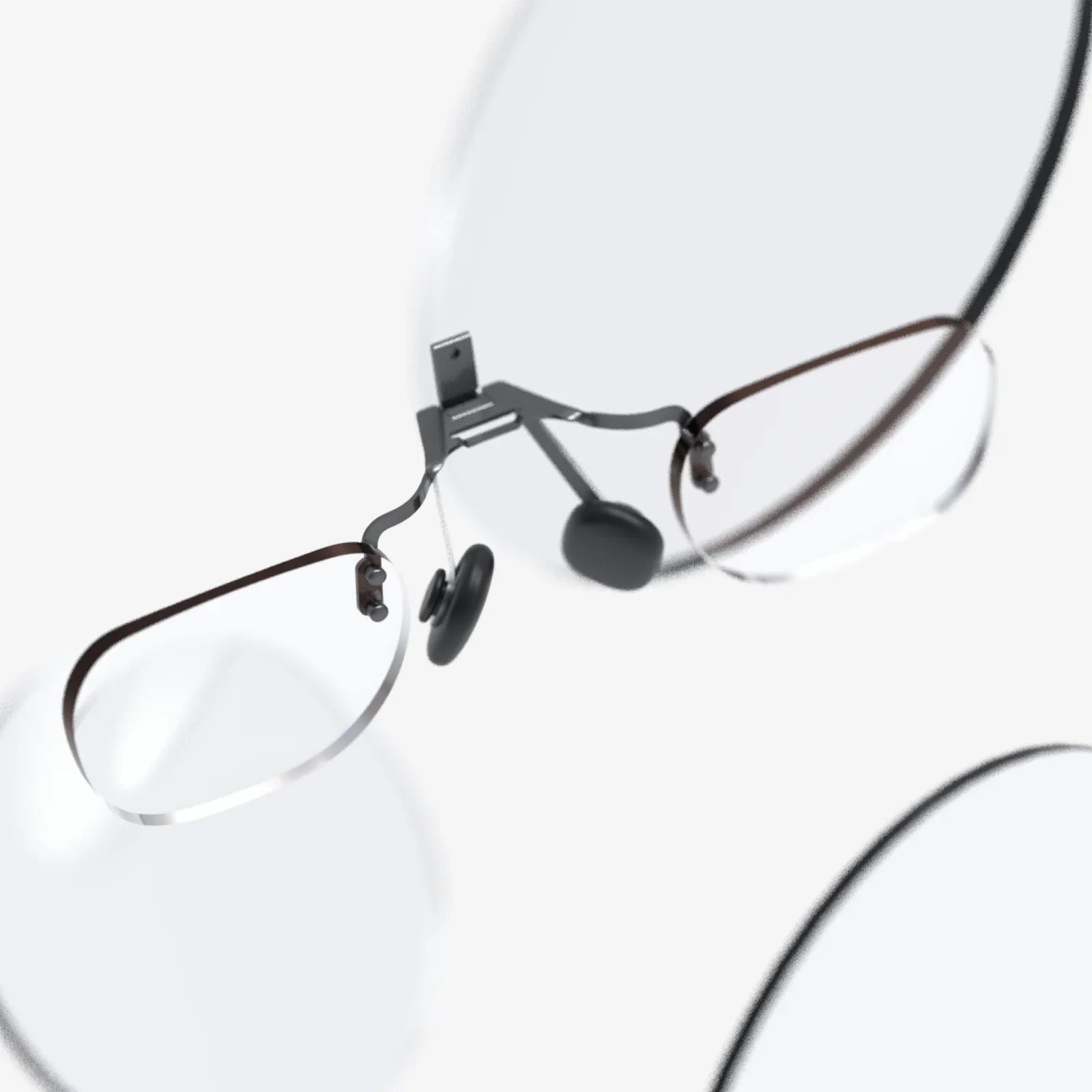
Imagine glancing at a street sign in a foreign city and instantly seeing a translation hovering beside it, or joining a meeting where everyone else is staring at laptops while your notes, agenda, and action items float quietly in your field of view. That is the promise of smart specs: everyday glasses that merge digital information with the real world so seamlessly that they start to feel like a natural extension of your mind. As this new wave of wearable technology accelerates, understanding what smart specs can do, how they work, and how they might reshape daily life could be the difference between being overwhelmed by change and taking control of it.
What Are Smart Specs?
Smart specs are network-connected glasses that combine traditional eyewear with miniature displays, sensors, microphones, and processors. They are designed to deliver information directly into your line of sight, respond to your voice or gestures, and integrate with your phone, home, and work systems. Instead of pulling a device from your pocket, you look, speak, or gesture, and the information appears in front of you.
Unlike bulky headsets, smart specs aim to look and feel like regular glasses or sunglasses. The core idea is ambient computing: technology that fades into the background while still being available at a moment’s notice. This shift is significant because it changes not just how we access information, but when and where we can use it without breaking our focus.
Key Technologies Behind Smart Specs
To understand why smart specs are so powerful, it helps to look at the technologies packed into a seemingly ordinary frame:
-
Micro-displays: Tiny projectors or OLED panels built into the frame or lenses display text, icons, or full augmented reality (AR) overlays. Some designs project images onto the lens surface, while others use waveguides to direct light into your eyes.
-
Sensors and cameras: Smart specs often include cameras, accelerometers, gyroscopes, magnetometers, and sometimes depth sensors. These help the glasses understand where you are, what you are looking at, and how you are moving.
-
Microphones and speakers: Beamforming microphones capture your voice and filter out noise, while tiny speakers or bone-conduction transducers deliver audio without blocking your ears.
-
Onboard computing: Low-power processors and dedicated chips for graphics and AI handle tasks like voice recognition, basic AR, and sensor fusion, often in coordination with a paired phone or cloud services.
-
Connectivity: Bluetooth, Wi-Fi, and sometimes cellular connectivity keep smart specs linked to your other devices and the internet.
-
Power systems: Miniature batteries and power management systems balance performance with all-day wearability, one of the biggest engineering challenges.
All of these components are optimized to be small, light, and efficient, making smart specs a concentrated showcase of modern electronics and design.
Why Smart Specs Matter More Than Another Gadget
Smartphones changed the world by making computing portable. Smart specs take the next step by making computing persistent and hands-free. That difference matters for three reasons:
-
Attention: Instead of constantly shifting your gaze from the world to a screen, smart specs keep your eyes on what you are doing while still giving you access to information.
-
Context: Because smart specs can see what you see and sense where you are, they can provide context-aware guidance and feedback that a phone cannot match as easily.
-
Friction: The fewer steps it takes to access information, the more likely you are to use it. Glancing or speaking is faster than unlocking a phone, opening an app, and navigating menus.
These differences may sound subtle, but they can add up to major changes in productivity, learning, and how we interact with our surroundings.
Everyday Use Cases: How Smart Specs Fit Into Daily Life
To see the potential of smart specs, imagine how they could integrate into different parts of your day.
Morning: Navigation, Planning, and Task Management
As you start your day, smart specs can serve as a silent, visual assistant:
- When you leave home, turn-by-turn navigation appears as subtle arrows at street level, guiding you without requiring you to look down at a phone.
- Your schedule floats briefly into view as you walk, showing your first meeting, commute time, and any urgent tasks.
- Weather alerts and transit updates appear contextually, only when they matter, reducing notification overload.
The key benefit is that you stay present in your environment while still being fully informed.
Work: Hands-Free Productivity and Collaboration
In the workplace, smart specs can transform how information flows:
-
Reference on demand: Need a document, checklist, or script while you are working with your hands? It appears in a corner of your vision without blocking your view.
-
Live collaboration: A remote colleague can see what you are seeing (if you allow it) and draw annotations that appear in your view, guiding you through repairs, inspections, or complex procedures.
-
Real-time transcription: Meeting dialogue can be transcribed into captions in your field of view, helping with note-taking, accessibility, and language barriers.
For roles that involve fieldwork, manufacturing, logistics, healthcare, or maintenance, smart specs can reduce errors, speed up training, and improve safety by keeping workers’ hands free and eyes up.
Learning and Skill Building
Smart specs can turn the world into an interactive classroom:
- Step-by-step instructions for cooking, DIY projects, or repairs appear as you perform each action, with visual overlays showing exactly where to cut, place, or adjust.
- Language learners can see translations of signs, menus, or even simple phrases in real time, reinforcing vocabulary in context.
- Students can overlay diagrams, timelines, or 3D models on top of physical objects to deepen understanding in subjects like biology, history, or engineering.
By linking information to physical context, smart specs can make learning more intuitive and memorable.
Health, Fitness, and Safety
Smart specs can also support healthier, safer lifestyles:
- During a run or bike ride, your pace, distance, and heart rate can appear at the edge of your vision, letting you monitor performance without breaking stride.
- Form cues for exercises or sports can appear as subtle prompts, helping you avoid injury and train more effectively.
- For people with visual or hearing impairments, smart specs can provide navigation assistance, object recognition, or live captions for conversations, increasing independence.
- Safety alerts, such as collision warnings while cycling or walking in traffic, can use visual and audio cues to draw attention to hazards.
Over time, smart specs could integrate with health monitoring systems to provide early warnings or personalized coaching based on your behavior and environment.
Entertainment and Social Experiences
Entertainment is another area where smart specs can shine:
- Live events like concerts or sports games could include optional overlays showing lyrics, player stats, or instant replays, enhancing the experience without requiring a separate screen.
- Casual games that blend with your surroundings could turn a walk through the park into an interactive adventure.
- Social interactions could be enriched with subtle context, such as remembering names, shared interests, or previous conversations, if users choose to store and display that information.
The challenge will be to use these capabilities in ways that enhance human connection rather than distract from it.
Augmented Reality: The Visual Layer of Smart Specs
One of the most compelling aspects of smart specs is their ability to deliver augmented reality. AR overlays digital information onto the real world, expanding what you can see and understand without removing you from your surroundings.
There are different levels of AR that smart specs might provide:
-
Heads-up information: Simple text and icons, such as notifications, navigation arrows, or status indicators.
-
Contextual labels: Information attached to real-world objects, like names of buildings, product details, or instructions.
-
Spatial overlays: 3D graphics that align precisely with the environment, such as virtual furniture placed in your living room or repair guides that highlight specific parts of a machine.
To make AR feel natural, smart specs must track your head and eye movements, understand the geometry of your surroundings, and render graphics with minimal lag. When this works well, the digital layer can feel like a natural extension of the physical world.
Privacy and Ethics: The Biggest Questions Around Smart Specs
As powerful as smart specs can be, they raise serious questions about privacy, consent, and social norms. Because they often include cameras and microphones, and because they are worn on the face, they can capture information in ways that are less obvious than a person holding up a phone.
Some of the key concerns include:
-
Recording without consent: People may not know when they are being recorded or analyzed by someone wearing smart specs, especially if there are no visible indicators.
-
Facial recognition: The possibility of automatically identifying people in public spaces raises concerns about surveillance, stalking, and loss of anonymity.
-
Data collection: Smart specs can gather detailed data about where you look, where you go, what you do, and who you interact with. How that data is stored, processed, and shared is critical.
-
Workplace monitoring: In professional settings, smart specs could be used to track worker performance, attention, and behavior in ways that feel invasive.
Addressing these issues will require thoughtful design and strong policies. Potential protective measures include:
- Clear visual indicators when recording is active.
- Local processing of sensitive data so it never leaves the device unnecessarily.
- Strict controls over third-party access to sensor data.
- Legal frameworks that limit abusive uses of facial recognition and surveillance.
Users also have a role to play by understanding the capabilities of their devices, respecting the privacy of others, and setting boundaries about where and how they use smart specs.
Design Challenges: Comfort, Style, and Social Acceptance
For smart specs to become mainstream, they must overcome more than technical hurdles. They must also fit into people’s lives aesthetically and socially.
Important design challenges include:
-
Comfort: Smart specs must be light enough to wear all day without causing strain on the nose or ears. Heat management is also important so the frames do not become uncomfortably warm.
-
Battery life: Users expect at least a full day of typical use. This requires careful balancing of display brightness, sensor usage, and processing power.
-
Style: People choose glasses not just for function, but as part of their identity. Smart specs need to offer a range of designs that do not look like technical gear unless that is the user’s preference.
-
Distraction: The interface must be subtle enough that it does not constantly pull attention away from the real world. Minimal, context-aware notifications are crucial.
-
Social cues: It should be clear when a person is paying attention to you versus reading something or interacting with their device. This may require interface and hardware cues that signal engagement.
These design choices will strongly influence how comfortable people feel around smart specs and how widely they are adopted.
Smart Specs vs. Smartphones and Other Wearables
Smart specs are not just another phone accessory; they represent a different category of computing. Comparing them with existing devices highlights their unique strengths and limitations.
Smart Specs vs. Smartphones
-
Advantages of smart specs: Hands-free operation, persistent access to information, and contextual awareness through cameras and sensors aligned with your gaze.
-
Advantages of smartphones: Larger screens, more powerful processors, and established app ecosystems. They are better suited for long-form reading, complex interfaces, and media consumption.
In practice, smart specs are likely to complement rather than replace smartphones, handling quick interactions and context-sensitive tasks while phones remain central for heavy computing.
Smart Specs vs. Smartwatches and Fitness Bands
-
Smartwatches: Great for glanceable notifications and fitness tracking, but limited in display size and contextual awareness.
-
Smart specs: Offer richer visual information and deeper integration with your environment, but are more visible and potentially more intrusive.
Many people may find that a combination of smart specs and wrist-worn devices provides the best balance of discreet notifications, health tracking, and immersive information.
How Smart Specs Could Transform Different Industries
Beyond personal use, smart specs have the potential to reshape entire industries by changing how information is delivered and how work is performed.
Healthcare
In healthcare, smart specs could:
- Display patient records, imaging, and checklists during procedures, reducing reliance on separate monitors.
- Enable remote specialists to guide on-site clinicians by seeing exactly what they see.
- Assist with training by overlaying anatomical information or procedural steps during practice sessions.
These capabilities could improve accuracy, reduce errors, and expand access to expert knowledge.
Manufacturing and Field Service
In manufacturing plants, warehouses, and field service roles, smart specs can:
- Provide real-time instructions and safety warnings in environments where hands and attention must be focused on machinery.
- Support predictive maintenance by overlaying sensor data and highlighting components likely to fail.
- Reduce training time by giving new workers visual guidance instead of relying solely on manuals.
These improvements can lead to fewer mistakes, faster repairs, and more flexible workforces.
Education and Training
In education, smart specs can:
- Enable immersive field trips where historical events, scientific concepts, or artistic details are overlaid onto real-world locations.
- Support vocational training by simulating complex tasks in real environments without the full risks or costs.
- Offer personalized learning paths where hints, explanations, or practice problems appear just when they are needed.
By making learning more interactive and contextual, smart specs could help students stay engaged and retain more information.
Retail and Customer Service
In retail and customer-facing roles, smart specs could:
- Help staff locate products, check inventory, and access customer preferences without leaving the customer’s side.
- Provide visual merchandising guides so displays can be set up correctly and consistently.
- Enable new forms of in-store experiences where customers can see additional information or virtual products through store-provided smart specs.
Used carefully, these tools can enhance service quality and personalize experiences while keeping human interaction at the center.
Potential Risks and Downsides
Despite their promise, smart specs come with real risks that need to be addressed thoughtfully.
-
Digital distraction: Poorly designed interfaces could bombard users with notifications and overlays, making it harder to focus and increasing the risk of accidents.
-
Overreliance: Constant access to guidance and information might reduce the incentive to memorize or deeply understand certain skills, potentially weakening independent problem-solving.
-
Social friction: People may feel uneasy talking to someone whose eyes occasionally flick to invisible notifications, or who might be recording without clear consent.
-
Security vulnerabilities: If smart specs are compromised, attackers could access cameras, microphones, and location data, creating serious security and privacy threats.
-
Equity concerns: If smart specs become essential tools for education or work but remain expensive, they could deepen existing digital divides.
Recognizing these risks early allows designers, policymakers, and users to shape norms and safeguards before problematic patterns become entrenched.
What To Look For When Choosing Smart Specs
For people considering adopting smart specs as they become more widely available, several factors can help distinguish promising devices from gimmicks.
-
Comfort and fit: Try to assess weight distribution, nose pad comfort, and how the frames feel after extended wear. Comfort is non-negotiable for a device that sits on your face.
-
Display quality: Check brightness, clarity, and how intrusive the overlay feels. The best displays provide information that is readable in various lighting conditions without obscuring your view.
-
Battery life: Consider how long the device can last under typical use, including display time, audio, and connectivity. Swappable or fast-charging options can be valuable.
-
Controls and interaction: Evaluate how you interact with the device: voice commands, touch-sensitive frames, gesture recognition, or eye tracking. The most useful systems feel natural and require minimal effort.
-
Privacy features: Look for clear indicators of recording, robust permission controls, and transparent data policies. Local processing of sensitive data is a positive sign.
-
Prescription support: If you wear corrective lenses, ensure the smart specs can accommodate your prescription or integrate with existing eyewear.
-
App ecosystem and integration: Check which services and platforms the smart specs support, and how well they integrate with your existing devices and workflows.
Ultimately, the best smart specs are those that solve real problems in your daily life while respecting your comfort and privacy.
Preparing for a World Where Smart Specs Are Common
Even if you are not ready to wear smart specs yet, it is worth thinking about what it will mean when many people around you are using them. Social norms will need to evolve, just as they did when smartphones first appeared.
Some practical steps for individuals and organizations include:
-
Setting boundaries: Establish clear rules about where smart specs are acceptable, such as in classrooms, meetings, or private spaces. Visible policies help avoid misunderstandings.
-
Encouraging transparency: Ask people to disclose when cameras or recording features are active, and make it normal to request that recording be turned off in sensitive situations.
-
Designing for respect: Developers and companies should build features that make it easy to respect others’ privacy, such as prominent recording indicators and default restrictions in certain environments.
-
Educating users: Training and guidelines can help users understand not just how to use smart specs, but how to use them responsibly.
By thinking ahead, communities can harness the benefits of smart specs while minimizing conflicts and abuses.
The Road Ahead: How Smart Specs Could Evolve
Smart specs are still in the early stages of their evolution, but several trends are likely to shape their future:
-
Improved miniaturization: Components will continue to shrink, allowing for lighter frames, larger batteries, and more powerful processing with less heat.
-
Better displays: Advances in micro-LED and waveguide technology could deliver brighter, sharper images that are more comfortable to view and easier to see in sunlight.
-
Smarter software: On-device AI will become more capable, enabling more natural voice interactions, better scene understanding, and more personalized experiences without always relying on the cloud.
-
Integration with other devices: Smart specs will likely work more closely with phones, laptops, and home devices, creating a seamless ecosystem where each device plays to its strengths.
-
Specialized models: Different versions of smart specs may emerge for gaming, enterprise use, healthcare, and everyday wear, each optimized for specific needs.
As these developments unfold, the line between the digital and physical worlds will blur further, making it even more important to think carefully about how we want to live with this technology.
Smart specs are poised to redefine how you see and shape your world, turning ordinary moments into opportunities for insight, creativity, and connection. Whether you are drawn to the idea of hands-free productivity, immersive learning, or simply a more streamlined way to navigate your day, this emerging technology offers a glimpse of a future where information is always available but rarely intrusive. The real power of smart specs will not come from flashy features alone, but from how thoughtfully they are woven into your habits, relationships, and values. If you start paying attention now—testing what works for you, setting boundaries that feel right, and demanding designs that respect human needs—you will be ready to step into that future with your eyes wide open, instead of just watching it pass by.