


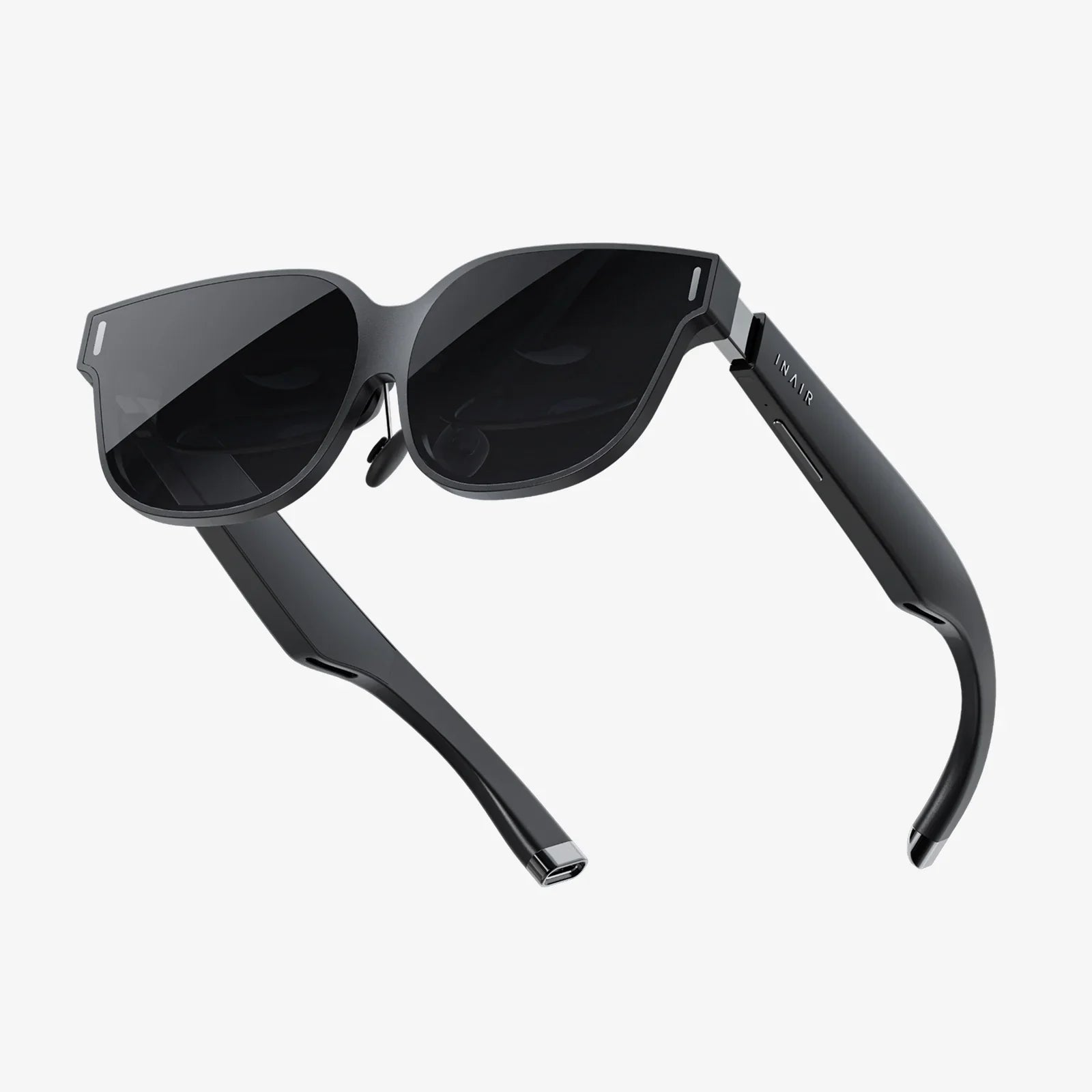
- von wangfred
Space Goggles And The Future Of Human Vision Beyond Earth
- von wangfred
Space goggles sound like something pulled straight from a sci-fi movie, yet they are quickly becoming one of the most important tools for humans who dream of living, working, and even playing beyond Earth. Whether you imagine astronauts navigating the glare of the Sun in orbit, tourists floating through luxury space hotels, or miners operating robotic drills on an asteroid, a single piece of gear shows up in every scenario: advanced eye protection and visual enhancement systems designed specifically for space. Understanding how these space goggles work, why they are needed, and how they are evolving might change the way you think about the future of human vision.
Human eyes evolved under the protection of Earth’s atmosphere and magnetic field. Once we leave that protective blanket, vision becomes one of the most vulnerable senses. Space goggles are not a fashion accessory; they are a survival tool that can mean the difference between mission success and permanent eye damage.
Outside Earth’s atmosphere, astronauts face intense ultraviolet radiation, extreme brightness when looking toward the Sun, and deep darkness when facing away from it. The contrast can be brutal. On top of that, tiny particles of dust, debris, and even floating droplets can irritate or damage the eyes in microgravity. Space goggles are engineered to mitigate all of these hazards while still allowing precise, clear vision for complex tasks.
The environment beyond Earth is unforgiving, especially for eyesight. Space goggles must contend with several unique threats that have no direct equivalent on the ground.
Space goggles are designed around these conditions, providing a controlled visual environment for the wearer even when everything around them is unstable and extreme.
Modern space goggles are more than simple protective eyewear. They combine multiple functions into a single system that must be lightweight, reliable, and comfortable in microgravity.
One of the primary roles of space goggles is to protect against harmful radiation and blinding brightness. Specialized coatings and layered lenses filter ultraviolet and high-energy visible light while preserving color accuracy and depth perception. Some designs use photochromic layers that darken automatically in intense light, allowing astronauts to move from dark interiors to bright exteriors without swapping gear.
Glare control is equally important. Polarizing filters can reduce reflections from metallic surfaces, ice, or dusty landscapes. This is critical during spacewalks or surface operations on the Moon or Mars, where glare could obscure hazards or important instruments.
In microgravity, tiny particles can float for long periods, and even small impacts or irritants can be dangerous. Space goggles form a protective barrier between the eyes and the environment. Frames are designed to seal gently against the face, reducing the chance that dust, crumbs, or droplets will reach the eyes.
During surface missions, such as operations on the Moon, dust presents a special threat. Lunar and Martian dust is sharp, abrasive, and electrostatically clingy. Goggles used in these environments must be resistant to scratching and easy to clean without water, as liquid handling is complicated in low gravity.
Many astronauts require vision correction, and some experience changes in eyesight after spending time in orbit. Space goggles often integrate prescription lenses or adjustable focus systems so that each wearer can maintain sharp vision without juggling multiple pairs of glasses.
Some designs explore variable-focus technology, where the lens curvature or internal fluid layers can be adjusted to fine-tune focus. This flexibility is valuable because microgravity-induced changes in eye shape may alter an astronaut’s prescription over the course of a mission.
Space goggles must work seamlessly with helmets and pressure suits. They cannot fog easily, must fit under or within helmet visors, and need to stay in place even when the wearer is moving in three dimensions. Anti-fog coatings, ventilation channels, and materials that manage temperature differences help ensure clear vision even when the inside of a suit is warm and the outside is extremely cold.
Fit is crucial: a misaligned pair of goggles inside a helmet can cause discomfort, pressure points, or obstructed vision. Designers carefully consider head shapes, strap systems, and foam or gel interfaces to ensure that space goggles remain stable without causing pain during long missions.
As missions grow longer and more complex, space goggles are evolving from passive protection to active information hubs. Several emerging technologies are reshaping what these devices can do.
Augmented reality (AR) overlays digital information onto the wearer’s view of the real world. In space, this can be transformative. Space goggles equipped with AR can project navigation markers, tool labels, step-by-step procedures, or warnings directly into an astronaut’s field of vision.
Imagine performing a complex repair outside a spacecraft while your goggles highlight the correct panel, show torque values for each bolt, and warn you if you move too far from a safety tether. AR can reduce reliance on handheld checklists or constant radio communication, freeing astronauts’ hands and attention for the task at hand.
Space goggles can also serve as health dashboards. Small sensors in the strap or frame can track heart rate, head movements, and even eye behavior, then display subtle indicators or alerts. If an astronaut shows signs of fatigue, disorientation, or elevated stress, the goggles could prompt a short break or notify mission control.
For long-duration missions to Mars or beyond, continuous, unobtrusive health monitoring will be essential. Integrating this capability into goggles makes sense because they are worn during many critical operations and naturally align with the wearer’s attention.
Some environments in space are extremely dark, such as the shadowed regions of craters on the Moon or areas inside large spacecraft without full lighting. Space goggles with low-light amplification or thermal imaging can allow astronauts to see in these conditions without flooding the area with artificial light.
Thermal vision can also help identify overheating components, air leaks, or hidden structural issues. By layering these imaging modes into the goggles, astronauts can switch views instantly, enhancing both safety and efficiency.
In microgravity, every free hand is valuable. Eye-tracking technology allows space goggles to interpret where the wearer is looking and use that information to control menus, highlight objects, or trigger functions. Combined with voice commands, this can create a fully hands-free interface.
For example, an astronaut could glance at a specific component, say a command to bring up its maintenance history, and have the information appear in the corner of their vision. This reduces cognitive load and eliminates the need to manipulate separate devices while tethered outside a spacecraft.
Not all missions need the same type of space goggles. The design priorities shift depending on whether the wearer is in orbit, on a planetary surface, or participating in remote operations from inside a spacecraft.
In orbit, astronauts spend time both inside pressurized modules and outside in the vacuum of space. Inside, goggles focus on comfort, glare reduction from windows, and protection from floating debris. Outside, during spacewalks, goggles must integrate tightly with helmets, resist extreme temperature swings, and provide maximum clarity in both sunlight and shadow.
Spacewalk goggles might emphasize anti-glare coatings, robust impact resistance, and minimal fogging. They may also include AR overlays for tether positions, tool identification, and emergency guidance paths back to airlocks.
On the Moon and Mars, dust becomes the enemy. Space goggles for surface missions must be dust-resistant, easy to clean, and highly durable. They also need to manage the unique lighting conditions of each world. The Moon’s stark contrast between light and shadow demands excellent dynamic range, while Mars’s dusty atmosphere and reddish light require careful color balancing.
Future explorers may wear goggles inside habitats for eye protection during construction, mining, or scientific work, and more advanced versions integrated into surface suits for external operations. Features like thermal imaging, AR navigation markers, and hazard highlighting could be vital for moving safely across unfamiliar terrain.
As commercial space travel grows, space goggles will not be limited to professional astronauts. Tourists and private passengers will need simple, intuitive protection that still delivers a memorable experience. Goggles for this group may emphasize comfort, ease of use, and immersive visual effects.
For instance, space tourists might wear goggles that reduce glare while looking out large windows, provide gentle AR labels for Earth landmarks, or offer guided visual tours of the planet below. Safety remains critical, but the design will likely lean toward user-friendly controls and visual enrichment rather than complex mission data.
Not everyone who works in space will physically travel there. Space goggles used on Earth could let operators control robots on the Moon, asteroids, or orbital platforms through immersive telepresence. High-resolution displays, motion tracking, and low-latency communication would allow wearers to see through a robot’s cameras and manipulate its arms as if they were on-site.
In this context, space goggles become a bridge between worlds, enabling human decision-making and dexterity to be applied remotely in environments that are too dangerous or expensive for crewed missions.
While space goggles protect the eyes, they must also avoid creating new problems. Designers face a delicate balance between safety, comfort, and long-term health.
Wearing goggles for extended periods can cause eye strain, especially if displays are too bright, too close, or poorly calibrated. In space, where the body already experiences stress from microgravity, minimizing additional strain is essential.
To address this, space goggles use carefully tuned brightness levels, high-resolution optics, and ergonomic design. Adjustable settings allow each wearer to customize the display to their comfort level. Some systems may even adapt automatically based on ambient light and eye-tracking data.
Fogging is more than an annoyance in space; it can be a serious safety hazard. Temperature differences between the wearer’s face and the surrounding environment, combined with limited airflow inside helmets or suits, make fog control a top priority.
Anti-fog coatings, micro-ventilation channels, and moisture-wicking materials all play a role. Some designs may incorporate tiny fans or passive airflow systems to keep lenses clear without compromising pressure seals or comfort.
Extended stays in microgravity have been linked to changes in vision, possibly due to fluid shifts affecting the shape of the eye and the optic nerve. Space goggles cannot prevent these changes outright, but they can help manage them.
Adjustable optics, variable focus lenses, and integrated diagnostic tools can help track vision changes over time. By logging how often wearers adjust focus or report blurred vision, goggles can contribute valuable data to medical research and early detection of problems.
Creating effective space goggles involves navigating conflicting requirements. Protection, performance, and practicality must coexist in a single device that is reliable under extreme conditions.
Every gram launched into space carries a cost. Space goggles must be as light as possible without sacrificing strength. Designers use advanced materials such as impact-resistant polymers, lightweight composites, and thin-film coatings to achieve this balance.
However, durability cannot be compromised. Goggles must withstand repeated use, cleaning, and exposure to radiation and temperature extremes. This often means rigorous testing, including vacuum exposure, thermal cycling, and mechanical stress simulations.
Adding features like AR displays, sensors, and variable-focus lenses increases the capabilities of space goggles but also introduces more potential points of failure. In a high-risk environment where repair options are limited, reliability is paramount.
Engineers must decide which features are essential and which can be simplified or omitted. Redundancy, modular design, and fail-safe modes help ensure that even if advanced features malfunction, the core protective functions of the goggles remain intact.
Human faces, eyes, and preferences vary widely. Ideally, space goggles would be tailored to each wearer. But space missions benefit from standardized equipment that can be shared, replaced, and stocked efficiently.
A common solution is modularity: adjustable straps, interchangeable nose pieces, and swappable lens inserts. This allows a single base model of goggles to accommodate many users while keeping logistics manageable.
Technology developed for space goggles does not stay in orbit. Many innovations designed to protect and enhance vision beyond Earth find their way into everyday life, improving safety and performance in a variety of fields.
Advances in impact resistance, anti-fog coatings, and glare reduction directly benefit protective eyewear used in industries such as construction, aviation, medicine, and emergency response. Workers on Earth face their own harsh environments, and space-grade goggles can inspire more robust and comfortable designs.
Enhanced dust resistance and scratch-proof coatings, originally developed for lunar or Martian conditions, can improve goggles used in mining, agriculture, and desert operations. The same design principles that keep astronauts safe can reduce injuries and fatigue for workers in demanding jobs.
The AR capabilities built into space goggles have clear applications on Earth. Technicians can receive visual instructions overlaid onto machinery, surgeons can access critical data without looking away from a patient, and students can explore complex concepts through immersive visualizations.
Space-driven AR emphasizes reliability and clarity under pressure, making it especially valuable for emergency responders, pilots, and military personnel who need information delivered quickly and accurately in high-stress situations.
The telepresence features envisioned for remote space operations can reshape how people work with robots and automated systems on Earth. Space-inspired goggles could allow operators to control drones, underwater vehicles, or hazardous-environment robots with greater precision and situational awareness.
This could improve disaster response, infrastructure inspection, and scientific exploration in dangerous locations, all while keeping human operators safely removed from direct risk.
As humanity moves deeper into space, space goggles will evolve from specialized equipment for a small group of astronauts into a common tool for a wide range of people. Future versions may be lighter, smarter, and almost invisible to the wearer, blending seamlessly into helmets, suits, or even contact lenses.
Imagine explorers on Mars wearing goggles that map their surroundings in real time, warn them of dust storms, track their health, and link them visually to colleagues on another world. Picture orbital workers using goggles to manage fleets of robots outside their stations, while tourists float by panoramic windows, their goggles quietly adjusting brightness and labeling the continents below.
Even if you never leave the ground, the evolution of space goggles is likely to touch your daily life through better protective eyewear, more intuitive AR systems, and new ways to see and interact with the world. The same technologies that help humans look out at the stars will help us look more clearly at everything around us.
Space goggles are, at their core, an answer to a simple question: how do we protect and enhance human vision when we step beyond the environment it was built for? As we push farther from Earth, that question becomes more urgent—and the solutions more ingenious. If you want a glimpse of how the future will look, literally and figuratively, keep your eyes on the next generation of space goggles, because they may shape not only how we see space, but how we see ourselves.