


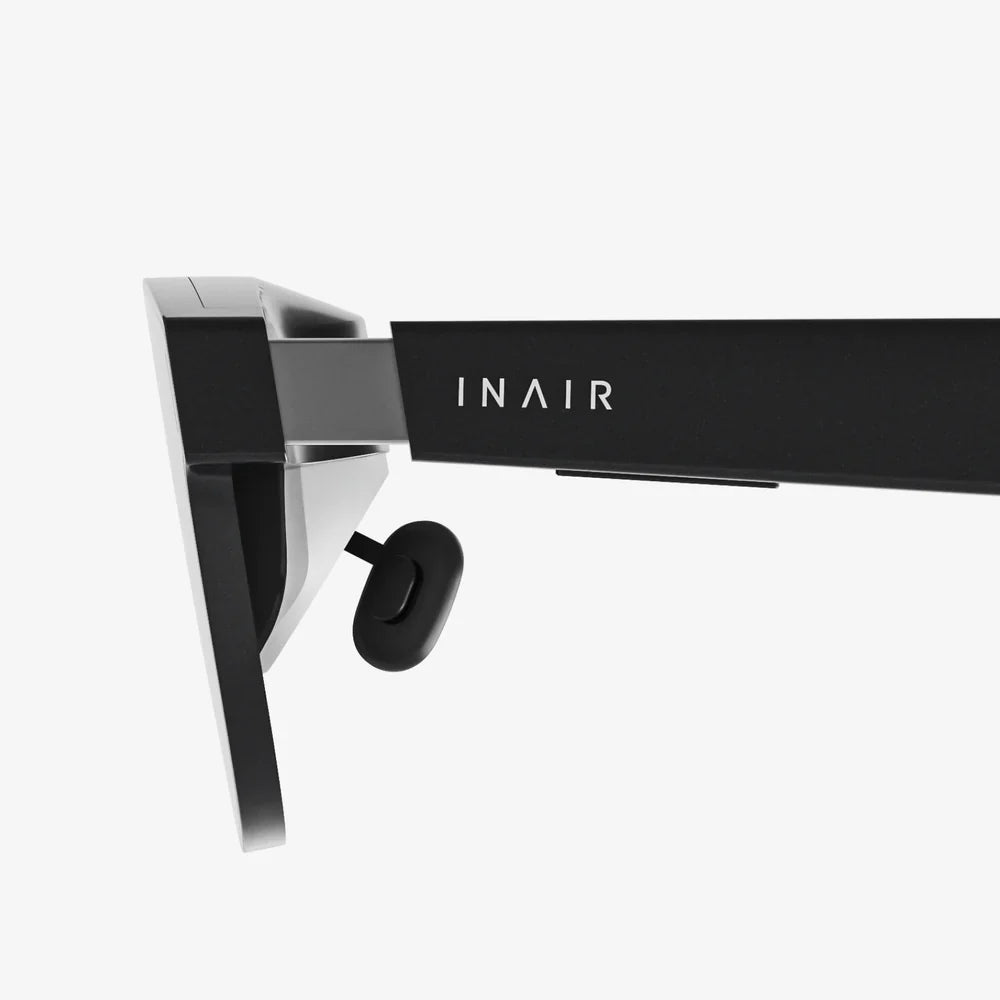
Spatial Computing is quietly turning the world into a living interface, where rooms respond to gestures, data hangs in midair, and digital content blends so seamlessly with the physical world that screens start to feel old-fashioned. If you have ever wondered what comes after smartphones and flat displays, the answer is emerging all around you: a 3D digital layer that sits on top of reality and changes how we work, learn, play, and connect.
What Is Spatial Computing?
Spatial computing refers to technologies that understand, represent, and interact with the physical world in three dimensions, allowing digital content to be placed, manipulated, and experienced in real space. Instead of confining information to 2D screens, spatial computing anchors virtual objects to locations, surfaces, and real-world context.
At its core, spatial computing combines several capabilities:
- 3D mapping and understanding: Devices scan the environment and build a digital model of walls, floors, furniture, and objects.
- Spatial tracking: Systems track your head, hands, eyes, and body to understand where you are and where you are looking.
- Mixed reality rendering: Digital objects are overlaid into your view in a way that respects perspective, lighting, and occlusion.
- Natural interaction: You can interact using gestures, gaze, voice, and body movement instead of relying only on keyboards and touchscreens.
These elements come together to turn the world into a canvas for information, collaboration, and creativity. Spatial computing is not just about headsets or glasses; it is a new computing paradigm where space itself becomes the operating system.
How Spatial Computing Differs From VR, AR, And Traditional Computing
Spatial computing overlaps with virtual reality (VR) and augmented reality (AR), but it is broader and more ambitious. To understand the difference, it helps to compare them:
- Traditional computing: Interaction happens on flat screens using keyboards, mice, and touch. The digital world is separated from the physical world.
- Virtual reality: Fully immersive digital environments that replace your real surroundings. You are transported to another world.
- Augmented reality: Digital objects are layered over your real environment, usually through a camera view or transparent display.
- Spatial computing: A unified approach that treats the world as a 3D interface, blending AR, VR, and physical context with advanced tracking, mapping, and natural interaction.
Spatial computing is concerned with understanding space, context, and movement in a continuous way. It does not only show visuals; it reasons about where things are, how they relate to each other, and how humans move through them. That is why spatial computing can power everything from immersive headsets and smart glasses to room-scale installations and industrial systems.
Core Technologies Behind Spatial Computing
Several technological pillars make spatial computing possible. Each one has been evolving for years, and their convergence is what unlocks new experiences.
1. Sensors And Environmental Mapping
Spatial computing systems rely on a rich set of sensors to perceive the world:
- Depth sensors and LiDAR: Measure distance to surfaces, creating real-time 3D maps of rooms and objects.
- Cameras: Capture visual information used for tracking, object recognition, and scene understanding.
- Inertial measurement units (IMUs): Track motion and orientation using accelerometers and gyroscopes.
- Microphones: Enable voice input and spatial audio capture.
Using techniques like simultaneous localization and mapping (SLAM), devices build a digital twin of the surrounding space, allowing virtual content to stick to surfaces, respect boundaries, and remain stable even as you move.
2. Spatial Tracking And Localization
Spatial computing depends on knowing where you are and where you are looking. Key tracking capabilities include:
- Head and body tracking: Determines your position and orientation in 3D space.
- Hand and gesture tracking: Recognizes hand poses and movements to enable direct manipulation of virtual objects.
- Eye tracking: Detects where you are focusing, allowing for foveated rendering and gaze-based interaction.
Accurate tracking is critical for immersion. When virtual objects respond correctly as you move, your brain accepts them as part of the environment.
3. 3D Graphics And Real-Time Rendering
Spatial computing requires rendering 3D content at high frame rates with low latency. This involves:
- Optimized 3D engines: Capable of rendering complex scenes while maintaining smooth performance.
- Lighting and shading models: To make virtual objects match the lighting conditions of the real environment.
- Occlusion handling: Ensuring real objects can block virtual ones and vice versa, preserving realism.
This visual fidelity is not just aesthetic; it directly affects comfort and believability during extended use.
4. Spatial Audio
Sound is a powerful part of spatial computing. Spatial audio simulates how sound emanates from specific points in space, changes with distance, and is affected by room acoustics. This allows experiences such as:
- Hearing a virtual colleague speak from the seat next to you in a digital meeting room.
- Following the sound of a virtual guide in a museum-like experience.
- Locating alerts or notifications based on where they originate in your environment.
Spatial audio increases immersion and helps users navigate complex 3D information.
5. Artificial Intelligence And Computer Vision
AI and computer vision are the brains behind spatial computing. They allow systems to:
- Recognize surfaces like tables, walls, and floors.
- Detect and classify objects, people, and gestures.
- Understand scenes to provide context-aware information and assistance.
For example, a spatial computing application might recognize that you are in a kitchen and overlay recipe instructions on the countertop, or it might identify machinery on a factory floor and show maintenance steps directly on the equipment.
Key Applications Of Spatial Computing Today
Spatial computing is not just a futuristic concept. It is already reshaping industries and everyday activities. Here are some of the most impactful applications.
1. Work And Productivity
Spatial computing is redefining what a workspace can be. Instead of being limited to physical monitors, you can surround yourself with virtual screens anchored in the room. Some emerging use cases include:
- Virtual multi-monitor setups: Create as many resizable, repositionable screens as you need, without physical hardware.
- Immersive collaboration: Meet with colleagues as 3D avatars in shared virtual rooms, or see life-size remote participants overlaid in your space.
- Data visualization: Explore complex data sets as interactive 3D charts, networks, or models you can walk around and manipulate.
This shift can increase focus by placing work tools in an environment optimized for concentration, whether that is a simulated quiet library or a virtual office with your team.
2. Design, Architecture, And Engineering
Spatial computing is a natural fit for any field that deals with 3D structures or spaces. Professionals can:
- Walk through virtual buildings before they are constructed, spotting design issues early.
- Overlay proposed changes on top of existing structures to see how renovations will look.
- Collaborate on 3D models with colleagues in different locations, all viewing and editing the same object in real time.
This reduces costly mistakes, shortens feedback loops, and helps clients understand designs without needing to interpret complex 2D plans.
3. Healthcare And Medical Training
Spatial computing is beginning to transform healthcare in several ways:
- Surgical planning: Surgeons can view patient-specific 3D models of organs, bones, and blood vessels to plan procedures more precisely.
- Medical training: Students can practice procedures in realistic simulations, interacting with virtual patients and anatomy.
- Remote assistance: Specialists can guide on-site clinicians by seeing what they see and overlaying instructions in their field of view.
These applications improve training outcomes and can enhance patient safety by giving practitioners richer spatial understanding.
4. Education And Learning
Spatial computing unlocks learning experiences that are difficult or impossible in traditional classrooms:
- Students can explore historical sites at full scale, walking through ancient cities reconstructed around them.
- Complex scientific concepts, such as molecular structures or astronomical systems, can be experienced as interactive 3D models.
- Vocational training can simulate dangerous or expensive scenarios, from operating heavy machinery to emergency response drills.
By engaging multiple senses and enabling active exploration, spatial learning can deepen understanding and retention.
5. Retail And Customer Experience
Spatial computing is changing how people discover, try, and buy products:
- Customers can visualize furniture or decor in their own homes at true scale before purchasing.
- Virtual showrooms allow browsing of items that may not be physically in stock.
- Interactive in-store experiences can guide shoppers, explain product features, or offer personalized recommendations.
By reducing uncertainty and making shopping more engaging, spatial computing can increase customer satisfaction and reduce returns.
6. Entertainment, Gaming, And Social Experiences
Entertainment is one of the most visible frontiers of spatial computing. Examples include:
- Games that blend digital characters and objects into your living room, reacting to furniture and walls.
- Immersive storytelling where you move through scenes as if you are inside the narrative.
- Social spaces where friends meet as avatars in shared virtual environments that feel like real places.
These experiences blur the line between playing, watching, and participating, turning entertainment into something you inhabit rather than simply observe.
How Spatial Computing Will Transform Everyday Life
Beyond specialized applications, spatial computing has the potential to change small, daily interactions with technology.
From Apps To Spatial Experiences
Today, we think in terms of apps on screens. In a spatial computing world, the concept of a rectangular app window fades. Instead, experiences are arranged around you:
- A calendar might appear as a wall-sized timeline you can walk along.
- Weather information could be visualized as clouds and temperature gradients hovering near a window.
- To-do lists might float above relevant locations in your home, such as repair tasks tagged to specific rooms.
Rather than opening and closing apps, you move through an environment where information is contextually placed.
Spatial Assistants And Context-Aware Guidance
Digital assistants will gain a spatial dimension. Instead of just responding to voice commands, they will see what you see and understand where you are:
- If you are cooking, a spatial assistant can highlight ingredients on your counter and show steps above the stove.
- When assembling furniture, it can overlay visual instructions directly on the pieces in front of you.
- While traveling, it can project navigation arrows onto the ground or highlight points of interest as you walk.
This moves assistance from abstract instructions to concrete, visually grounded help in real space.
New Forms Of Social Connection
Spatial computing can make remote interactions feel more like being physically together. Instead of grid-based video calls, you might:
- Sit around a virtual table with distant friends, seeing their gestures and spatial presence.
- Collaborate on a shared 3D artifact, such as a design, artwork, or model, while talking naturally.
- Attend concerts, lectures, or events as if you are standing among a crowd, with realistic spatial audio.
These experiences can preserve the convenience of remote connection while restoring some of the nuance and energy of in-person gatherings.
Challenges And Risks Of Spatial Computing
Despite its promise, spatial computing raises serious challenges that must be addressed thoughtfully.
Privacy And Data Security
Spatial computing devices capture detailed information about your surroundings, body, and behavior. This includes:
- 3D maps of your home or workplace.
- Biometric signals such as eye movements, gestures, and posture.
- Potentially sensitive contextual data about who and what is around you.
Without strong safeguards, this data could be misused for intrusive profiling, surveillance, or targeted manipulation. Clear policies, robust encryption, and user control over data collection and sharing are essential.
Safety, Comfort, And Health
Extended use of spatial computing devices can raise physical and cognitive concerns:
- Eye strain and motion discomfort if visuals are not well calibrated.
- Risk of collisions or accidents if users are immersed and unaware of surroundings.
- Potential impact on posture and musculoskeletal health if devices are heavy or encourage static positions.
Designers must prioritize ergonomics, safety features, and experience guidelines that encourage healthy usage patterns.
Ethical And Social Implications
Spatial computing does not only change interfaces; it can change social norms:
- People may wear always-on devices that record and analyze their environment.
- Public spaces might be filled with invisible layers of digital advertising or gamified incentives.
- Access to high-quality spatial experiences may be uneven, deepening digital divides.
Society will need new norms, regulations, and design principles to ensure spatial computing enhances human dignity, autonomy, and fairness rather than undermining them.
Interoperability And Fragmentation
For spatial computing to reach its full potential, experiences must work across devices, platforms, and locations. Without shared standards, we risk a patchwork of incompatible systems where content is locked into specific hardware or ecosystems.
Efforts to define common formats for 3D assets, spatial anchors, and identity will be crucial so that the spatial web can be as open and interoperable as the early internet aspired to be.
Skills And Opportunities In The Spatial Computing Era
As spatial computing grows, it will create new roles and reshape existing ones. Whether you are a developer, designer, business leader, or curious learner, there are skills that can help you thrive.
Technical Skills
Key technical capabilities include:
- 3D development: Working with 3D engines, scripting interactions, and optimizing performance.
- Computer vision and AI: Building systems that understand scenes, objects, and human behavior.
- Spatial UX engineering: Implementing interfaces that rely on gaze, gesture, and voice.
- Networking and cloud integration: Supporting multi-user, real-time spatial experiences.
These skills combine traditional software engineering with a deep understanding of real-world physics and human perception.
Design And Human-Centered Skills
Designing for spatial computing requires a different mindset than designing for flat screens:
- Spatial interaction design: Thinking about how people move, reach, and look around in 3D environments.
- Information placement: Deciding where to put content in space so it is helpful, not overwhelming.
- Accessibility: Ensuring experiences work for people with diverse abilities and comfort levels.
- Ethical design: Anticipating how spatial experiences affect privacy, autonomy, and social dynamics.
Empathy, observation, and user research are as important as technical tools.
Business And Strategic Skills
Organizations exploring spatial computing need people who can:
- Identify high-impact use cases that solve real problems rather than chasing novelty.
- Evaluate hardware and software options in a rapidly evolving landscape.
- Plan pilots, measure outcomes, and scale successful experiences.
- Navigate legal, regulatory, and ethical considerations.
Understanding both the possibilities and limits of spatial computing helps leaders make informed bets and avoid costly missteps.
Practical Steps To Get Ready For Spatial Computing
You do not need to wait for the future to start engaging with spatial computing. There are concrete actions you can take now.
Experiment With Existing Tools
Even if you do not have advanced hardware, you can explore spatial concepts by:
- Using mobile augmented reality apps that place 3D objects in your environment.
- Trying browser-based 3D experiences and simple VR simulations.
- Exploring 3D modeling tools to understand how objects and scenes are constructed.
This hands-on exposure builds intuition about what works well and what feels awkward in 3D interaction.
Learn The Fundamentals Of 3D And Spatial Thinking
Foundational knowledge pays off over time. Consider learning about:
- Basic 3D geometry, coordinate systems, and transformations.
- Principles of lighting, materials, and rendering.
- Human perception of depth, motion, and spatial cues.
These concepts help you reason about spatial experiences even as tools and platforms change.
Prototype Simple Spatial Experiences
If you are a creator or developer, start small:
- Build a simple scene where you place virtual objects on real surfaces.
- Experiment with basic interactions like grabbing, scaling, or rotating objects.
- Test with real users and observe how they move and respond.
Early prototypes do not need to be polished. Their value lies in revealing insights about comfort, clarity, and delight.
Stay Informed And Connected
Spatial computing is evolving quickly. To keep up:
- Follow communities focused on immersive technologies, 3D design, and human-computer interaction.
- Read case studies from industries experimenting with spatial solutions.
- Engage in discussions about ethics, standards, and best practices.
Being part of the conversation helps you anticipate shifts rather than react to them.
The Long-Term Vision Of Spatial Computing
Looking ahead, spatial computing points toward a world where digital and physical realities are deeply intertwined. Several trends hint at where this might lead.
From Devices To Environments
Over time, the focus may shift from wearable devices to spatially aware environments. Walls, furniture, and public spaces could contain embedded sensors, displays, and actuators, turning entire rooms into responsive systems.
Imagine:
- Conference rooms that automatically configure displays, lighting, and tools based on who walks in.
- Homes that adapt layouts of digital content based on time of day and activity.
- Cities where navigation, safety information, and local services are accessible as ambient overlays.
In such a world, spatial computing becomes infrastructure, as fundamental as electricity or networking.
The Spatial Web
As more content becomes spatially anchored, a new layer of the internet may emerge: a spatial web where information is tied to locations and objects. Instead of entering URLs, you discover content by looking at or walking through the world.
This raises questions about ownership, moderation, and discoverability. Who controls what appears over your home or business? How are spatial layers indexed and filtered? The answers will shape how open and user-centric the spatial web becomes.
Blending Physical Craft And Digital Creation
Spatial computing can bridge the gap between traditional craftsmanship and digital design. Artists, makers, and builders might:
- Sketch in midair and then refine designs with precise digital tools.
- Use overlays to guide hands-on fabrication or assembly.
- Preserve and share techniques through spatial recordings of expert movements.
This fusion of analog and digital could unlock new forms of creativity and preserve skills that might otherwise fade.
Why Spatial Computing Matters Now
Spatial computing is not just another technology trend; it is a shift in how humans relate to information and machines. For decades, we have adapted ourselves to flat screens and rigid input devices. Spatial computing offers the possibility of technology that adapts more naturally to us, to our bodies, and to the spaces we inhabit.
Whether you are building products, leading teams, learning new skills, or simply curious about what comes next, understanding spatial computing gives you a window into the future of interaction. The organizations and individuals who experiment thoughtfully today will be best positioned to shape that future rather than be surprised by it.
If you are ready to move beyond imagining and start exploring, the next step is simple: look around the room you are in right now and picture how it would change if every surface, every object, and every corner could come alive with information, guidance, and stories. That mental exercise is the first step into the world of spatial computing, and the sooner you take it, the more prepared you will be for the moment when the room actually answers back.
Aktie:
Screen Door Glass Replacement Tips for a Safer, Brighter Home
replacement screen door for sliding glass door: A Complete Homeowner Guide