


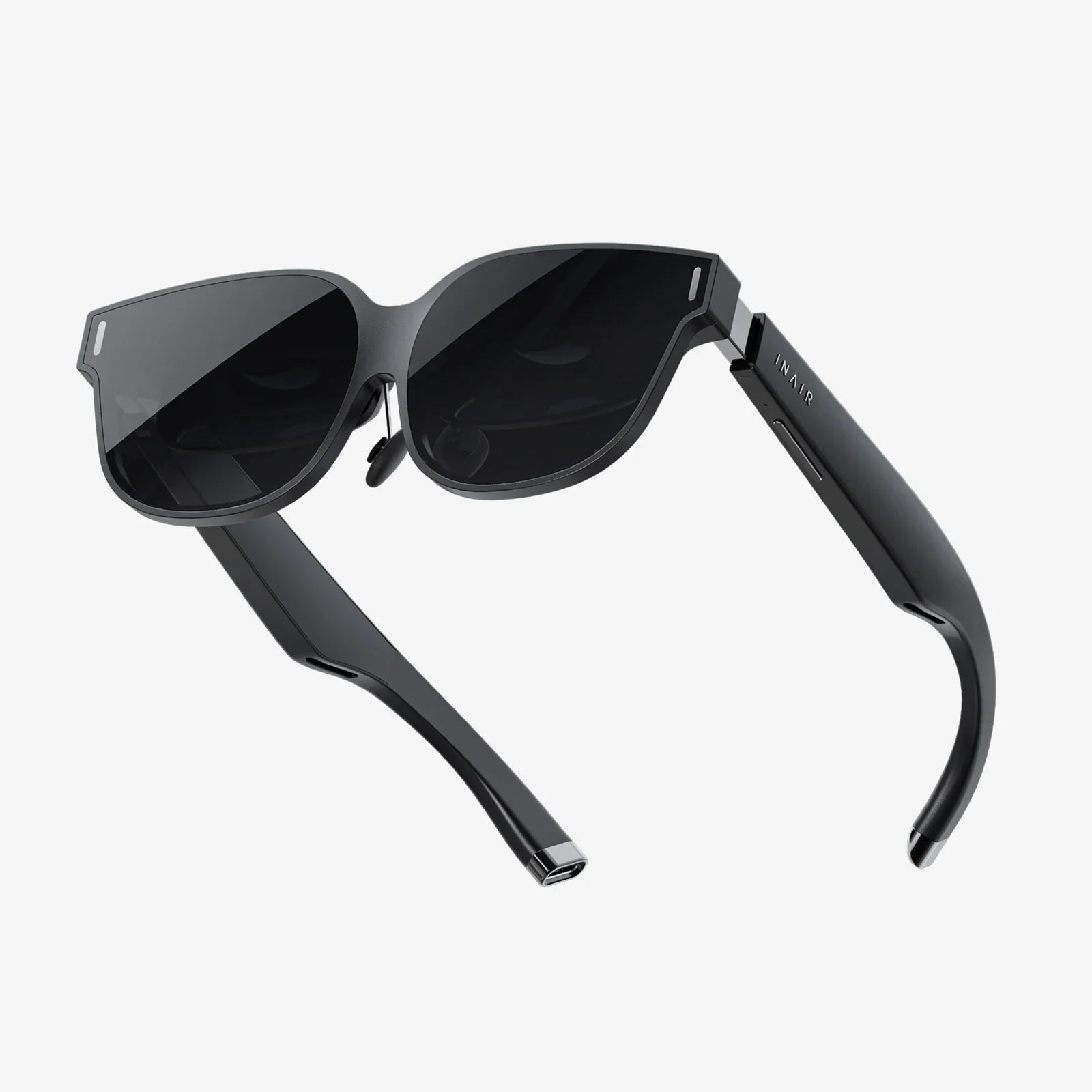
- von wangfred
virtual reality is here and transforming how we live, work and play
- von wangfred
virtual reality is here, and it is quietly rewriting the rules of everyday life while most people still think it belongs to the future. What was once a science-fiction fantasy is now a rapidly maturing technology that is changing how we learn, work, socialize, heal, and relax. If you think VR is only about games and gadgets, you are already behind the curve. The real story is far bigger, and understanding it now can give you a serious advantage in the years ahead.
To see why this matters, you do not have to look very far. Offices are running meetings in virtual spaces instead of physical conference rooms. Students are dissecting virtual frogs and walking through historical cities without leaving their classrooms. Therapists are treating phobias, pain, and trauma with carefully designed immersive experiences. Families are gathering inside shared digital environments that feel far more personal than a flat video call. The shift is happening now, not someday, and the people who learn to navigate this new reality early will shape how it grows.
Before diving into specific uses, it helps to be clear about what it actually means to say that virtual reality is here. It does not mean every home has a headset or that we all live in some fully immersive digital universe. Instead, it means that the core ingredients of VR have matured enough to deliver meaningful, repeatable value in the real world.
Those ingredients include:
When these elements come together, something powerful happens: your brain starts to treat the virtual environment as if it were physically real. You duck when objects fly at you. You feel a sense of height when you stand on a simulated edge. You remember locations and layouts as if you had actually been there. This psychological effect is what makes VR so much more than just another screen.
One of the most important ideas in VR is presence, the feeling of actually being inside a virtual environment. Presence is not just about graphics quality; it is about how convincingly your senses and expectations are aligned with what you experience.
Several factors contribute to presence:
When presence is strong, VR can trigger emotional responses that are far more intense than traditional media. Standing at the edge of a virtual cliff can make your heart race. Walking through a simulated war zone can be deeply unsettling. Exploring a peaceful forest can be surprisingly calming. This emotional power is exactly why so many industries are taking VR seriously.
For many people, the first proof that virtual reality is here comes from entertainment. Games and interactive experiences are often the easiest way to understand what makes VR different.
Traditional games put you behind a screen, controlling a character from a distance. VR pulls you into the world itself. Instead of pressing a button to swing a sword, you physically swing your arm. Instead of moving a joystick to look around, you turn your head and body. This direct embodiment changes how you think about challenges, puzzles, and stories.
Beyond games, VR is also reshaping other forms of entertainment:
These experiences are not just novelties. They are teaching creators how to design for a medium where the viewer is also a participant. That shift will echo far beyond entertainment as VR spreads into other fields.
virtual reality is here at work, too, even if you have not seen it in your own office yet. As organizations search for better ways to collaborate across distance, VR offers something that video calls cannot: a shared sense of space.
In a virtual workspace, you can sit around a table with colleagues from different countries, look at 3D models together, sketch ideas on virtual whiteboards, and walk through digital prototypes. You can see where people are “sitting,” notice who is paying attention, and read body language more naturally than in a grid of webcams.
Some of the most promising uses of VR for work include:
This is not about replacing physical offices entirely. It is about adding a new layer of flexibility. Some tasks are still best done in person, others on a laptop, and others in VR. The companies that figure out when to use each mode will have a clear advantage in productivity and collaboration.
Education is one of the clearest examples of why virtual reality is here in a meaningful way. Traditional learning often relies on reading, listening, and watching. VR adds something powerful: learning by doing in safe, repeatable environments.
Consider these scenarios:
Because VR engages multiple senses and requires active participation, it can improve retention and understanding. When you have “been” somewhere or “done” something in VR, you remember it more vividly than a paragraph in a textbook.
Professional training is also being transformed. Pilots, surgeons, firefighters, and industrial workers can rehearse critical procedures in high-fidelity simulations. Mistakes become learning opportunities rather than disasters. Rare or dangerous scenarios can be practiced repeatedly until responses become second nature.
Healthcare is another area where virtual reality is here in practical, life-changing ways. Because VR can shape perception and emotion so strongly, it is a powerful tool for both mental and physical health.
Some key applications include:
VR also supports medical training. Students and professionals can practice surgeries, emergency responses, and diagnostic procedures without risk to real patients. Complex operations can be rehearsed beforehand, improving confidence and outcomes.
The key advantage is that VR allows healthcare providers to design experiences that are personalized, repeatable, and measurable. Progress can be tracked, environments adjusted, and treatments refined based on how each patient responds.
virtual reality is here as a new kind of social platform, one that goes beyond text chats and video calls. In social VR environments, you appear as an avatar, move naturally, use your hands, and share spaces with others in a way that feels surprisingly personal.
These spaces can be anything: a cozy living room, a futuristic city, a fantasy landscape, or a faithful recreation of a real-world location. You can play games, watch movies, attend events, or simply sit and talk. The sense of co-presence is stronger than on traditional platforms because you share a common environment and can interact with the same objects.
For people who live far from friends and family, or who have limited mobility, this can be transformative. Birthdays, celebrations, study groups, and casual hangouts can all take place in VR. It does not replace physical contact, but it can make distance feel less isolating.
Of course, social VR also raises questions about identity, behavior, and community norms. How do you handle harassment in virtual spaces? How do you protect privacy when body movements and voice patterns can be tracked? These questions are still being worked out, and the answers will shape how healthy and welcoming these digital communities become.
Another clear sign that virtual reality is here is its growing role in shaping physical spaces. Architects, interior designers, and urban planners are using VR to visualize projects long before construction begins.
Instead of looking at flat blueprints or static 3D renders, clients can walk through virtual buildings at full scale. They can experience how rooms feel, how light enters, and how people will move through the space. Changes can be made instantly: move a wall, resize a window, try different materials, or rearrange furniture in real time.
This approach offers several advantages:
On a larger scale, city planners can simulate traffic flows, public spaces, and infrastructure projects. Residents can experience proposed changes and give feedback, making development more participatory and transparent.
In industrial settings, virtual reality is here as part of a broader move toward digital transformation. One of the most powerful concepts is the digital twin: a detailed virtual model of a real-world system, such as a factory, vehicle, or power plant.
When combined with VR, digital twins allow engineers and operators to step inside complex systems, inspect components, and test changes without touching the physical equipment. They can simulate different conditions, train staff on rare or emergency scenarios, and optimize workflows before making real-world adjustments.
Practical uses include:
These applications save time, reduce risk, and cut costs, which is why industrial adoption of VR is growing even when most consumers still see it primarily as a gaming technology.
Whenever people say virtual reality is here, the word “metaverse” is never far behind. While the term is often overused, the underlying idea is worth understanding: a persistent, shared digital layer where people, places, and things exist and interact across different platforms and devices.
VR is one of the main gateways into that layer because it offers the strongest sense of presence. However, the broader ecosystem also includes augmented reality, smartphones, computers, and other devices. The metaverse, in this sense, is not a single app or world. It is a network of interconnected environments, identities, and economies.
Key elements of this emerging landscape include:
Whether or not the term “metaverse” sticks, the trend is clear: our digital lives are becoming more immersive, more interactive, and more persistent. VR is a central piece of that puzzle.
Despite all of these advances, saying virtual reality is here does not mean it is perfect or universally adopted. Several challenges still limit how far and how fast it can spread.
Some of the main obstacles include:
These challenges are real, but they are also being actively addressed. New designs aim to reduce motion sickness, lighter and more comfortable headsets are emerging, and developers are learning best practices for creating compelling content. As these improvements continue, barriers to adoption will keep shrinking.
Because virtual reality is here in ways that deeply affect perception and behavior, it raises serious ethical questions. VR collects detailed data about how your body moves, where you look, how long you focus on certain things, and how you react emotionally. This information can be incredibly valuable, but also sensitive.
Key concerns include:
Addressing these issues requires more than technology. It demands thoughtful policies, transparent practices, and informed users. As VR becomes more common, digital literacy must expand to include understanding how immersive systems work, what they collect, and how to use them responsibly.
If you are curious about this technology, the good news is that virtual reality is here in forms that are easier to try than ever before. You do not need to dive straight into high-end systems to understand the basics.
Here are some practical steps:
The goal is not to replace your existing hobbies or tools, but to see where VR can add something unique: deeper immersion, stronger presence, or new ways of interacting with information and people.
Looking ahead, the fact that virtual reality is here today is just the beginning. Several trends are likely to shape how it evolves over the next ten years.
Some likely directions include:
As these changes unfold, VR will likely move from being a separate activity to something that is woven into daily life. You might use it briefly for a meeting, a training session, a workout, or a creative project, the way you currently use different apps on your phone or computer.
virtual reality is here, but what it becomes next is not fixed. Every person who uses it, builds for it, or sets policies around it helps decide whether it grows into a healthy, empowering medium or something more troubling. You do not need to be a programmer or a designer to influence this trajectory. Simply by choosing which experiences to support, how to behave in virtual spaces, and what questions to ask about privacy and ethics, you contribute to the culture that forms around VR.
Now is the moment when your curiosity matters most. Trying VR today gives you a front-row seat to a transformation that will touch nearly every part of modern life. Whether you care about education, work, creativity, health, or social connection, there is already a doorway into that world waiting for you. virtual reality is here, and the sooner you step inside, the more prepared you will be to navigate, shape, and thrive in the immersive future that is rapidly coming into view.