


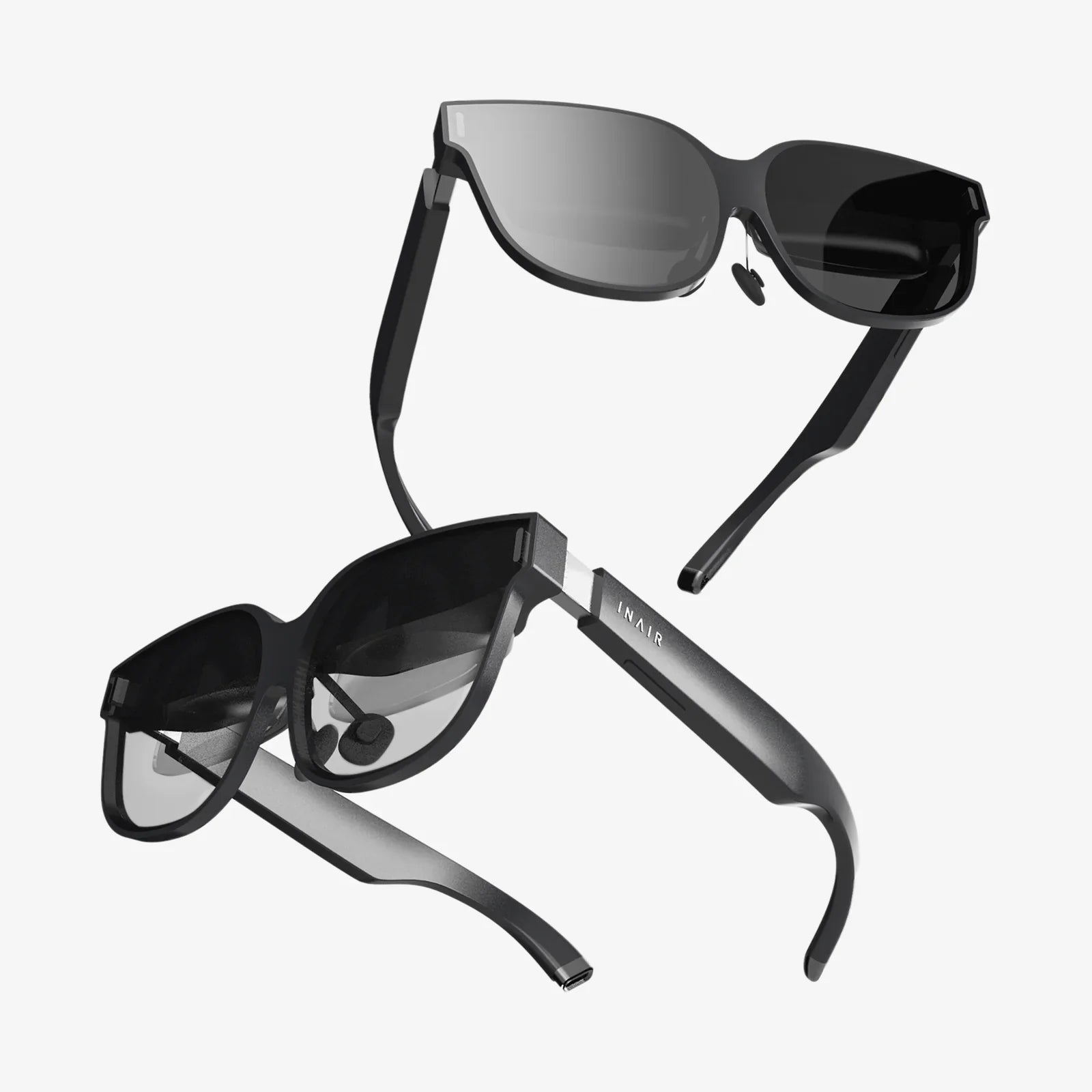
Imagine slipping on a pair of glasses and instantly seeing translations, navigation arrows, health insights, and helpful reminders appear naturally in your field of view. That is the promise of ai eyeglasses: wearable devices that blend the power of artificial intelligence with everyday eyewear. Far beyond simple smart gadgets, they are poised to change how we see, understand, and interact with the world, and anyone who ignores this shift risks being left behind as digital and physical realities merge.
What Are AI Eyeglasses?
AI eyeglasses are wearable devices that look like regular glasses but include integrated sensors, processors, cameras, microphones, and connectivity modules. They use artificial intelligence algorithms to analyze what you see and hear, then overlay useful information or trigger actions in real time. The goal is not just to display data, but to make your vision smarter, more contextual, and more responsive to your needs.
Unlike traditional smart glasses that simply mirror notifications or play media, ai eyeglasses focus on perception and understanding. They can identify objects, recognize faces, read text, understand spoken language, and interpret your environment. This deeper level of intelligence enables experiences such as live translation, hands-free assistance, and adaptive visual enhancements tailored to each user.
Core Technologies Behind AI Eyeglasses
To appreciate the potential of ai eyeglasses, it helps to understand the technologies that power them. These devices are essentially miniature computers built into frames, relying on several key components and software capabilities.
On-Device Processors And Edge AI
AI eyeglasses typically contain low-power processors optimized for running machine learning models directly on the device. This approach, often called edge AI, allows them to process audio, video, and sensor data locally without always sending it to remote servers.
Edge AI offers several advantages:
- Lower latency: Responses feel instant because data does not need to travel across the internet.
- Better privacy: Sensitive visual or audio data can remain on the device instead of being transmitted to the cloud.
- Offline functionality: Many features continue working even without a network connection.
Cameras, Sensors, And Environmental Awareness
AI eyeglasses rely on cameras and sensors to understand the world around you. These can include:
- Forward-facing cameras for object recognition, text reading, and scene understanding.
- Depth sensors or stereo cameras for mapping the environment in three dimensions.
- Inward-facing sensors for eye tracking, helping determine what you are looking at.
- Motion sensors such as accelerometers and gyroscopes for tracking head movement.
- Microphones for voice commands and ambient sound analysis.
By combining these inputs, ai eyeglasses can construct a detailed model of your surroundings and your focus, enabling context-aware assistance that feels natural rather than intrusive.
Computer Vision And Object Recognition
Computer vision is at the heart of ai eyeglasses. Using deep learning models trained on millions of images, the glasses can identify objects, text, and patterns. Common capabilities include:
- Recognizing everyday objects such as vehicles, furniture, tools, and landmarks.
- Reading printed or handwritten text and converting it into digital form.
- Detecting faces and, with appropriate permissions, identifying known contacts.
- Understanding scenes, such as whether you are indoors, outdoors, in a store, or on a street.
This visual understanding is what enables many of the most compelling use cases, from accessibility features for people with low vision to real-time translation of signs and menus.
Natural Language Processing And Voice Interaction
AI eyeglasses often include voice assistants that rely on natural language processing. You can ask questions, issue commands, or request explanations about what you are seeing. For example, you might say, “What does that sign say?” or “How many calories are in this food?” and receive spoken or visual responses.
Natural language models also help interpret ambient speech, enabling features such as live captioning for conversations, language translation, and contextual suggestions based on what is being said around you.
Augmented Reality Overlays
Some ai eyeglasses integrate augmented reality displays that project digital information into your field of view. These overlays can be subtle, such as small icons or text near the edge of your vision, or more immersive, such as arrows on the ground showing where to walk.
Effective AR design is crucial. Overlays must be legible without blocking your view, and they must respond smoothly to head movements so that digital elements appear anchored to real-world objects. When done well, AR makes information feel like a natural extension of your vision rather than a separate screen.
Everyday Use Cases Of AI Eyeglasses
The true value of ai eyeglasses emerges when you look at everyday scenarios where they can reduce friction, increase safety, or enhance understanding. These are not futuristic fantasies; many of these use cases are already possible in early forms.
Real-Time Translation And Travel Assistance
For travelers, language barriers can turn simple tasks into stressful challenges. AI eyeglasses can ease this by:
- Translating signs, menus, and documents when you look at them.
- Providing live subtitles for conversations in a foreign language.
- Offering spoken translations through bone conduction or small speakers.
Combined with navigation features, the glasses can guide you through unfamiliar cities, highlight points of interest, and give cultural context, all while keeping your hands free and your eyes on your surroundings.
Navigation And Spatial Guidance
Whether you are walking, cycling, or driving, ai eyeglasses can make navigation safer and more intuitive. Instead of glancing down at a phone, you can see subtle arrows, distance markers, or street names appear in your field of view.
Potential benefits include:
- Reduced distraction, since your attention stays on the road or path.
- Context-aware directions that adjust to your pace and orientation.
- Alerts about hazards, such as obstacles, traffic, or sudden changes in route.
For people who struggle with spatial awareness, this kind of guidance can be transformative, providing confidence in unfamiliar environments.
Accessibility For People With Visual Or Hearing Impairments
One of the most powerful applications of ai eyeglasses lies in accessibility. For individuals with low vision, the glasses can act as an intelligent assistant that narrates the world. Examples include:
- Reading text aloud from books, signs, screens, or labels.
- Describing scenes, such as “a person is approaching from the left” or “there is a staircase ahead.”
- Highlighting obstacles or important objects using contrast enhancement or outlines.
For those who are hard of hearing, ai eyeglasses can provide live captions of conversations or environmental sounds. They can also detect important audio cues like alarms or sirens and translate them into visual alerts, improving safety and independence.
Workplace Productivity And Hands-Free Assistance
In professional settings, ai eyeglasses can streamline workflows and reduce errors. Examples include:
- Displaying step-by-step instructions for complex tasks in manufacturing, maintenance, or healthcare.
- Recognizing equipment or components and showing relevant specifications or safety information.
- Enabling remote experts to see what the wearer sees and provide real-time guidance.
Because the wearer’s hands remain free, this approach can be more efficient and safer than juggling paper manuals or handheld devices. Over time, the AI can learn common workflows and adapt instructions to individual skill levels.
Education And Continuous Learning
AI eyeglasses can turn the world into an interactive classroom. While walking through a museum, you might see brief summaries appear next to exhibits. In a city, historical facts or architectural details could appear near buildings. In nature, plant or animal identification can happen automatically as you look around.
In formal education, students could receive real-time hints, translations, or definitions as they read or watch demonstrations. For technical training, overlays can show labels on machinery, highlight key components, or simulate internal structures that are not visible from the outside.
Health, Fitness, And Wellbeing
AI eyeglasses can also play a growing role in health monitoring and wellness. Potential features include:
- Tracking posture and gently nudging you to adjust if you slouch.
- Providing real-time coaching for exercises, with visual cues for correct form.
- Monitoring signs of fatigue or strain and suggesting breaks.
- Alerting you to potential hazards if you appear distracted or drowsy while moving.
Some designs may integrate with other wearable devices to provide a more complete picture of your health, combining heart rate, activity levels, and environmental context to offer personalized recommendations.
How AI Eyeglasses Change Human-Computer Interaction
AI eyeglasses represent a significant shift in how we interact with technology. Instead of pulling out a phone or sitting at a computer, you access digital tools through natural behaviors such as looking, speaking, and moving.
From Screens To Ambient Computing
Traditional computing is screen-centric: you focus your attention on a device and temporarily leave the physical world behind. AI eyeglasses push us toward ambient computing, where digital assistance is woven into the environment and accessible at any moment without demanding full attention.
This shift has several implications:
- Information becomes more contextual, appearing only when relevant to your current situation.
- Interactions become more ephemeral, with fewer persistent screens or windows.
- Technology becomes less visible, blending into everyday objects like eyewear.
New Interaction Modalities: Gaze, Gesture, And Voice
AI eyeglasses introduce new ways to interact with digital content:
- Gaze: Eye tracking allows the system to infer what you are interested in. Looking at an object might trigger a label, description, or action prompt.
- Gesture: Subtle head movements or hand gestures can be used to confirm selections, scroll through content, or dismiss notifications.
- Voice: Speaking naturally to your glasses can replace tapping and typing in many situations.
These modalities can be combined. For instance, you might look at a restaurant sign and say, “Show reviews,” or glance at a product and say, “What is the price?” The AI interprets your intent based on where you are looking and what you say.
Cognitive Load And Attention Management
While constant access to information is powerful, it also risks overwhelming users. Effective ai eyeglasses must manage cognitive load carefully, presenting only the most relevant information and avoiding clutter.
Strategies to reduce overload include:
- Prioritizing alerts based on urgency and user preferences.
- Using subtle visual cues rather than large, intrusive overlays.
- Allowing users to define focus modes, such as “commute,” “work,” or “social,” with different notification rules.
Done well, ai eyeglasses can actually reduce distraction by filtering out unnecessary information and surfacing only what matters in the moment.
Ethical And Privacy Considerations
AI eyeglasses raise serious questions about privacy, consent, and social norms. Because they can capture and analyze visual and audio data from the environment, they must be designed and used responsibly.
Visual And Audio Recording Concerns
People around you may not always know when they are being recorded or analyzed by your glasses. This can create discomfort and potential misuse. Key concerns include:
- Unintentional capture of sensitive information, such as computer screens, documents, or private conversations.
- Facial recognition being used without consent to identify or track individuals.
- Continuous recording leading to detailed logs of people’s movements and interactions.
Addressing these concerns requires clear design choices, such as visible indicators when recording is active, strict controls on facial recognition, and options to limit or disable certain features in sensitive environments.
Data Security And Ownership
AI eyeglasses generate and store large amounts of personal data, including location history, behavioral patterns, and possibly biometric data. Users should understand:
- What data is stored on the device versus in the cloud.
- How long data is retained and for what purposes.
- Whether data is shared with third parties and under what conditions.
Strong encryption, transparent privacy policies, and user-friendly controls for data access and deletion are essential to building trust.
Social Norms And Etiquette
Just as smartphones changed social behavior, ai eyeglasses will require new norms. Questions that societies will need to address include:
- Should certain spaces, such as classrooms, theaters, or meetings, restrict the use of AI-enhanced eyewear?
- How should users signal when recording or analysis is active?
- What responsibilities do wearers have to respect the privacy of others?
Clear etiquette guidelines, combined with thoughtful design, can help reduce friction and make these devices more socially acceptable.
Design Challenges And Limitations
Despite their promise, ai eyeglasses face significant design and technical challenges that will shape how quickly they are adopted and how widely they are used.
Comfort, Weight, And Battery Life
For ai eyeglasses to be worn all day, they must be comfortable and lightweight. Yet they also need batteries, processors, sensors, and displays. Balancing these demands is difficult.
Key trade-offs include:
- Battery size versus weight and frame thickness.
- Processing power versus heat generation and energy consumption.
- Display brightness versus battery drain.
Incremental improvements in component efficiency and battery technology will gradually ease these constraints, but early devices may still require compromises, such as shorter usage times or bulkier frames.
Display Quality And Visual Comfort
The display system must be bright enough to be visible outdoors, yet subtle enough not to block natural vision. Poorly designed overlays can cause eye strain, headaches, or motion discomfort.
Important factors include:
- Field of view: how much of your vision can be augmented.
- Resolution and clarity: whether text and graphics are sharp enough for extended reading.
- Color accuracy and contrast: especially important for professionals who rely on precise visuals.
Designers must also consider users with existing vision conditions and ensure that the glasses can accommodate prescription lenses or work in combination with them.
Context Awareness And Error Handling
AI is not perfect, and misinterpretations can be annoying or even dangerous. If your glasses misread a sign, misidentify a person, or give incorrect navigation instructions, the consequences can be serious.
Robust ai eyeglasses must:
- Estimate their own confidence levels and communicate uncertainty.
- Allow users to correct errors easily, improving models over time.
- Avoid making high-stakes decisions without clear confirmation from the user.
Designing for graceful failure is as important as optimizing for accuracy.
How To Evaluate AI Eyeglasses Before Adopting Them
If you are considering adopting ai eyeglasses, either personally or in an organization, several criteria can help you evaluate different options and decide whether they fit your needs.
Clarify Your Primary Use Cases
Start by defining what you actually want to accomplish. Are you most interested in:
- Accessibility features such as text reading or live captioning?
- Navigation and travel assistance?
- Workplace productivity and hands-free instructions?
- Language learning and translation?
- Health and fitness guidance?
Different devices may prioritize different features, so clarity about your goals will help you avoid paying for capabilities you do not need while missing ones you do.
Assess Comfort And Fit
No matter how advanced the features, ai eyeglasses that are uncomfortable will end up in a drawer. When possible, consider:
- Frame weight and balance on your nose and ears.
- Compatibility with prescription lenses or existing eyewear.
- Adjustability for different face shapes and sizes.
Even small discomforts can become significant over hours of wear, so ergonomic design is critical.
Evaluate Privacy Controls And Data Policies
Before adopting any AI-enabled eyewear, review how it handles data. Look for:
- Clear explanations of what is processed locally versus in the cloud.
- Options to disable or limit camera and microphone access.
- Simple tools to view, export, and delete your data.
- Strong authentication methods to prevent unauthorized access.
For organizations, compliance with relevant regulations is also essential, especially in healthcare, finance, or education.
Consider Integration With Existing Tools
AI eyeglasses become more powerful when they integrate smoothly with your existing ecosystem. Factors to examine include:
- Compatibility with your smartphone or computer platforms.
- Support for your preferred communication and productivity apps.
- Availability of developer tools or APIs for custom integrations.
In enterprise environments, integration with workflow systems, training platforms, and security tools can significantly increase the value of the investment.
The Road Ahead For AI Eyeglasses
AI eyeglasses are still in the early stages of their evolution, but the trajectory is clear: more intelligence in smaller, more comfortable frames, with deeper integration into daily life. As hardware improves and AI models become more efficient, the gap between traditional eyewear and intelligent glasses will continue to shrink.
Future developments may include:
- More advanced eye tracking that allows entirely gaze-based interfaces.
- Adaptive lenses that adjust focus or tint in response to context.
- Seamless blending of digital and physical objects through highly realistic augmented reality.
- Personalized AI agents that learn your habits, preferences, and goals to provide proactive assistance.
As these capabilities mature, ai eyeglasses will not just be another gadget; they will become an integral part of how many people see and shape their world.
If you are curious about where personal technology is heading, ai eyeglasses are one of the most important trends to watch. They offer a glimpse of a future in which information flows as effortlessly as sight itself, where learning, navigation, communication, and accessibility are woven directly into the act of looking. The question is not whether this transformation will happen, but how prepared you will be to take advantage of it when intelligent eyewear becomes as common as smartphones are today.
共有:
Smart Eyewear And The Future Of Seamless Digital Vision
AR Eyewear And The Future Of Everyday Augmented Reality