


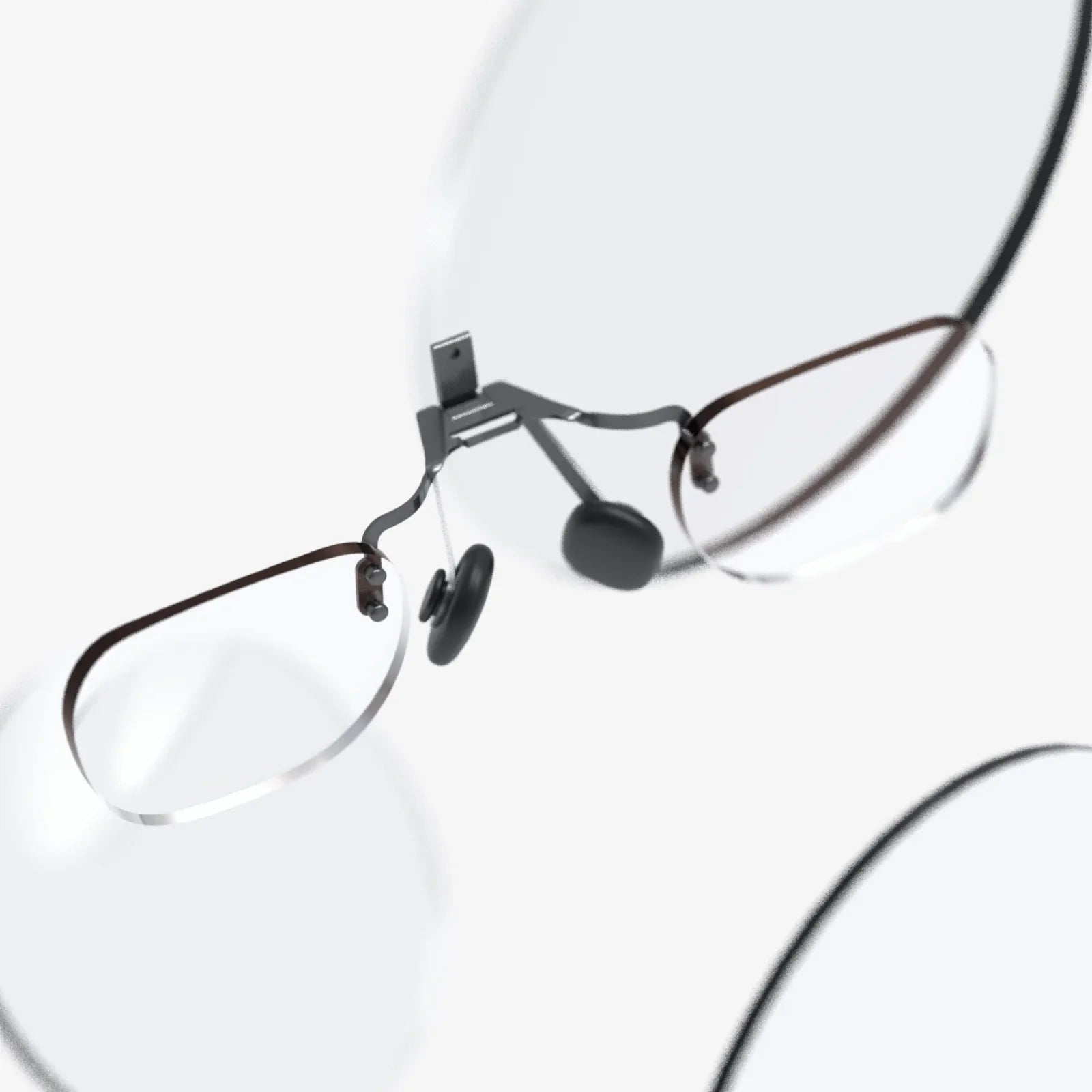
Choosing the right ai-powered smart glasses supplier can determine whether your next product launch becomes a breakthrough success or an expensive experiment that never leaves the pilot phase. As demand for hands-free, context-aware computing surges across industries, organizations that move early with the right supplier partnerships are poised to redefine how people work, learn, and interact with the world.
Yet the supplier landscape is crowded, fragmented, and full of hidden trade-offs. Some vendors excel at optics but lag in AI; others shine in software but struggle with reliable hardware. To navigate this complexity, you need a clear framework for evaluating an ai-powered smart glasses supplier on technology, manufacturing, data protection, user experience, and long-term strategic fit.
Why ai-powered smart glasses supplier choice matters more than ever
Smart glasses are no longer just a futuristic concept or a niche gadget. They are rapidly becoming a core interface for frontline workers, field technicians, medical staff, logistics teams, educators, and even consumers. The integration of artificial intelligence transforms glasses from simple display devices into intelligent assistants that can recognize objects, interpret speech, overlay instructions, and adapt to the user’s environment in real time.
In this context, your choice of ai-powered smart glasses supplier is not just a procurement decision. It is a strategic move that affects:
- Time-to-market for new products and services
- Quality and reliability of the user experience
- Compliance with data protection and safety requirements
- Scalability from small pilots to global deployments
- Total cost of ownership over the product lifecycle
Because AI-driven eyewear sits at the intersection of optics, electronics, machine learning, and human factors, no single capability is enough. You need a supplier that can orchestrate all of these dimensions into a coherent, manufacturable product platform.
Core technologies every ai-powered smart glasses supplier must master
Before you even compare suppliers, it helps to understand the core technology blocks that define modern AI smart glasses. This lets you ask sharper questions and spot red flags early.
Optical systems and display technology
The optical system determines visual clarity, comfort, and how naturally digital content blends with the real world. Key aspects include:
- Display type: waveguide, birdbath, micro-OLED, LCOS, or other projection methods, each with trade-offs in brightness, field of view, and form factor.
- Field of view (FOV): a larger FOV feels more immersive but can increase complexity, cost, and power consumption.
- Brightness and contrast: critical for outdoor use and industrial environments with variable lighting.
- Eye relief and eye box: the range within which the user’s eyes can move while still seeing the image clearly.
An advanced ai-powered smart glasses supplier should be able to explain how their optical architecture supports your use cases, from indoor warehouses to bright outdoor construction sites.
On-device processing and AI acceleration
AI capabilities hinge on compute power and efficient processing. Important factors include:
- Processor architecture: integrated system-on-chip with CPU, GPU, and possibly dedicated neural processing units.
- On-device vs edge/cloud inference: which AI tasks run locally (for low latency and privacy) and which rely on network connectivity.
- Thermal design: how the device manages heat while running AI workloads without discomfort to the wearer.
- Battery life under real workloads: not just standby time, but actual life with continuous camera, connectivity, and AI processing.
A capable supplier should provide realistic performance benchmarks under typical scenarios, not just theoretical maximums.
Sensing, cameras, and environmental awareness
AI smart glasses depend on sensors to perceive the environment and the user’s actions. Common components include:
- RGB cameras: for video capture, object recognition, and remote assistance.
- Depth sensors: for spatial mapping and more precise augmented reality overlays.
- IMU (inertial measurement unit): accelerometer, gyroscope, and sometimes magnetometer for head tracking.
- Eye tracking (optional): to enable gaze-based interaction and improve rendering efficiency.
- Microphones and speakers: for voice commands, calls, and audio feedback.
The supplier’s ability to calibrate and fuse these sensors into stable, low-latency experiences is as important as the hardware itself.
Connectivity and integration
Smart glasses rarely operate in isolation. They connect to smartphones, tablets, industrial systems, or cloud platforms. Evaluate:
- Wireless protocols: Wi-Fi, Bluetooth, and optional cellular connectivity.
- Compatibility: with major mobile operating systems and enterprise infrastructure.
- APIs and SDKs: how developers can integrate the glasses into existing workflows and applications.
- Device management: remote configuration, updates, and monitoring at scale.
An ai-powered smart glasses supplier that offers robust integration tools can dramatically reduce your development and deployment effort.
AI capabilities that differentiate a strong supplier
Not all AI is created equal. Some suppliers focus on basic voice commands, while others enable sophisticated computer vision and contextual understanding. When assessing AI capabilities, consider the following dimensions.
Computer vision and scene understanding
For many industrial and enterprise use cases, computer vision is the core value driver. Ask suppliers about:
- Object detection and recognition: ability to identify tools, equipment, labels, or components.
- Text recognition (OCR): reading serial numbers, documents, or signage in real time.
- Hand and gesture tracking: enabling touchless interaction in sterile or gloved environments.
- Spatial mapping: understanding room layout, surfaces, and distances for accurate overlay placement.
Request demonstrations that reflect your real-world environment rather than controlled lab scenes. Lighting, clutter, and motion can significantly affect performance.
Natural language interaction
Voice is a natural fit for hands-free devices. Evaluate the supplier’s capabilities in:
- Speech recognition accuracy: especially in noisy environments like factories, warehouses, or outdoors.
- Support for multiple accents and languages: crucial for global deployments.
- Conversational AI: ability to handle multi-step instructions, clarifications, and contextual follow-up questions.
- Offline capabilities: performance when network connectivity is limited or unavailable.
Suppliers should be able to show latency metrics and error rates for voice interactions under realistic conditions.
Context awareness and personalization
Truly intelligent glasses adapt to the user and their surroundings. Look for:
- Activity recognition: detecting whether the user is walking, standing, driving, or performing a specific task.
- Role-based experiences: customizing instructions and interfaces based on job role or skill level.
- Learning from usage: models that improve recommendations and workflows over time.
- Configurable AI policies: allowing you to define what data can be used for training and personalization.
These capabilities can dramatically increase productivity but also introduce new data governance considerations that your supplier must address.
Hardware design and ergonomics: more than just aesthetics
Even the most advanced AI will fail if users do not want to wear the device for more than a few minutes. Comfort, safety, and practicality are non-negotiable.
Weight distribution and comfort
Ask your ai-powered smart glasses supplier about:
- Total weight and balance: front-heavy designs cause fatigue and neck strain.
- Adjustability: nose pads, temples, and strap options for different head sizes.
- Compatibility with prescription lenses: critical for many professional users.
- Long-wear testing: whether the supplier has conducted studies on comfort across full work shifts.
Request physical samples early and involve actual end users in comfort evaluations, not just lab staff.
Durability and environmental resistance
Use environments vary widely. Some devices must survive dust, moisture, drops, and temperature extremes. Evaluate:
- Ingress protection ratings: resistance to dust and water.
- Drop and impact resistance: testing standards and real-world failure rates.
- Operating temperature range: for outdoor or industrial deployments.
- Replaceable components: ease of swapping batteries, straps, or worn parts.
Suppliers that design specifically for industrial or field use will have documented test results and certifications to share.
User interface and interaction modes
Interaction must be intuitive and reliable. Smart glasses typically support a mix of:
- Voice commands for hands-free operation
- Head gestures for simple navigation
- Touch controls on the frame for precise input
- Gaze or gesture control where hardware supports it
When comparing suppliers, examine how consistent and discoverable these interactions feel, and whether they can be customized to your workflows.
Software platform, SDKs, and ecosystem strength
The software layer is where your organization will spend most of its time and resources. A strong ai-powered smart glasses supplier should offer a platform that accelerates development and integration.
Operating system and update strategy
Key questions to ask include:
- Underlying OS: is it based on a widely supported platform or a proprietary system?
- Update mechanisms: how are firmware and software updates delivered and managed?
- Backward compatibility: how long will older devices receive security patches and feature updates?
- Customizability: can you lock down or tailor the OS for specific enterprise requirements?
Suppliers with a clear roadmap and long-term support policies reduce the risk of premature obsolescence.
Developer tools and documentation
Developer experience often makes or breaks a deployment. Evaluate:
- SDKs and APIs: availability for popular programming languages and frameworks.
- Sample apps and templates: to accelerate prototypes and proofs of concept.
- Documentation quality: clarity, completeness, and maintenance.
- Developer support: forums, technical account managers, and response times.
A supplier that invests in developer success signals a mature ecosystem rather than a hardware-only mindset.
Integration with enterprise systems
For business use, integration with existing systems is crucial. Ask how the glasses can connect to:
- Work order and asset management tools
- Learning and training platforms
- Collaboration and remote support systems
- Identity and access management solutions
Look for pre-built connectors, reference architectures, or integration partners that can shorten your implementation timeline.
Data security, privacy, and regulatory compliance
AI smart glasses capture video, audio, location data, and potentially biometric signals. This makes data protection and regulatory compliance central to supplier evaluation.
Data handling and storage policies
Discuss with your ai-powered smart glasses supplier how they handle:
- Data at rest and in transit: encryption standards and key management.
- Cloud vs on-premise options: where data is stored and processed.
- Access controls: role-based access and audit logs for sensitive data.
- Retention policies: how long data is kept and how it is deleted.
Ensure their practices align with your organization’s security policies and industry regulations.
Privacy and ethical considerations
Smart glasses can raise concerns among employees, customers, and the public. Your supplier should help you address:
- Consent mechanisms: how users and bystanders are informed and can opt out where required.
- Face and identity handling: whether facial recognition is used and how it is controlled.
- Data minimization: capturing only what is necessary for the task.
- Transparency: clear communication about what is recorded and why.
Suppliers experienced in regulated industries are more likely to have robust answers and supporting documentation.
Compliance with standards and regulations
Depending on your region and sector, relevant standards may include data protection laws, safety regulations, and industry-specific guidelines. Ask suppliers about:
- Certifications: for safety, electromagnetic compatibility, and information security practices.
- Industry deployments: experience in healthcare, aviation, manufacturing, or other highly regulated fields.
- Documentation: technical files and evidence to support compliance audits.
Choosing a supplier that understands your regulatory landscape can save months of delays and rework.
Manufacturing capabilities and supply chain resilience
Even the best design is meaningless if your supplier cannot deliver at scale, on time, and with consistent quality. Manufacturing strength is a core differentiator among ai-powered smart glasses suppliers.
Production capacity and scalability
Probe the supplier’s ability to scale from prototype to mass production:
- Current production volume: how many units they can produce per month.
- Lead times: for both small batches and large orders.
- Surge capacity: how quickly they can ramp up if demand spikes.
- Multi-site manufacturing: redundancy to mitigate regional disruptions.
Early clarity on capacity avoids painful surprises when your pilot succeeds and demand grows.
Quality assurance and testing
Quality processes should be embedded throughout the manufacturing chain. Look for:
- Incoming inspection: checks on optical components, sensors, and electronics.
- In-line testing: automated tests during assembly to catch issues early.
- End-of-line testing: functional tests for vision, audio, connectivity, and sensors.
- Field failure analysis: how the supplier investigates and resolves issues after deployment.
Ask for defect rate metrics and examples of how they have corrected systemic issues in past projects.
Supply chain transparency
Complex devices depend on many upstream suppliers. Discuss with your ai-powered smart glasses supplier:
- Key component sources: especially for displays, processors, and sensors.
- Risk management: strategies for handling shortages or geopolitical disruptions.
- Traceability: ability to track components for recalls or quality investigations.
- Sustainability practices: environmental and social responsibility in the supply chain.
A transparent supplier is better positioned to navigate volatility and maintain consistent delivery.
Evaluating business model and partnership fit
Beyond technology and manufacturing, the commercial relationship with your supplier will shape your long-term success. You are not just buying hardware; you are entering a partnership that may last years.
Pricing structure and total cost of ownership
Compare suppliers not only on unit price but on total cost of ownership, including:
- Hardware cost: per device and accessories.
- Software licensing: per-user or per-device fees for AI features and management tools.
- Support and maintenance: service-level agreements, extended warranties, and upgrade options.
- Integration and customization: one-time costs for adapting the platform to your environment.
Model different deployment scales and time horizons to understand the full financial impact.
Roadmap alignment and co-innovation
Ask potential suppliers about their product roadmap and how they involve customers in shaping it:
- Upcoming hardware revisions: timelines and compatibility with existing deployments.
- AI feature roadmap: planned enhancements in vision, language, and analytics.
- Customer advisory programs: opportunities to influence future capabilities.
- Joint development models: options for co-designing specialized variants.
A supplier that views you as a strategic partner rather than a one-time buyer is more likely to invest in your success.
Support, training, and change management
Smart glasses deployments often require user training, process changes, and ongoing support. Evaluate:
- Onboarding programs: training materials and workshops for administrators and end users.
- Technical support: availability, response times, and escalation paths.
- Field services: on-site assistance for large rollouts or complex integrations.
- Knowledge base and community: online resources and peer support.
Suppliers with robust enablement resources will help you overcome adoption barriers and realize value faster.
Practical steps to select an ai-powered smart glasses supplier
Translating these criteria into action requires a structured evaluation process. The following steps can help you move from exploration to confident selection.
1. Define use cases and success metrics
Start by clearly articulating what you want to achieve. Examples include:
- Reducing error rates in assembly or maintenance tasks
- Shortening training time for new employees
- Improving first-time fix rates in field service
- Enabling remote expert support for distributed teams
For each use case, define measurable outcomes such as time saved, errors reduced, or satisfaction scores. These will guide your supplier evaluation.
2. Shortlist suppliers based on core fit
Use high-level criteria to narrow the field:
- Support for your target environment (industrial, clinical, retail, etc.)
- AI capabilities aligned with your use cases
- Regional presence and support availability
- Evidence of successful deployments in similar contexts
Create a shortlist of suppliers that appear capable of meeting your baseline needs.
3. Conduct technical and business deep dives
For each shortlisted supplier, organize sessions focused on:
- Architecture walkthroughs covering hardware, AI, and software
- Security and compliance discussions with your IT and legal teams
- Manufacturing and quality process overviews
- Commercial terms, pricing, and roadmap alignment
Use a standardized scoring framework to compare responses objectively.
4. Run pilot projects with real users
Nothing replaces hands-on experience. Design pilot programs that:
- Involve actual end users in representative environments
- Measure predefined success metrics and user feedback
- Test integration with your systems and workflows
- Evaluate support responsiveness and problem resolution
Consider running pilots with two suppliers in parallel if resources allow. This can reveal differences that are not obvious on paper.
5. Assess scalability and long-term viability
Before making a final decision, step back and evaluate:
- How easily the solution can scale from dozens to thousands of devices
- The supplier’s financial stability and investment in R&D
- Alignment with your organization’s digital strategy and timelines
- Risks of vendor lock-in and options for migration
Choose the supplier that not only wins the pilot but also positions you for sustainable growth.
Common pitfalls when choosing an ai-powered smart glasses supplier
Many organizations encounter avoidable problems because they overlook key factors during evaluation. Be wary of these common pitfalls.
Over-focusing on specs instead of outcomes
High-resolution displays and impressive AI benchmarks are attractive, but they do not guarantee business value. Always tie technology decisions back to concrete outcomes and user needs.
Underestimating change management
Smart glasses change how people work. If you ignore training, user concerns, and process redesign, even the best supplier cannot save a poorly managed rollout.
Ignoring long-term support and lifecycle
Some organizations choose the lowest-cost option only to discover limited support, slow updates, or abrupt product changes. Evaluate the supplier’s commitment to long-term partnership, not just initial pricing.
Neglecting privacy and ethical implications
Deployments can face backlash if employees or customers feel surveilled or uninformed. Ensure your supplier helps you design transparent, respectful usage policies.
Turning supplier selection into a competitive advantage
The right ai-powered smart glasses supplier does more than deliver hardware and software. They become a catalyst for transforming how your organization operates, learns, and innovates. With strong AI capabilities, robust manufacturing, secure data practices, and a collaborative mindset, your supplier can help you move from isolated pilots to a scalable, strategic platform for augmented work.
As you evaluate options, keep your focus on the real-world experiences you want to create and the long-term capabilities you need to build. Ask tough questions about AI performance, ergonomics, integration, security, and support. Demand evidence, not just promises. And involve stakeholders from IT, operations, security, and end-user groups so that your final choice reflects the full spectrum of requirements.
Organizations that approach supplier selection with this level of rigor are already discovering that smart glasses are not just another gadget, but a foundational interface for the next decade of digital transformation. By partnering with an ai-powered smart glasses supplier that matches your ambition and understands your challenges, you position yourself to capture that opportunity while competitors are still experimenting on the sidelines.
共有:
AIバーチャルアシスタントとは:デジタルワークフォースの決定版ガイド
Basis of AI: Core Concepts Behind Intelligent Machines