


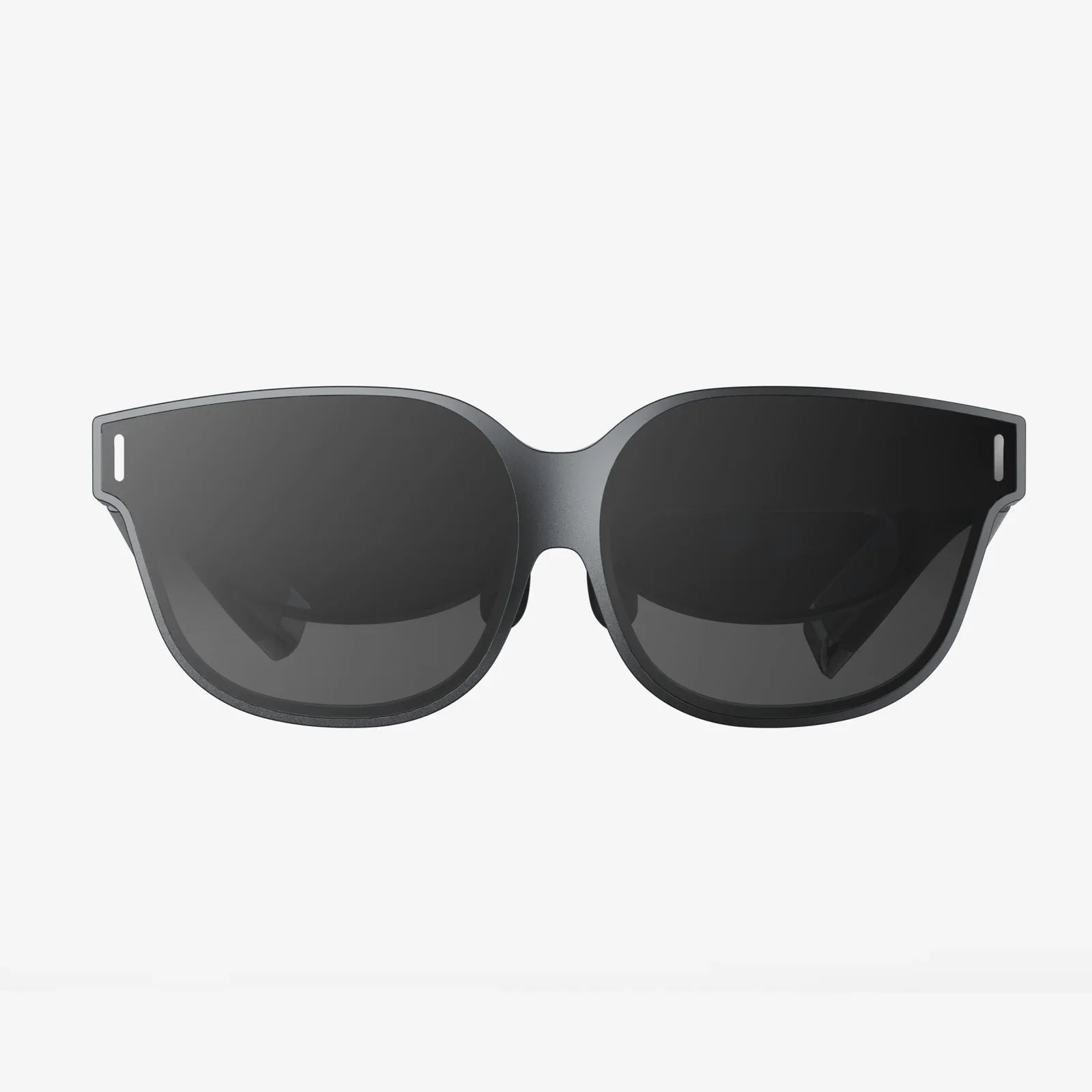
- by wangfred
AR Glasses Providers Transforming Everyday Life and Work
- by wangfred
AR glasses providers are quietly rewriting the rules of how people see, learn, work, and play, and the organizations that understand this shift early will gain a powerful competitive edge. Whether you are a business leader evaluating wearable technology, a developer planning immersive applications, or a tech enthusiast preparing for the next wave of computing, understanding the landscape of AR glasses providers has become a strategic necessity rather than a niche curiosity.
Augmented reality glasses are no longer just futuristic prototypes. They are evolving into practical tools that overlay digital information onto the physical world, turning everyday environments into interactive canvases. As providers race to deliver lighter hardware, sharper displays, and smarter software, buyers face a new challenge: choosing the right partners, platforms, and roadmaps in a rapidly changing market. This article breaks down what matters most when assessing AR glasses providers, from technical capabilities and use cases to integration, security, and long-term viability.
AR glasses providers are companies or organizations that design, manufacture, or support augmented reality eyewear and the surrounding ecosystem. Their offerings typically include:
Not all AR glasses providers offer the full stack. Some focus on hardware, others on software platforms, and some specialize in vertical solutions such as industrial maintenance or medical training. Understanding which type of provider you are dealing with helps you assess fit for your needs.
The AR ecosystem is diverse, and providers can be grouped into several categories based on their focus and strengths.
These providers design AR glasses primarily for professional and industrial use. Their priorities include durability, security, compliance, and integration with enterprise systems. Typical use cases include:
Enterprise providers usually emphasize:
Consumer-focused providers aim to make AR glasses appealing for everyday use. Their goals include comfort, style, and entertainment value. Typical use cases include:
These providers often focus on:
Some AR glasses providers position their products as part of a broader spatial computing ecosystem. Their devices often blend augmented and mixed reality features, supporting:
These providers usually target sectors such as architecture, engineering, design, healthcare, and education, where spatial understanding and 3D visualization deliver clear value.
Some AR glasses providers specialize narrowly in a single industry or use case. Examples include:
These providers often offer tightly integrated hardware, software, and workflows designed around regulatory requirements, safety standards, and domain-specific needs.
To evaluate AR glasses providers effectively, it helps to understand the underlying technologies that determine performance, comfort, and capability.
The optical system defines how digital images are projected into the wearer’s field of view. Common approaches include:
Important display metrics include brightness, field of view, resolution, and color accuracy. AR glasses providers must balance these factors against weight, power consumption, and cost.
AR glasses rely on multiple sensors to understand the environment and the user’s movements:
The sophistication of sensor fusion and environmental mapping heavily influences the realism and stability of AR experiences. Leading AR glasses providers invest significantly in algorithms for simultaneous localization and mapping (SLAM) and computer vision.
AR glasses must process sensor data, render graphics, and handle connectivity, often in a very compact form factor. Providers adopt different architectures:
Battery life is a constant trade-off with performance and brightness. Enterprise-focused AR glasses providers may prioritize longer operating times, while consumer devices may lean toward lighter designs with shorter sessions.
How users interact with AR glasses is just as important as what they see. Providers use a mix of input methods:
Effective AR glasses providers invest in natural, low-friction interaction models that minimize user fatigue and learning curves.
Choosing the right AR partner involves more than comparing specifications. It requires a holistic assessment of technology, business viability, and alignment with your use cases.
The best AR glasses provider for your organization is usually the one that understands your industry and workflows. Consider:
A provider with deep domain expertise can shorten deployment timelines and reduce the risk of misalignment between the technology and real-world workflows.
Even the most powerful AR glasses fail if they are uncomfortable or impractical to wear. Evaluate:
For enterprise deployments, it is wise to run pilot programs that include workers from different roles and environments to gather real feedback on comfort and usability.
AR glasses are only as valuable as the applications they run. Assess the provider’s software ecosystem:
Providers with strong developer support enable faster iteration, customization, and innovation.
AR glasses often capture sensitive visual and audio data, making security and privacy critical. When evaluating providers, investigate:
Security features should be part of the core design, not an afterthought, particularly in sectors like healthcare, finance, and defense.
For organizations planning large deployments, AR glasses providers must offer robust fleet management capabilities:
Without strong management tools, scaling from a pilot to hundreds or thousands of devices can become operationally complex and costly.
Beyond the sticker price of the glasses, consider the full cost of ownership:
AR glasses providers that offer transparent pricing models and clear roadmaps can help organizations budget realistically and avoid unpleasant surprises.
Demand for AR glasses is not driven by a single killer app but by a cluster of high-value use cases across industries.
Industrial companies turn to AR glasses providers to improve efficiency, safety, and knowledge transfer. Common scenarios include:
AR glasses providers targeting this segment must handle rugged conditions, integrate with existing industrial systems, and prove clear ROI.
Healthcare organizations work with AR glasses providers to enhance care and education:
Providers in this space must prioritize accuracy, latency, and strict privacy protections, along with compliance with healthcare regulations.
Retailers and customer-facing businesses collaborate with AR glasses providers to create more engaging experiences:
Here, providers must balance performance with aesthetics, ensuring AR glasses are approachable and comfortable in public settings.
Educational institutions and training organizations rely on AR glasses providers to bring abstract concepts to life:
Providers that support multi-user experiences, content creation tools, and classroom management features can stand out in this segment.
As hybrid work becomes the norm, AR glasses providers are exploring ways to make remote collaboration feel more natural:
Providers that integrate with existing productivity suites and communication tools can accelerate adoption in knowledge work environments.
Despite rapid progress, AR glasses providers face significant challenges that will shape the pace and direction of adoption.
To move beyond niche use, AR glasses must be comfortable and socially acceptable. This requires:
Providers that collaborate with designers, ergonomics experts, and end users are more likely to find the right balance.
High brightness, wide fields of view, and powerful processing all consume energy. AR glasses providers must innovate in:
Until battery technology advances significantly, clever engineering and design compromises will remain essential.
For many potential users, the value of AR glasses is limited by the available content and applications. Providers can address this by:
Without a robust library of useful applications, even impressive hardware can struggle to gain traction.
AR glasses raise complex questions about surveillance, consent, and data usage. Providers must navigate:
Transparent policies, visible recording indicators, and user-controlled privacy settings will be critical for building trust.
Organizations evaluating AR glasses should approach providers as long-term partners rather than simple vendors. A structured approach can increase the likelihood of success.
Before engaging with AR glasses providers, clarify what you want to achieve:
Clear objectives help providers propose relevant solutions and make it easier to justify investment internally.
Rather than attempting a broad rollout from the start, work with providers to design targeted pilots:
Pilots help validate assumptions, uncover practical challenges, and refine requirements before scaling up.
Deploying AR glasses often requires changes to processes, systems, and culture. Collaborate with providers on:
Successful projects treat AR not as a standalone gadget but as part of a broader digital transformation strategy.
AR glasses providers are still iterating rapidly on hardware and software. When selecting a partner, examine:
A provider with a clear, credible roadmap reduces the risk of investing in a platform that becomes obsolete prematurely.
The next decade will likely see AR glasses transition from specialized tools to mainstream computing interfaces. Several trends will shape how providers evolve.
AR glasses providers are increasingly integrating artificial intelligence and cloud services to deliver smarter, more context-aware experiences:
This convergence will make AR glasses feel less like simple display devices and more like intelligent companions that understand context and intent.
Advances in optics, materials, and chip design will allow AR glasses providers to create devices that look and feel more like standard eyewear. As designs become more discreet and comfortable, social acceptance and day-long wearability will improve, opening the door to:
Providers that master miniaturization without sacrificing capability will be well-positioned to lead the next wave of adoption.
As the ecosystem matures, AR glasses providers will face pressure to support common standards for:
Standardization will reduce fragmentation, making it easier for developers to build cross-device experiences and for organizations to adopt multi-vendor strategies.
Beyond selling devices, AR glasses providers are likely to expand into:
This shift will encourage providers to focus on long-term value and outcomes rather than one-time hardware sales.
The momentum behind AR glasses providers is no longer speculative. Organizations across industries are reporting tangible benefits: faster training, fewer errors, improved collaboration, and more engaging customer experiences. Meanwhile, ongoing advances in optics, silicon, and AI are steadily eroding the barriers that once limited AR to experimental labs.
For decision-makers, the most costly mistake may not be choosing the wrong AR platform, but ignoring the space entirely until competitors have already built experience, content, and organizational muscle around it. By learning how to evaluate AR glasses providers now, running focused pilots, and building internal expertise, you position yourself to move quickly as the technology matures and new possibilities emerge.
AR glasses providers are laying the groundwork for a world where digital information is no longer confined to flat screens but woven directly into the fabric of everyday life. Those who understand how to harness this shift early will not just keep up with change; they will help define what comes next.