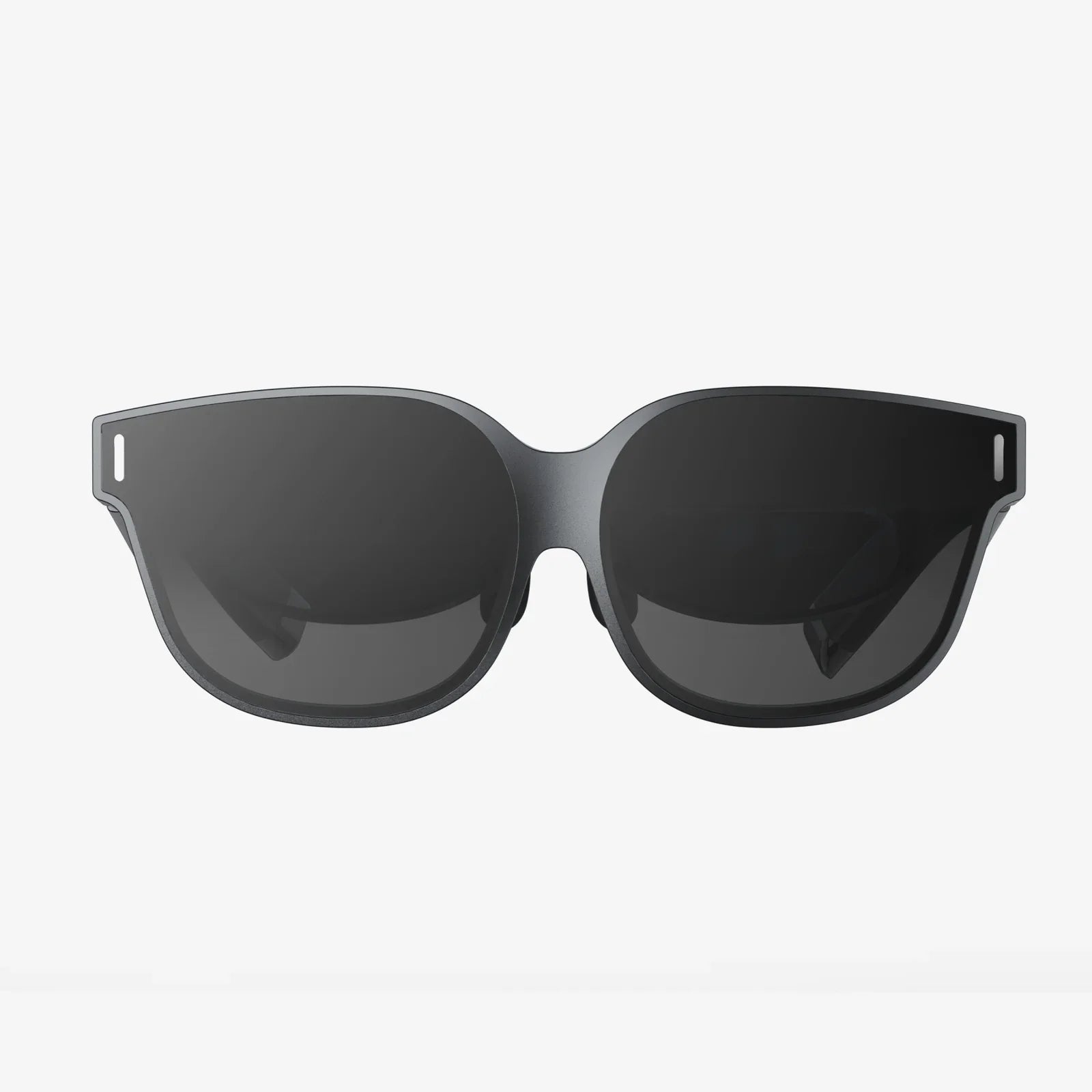
If you are searching for the best operating system for augmented reality AR development support, you are probably already feeling the pressure of a fast-moving industry: new devices, new toolchains, and shifting platform priorities every year. Choosing the wrong operating system to build your AR stack on can quietly sabotage your project with performance bottlenecks, poor tooling, or limited deployment options. Choosing the right one, on the other hand, can give you smoother rendering, faster iteration, and access to a much wider audience of users.
This guide walks through the trade-offs between the major operating systems that matter for AR: desktop platforms like Windows, macOS, and Linux, and mobile platforms like Android and iOS. Instead of vague generalities, we focus on what actually affects AR developers day to day: graphics APIs, sensor access, device support, debugging tools, ecosystem maturity, and long-term viability. By the end, you will be able to match your AR project goals with a concrete OS strategy that supports you instead of holding you back.
Why the Operating System Matters So Much for AR
Augmented reality development is more sensitive to operating system choices than many other kinds of software. AR applications combine real-time 3D rendering, camera streaming, sensor fusion, computer vision, and sometimes networking and cloud integration. All of this needs to run with low latency and high stability. The operating system sits at the center of that stack and influences several critical aspects:
-
Performance and latency: How efficiently the OS handles GPU calls, camera frames, and sensor data directly affects motion-to-photon latency and user comfort.
-
Sensor access: AR relies on cameras, IMUs, depth sensors, and sometimes LiDAR or time-of-flight sensors. The OS determines how easily and reliably you can access them.
-
Graphics APIs: Your choice of graphics API (such as low-level or high-level APIs) is tied to the OS, impacting rendering performance and battery life.
-
Tooling and SDKs: Some AR frameworks are tightly coupled to specific operating systems, and the quality of profiling, debugging, and simulation tools varies widely.
-
Distribution and audience: The OS determines where you can ship your AR app and which devices your users can actually use it on.
Because of this, the "best" operating system for augmented reality AR development support is not a single universal answer. Instead, it depends on your priorities: are you targeting consumer phones, enterprise headsets, industrial wearables, or cross-platform experiences? The sections below break down how each major OS stacks up from a developer’s point of view.
Desktop vs Mobile: Two Different Roles in AR Development
Before comparing specific operating systems, it helps to separate the two main roles they play in AR work:
-
Development host OS: The system you use to write code, run the editor, use the emulator, and build your AR apps.
-
Target runtime OS: The system that runs your AR application on the user’s device.
In many AR workflows, the development host and target runtime are different. For example, you might develop on a laptop running a desktop operating system, but deploy to a phone running a mobile OS. Or you might build directly for a stand-alone headset that runs a customized OS but still rely on a desktop OS for building and debugging.
When people ask about the best operating system for augmented reality AR development support, they often mix these two roles together. To make a sound decision, you should evaluate:
- Which desktop OS gives you the best tools and stability for development?
- Which mobile or headset OS gives you the best performance, features, and user reach?
- How easy it is to bridge between your development host and your target runtime?
With that in mind, let us look at the major operating systems one by one, starting with desktop environments, then moving to mobile and specialized AR platforms.
Windows for AR Development: Strengths and Trade-offs
Windows remains one of the most widely used operating systems for AR development on the desktop side. Its strengths are largely about tooling, hardware compatibility, and broad ecosystem support.
Key Advantages of Windows for AR Development
-
Strong graphics and GPU support: Windows offers robust drivers for a wide range of GPUs, making it a solid choice for heavy 3D workloads, advanced shaders, and real-time rendering pipelines.
-
Popular game engines run well: Many AR developers rely on game engines and related tools that are well-optimized for Windows, which can improve editor responsiveness and build times.
-
Device connectivity: Windows generally offers excellent support for connecting AR headsets, depth cameras, and external sensors, which is crucial for testing and prototyping.
-
Enterprise integration: For enterprise AR solutions, Windows often fits cleanly into existing IT environments, with familiar security and management tools.
Limitations of Windows for AR Development
-
Mobile toolchain gaps: While Windows supports toolchains for multiple platforms, some mobile development workflows can feel more polished on other desktop OS options.
-
Less native Unix-like environment: Many computer vision, machine learning, and robotics tools were born in Unix-like environments. Although Windows has improved in this area, some libraries and scripts still work more smoothly elsewhere.
-
Fragmented AR runtime landscape: On Windows, there is no single dominant AR runtime environment, which can make it harder to standardize your toolchain.
Overall, Windows is a strong candidate for AR developers who prioritize powerful hardware, broad device support, and compatibility with popular AR-related tools, especially in enterprise or industrial contexts.
macOS for AR Development: Polished Tools and Mobile Focus
macOS occupies a special position in AR development because it is tightly connected to one of the dominant mobile platforms. If you are targeting that mobile ecosystem, macOS is essentially mandatory for building and signing apps for that environment.
Key Advantages of macOS for AR Development
-
Essential for certain mobile deployments: If your AR app targets specific mobile devices that require macOS for signing and deployment, you simply cannot avoid it.
-
Polished development environment: macOS provides integrated tools that combine code editing, UI design, debugging, and profiling in a unified workflow, which can be particularly pleasant for AR experimentation.
-
High-performance graphics on modern hardware: Recent macOS hardware provides strong GPU performance and efficient power usage, which is useful when running heavy AR simulations or editors.
-
Strong support for creative workflows: Many 3D artists, designers, and multimedia creators use macOS, making it easier to integrate AR development with content creation pipelines.
Limitations of macOS for AR Development
-
Limited hardware variety: macOS runs on a relatively narrow set of hardware, which limits options for custom GPUs or specialized sensors.
-
Less flexibility for certain low-level experiments: Developers who want deep access to drivers, kernel modules, or experimental hardware interfaces may find macOS more restrictive than other desktop OS options.
-
Not ideal for all AR targets: If you are primarily building AR apps for other ecosystems, macOS may not provide the most direct or efficient toolchain.
For AR developers focused on certain mobile platforms, macOS is often the best operating system for augmented reality AR development support on the desktop side. Its tight integration with mobile devices and polished tools can significantly speed up development cycles.
Linux for AR Development: Flexibility and Open Toolchains
Linux is a favorite among researchers, robotics engineers, and developers working on experimental AR systems that rely heavily on computer vision, SLAM algorithms, and custom hardware. Its strengths lie in flexibility, open-source ecosystems, and deep control over the system.
Key Advantages of Linux for AR Development
-
Rich open-source ecosystem: Many core technologies used in AR—such as computer vision libraries, robotics frameworks, and machine learning tools—are first-class citizens on Linux.
-
Fine-grained system control: Linux allows detailed control over scheduling, device drivers, and low-level optimizations, which is valuable for advanced AR research and high-performance prototypes.
-
Good fit for edge devices: If your AR system relies on embedded or edge computing nodes, these often run Linux, making development and deployment more coherent.
-
Cost and licensing flexibility: For teams that need to scale infrastructure or run many build servers, Linux can be more economical and easier to automate.
Limitations of Linux for AR Development
-
Less polished consumer AR tooling: Some mainstream AR development tools are not as well-supported on Linux, or require workarounds.
-
Driver and hardware challenges: While improving, GPU and camera drivers on Linux can be more complex to configure, which may slow down some AR workflows.
-
Mobile deployment gaps: Building and deploying to certain mobile platforms from Linux can be more complicated or less officially supported.
Linux is a strong choice if your AR work is research-heavy, deeply technical, or tied to robotics and edge devices. For consumer-focused mobile AR apps, however, it is often more practical as a secondary environment rather than the primary development OS.
Android as an AR Target Platform
On the mobile side, Android is one of the most important platforms for AR developers, thanks to its wide device range and global reach. When evaluating the best operating system for augmented reality AR development support, Android stands out as a target runtime OS, even though most developers author their code on desktop systems.
Key Advantages of Android for AR
-
Massive device diversity: Android runs on a huge variety of phones, tablets, and some head-mounted devices, providing access to a broad user base.
-
Flexible hardware options: Many Android devices offer advanced cameras, depth sensors, and powerful mobile GPUs, which can be harnessed for sophisticated AR experiences.
-
Open and customizable environment: The Android platform allows relatively deep access to sensors and system features, which is valuable for novel AR interactions and custom tracking pipelines.
-
Multiple distribution channels: Android apps can be distributed through various app stores and enterprise channels, making it easier to reach different markets.
Challenges of Android for AR
-
Fragmentation: Device diversity is a double-edged sword. Different sensors, camera characteristics, and performance levels can make consistent AR behavior difficult to guarantee.
-
Varying AR capability levels: Not all Android devices support advanced AR features. Some lack required sensors or do not meet performance thresholds for high-quality AR.
-
Testing complexity: To ensure quality, you often need to test on multiple physical devices covering different manufacturers, chipsets, and OS versions.
Despite these challenges, Android is a core part of almost any AR strategy targeting consumer users. Even if it is not your primary development OS, designing your AR architecture with Android in mind can dramatically expand your reach.
iOS as an AR Target Platform
iOS is another major mobile operating system that plays a central role in AR development. It has gained a reputation for high-quality AR experiences due to strong hardware-software integration and consistent device capabilities.
Key Advantages of iOS for AR
-
Consistent hardware and sensors: iOS devices tend to have more uniform camera systems, IMUs, and depth sensing capabilities, which simplifies AR development and testing.
-
Optimized AR frameworks: The platform provides well-integrated AR frameworks that handle tracking, plane detection, lighting estimation, and more, reducing the need to build everything from scratch.
-
High-performance graphics stack: The graphics APIs and hardware are optimized together, delivering smooth rendering and low latency for AR experiences.
-
Strong user engagement: Users on this platform are often early adopters of immersive technologies, making it a valuable audience for AR apps.
Challenges of iOS for AR
-
Closed ecosystem: iOS is more restrictive in terms of system access and customization, which can limit experimental AR approaches.
-
Single distribution channel: Public distribution typically goes through a single app marketplace, which has its own review and policy requirements.
-
Dependency on macOS for development: Building and deploying iOS AR apps generally requires a macOS machine, which shapes your choice of development OS.
For developers who prioritize polished, high-quality AR experiences with predictable behavior across devices, iOS is a strong candidate. When combined with macOS as the development host, it offers one of the most streamlined pipelines for AR on mobile.
Specialized AR and XR Operating Systems
Beyond general-purpose desktop and mobile OS options, several specialized AR and extended reality platforms exist. These systems are often built on top of existing operating systems but provide customized shells and AR runtimes tailored to headsets or smart glasses.
Key characteristics of these specialized systems include:
-
Head-mounted display optimization: They are tuned for low-latency, stereo rendering, and precise tracking needed for head-worn AR devices.
-
Dedicated input methods: They support hand tracking, eye tracking, spatial gestures, and voice commands as first-class input methods.
-
Spatial mapping and anchoring: Many provide system-level services for spatial mapping, persistent anchors, and shared spatial coordinates.
-
Enterprise deployment models: Some are designed for industrial or enterprise use, with features like remote management, secure deployment, and integration with corporate identity systems.
From a developer’s perspective, these specialized AR operating systems often come with their own SDKs and development guidelines. The best operating system for augmented reality AR development support in this category depends on which headset or smart glasses you are targeting and how tightly integrated the vendor’s tools are with your chosen desktop OS.
Cross-Platform Engines and How They Influence OS Choice
Most AR developers today rely on cross-platform engines or frameworks to build once and deploy to multiple operating systems. These tools can partially decouple your project from any single OS, but they do not eliminate OS-specific considerations.
Benefits of Cross-Platform Engines for AR
-
Shared codebase: You can maintain one core project that exports to multiple platforms, including Android, iOS, and sometimes desktop or standalone AR devices.
-
Common abstractions: Engines often provide unified APIs for input, rendering, and sometimes basic AR features, reducing the need for platform-specific code.
-
Built-in editor and scene tools: Visual editors, scene graphs, and asset pipelines speed up AR prototyping and iteration, regardless of the underlying OS.
OS-Related Trade-offs with Cross-Platform Engines
-
Editor performance varies by OS: The same engine may run faster or more reliably on one desktop OS compared to another, affecting your day-to-day productivity.
-
Platform-specific plugins: You may still need OS-specific plugins or native code for advanced AR features, which ties you back to the underlying operating system.
-
Build and deployment dependencies: Even when using a cross-platform engine, building for certain mobile platforms may require specific desktop OS environments and toolchains.
When evaluating the best operating system for augmented reality AR development support, you should consider not only the target OS but also how well your chosen engine runs on your development machine. A smooth editor experience can make as much difference as the runtime performance on the device.
Performance, Latency, and Sensor Access Across OS Options
AR applications succeed or fail on performance and user comfort. The operating system influences these factors in subtle but important ways.
Graphics and Rendering Performance
Key questions to ask about each OS you are considering:
- Does the OS provide a modern, low-overhead graphics API that your engine can use efficiently?
- Are GPU drivers stable and optimized for your target hardware?
- Can you reliably hit high frame rates needed for comfortable AR (often 60 frames per second or higher)?
Desktop OS options generally offer more raw GPU power, which is helpful for simulation and development. Mobile OS options focus on power-efficient graphics, which is vital for real-world AR usage where battery life matters.
Sensor Access and Synchronization
AR depends on precise synchronization between camera frames, IMU readings, and sometimes depth sensors. When comparing OS options, consider:
- How easy is it to access raw sensor data, if needed?
- Does the OS provide high-level AR services that fuse sensors for you, or do you need to implement your own fusion?
- Are there known issues with sensor latency or jitter on certain OS and device combinations?
Mobile operating systems often provide high-level AR frameworks that handle much of this complexity. Desktop operating systems may require more manual handling, but they give you more freedom for custom algorithms.
Tooling, Debugging, and Simulation on Different Operating Systems
The best operating system for augmented reality AR development support is also the one that gives you powerful, reliable tools. AR debugging is inherently more complex than traditional app debugging because you are dealing with 3D space, real-world lighting, and physical movement.
Key Tooling Considerations
-
Emulators and simulators: Does the OS support high-quality AR simulation so you can test without constantly deploying to a physical device?
-
Remote debugging: Can you attach a debugger to a device running your AR app, inspect variables, and capture performance traces?
-
Profiling tools: Are there good tools for analyzing GPU usage, CPU hotspots, memory allocation, and frame timing?
-
Logging and analytics: How easy is it to capture logs and metrics from AR sessions, especially when users move through large physical spaces?
Desktop OS choices affect which profiling and debugging tools you can run, while mobile and headset OS choices affect what data you can collect from the device. Ideally, you want a combination that gives you full visibility into your AR app’s behavior.
Choosing an OS Strategy Based on Project Type
Instead of looking for a single universal answer, it is more practical to choose an operating system strategy aligned with your project type and constraints. Below are some common scenarios and OS combinations that tend to work well.
Scenario 1: Consumer Mobile AR App
If you are building a consumer AR app for smartphones, a typical strategy is:
-
Development host OS: macOS, especially if you need to build for both major mobile platforms.
-
Target runtime OS: Android and iOS, using a cross-platform engine or separate native projects.
-
Reasoning: macOS gives you access to the necessary mobile toolchains, while Android and iOS provide the broadest user reach for consumer AR experiences.
Scenario 2: Enterprise or Industrial AR Headset Solution
For enterprise AR in warehouses, factories, or field service:
-
Development host OS: Windows or Linux, depending on your tool preferences and enterprise environment.
-
Target runtime OS: Specialized AR headset OS or Android-based smart glasses.
-
Reasoning: Windows and Linux offer solid integration with enterprise IT, powerful hardware, and flexibility for custom integrations, while specialized headset OS environments are optimized for hands-free AR in industrial settings.
Scenario 3: Research and Experimental AR Systems
For academic research, robotics integration, or experimental AR algorithms:
-
Development host OS: Linux, often combined with Windows or macOS as secondary environments.
-
Target runtime OS: Linux-based embedded systems, Android devices, or custom hardware.
-
Reasoning: Linux provides strong support for computer vision, robotics frameworks, and custom hardware, making it ideal for pushing the boundaries of AR technology.
Scenario 4: High-End Creative AR Experiences
For premium AR experiences tied to design, art, or premium consumer devices:
-
Development host OS: macOS or Windows, depending on your content creation tools.
-
Target runtime OS: iOS, high-end Android devices, or specialized AR headsets.
-
Reasoning: These combinations give you access to powerful hardware, polished AR frameworks, and users who are eager to try immersive experiences.
Future Trends That Will Shape AR OS Choices
The AR landscape is evolving rapidly, and the definition of the best operating system for augmented reality AR development support will keep shifting as new devices and standards emerge. A few trends to watch:
-
More powerful mobile chipsets: As mobile processors and GPUs continue to improve, mobile OS platforms will support more complex AR scenes and higher fidelity rendering.
-
Standardization of AR interfaces: Efforts to standardize AR runtimes, anchors, and spatial mapping across platforms may reduce fragmentation and make cross-OS development easier.
-
Cloud-assisted AR: Offloading heavy computation to edge or cloud servers may reduce the performance burden on the local OS, but will increase the importance of networking and security features.
-
Convergence of AR and VR platforms: As mixed reality devices blur the line between AR and VR, operating systems will likely evolve to support both modes seamlessly, offering developers unified APIs.
-
Greater emphasis on privacy and safety: AR systems collect sensitive spatial and visual data. Operating systems will increasingly provide built-in mechanisms for privacy, permissions, and safe content rendering.
Planning for these trends means choosing operating systems and toolchains that are actively maintained, widely adopted, and committed to supporting AR as a long-term priority rather than a short-lived experiment.
Building a Resilient AR Development Stack
Rather than betting everything on a single platform, many successful AR teams build a resilient stack that can adapt to changes in operating systems, devices, and user expectations. You can do the same by following a few practical guidelines:
-
Separate core logic from platform-specific code: Keep your AR algorithms, game logic, and data models as platform-agnostic as possible, and isolate OS-specific features behind clean interfaces.
-
Use cross-platform standards where feasible: When working with 3D assets, networking, or cloud services, choose formats and protocols that are not tied to a single OS.
-
Maintain a multi-OS development environment: Even if you have a primary development OS, keep at least one secondary environment for testing and building, so you are not locked in.
-
Automate builds and tests: Continuous integration systems can build your AR project for multiple operating systems, catching OS-specific issues early.
-
Monitor OS and SDK roadmaps: Keep an eye on OS updates and AR SDK roadmaps, so you can plan migrations and take advantage of new capabilities without last-minute scrambles.
With this kind of strategy, you are not just picking the best operating system for augmented reality AR development support today; you are building a flexible foundation that can evolve as the AR ecosystem grows.
Putting It All Together: Making Your OS Decision
When you step back and look across all the options, a pattern emerges. The best operating system for augmented reality AR development support is rarely a single platform; it is a combination that matches your goals, your team’s skills, and your target users.
If your priority is reaching the largest number of consumers on mobile, pairing macOS as your primary development environment with both Android and iOS as targets is often the most effective approach. If you are focused on industrial AR or robotics-driven experiences, Windows or Linux on the desktop combined with specialized AR headsets or Android-based devices may serve you better. For cutting-edge research, Linux often takes center stage, supported by other OS options where needed.
What matters most is that you choose an operating system strategy deliberately, based on concrete criteria: performance, sensor access, tooling quality, ecosystem maturity, and long-term viability. When you align these factors with your project’s purpose, the operating system stops being a source of friction and becomes a powerful ally in delivering compelling AR experiences.
The next step is to map your specific project to the scenarios outlined above, list the devices you want to support, and then select the OS combination that best fits those constraints. Once you do, you will not just be guessing at the best operating system for augmented reality AR development support—you will have a clear, defensible strategy that can adapt as your AR ambitions grow.