


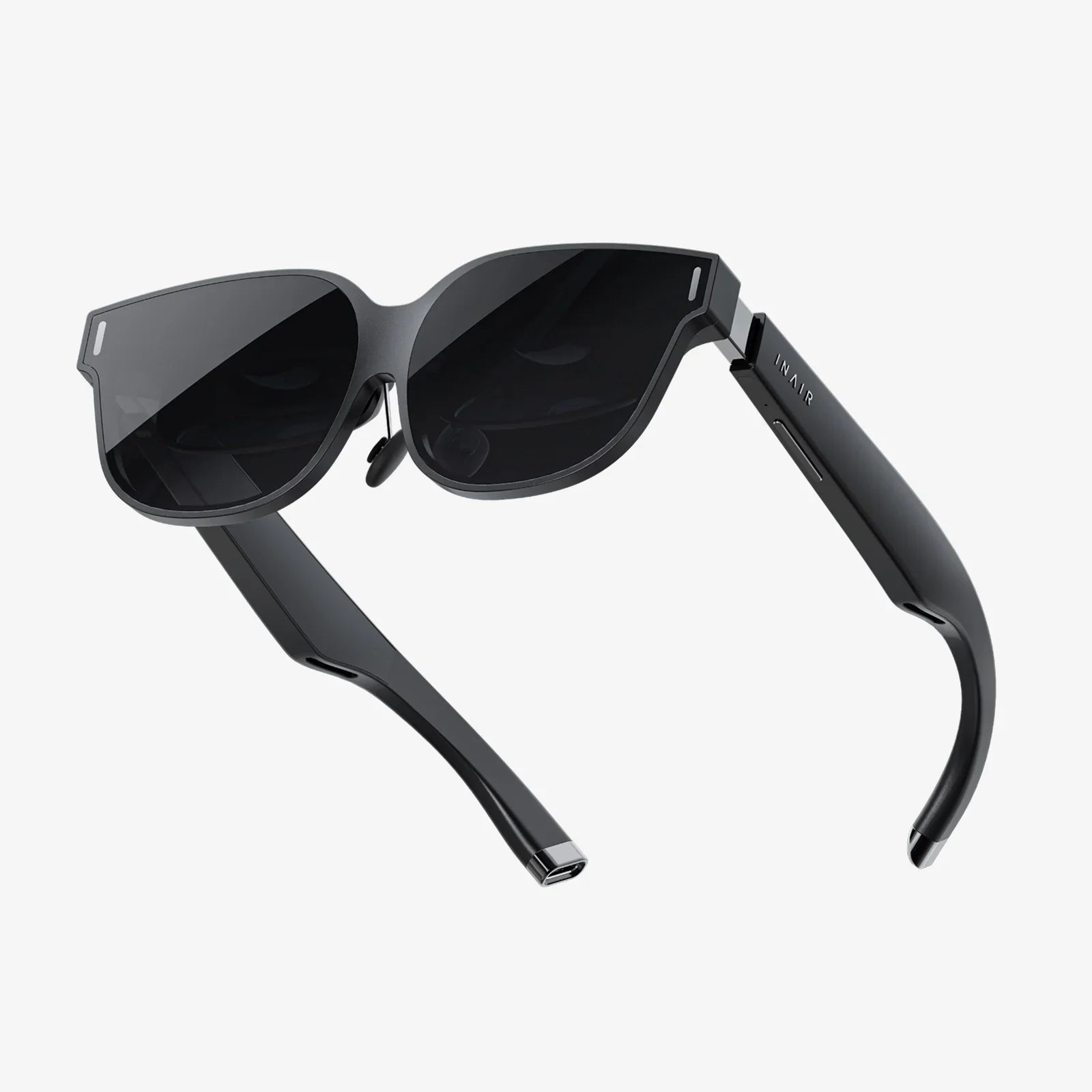
current ar glasses are no longer just sci-fi props or tech demo toys. They are quietly stepping into offices, factories, classrooms, and even living rooms, changing how people work, learn, and play. If you have ever wondered whether these devices are finally useful in real life, or still just an overhyped gadget, this deep dive into the present state of AR eyewear will help you decide whether it is time to pay attention.
Today’s devices are far from perfect, but they are much more capable, comfortable, and practical than many people realize. From hands-free instructions on the job to immersive study aids at home, current AR glasses are carving out real, high-value roles. Understanding what they can and cannot do right now is the key to seeing where this technology is heading next.
What current ar glasses Actually Are
Augmented reality (AR) glasses overlay digital information onto the real world. Unlike virtual reality headsets that block out your surroundings, AR glasses let you see your environment while adding virtual layers on top: text, images, 3D models, and interactive elements.
Current AR glasses generally fall into a few categories:
- Smart viewers: Lightweight glasses that mirror or extend a phone or computer screen into your field of view.
- Mixed reality headsets: More powerful devices with advanced sensors that understand your surroundings and anchor 3D content in space.
- Industrial AR devices: Rugged eyewear designed for factories, warehouses, healthcare, and field work, often focused on hands-free instructions and remote support.
All of them share the same core idea: keep your hands free while digital content appears where you need it, when you need it.
How current ar glasses Work Under the Hood
Even though the designs and capabilities differ, current AR glasses rely on a similar stack of technologies. Understanding this stack helps explain both their strengths and their limitations.
Optics and Displays
AR glasses must project bright, sharp images into your eyes while keeping the glasses as thin and light as possible. To do this, they use a combination of components:
- Micro-displays: Tiny screens (often OLED, microLED, or LCOS) that generate the digital image.
- Waveguides or prisms: Transparent optical elements that guide the image from the micro-display into your line of sight.
- Optical combiners: Layers that blend the digital image with the real-world view.
These systems must balance brightness, clarity, color accuracy, and field of view while remaining comfortable for long-term wear. That balance is one of the main engineering challenges for current AR glasses.
Sensors and Environment Tracking
To place digital objects in the right location and keep them stable as you move, AR glasses rely on a network of sensors:
- IMU (inertial measurement unit): Measures head movement and orientation.
- Cameras: Capture the environment for spatial mapping and sometimes for video pass-through AR.
- Depth sensors: Help understand distances and surfaces, enabling more accurate placement of virtual objects.
- Eye tracking (on some devices): Follows where you are looking to optimize rendering and enable gaze-based interaction.
The data from these sensors feeds into algorithms that estimate the device’s position and orientation in 3D space, a process known as tracking. For more advanced devices, this includes simultaneous localization and mapping (SLAM), which builds a live map of your surroundings.
Computing and Connectivity
Some current AR glasses contain full onboard processors, while others offload most of the computing to a paired phone, PC, or edge server. The choice affects weight, battery life, and performance:
- Standalone AR glasses: More self-contained, but often bulkier with limited battery life.
- Tethered or companion-based: Lighter and more comfortable, but dependent on another device.
Connectivity options typically include Wi-Fi, Bluetooth, and sometimes specialized wireless links for low-latency streaming. As networks improve, especially with faster wireless standards, AR glasses can rely more on cloud or edge computing for heavy tasks such as 3D rendering or AI processing.
The Real-World Use Cases of current ar glasses Today
While futuristic visions often focus on consumer entertainment, the most compelling uses for current AR glasses are happening in professional and educational contexts. These are the areas where the technology delivers clear, measurable value right now.
Hands-Free Guidance in Industry and Field Work
In manufacturing plants, warehouses, and field service operations, current AR glasses are used to display step-by-step instructions, diagrams, and alerts directly in workers’ fields of view. This can reduce errors and speed up complex tasks.
Common scenarios include:
- Assembly and maintenance: Technicians follow visual instructions overlaid on real equipment, with highlighted parts and animated sequences.
- Remote expert support: A specialist sees what the on-site worker sees and can annotate the view in real time.
- Inventory management: Workers scan shelves by looking at them, with AR overlays showing stock levels, pick lists, and optimal routes.
Because these environments are often controlled, repetitive, and high value, they are ideal early adopters for current AR glasses.
Medical and Healthcare Applications
Healthcare is another field where current AR glasses are making an impact. While strict regulations and privacy concerns limit some uses, there are several active applications:
- Surgical assistance: Surgeons can view patient imaging data, vital signs, and navigation cues in their field of view without looking away from the operating area.
- Training and simulation: Medical students and residents can practice procedures with AR overlays that guide their actions or simulate patient responses.
- Remote consultations: Specialists can observe procedures or examinations remotely, seeing what the local clinician sees.
These use cases focus on augmenting expert performance, improving training outcomes, and reducing the need for physical presence in every scenario.
Design, Architecture, and Construction
Architects, designers, and construction professionals are using current AR glasses to visualize projects at full scale, on site. Instead of relying solely on 2D plans or screens, they can walk through a planned building or inspect a virtual model overlaid on the real environment.
Typical applications include:
- On-site visualization: See how a new structure will look in its actual location before construction begins.
- Clash detection: Identify conflicts between systems (like plumbing and electrical) by comparing virtual plans to real-world conditions.
- Client presentations: Allow stakeholders to experience design options virtually, at scale, while standing on the project site.
This spatial understanding can prevent costly mistakes and speed up decision-making.
Education and Training
From classrooms to corporate training rooms, current AR glasses are turning abstract concepts into tangible experiences. Instead of imagining a molecule, an engine, or a historical site, learners can see and interact with 3D representations in their surroundings.
Examples include:
- STEM education: Visualizing complex structures like DNA, planetary systems, or mathematical models in 3D.
- Technical training: Practicing procedures on virtual equipment that appears in the real room, reducing the need for expensive physical setups.
- Soft skills and simulations: Role-playing scenarios such as customer interactions or emergency responses with virtual characters.
These experiences can increase engagement and retention, especially for visual and kinesthetic learners.
Everyday Productivity and Communication
While professional use cases are leading, current AR glasses are slowly creeping into everyday productivity for early adopters. Common uses include:
- Virtual monitors: Creating multiple floating screens for work without needing physical displays.
- Heads-up notifications: Seeing messages, calls, and reminders in a subtle, glanceable way.
- Navigation: Having turn-by-turn directions overlaid onto the real world while walking or cycling.
These uses hint at a future where AR glasses may replace or complement laptops, tablets, and even smartphones for some tasks.
Gaming and Entertainment
On the entertainment side, current AR glasses enable interactive experiences that blend digital characters and objects with your surroundings. While this segment is still growing, there are already examples of:
- Location-based games: Virtual creatures or items appearing in your home or local park.
- Shared experiences: Multiple people seeing and interacting with the same AR content in the same space.
- Media overlays: Extra information or scenes appearing around you while watching shows or events.
The entertainment potential is huge, but today it is limited by device adoption, comfort, and content availability.
Key Strengths of current ar glasses
To understand why so many industries are experimenting with AR, it helps to look at the unique advantages of current AR glasses compared to traditional screens.
Hands-Free Operation
One of the most powerful features is the ability to access information without using your hands. This is crucial for:
- Workers handling tools or machinery
- Medical professionals in sterile environments
- People cooking, repairing, or exercising
Instead of stopping to check a phone or monitor, the relevant data simply appears at the right moment.
Spatial Context
AR content is not just floating in a void; it can be anchored to real-world objects and locations. That spatial context makes information more intuitive:
- Instructions can appear directly on the part that needs attention.
- Navigation arrows can align with streets and hallways.
- Data can pop up above machines, doors, or shelves.
This reduces cognitive load because users do not have to mentally translate a 2D diagram into their 3D surroundings.
Enhanced Collaboration
Current AR glasses enable new forms of remote collaboration. Instead of describing a problem over a call, a worker can show it from their point of view. The remote expert can then draw annotations that appear in the worker’s field of view, or place virtual markers in the environment.
This can reduce travel, speed up problem resolution, and allow experts to assist more teams in less time.
Immersive Learning and Memory
Research suggests that interactive, spatial learning can improve understanding and recall. By turning lessons into experiences, current AR glasses can make training more effective:
- Learners can walk around a virtual object and see it from all angles.
- Simulations can replay complex procedures step by step.
- Abstract ideas can be connected to physical surroundings.
This is particularly valuable in fields where mistakes are costly or dangerous, such as aviation, medicine, or heavy industry.
The Limitations and Challenges Facing current ar glasses
Despite their promise, current AR glasses still face significant hurdles before they become mainstream everyday devices. Being aware of these limitations helps set realistic expectations.
Comfort, Size, and Style
One of the biggest barriers is physical design. Many devices are still bulkier and heavier than regular glasses. Long sessions can cause discomfort, especially if the weight is not evenly distributed.
Challenges include:
- Accommodating batteries, processors, sensors, and displays in a small frame.
- Ensuring proper fit for different head shapes and sizes.
- Creating styles that people are willing to wear in public.
Progress is steady, but the ideal form factor that truly feels like normal eyewear is still in development.
Battery Life
Powering displays, sensors, and wireless connections in a tiny frame puts a strain on batteries. Many current AR glasses offer only a few hours of intensive use, which is fine for targeted tasks but not yet for all-day wear.
Manufacturers must trade off between battery size, weight, and performance. Advances in low-power chips and display efficiency are helping, but energy remains a core constraint.
Field of View and Visual Quality
Another limitation is the field of view, which defines how much of your vision can be filled with AR content. Many devices display digital imagery in a relatively narrow window, which can feel like looking through a rectangular portal.
Other visual challenges include:
- Brightness in outdoor sunlight.
- Color accuracy and contrast.
- Alignment and focus for different users’ eyes.
These factors affect immersion and usability, especially for demanding tasks or entertainment.
User Interface and Interaction
Interacting with AR content is more complex than tapping a screen. Current approaches include:
- Hand gestures detected by cameras.
- Voice commands.
- Gaze-based selection and subtle head movements.
- Companion devices like phones or controllers.
Each method has trade-offs in precision, privacy, and social acceptability. Designing intuitive, low-friction interfaces for AR is still an active area of experimentation.
Privacy and Social Acceptance
Wearing a device with cameras and sensors raises understandable privacy concerns. People around you may not know if they are being recorded or analyzed. This has led to public pushback against some early AR devices.
To address this, current AR glasses increasingly include:
- Visible indicators when cameras are recording.
- Clear policies about data use and local processing.
- Options to disable certain sensors in sensitive environments.
Even with these measures, social norms around AR wearables are still forming. Acceptance will depend on transparent design and responsible usage.
Content and Software Ecosystems
Hardware alone is not enough. The value of current AR glasses depends heavily on the availability of useful, high-quality applications. While industrial and enterprise solutions are growing, consumer app ecosystems are still relatively small compared to smartphones.
Developers face technical challenges such as:
- Supporting multiple devices and platforms.
- Designing for 3D space instead of flat screens.
- Optimizing performance for limited hardware.
As common standards and tools mature, creating AR experiences will become easier, likely accelerating content growth.
How current ar glasses Compare to VR Headsets
Many people lump AR and VR together, but they serve different purposes. Understanding the distinction helps clarify where current AR glasses shine.
Presence vs. Coexistence
VR aims to fully immerse you in a virtual environment, ideal for gaming, simulations, and focused experiences. AR, on the other hand, overlays information onto your real surroundings, making it better suited for tasks that require awareness of the physical world.
In practice:
- VR is great when you want to escape or simulate another place.
- AR is powerful when you want to enhance what is already around you.
Use Contexts
Because AR glasses let you see and move freely, they fit naturally into:
- Work environments where safety and situational awareness matter.
- Public or shared spaces where you need to interact with others.
- On-the-go scenarios like navigation or field inspection.
VR headsets, by contrast, are better for stationary or controlled settings where immersion is the priority.
What to Look For When Evaluating current ar glasses
If you are considering exploring this technology for yourself or your organization, it helps to know which factors matter most. The right choice depends on your specific use case.
Comfort and Fit
Because AR glasses are worn on the face, comfort is critical. Key points to consider include:
- Weight distribution across nose and ears.
- Adjustability for different head sizes.
- Compatibility with prescription lenses if needed.
A device that looks impressive on paper but feels awkward after 20 minutes will not see much real-world use.
Display Quality and Field of View
Evaluate how clear and bright the virtual content appears, and how large the visible AR area is. Ask questions such as:
- Is the text easy to read at typical working distances?
- Does the content remain visible in bright environments?
- Does the limited field of view affect your intended tasks?
For industrial tasks, clarity and stability may matter more than cinematic immersion, while creative or entertainment uses may demand a wider field of view.
Interaction Methods
Consider how users will control the AR experience. For example:
- Are voice commands practical in your environment?
- Do hand gestures work reliably in your lighting and space?
- Is there a simple fallback method like a handheld controller or companion app?
The interaction model should align with your workflows and user preferences.
Software Support and Integration
Check whether current AR glasses support the applications and platforms you need. Important aspects include:
- Compatibility with existing enterprise systems or productivity tools.
- Availability of development kits and documentation if you plan custom apps.
- Support for remote management and security policies in organizational contexts.
A strong software ecosystem can be more important than raw hardware specs.
Privacy and Security Features
Especially in workplaces or public settings, privacy and security are non-negotiable. Consider:
- How video and sensor data are stored and processed.
- Options to restrict recording or disable cameras.
- Compliance with relevant regulations and standards.
Clear policies and technical safeguards can help build trust among users and bystanders.
The Future Trajectory of current ar glasses
Although this article focuses on the current state, it is impossible to ignore where the trends are heading. Several developments are likely to shape the next generation of AR glasses.
Smaller, Lighter, and More Stylish Designs
Advances in micro-displays, optics, and low-power chips are steadily shrinking the components required for AR. Over time, this will enable devices that look and feel closer to regular eyewear, making them more acceptable for everyday use.
As design improves, the line between prescription glasses, sunglasses, and AR glasses may blur, especially for people who already wear glasses daily.
Better Visual Fidelity and Wider Fields of View
Emerging display technologies promise brighter, sharper images and wider AR windows. Combined with more accurate environment mapping, this will make virtual content feel more solid and integrated with the real world.
Improvements in eye tracking and foveated rendering (rendering in high detail only where you are looking) will help deliver this fidelity without draining batteries.
More Intelligent, Context-Aware Experiences
As on-device and cloud-based AI systems improve, current AR glasses will become more context-aware. Instead of simply showing static overlays, they will understand what you are doing and proactively offer relevant information or assistance.
Examples might include:
- Recognizing tools or equipment and pulling up manuals automatically.
- Detecting potential safety hazards and highlighting them.
- Translating signs or conversations in real time.
This shift from manual control to intelligent assistance could dramatically increase the value of AR in daily life.
Deeper Integration with Other Devices
Future AR glasses are likely to work closely with phones, wearables, and ambient devices. Instead of replacing everything, they may become the primary visual interface while other devices handle input, sensing, or heavy computation.
This multi-device ecosystem will allow AR glasses to stay lightweight while still delivering powerful capabilities.
Practical Steps if You Want to Explore current ar glasses Now
If this technology is starting to sound relevant to your work or interests, there are practical ways to get involved without betting everything on a single device.
Identify High-Value Use Cases First
Start by asking where hands-free, context-aware information could make the biggest difference. Examples might include:
- Reducing errors in complex procedures.
- Shortening training time for new staff.
- Enabling experts to support multiple locations remotely.
Focusing on a small number of high-impact scenarios helps justify the investment and keeps early experiments manageable.
Run Limited Pilots and Gather Feedback
Rather than rolling out AR glasses widely, begin with pilot projects involving a small group of motivated users. Provide training, gather feedback, and measure outcomes such as task time, error rates, or satisfaction.
Use these insights to refine workflows, content design, and device selection before scaling up.
Invest in Content and Workflow Design
The value of current AR glasses depends heavily on how information is presented. Overloading users with cluttered overlays can be counterproductive. Effective AR content is:
- Minimal and context-specific.
- Easy to read at a glance.
- Aligned with physical objects and steps.
Collaborate with designers, trainers, and end users to create experiences that truly support the tasks at hand.
Plan for Change Management
Introducing AR glasses is not just a technical upgrade; it is a change in how people work. Address concerns proactively by:
- Explaining what data is collected and why.
- Clarifying that AR is a tool to assist, not to monitor or replace.
- Involving users in the design and evaluation process.
When people feel heard and supported, they are more likely to embrace the technology.
Why current ar glasses Are Worth Watching Right Now
For years, AR glasses were treated as a futuristic novelty, always promising more than they delivered. That perception is starting to shift. Quietly, in factories, hospitals, classrooms, and creative studios, these devices are solving real problems and creating new possibilities.
They are not yet ready to replace your phone or laptop, and they still face real challenges in comfort, battery life, and social acceptance. Yet the combination of hands-free access to information, spatial context, and intelligent assistance is powerful enough that many organizations are no longer asking whether AR will matter, but how quickly they can put it to work.
If you wait until AR glasses are as common as smartphones, you will be reacting to a world that has already changed. By understanding what current AR glasses can do today, and where they are heading, you can start experimenting on your own terms and be ready for the moment when digital information is no longer just on screens, but seamlessly woven into the world in front of your eyes.
共有:
A Wireless Portable Personal Computer With A Touch-Screen Interface: The Ultimate Guide
ARグラスのUI設計:未来を形作る目に見えないインターフェース