


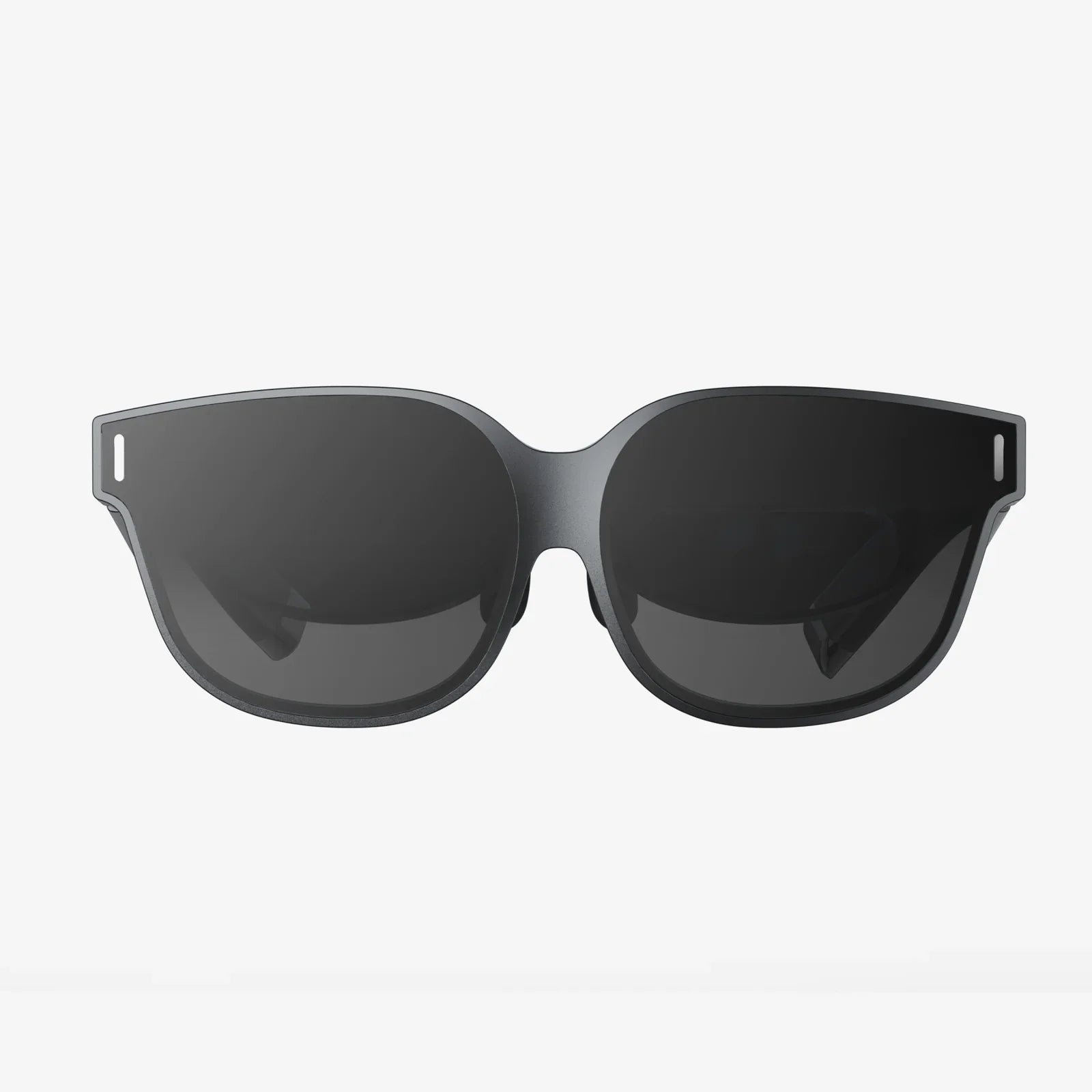
- by wangfred
Do AR Glasses Exist And How Close Are We To Everyday Use
- by wangfred
Do AR glasses exist, or are they still just a sci-fi fantasy used to sell futuristic dreams? If you have ever watched a movie where characters wear sleek glasses that project digital information into the real world, you have probably wondered how much of that is real and how much is pure imagination. The surprising truth is that AR glasses are not only real, they are already being used in workplaces, research labs, and even homes. But the story is more complex than a simple yes or no, and that complexity is exactly what makes this technology so fascinating.
To understand where we are today, it helps to unpack what “AR glasses” really means, how they differ from other devices like VR headsets, and why creating something that looks like normal eyewear but overlays rich digital information is one of the hardest challenges in consumer technology. If you are curious about when you might actually wear AR glasses on the street, at work, or in class without looking like a science experiment, the details below will give you a clear picture of where things stand and where they are headed.
Before answering whether AR glasses exist, it is important to define the term clearly. People often mix up AR, VR, smart glasses, and mixed reality. These categories overlap, but they are not identical.
When people say “AR glasses,” they usually mean a lightweight, glasses-like device that lets you see the real world while overlaying digital information directly in your field of view. This is different from viewing AR through a phone screen or a bulky headset.
Today’s devices fall into several categories, each capturing a piece of the AR vision:
So, do AR glasses exist? Yes, but they exist in different forms, with varying levels of capability, comfort, and practicality. None of them yet match the sleek, everyday eyewear often depicted in science fiction, but the gap is closing in certain areas.
To appreciate why AR glasses are difficult to build, it helps to understand the core components that make them work. At a high level, AR glasses must do four things simultaneously:
The optical system is the heart of AR glasses. It needs to place digital content in your field of view without blocking or distorting the real world. Common approaches include:
The challenge is to make all of this small enough to fit into something that resembles normal eyewear, while still delivering sharp, bright images that are visible even outdoors.
AR glasses also need to know where you are looking and what is around you. This typically requires:
These sensors feed data to onboard processors that calculate how to anchor digital content to the real world. For example, a virtual note pinned to your refrigerator must stay in the same place as you move around the kitchen.
Some AR glasses have powerful processors built in, while others offload heavy computation to a paired phone or a small companion device. Wireless connectivity is essential for cloud services, multi-user experiences, and updates.
The ideal AR glasses would combine all these elements into a device that feels as light and natural as wearing ordinary glasses. The reality is that trade-offs are still necessary: more power means more heat and weight; brighter displays mean more battery drain; more sensors mean more bulk.
Even if you do not see many people walking down the street wearing AR glasses, the technology is already making a real impact in specialized environments.
In factories and warehouses, workers use AR headsets and glasses to:
These use cases justify bulkier, more expensive hardware because they can reduce errors, speed up training, and improve safety. In these settings, appearance matters less than function.
AR glasses are also being tested and used in healthcare, where surgeons and clinicians can:
Here again, the emphasis is on precision and information density rather than style or portability.
Technicians repairing complex equipment, engineers inspecting construction sites, and remote workers collaborating across distances can all benefit from AR glasses that show diagrams, checklists, or annotations directly in their field of view. This reduces the need to consult paper manuals or handheld devices, keeping hands free for work.
On the consumer side, AR glasses are still in a relatively early stage, but there are already examples of:
These consumer devices may not deliver full 3D holograms anchored in space, but they demonstrate that lightweight, connected eyewear is technically feasible and can fit into daily life for early adopters.
If AR glasses already exist, why is almost no one wearing them on the street? The answer lies in a combination of technical, social, and economic challenges.
To be widely adopted, AR glasses must be comfortable for hours of use, look reasonably stylish, and work with prescriptions. That means:
Fitting displays, sensors, batteries, processors, and radios into something that still looks like normal glasses is a major engineering challenge. Many current devices compromise by being larger or limiting features.
Brightness, processing power, and connectivity all consume energy. At the same time, users do not want to recharge their glasses constantly or feel heat on their face. Balancing battery life with performance is an ongoing struggle.
Some designs offload computing to a phone or small external unit, but this introduces complexity and potentially reduces convenience.
For AR to feel convincing, digital content must appear stable, bright, and sharp across a wide field of view. Many current AR glasses have relatively narrow display areas, meaning digital content appears in a small “window” rather than filling your entire view.
Increasing the field of view while keeping lenses thin and transparent is extremely difficult. Engineers must also deal with color accuracy, contrast, and visibility outdoors in bright sunlight.
Even if AR glasses were technically perfect, social factors could slow adoption. People are understandably concerned about:
Designers try to address these concerns with visible recording indicators, clear design cues, and software restrictions, but social norms take time to evolve. The public memory of earlier attempts at camera-equipped glasses still influences how new devices are perceived.
High-end AR glasses and mixed reality headsets can be expensive due to their advanced optics and sensors. For most consumers, the question is not just whether AR glasses exist, but whether they are worth the cost compared to phones, tablets, and laptops that already deliver rich digital experiences.
Until AR glasses offer unique, compelling benefits that justify their price and visibility on your face, adoption will likely remain limited to enthusiasts and specific professional niches.
Despite all the challenges, the capabilities of current AR glasses are impressive in many scenarios. Depending on the device, users can:
In industrial environments, workers can see repair instructions attached to machines, checklists hovering over equipment, or safety warnings aligned with hazardous zones. In education, students can view 3D models of molecules, historical artifacts, or mechanical systems superimposed on their desks.
These use cases are not science fiction; they are already happening in pilot programs, specialized deployments, and early consumer products. The limitation is not whether AR glasses exist, but how widely available and comfortable they are for the average person.
AR glasses are only one piece of a much larger augmented reality landscape. To understand their future, it is helpful to see how they relate to other AR platforms.
Most people’s first experience with AR is through smartphone apps that place virtual objects into camera views. While this is less immersive than glasses, it has allowed developers to:
The lessons learned from phone-based AR will influence the software and services that eventually run on AR glasses. In a sense, the phone is the testbed, and glasses are the long-term destination for many AR ideas.
Some VR headsets now include high-quality cameras that let you see the real world while overlaying virtual objects, a technique called passthrough AR. While these headsets are bulkier than glasses, they demonstrate:
As the hardware shrinks and optics improve, many of the mixed reality experiences being developed for headsets could migrate to lighter AR glasses.
For AR glasses to feel truly magical, they need more than just local processing. Cloud services can provide:
This infrastructure is still evolving, but it will be crucial for AR glasses to move beyond simple overlays into rich, shared experiences that feel integrated with the real world.
When people ask “do AR glasses exist,” they often really mean “do the kind of AR glasses I see in movies exist yet?” The honest answer is: not quite in the form most people imagine, but many building blocks are already here.
In the near term, you can expect to see more:
These devices will continue to refine the balance between size, capability, and cost. They may not replace smartphones, but they will extend how and where you access digital information.
Looking a bit further ahead, advances in micro-LED displays, battery technology, and chip efficiency could enable:
At this stage, AR glasses could become a common tool in offices, classrooms, and homes for tasks like collaboration, training, design, and entertainment.
The long-term vision many technologists describe is a world where lightweight AR glasses are as common as smartphones are today. In that world, digital information would be woven into everyday life:
Whether this vision becomes reality depends not only on engineering progress but also on social acceptance, regulation, and the creation of genuinely useful applications that people want to use daily.
Knowing that AR glasses do exist, the next question is whether they matter for your life or work right now. The answer depends on your role and interests.
AR glasses may be worth exploring if you:
In these cases, pilot projects with AR glasses can reveal productivity gains, error reduction, or improved training outcomes. Even if the hardware is not perfect yet, early experimentation can build internal expertise.
If you build software or content, AR glasses represent a new frontier of interaction design. Areas to explore include:
Developing for AR today often means targeting phones and headsets, but the skills and concepts will carry over to future glasses as the hardware matures.
If you are simply curious, there are several ways to get a taste of AR without committing to expensive hardware:
These experiences will help you understand what AR feels like and what kinds of applications resonate with you, making it easier to decide when more advanced AR glasses become worth buying.
So, do AR glasses exist? Yes, they do, but not yet in the sleek, invisible form that science fiction has promised for decades. What we have today is a spectrum:
Instead of a single breakthrough moment when perfect AR glasses suddenly appear, the reality is a gradual evolution. Each generation gets a bit lighter, a bit smarter, and a bit more socially acceptable. Meanwhile, the software, services, and social norms that will make AR glasses truly valuable are quietly taking shape around us.
If you are waiting for the day when slipping on a pair of glasses instantly transforms your world with seamless digital information, you are not chasing a myth. You are simply early. AR glasses already exist in specialized forms, and they are steadily moving closer to the everyday, everywhere devices that stories and films have imagined. The next time you see someone wearing unusual eyewear, you might not just be looking at sunglasses or prescription lenses; you could be catching a glimpse of the future of computing, sitting right on their face.