


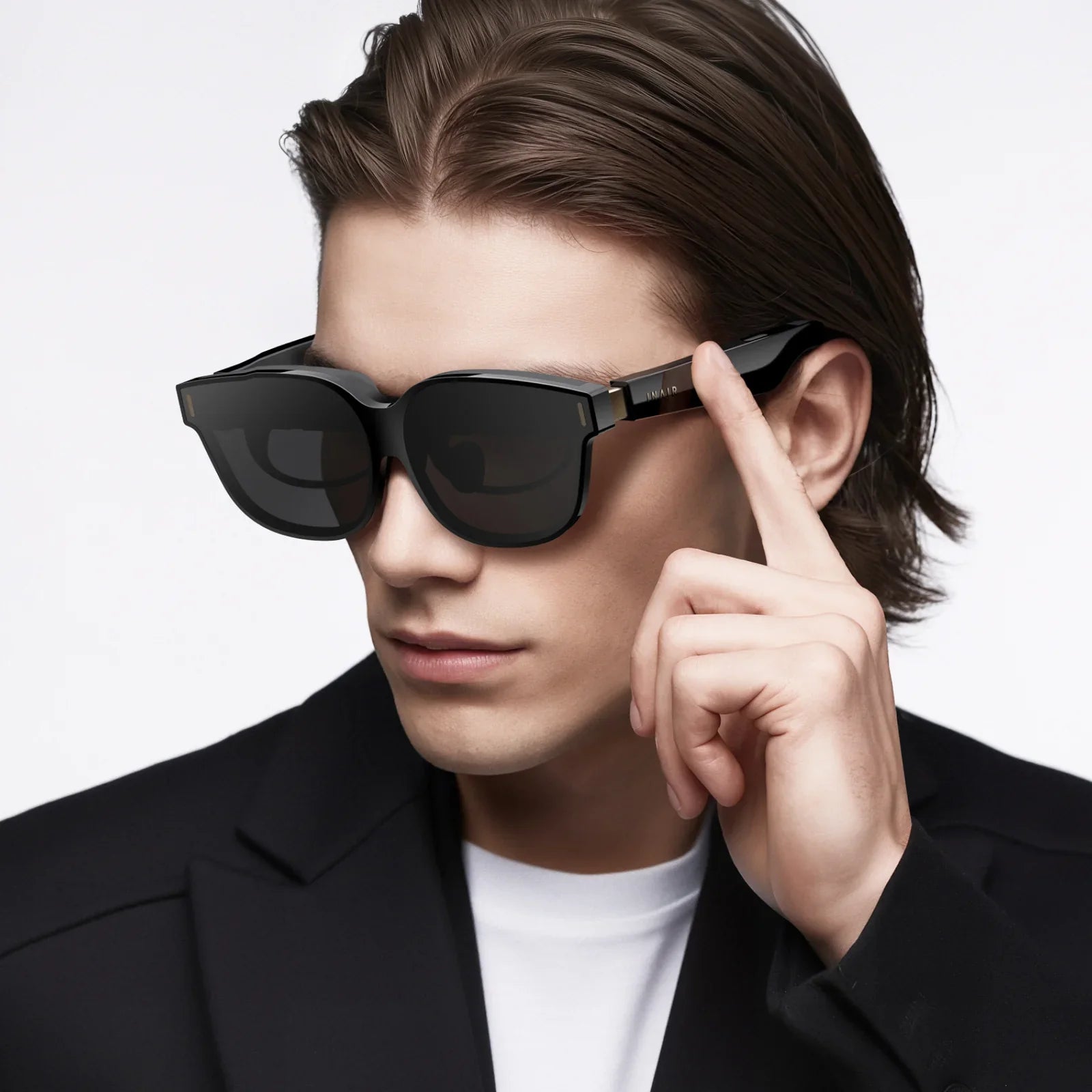
Mixed Reality is quietly reshaping the way we see, touch, and work with the digital world, and those who understand it now will be the ones shaping tomorrow’s opportunities. What once sounded like science fiction is rapidly becoming an everyday tool, blending physical spaces with digital intelligence to change how we design, learn, collaborate, and even relax. If you have ever imagined walking through a data model in your living room, collaborating with remote teammates as if they were beside you, or training for complex tasks in a safe but realistic environment, Mixed Reality is the bridge between imagination and reality.
What Is Mixed Reality?
Mixed Reality (MR) is a technology that merges the physical and digital worlds so that virtual objects can not only appear in the real environment, but also interact with it in believable, responsive ways. It sits on a spectrum between Virtual Reality (VR), which fully immerses you in a digital world, and Augmented Reality (AR), which overlays simple digital information on top of the physical world.
In Mixed Reality, digital content is anchored to the physical environment, responds to real-world surfaces, lighting, and movement, and can be manipulated as if it were truly there. You can walk around a virtual object on your desk, scale it, rotate it, or collaborate on it with others in real time.
Key characteristics of Mixed Reality include:
- Spatial awareness: The system understands the geometry of the room and objects around you.
- Real-time interaction: Digital objects respond to your gestures, voice, gaze, and physical motion.
- Persistence: Virtual content can stay in the same place over time, as if it were part of the real world.
- Multi-user collaboration: Multiple people can share the same Mixed Reality experience from different locations.
The Technology Behind Mixed Reality
To understand why Mixed Reality is so powerful, it helps to look at the core technologies that make it work. Several advanced components come together to create convincing, responsive experiences.
Head-Mounted Displays and Wearable Devices
Most Mixed Reality experiences rely on head-mounted displays, often called MR headsets or smart glasses. These devices combine transparent or semi-transparent displays with sensors that track your head movement and your surroundings. Some systems also support handheld devices like tablets or phones, but headsets deliver the most immersive MR experiences.
Typical features of MR headsets include:
- High-resolution displays that overlay digital content on your field of view.
- Wide field of view to make digital objects feel more natural and less constrained.
- Built-in speakers or spatial audio for 3D sound.
- Comfort-focused design for extended use.
Sensors, Cameras, and Spatial Mapping
Mixed Reality depends heavily on understanding the physical environment. Headsets use a combination of cameras and sensors to build a 3D map of the surroundings in real time. This process, known as spatial mapping, lets the system identify surfaces like walls, floors, tables, and objects.
Common sensors and techniques include:
- Depth sensors to measure the distance to objects and surfaces.
- Inertial measurement units (IMUs) to track head rotation and movement.
- Computer vision algorithms to recognize shapes, edges, and sometimes specific objects.
- Simultaneous Localization and Mapping (SLAM) to track your position while building a map of the environment.
With accurate spatial mapping, virtual objects can sit on your desk, hide behind your sofa, or bounce off your walls in ways that feel natural and physically plausible.
Interaction Methods: Hands, Eyes, and Voice
Mixed Reality enables more natural ways of interacting with digital content, moving beyond keyboards and touchscreens. Common input methods include:
- Hand tracking: Cameras track your hand movements and gestures, allowing you to grab, pinch, or tap virtual objects.
- Eye tracking: The system follows your gaze to understand what you are looking at and to enhance focus and interaction.
- Voice commands: Built-in microphones and speech recognition allow you to control apps and content using natural language.
- Controllers: Some systems still use handheld controllers for precision input, especially in complex applications.
The goal is to make interacting with digital content as intuitive as interacting with physical objects, reducing the learning curve and increasing immersion.
Cloud Computing and Connectivity
Many Mixed Reality experiences rely on cloud computing to handle heavy processing tasks, store large data sets, and synchronize shared experiences across users. Low-latency connections are especially important for collaborative MR, where multiple people interact with the same digital objects from different locations.
Cloud services can support:
- Real-time streaming of high-quality 3D content.
- Shared spatial anchors that keep virtual objects aligned across devices.
- AI-powered object recognition and scene understanding.
- Persistent environments that remain available over time.
Mixed Reality Versus VR and AR
Mixed Reality is often confused with Virtual Reality and Augmented Reality, but each serves different purposes and offers different levels of immersion.
Virtual Reality
Virtual Reality fully immerses you in a digital environment, blocking out the real world. It is ideal for scenarios where complete immersion is beneficial, such as gaming, simulations, or virtual tours. However, VR typically requires dedicated space and can isolate users from their physical surroundings.
Augmented Reality
Augmented Reality overlays digital information on the real world, often through smartphone screens or simple smart glasses. It is useful for quick, context-aware information like navigation, notifications, or simple visual overlays. AR usually does not deeply understand or interact with the physical environment; it simply places content on top of it.
Where Mixed Reality Fits
Mixed Reality combines the strengths of both approaches. It keeps you grounded in the physical world while enabling rich, interactive digital experiences that respond to the environment. You can see your surroundings, interact with people around you, and still work with complex 3D content as if it were physically present.
This balance between immersion and awareness makes Mixed Reality particularly well suited for professional use, collaboration, and tasks that require both digital tools and real-world context.
Key Applications of Mixed Reality Today
Mixed Reality is already being used across industries to solve real problems, streamline workflows, and create new experiences. Understanding these applications reveals why MR is more than a novelty; it is a strategic tool.
Education and Training
In education, Mixed Reality allows students to interact with complex concepts in three dimensions. Rather than reading about a process or looking at static diagrams, learners can explore interactive models that respond to their actions.
Examples of MR in education and training include:
- Visualizing complex systems such as the human body, engines, or ecosystems.
- Simulating hazardous or expensive scenarios safely, such as emergency response or technical maintenance.
- Guided step-by-step procedures that overlay instructions directly on real equipment.
- Remote mentoring, where an expert sees what a trainee sees and provides visual guidance.
This hands-on, immersive approach can improve retention, reduce training time, and increase confidence in performing tasks.
Healthcare and Medical Fields
Healthcare professionals are beginning to use Mixed Reality to enhance planning, training, and patient care. MR can overlay medical images directly onto a patient’s body, helping clinicians visualize internal structures more intuitively.
Use cases include:
- Pre-surgical planning with 3D reconstructions of patient anatomy.
- Training medical students with realistic, interactive simulations.
- Remote consultations where specialists can guide procedures with spatial annotations.
- Patient education using visual models to explain conditions and treatments.
By providing deeper spatial understanding, Mixed Reality can support more precise procedures and better communication between medical teams and patients.
Manufacturing and Industrial Operations
Mixed Reality is particularly powerful in industrial environments, where it can reduce errors, speed up complex tasks, and improve safety. Workers can see digital instructions, diagrams, and alerts directly in their field of view while keeping their hands free.
Common industrial applications include:
- Assembly guidance with step-by-step overlays on parts and tools.
- Maintenance procedures with visual cues highlighting components to inspect or replace.
- Remote support, where experts can annotate the worker’s view in real time.
- Layout planning by visualizing machinery or production lines before installation.
This reduces the need for printed manuals, lowers training costs, and helps ensure consistency and quality across teams and locations.
Architecture, Engineering, and Construction
Mixed Reality is changing how buildings and infrastructure are designed, reviewed, and constructed. Instead of relying solely on 2D drawings or screens, stakeholders can walk through full-scale digital models in real environments.
Benefits in this sector include:
- Visualizing design concepts on site, at scale, before construction begins.
- Detecting clashes between systems like plumbing, electrical, and structural components.
- Presenting designs to clients in an intuitive, immersive way.
- Supporting on-site teams with detailed visual instructions and safety information.
This reduces costly design errors, improves communication among teams, and accelerates decision-making.
Retail and Customer Experience
Mixed Reality is also emerging in retail and customer-facing experiences, creating more engaging and personalized interactions. Customers can visualize products in their own environments, customize options, and make more confident decisions.
Examples include:
- Trying virtual furniture in a physical room to check size, style, and fit.
- Exploring interactive showrooms where products come to life with digital layers.
- Guided in-store experiences where digital assistants appear in the shopper’s field of view.
- Immersive brand experiences that blend storytelling, games, and product discovery.
These experiences can increase engagement, reduce returns, and differentiate brands in competitive markets.
Entertainment, Art, and Culture
Mixed Reality opens new creative possibilities for artists, performers, and cultural institutions. It allows digital storytelling to inhabit physical spaces, turning everyday environments into interactive stages.
Creative uses of MR include:
- Immersive theater where digital characters share the stage with live actors.
- Museums with interactive exhibits that respond to visitors’ movements and choices.
- Location-based experiences that overlay historical scenes or fictional worlds onto real locations.
- Collaborative art tools where multiple creators sculpt or paint in shared 3D space.
By blending physical presence and digital imagination, Mixed Reality enables entirely new forms of expression and audience engagement.
Design Principles for Effective Mixed Reality Experiences
Creating successful Mixed Reality applications requires more than simply placing 3D objects in a room. Designers must consider how people naturally perceive and interact with the world, and how digital content can complement rather than overwhelm that experience.
Respecting the User’s Space
Mixed Reality content should feel like a natural extension of the physical environment. That means:
- Avoiding clutter and visual overload.
- Placing important elements within comfortable viewing zones.
- Ensuring virtual objects respect physical boundaries when possible.
- Allowing users to reposition or hide content to match their preferences.
When MR experiences respect users’ physical comfort and spatial awareness, they feel more trustworthy and usable.
Clear Feedback and Affordances
Users need to know what they can interact with and how. Effective MR interfaces provide:
- Visual cues such as highlights or outlines when objects are selectable.
- Subtle animations to show that objects are active or responsive.
- Haptic or audio feedback when interactions occur.
- Consistent gesture patterns across applications.
These cues reduce confusion and make interactions feel satisfying and predictable.
Comfort, Safety, and Accessibility
Mixed Reality experiences must be designed for long-term comfort and accessibility. Considerations include:
- Minimizing rapid motion or visual effects that cause discomfort.
- Allowing frequent breaks and easy pausing of experiences.
- Supporting seated and standing use cases.
- Providing options for different abilities, such as voice controls, larger text, or simplified interfaces.
Well-designed MR experiences can be inclusive, empowering a broad range of people to benefit from the technology.
Context-Aware Experiences
Because Mixed Reality understands the environment, it can tailor experiences based on context. Designers can use this to:
- Trigger relevant information when users approach certain locations or objects.
- Adjust content based on lighting conditions or noise levels.
- Adapt interfaces for crowded spaces versus quiet, private environments.
Context awareness makes MR more useful and less intrusive, turning it into a subtle assistant rather than a constant distraction.
Challenges and Limitations of Mixed Reality
Despite its potential, Mixed Reality faces several challenges that will shape how quickly and widely it is adopted. Understanding these limitations is crucial for realistic planning and investment.
Hardware Constraints
Current MR headsets must balance performance, comfort, and battery life. Limitations include:
- Weight and fit, which can affect comfort during extended use.
- Field of view, which may not cover the entire visual field.
- Battery life, often limiting untethered use to a few hours.
- Processing power, which impacts graphics quality and responsiveness.
These constraints are improving with each generation of devices, but they still influence which use cases are practical today.
Cost and Accessibility
High-quality Mixed Reality systems can be expensive, especially for large-scale deployments. Organizations must consider:
- Initial hardware investment.
- Licensing and software development costs.
- Training for users and support staff.
- Ongoing maintenance and upgrade cycles.
Costs are gradually falling, and some use cases already deliver strong returns on investment, but budget remains a barrier for some sectors.
Content Creation and Standards
Mixed Reality requires high-quality 3D content and specialized applications. Challenges include:
- A shortage of designers and developers with MR experience.
- Diverse hardware platforms with differing capabilities.
- Lack of universal standards for sharing and reusing MR content.
As tools improve and best practices emerge, content creation will become more accessible, but organizations must plan for an initial learning curve.
Privacy, Security, and Ethics
Mixed Reality devices collect sensitive data about users and environments, including spatial maps, audio, and sometimes biometric information. This raises important questions:
- Who owns and controls spatial data about homes, offices, or public spaces?
- How is personal information protected when MR experiences are shared?
- What safeguards prevent unauthorized tracking or surveillance?
Responsible deployment of Mixed Reality requires clear policies, transparent data practices, and robust security measures.
The Future of Mixed Reality
Mixed Reality is still in its early stages, but several trends indicate where it is headed and how it will integrate into daily life and work.
Convergence with Artificial Intelligence
As AI becomes more capable, it will play a central role in Mixed Reality. AI can help:
- Recognize and label objects and environments.
- Predict user needs and offer proactive assistance.
- Generate personalized content and adaptive learning paths.
- Enable natural language interfaces and intelligent virtual agents.
Combined with MR, AI can turn physical spaces into intelligent environments that respond to people’s intentions and goals.
Everyday Use Cases and Consumer Adoption
As devices become lighter, more stylish, and more affordable, Mixed Reality is likely to move from specialized applications into everyday life. Potential consumer scenarios include:
- Productivity tools that replace multiple screens with flexible virtual workspaces.
- Navigation that overlays directions and contextual information on the real world.
- Social interactions where friends appear as realistic avatars in your environment.
- Home improvement and design tools that let you experiment before making changes.
When MR becomes as convenient and reliable as smartphones, it may become a primary way people interact with digital content.
Blending Physical and Digital Workspaces
Mixed Reality has the potential to redefine what a workspace looks like. Instead of being limited by physical screens and furniture, people can create their own ideal environments.
Future workspaces might feature:
- Virtual monitors arranged around you in any configuration.
- Collaborative rooms where remote colleagues appear at life-size scale.
- Contextual dashboards that appear when you look at specific tools or machines.
- Dynamic training zones that adapt to the tasks you perform.
This flexibility could increase productivity, creativity, and satisfaction while reducing the need for fixed physical infrastructure.
Standardization and Interoperability
For Mixed Reality to reach its full potential, experiences and content need to work across devices and platforms. Efforts toward standardization will focus on:
- Common formats for 3D models and spatial data.
- Shared protocols for multi-user experiences.
- Security and privacy frameworks that apply across ecosystems.
Interoperable MR will allow people to move seamlessly between environments and devices without losing their content or context.
How to Start Exploring Mixed Reality
Whether you are an individual, a business leader, or a creator, you can begin preparing for a Mixed Reality future today. Taking practical steps now can position you ahead of the curve as the technology matures.
For Individuals and Learners
If you want to build skills and familiarity with Mixed Reality:
- Experiment with MR-capable devices through labs, libraries, or local organizations.
- Learn the basics of 3D modeling and interaction design.
- Explore online courses that cover MR development and user experience.
- Stay informed about new applications in your field of interest.
Building even a simple MR project can help you understand the possibilities and limitations more deeply.
For Businesses and Organizations
Organizations considering Mixed Reality should approach it strategically:
- Identify high-impact use cases, such as training, maintenance, or design review.
- Start with pilot projects that measure clear metrics like error reduction or time savings.
- Involve end users early to gather feedback and improve adoption.
- Plan for integration with existing systems and workflows.
By focusing on practical outcomes rather than novelty, businesses can unlock real value from Mixed Reality investments.
For Creators and Developers
Creators and developers interested in Mixed Reality should:
- Learn MR development tools and frameworks for 3D content and interaction.
- Study human-centered design principles specific to spatial computing.
- Experiment with prototypes that solve real problems, even on a small scale.
- Collaborate with experts in fields like ergonomics, psychology, and domain-specific areas.
The most successful MR experiences will come from teams that combine technical skill with deep understanding of human behavior and industry needs.
Why Mixed Reality Matters Now
Mixed Reality is more than a new way to display information; it is a shift in how humans and computers interact. As digital content moves off flat screens and into the spaces where we live and work, the boundaries between physical and virtual will continue to blur.
Those who engage with Mixed Reality early will have a significant advantage. They will understand how to design meaningful experiences, how to navigate the ethical and practical challenges, and how to harness MR to solve real problems. Whether you want to reinvent training, transform customer experiences, or unlock new forms of creativity, Mixed Reality offers a powerful toolkit.
The next wave of digital transformation will not live only in browsers and mobile apps. It will unfold in living rooms, factory floors, classrooms, hospitals, and city streets, layering intelligence and imagination onto the world we already know. Mixed Reality is the lens through which that transformation becomes visible, tangible, and actionable. The question is not whether it will shape the future, but how prepared you will be when that future arrives around you, in full, vivid, interactive 3D.
共有:
No Built-in Battery Glasses for Safer, Lighter, Smarter Everyday Wear
No Built-in Battery Glasses for Safer, Lighter, Smarter Everyday Wear