


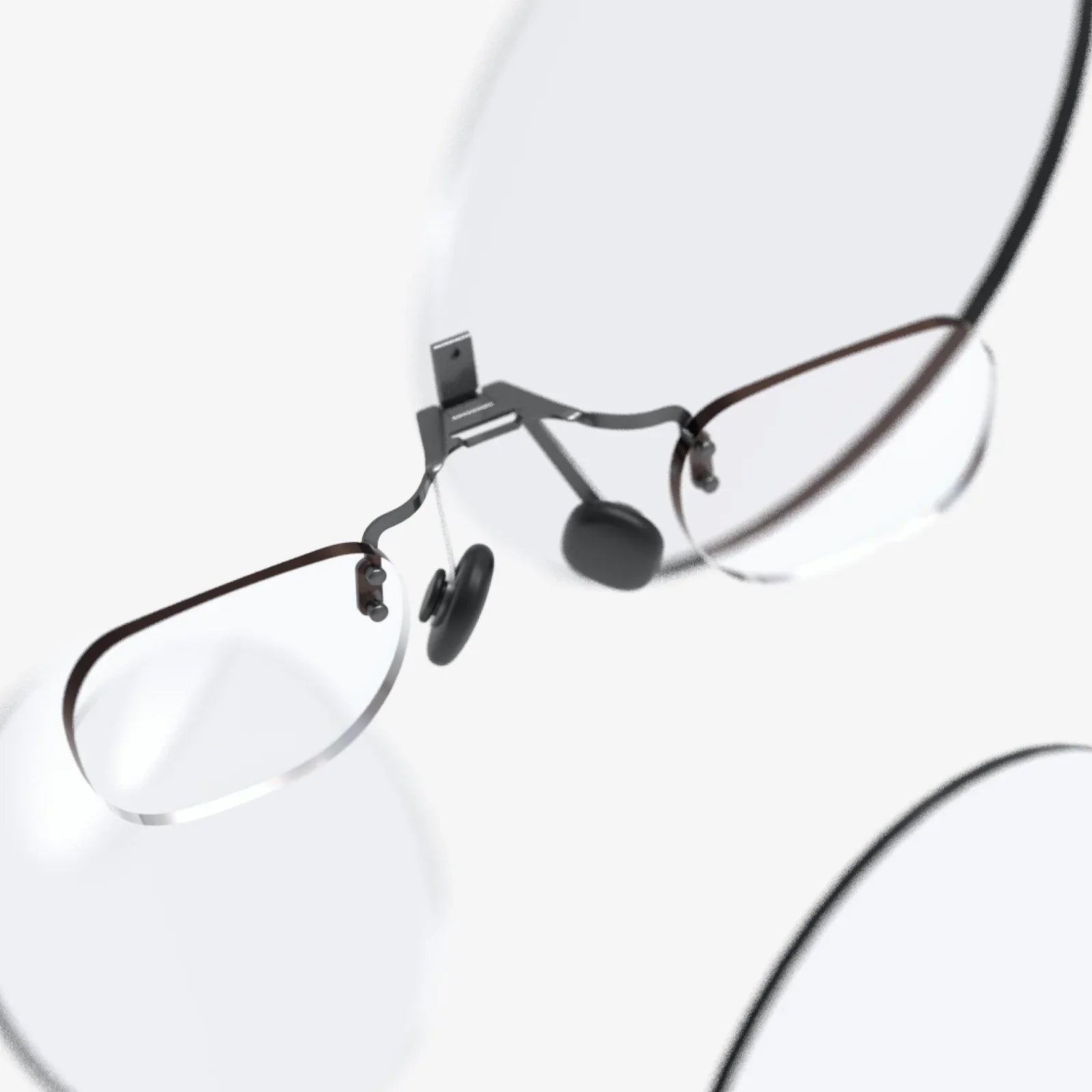
New AR glasses in the works are quietly preparing to turn everyday life into a digital playground, and most people have no idea how fast this shift is coming. From invisible screens floating in your vision to real-time translation of foreign signs on the street, the next generation of augmented reality eyewear is aiming to replace your phone, your laptop, and even parts of your memory. If you have ever wondered what it would feel like to live inside a layer of information that only you can see, the coming wave of AR glasses is being built for exactly that.
While early attempts at smart glasses were bulky, limited, and socially awkward, the new AR glasses in the works are being designed to look like ordinary eyewear while hiding astonishing capabilities. Engineers are blending advanced optics, miniature projectors, eye-tracking sensors, and powerful processors into frames that could pass for everyday glasses. The result is a race to build the first truly mainstream pair of AR glasses that you would actually want to wear in public, all day, without feeling like a walking gadget.
What Makes New AR Glasses in the Works So Different?
The latest generation of devices is fundamentally different from earlier smart glasses that mostly showed simple notifications or required awkward gestures. These new AR glasses in the works are designed as full mixed-reality computers that can understand your environment and overlay digital content onto it in a realistic way.
Several technological advances make this possible:
- Smaller, brighter displays: Micro displays and waveguide optics can project crisp images directly into your field of view without blocking the real world.
- Spatial mapping: Tiny cameras and depth sensors can scan your surroundings, letting digital objects appear anchored to real tables, walls, and floors.
- Eye and head tracking: Sensors detect exactly where you are looking and how your head moves, so digital content can stay stable and responsive.
- On-device processing: Miniature processors and dedicated chips for graphics and AI allow complex visuals and real-time analysis without huge battery packs.
- Connectivity: High-speed wireless connections let the glasses offload demanding tasks to nearby devices or the cloud.
Instead of being a notification screen for your phone, these new AR glasses in the works aim to become a primary computing platform. The ambition is not just to add digital elements to reality, but to blend them so seamlessly that you forget where the screen ends and the real world begins.
Core Technologies Powering the Next Wave of AR Glasses
To understand why so many companies are investing heavily in new AR glasses in the works, it helps to break down the core technologies that are converging to make them possible.
Advanced Optics and Display Systems
At the heart of AR glasses is the display system. Traditional screens cannot simply be shrunk and placed in front of your eyes; they must remain transparent while still bright and sharp enough to be visible outdoors.
Modern AR glasses rely on technologies such as:
- Waveguide optics: Thin transparent layers that guide light from tiny projectors into your eyes, allowing the lenses to remain mostly clear.
- Micro-LED or micro-OLED displays: Extremely small, bright, and power-efficient displays that can fit in the temple or near the lens.
- Variable focus systems: Experimental approaches that adjust focus based on where you are looking, reducing eye strain and improving realism.
The goal is to create visuals that feel natural: text that looks like it is printed on the world around you, arrows that appear painted on the sidewalk, and 3D objects that seem to sit on your desk.
Spatial Awareness and Environmental Understanding
For AR to be convincing, the glasses must understand your environment in real time. This is where spatial computing comes in. New AR glasses in the works use a combination of cameras, depth sensors, and inertial measurement units to build a 3D map of the world around you.
With this map, the glasses can:
- Recognize flat surfaces like tables and floors.
- Identify walls, doors, and large objects.
- Track your position and orientation as you move.
- Anchor digital content so it appears fixed in the room.
This spatial awareness also enables advanced interactions, such as walking around a digital model of a building, placing virtual monitors on your wall, or having a 3D character stand in front of your couch and remain there as you move.
AI, Computer Vision, and Context Awareness
Artificial intelligence and computer vision are crucial for making AR glasses feel helpful rather than overwhelming. New AR glasses in the works are being designed to recognize objects, understand scenes, and anticipate your needs.
Examples of what AI could enable include:
- Recognizing text in the real world and translating it instantly.
- Identifying tools or components in a workshop and guiding you step-by-step.
- Understanding hand gestures so you can interact without controllers.
- Detecting faces and providing contextual information during meetings, where allowed by privacy settings.
AI also helps reduce information overload by filtering what appears in your field of view based on location, time, and activity. Instead of being bombarded with notifications, you might see only what is relevant to your current task.
Natural Input: Hands, Voice, and Eyes
New AR glasses in the works are moving away from clumsy touchpads and toward more natural input methods. The aim is to make interacting with digital content feel as intuitive as interacting with physical objects.
Key input methods include:
- Hand tracking: Cameras detect your hand movements so you can grab, swipe, and resize virtual objects in mid-air.
- Voice commands: Built-in microphones and speech recognition let you control apps, dictate text, and search without touching anything.
- Eye tracking: Sensors monitor where you are looking and can trigger actions when you focus on a specific element.
- Subtle gestures: Small finger movements or taps on the frame can serve as quick shortcuts.
These input methods are crucial for making AR glasses usable in real-world situations like walking down the street, working in an office, or cooking in the kitchen.
Everyday Life with New AR Glasses in the Works
To see the impact of new AR glasses in the works, imagine a typical day where your eyewear quietly enhances everything you do.
Morning: Personal Assistant in Your Field of View
When you put on your glasses in the morning, a subtle overlay appears: the time, weather, and a glanceable view of your schedule. Instead of checking your phone, you see your first meeting floating near the corner of your vision, along with the estimated commute time.
As you walk to the kitchen, a small prompt appears above the coffee machine reminding you that you are running low on beans. You glance at the notification and tap the frame, adding the item to your shopping list without opening any separate device.
Commuting and Navigation
On your way to work, navigation arrows appear directly on the sidewalk or road, guiding you without requiring you to look down at a screen. Landmarks are labeled, and if you are in a new city, key points of interest are highlighted as you pass.
If you use public transport, the glasses can show the next arrival time above the platform, notify you of delays, and even highlight the correct exit to take when you arrive at your stop.
Work: Virtual Monitors and Real-Time Collaboration
At the office or your home workspace, new AR glasses in the works promise to replace bulky monitors with virtual screens. You could have multiple floating displays positioned around your desk, all adjustable in size and location with a simple gesture.
During meetings, shared documents can appear in front of everyone wearing compatible glasses, synchronized in real time. Remote colleagues might appear as life-sized avatars or video windows anchored in your room, making remote collaboration feel more natural and less isolating.
For hands-on jobs, such as maintenance, construction, or healthcare, AR guidance can overlay instructions directly onto equipment or environments. This can reduce errors, speed up training, and make complex tasks more accessible to less experienced workers.
Shopping and Errands
Running errands becomes more efficient when relevant information appears exactly where you need it. In a grocery store, your shopping list could appear aisle by aisle, with subtle highlights on shelves where the items are located. Nutritional information, price comparisons, and allergy warnings can be shown on demand.
When browsing physical stores, AR overlays might show size availability, color options, or compatibility details without requiring you to ask staff or scan barcodes. For large items like furniture, you could preview how a piece would look in your living room by viewing a virtual model through the glasses before buying.
Evening: Entertainment, Fitness, and Relaxation
After work, new AR glasses in the works could transform how you relax and stay active. Instead of watching content on a TV, you might project a virtual cinema screen on the wall in front of you. Games could blend into your living room, turning your floor into a racetrack or your walls into interactive canvases.
Fitness routines can become more engaging with real-time form feedback, virtual trainers that appear beside you, and progress metrics floating in your peripheral vision. Outdoor runs could be enhanced with route overlays, pace indicators, and motivational cues that appear along your path.
How New AR Glasses Will Transform Key Industries
Beyond personal use, new AR glasses in the works are poised to reshape multiple industries by delivering information where and when it is most useful.
Education and Training
In education, AR glasses can turn abstract concepts into tangible experiences. Students could explore 3D models of molecules, historical sites, or celestial bodies right in their classroom. Interactive overlays can guide learners through complex processes, such as dissecting a virtual specimen or assembling a mechanical device.
For vocational training, AR-based step-by-step instructions can appear directly on equipment, reducing the need for manuals and allowing trainees to learn by doing. This is especially powerful in fields such as aviation, manufacturing, and healthcare, where mistakes can be costly.
Healthcare and Medicine
New AR glasses in the works have significant potential in healthcare. Surgeons could view patient imaging data, such as scans and vital signs, overlaid in their field of view during procedures. This reduces the need to look away at separate monitors and can improve precision.
Medical students could practice on virtual patients, seeing detailed anatomical overlays on physical mannequins or real people. Outside hospitals, AR glasses could help caregivers by reminding them of medication schedules, dosage instructions, and care routines.
Manufacturing, Maintenance, and Field Work
In factories and on job sites, AR glasses can provide real-time instructions, highlight parts, and warn about safety hazards. A technician wearing AR glasses could look at a machine and immediately see which components need maintenance, along with guided instructions for disassembly and repair.
Remote experts can also see what the worker sees through the glasses and provide live assistance, drawing annotations that appear directly in the worker’s view. This can reduce downtime, minimize travel, and improve service quality.
Retail, Tourism, and Hospitality
Retail experiences will evolve as new AR glasses in the works become widely available. Shoppers might see personalized offers, style recommendations, or product information tailored to their preferences. Store layouts can be enhanced with AR wayfinding, helping customers find what they need faster.
In tourism, AR can bring historical sites to life by overlaying reconstructions of ancient buildings, showing how they looked in their prime. Travelers could access guided tours in their own language, with visual cues appearing on landmarks as they explore a city.
Social Interaction and Communication in an AR World
One of the most intriguing aspects of new AR glasses in the works is how they might change social interaction. On one hand, AR can make communication richer and more engaging. On the other, it raises questions about distraction, authenticity, and privacy.
Shared Experiences and Digital Layers
Imagine a group of friends wearing AR glasses at a concert. They could share synchronized visual effects, lyrics, or backstage camera feeds that only they can see. In everyday life, friends might create shared digital notes or artwork that appears in specific locations, visible only to those they choose.
Social networks may evolve into spatial experiences, where posts are not just in feeds but anchored in places. You might leave a virtual message above a cafe table for a friend to discover later, or decorate your home with digital art that visitors wearing compatible glasses can admire.
Avatars, Presence, and Remote Connection
For remote communication, new AR glasses in the works could enable more lifelike interactions than traditional video calls. Instead of staring at a flat screen, you might see a 3D representation of the person sitting across from you at your table, mimicking eye contact and body language.
These avatars can range from realistic to stylized, raising interesting questions about identity and self-expression. People might choose different appearances for work, gaming, and socializing, blending physical and digital selves in new ways.
Social Norms and Etiquette
As AR glasses become more common, society will need to develop new norms about when and how they are used. People may not want to be recorded or analyzed without consent, leading to expectations that glasses indicate when cameras are active or provide visible cues when certain features are in use.
Public spaces such as theaters, schools, and workplaces may create policies about AR usage, just as they did with smartphones. Balancing the benefits of constant connectivity with the need for focused, distraction-free environments will be an ongoing challenge.
Design Challenges: Making AR Glasses Wearable and Desirable
For all their potential, new AR glasses in the works will only succeed if people actually want to wear them. This means solving not just technical problems but also design, comfort, and social acceptance issues.
Comfort and Ergonomics
Glasses that are too heavy, unbalanced, or hot will quickly end up in drawers. Designers must fit batteries, processors, cameras, and displays into frames that feel as comfortable as conventional eyewear.
Key considerations include:
- Weight distribution so the glasses do not pinch the nose or ears.
- Ventilation and heat management to prevent discomfort.
- Adjustable fits for different head shapes and sizes.
- Compatibility with prescription lenses.
Battery life is another major constraint. Users expect all-day wear without constant charging, yet the more powerful the features, the more energy they consume. This leads to trade-offs between performance and endurance.
Style, Subtlety, and Social Fit
New AR glasses in the works must blend into everyday fashion. People are unlikely to adopt devices that make them feel self-conscious or overly conspicuous. This pushes designers toward frames that look like regular glasses, with minimal visible indicators of technology.
Subtlety also extends to how digital content appears. Overly flashy or intrusive visuals can be distracting and socially awkward. Many users will prefer understated overlays that respect real-world interactions rather than dominate them.
User Experience and Information Overload
One of the biggest design challenges is preventing information overload. If AR glasses constantly bombard users with notifications and overlays, they will quickly become more annoying than helpful.
Thoughtful user experience design includes:
- Context-aware filtering that shows only relevant information.
- Customizable levels of detail depending on activity and preference.
- Clear visual hierarchy so important elements stand out.
- Easy ways to temporarily disable overlays and focus on the real world.
The most successful new AR glasses in the works will likely be those that feel almost invisible until you need them, then instantly helpful without demanding constant attention.
Privacy, Security, and Ethical Questions
As AR glasses become more capable, concerns about privacy and ethics grow more urgent. These devices are not just screens; they are sensors constantly observing the world.
Always-On Cameras and Data Collection
To understand the environment, new AR glasses in the works rely on cameras and microphones that may be active frequently. This raises questions such as:
- Who owns the data captured by the glasses?
- How long is that data stored, and where?
- Can bystanders opt out of being recorded or analyzed?
- How is sensitive information, such as faces or license plates, handled?
Strong privacy protections, transparent policies, and user controls will be essential for public acceptance. Features like on-device processing, data minimization, and visible recording indicators can help mitigate concerns.
Digital Overlays and Reality Distortion
AR does not just show information; it can also shape perception. New AR glasses in the works could, in theory, alter or hide certain elements of the real world, or highlight others in ways that influence behavior.
This raises ethical questions about:
- Manipulative advertising that appears directly in your field of view.
- Biased or misleading annotations on people, places, or products.
- Echo chambers where people choose to see only certain types of information.
Responsible design and regulation will need to address how AR content is curated, labeled, and controlled, especially when it intersects with news, politics, and public spaces.
Security and Identity
Because AR glasses may be used for payments, authentication, and access control, they become attractive targets for attackers. Compromised AR systems could overlay false information, capture sensitive data, or impersonate trusted contacts.
Robust security measures, including strong encryption, secure hardware, and frequent updates, will be necessary to protect users. Biometric authentication, such as iris scanning or voice recognition, may be built into the glasses themselves, raising additional questions about biometric data storage and protection.
The Road Ahead: From Early Adopters to Everyday Essential
New AR glasses in the works are currently moving through stages of development, testing, and limited deployment. Early versions are likely to target professionals, enthusiasts, and specialized use cases where the benefits are clear and the cost is justified.
As hardware improves and economies of scale reduce prices, AR glasses will push into broader consumer markets. The transition may follow a pattern similar to smartphones: initially seen as luxury gadgets, then gradually becoming indispensable tools for communication, productivity, and entertainment.
Several milestones will mark this journey:
- All-day battery life in lightweight, stylish frames.
- Compelling everyday applications that go beyond novelty.
- Robust ecosystems of developers and content creators.
- Clear privacy standards and social norms.
- Interoperability between different AR platforms and services.
As these pieces fall into place, the line between the digital and physical worlds will blur. Instead of pulling out a phone to access information, you will simply look at the world, and the world will respond with context.
For anyone paying attention to new AR glasses in the works, the message is clear: the way we see, learn, work, and connect is about to be rewritten through a lens that never leaves our face. The most interesting question is not whether AR glasses will arrive, but how ready you will be when your everyday reality suddenly gains a digital layer that only you can see.
共有:
fast virtual staging for real estate photos that sell properties quicker
how are ar glasses made From Concept To Cutting Edge Wearables