


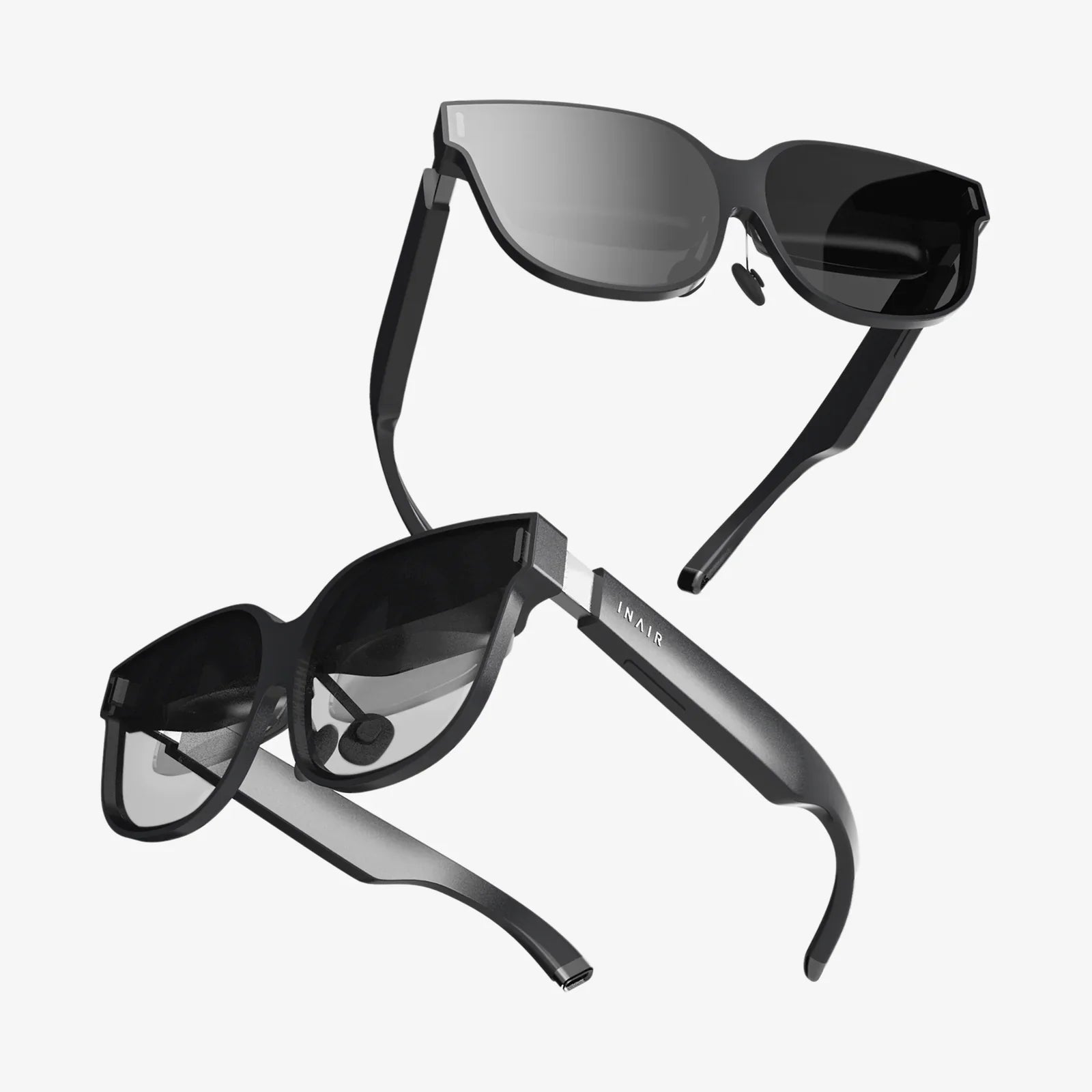
Reasonable AR glass is not about buying the most expensive futuristic gadget; it is about choosing smart glasses that actually improve your daily life without draining your wallet. If you have ever been tempted by flashy demos and buzzwords but walked away unsure whether these devices are practical, you are not alone. Augmented reality promises to change how we work, learn, and entertain ourselves, yet many people still struggle to figure out what truly makes AR glasses worth buying. This guide breaks down how to evaluate AR glasses in a realistic, grounded way so you can spot real value instead of paying for empty hype.
To understand what makes reasonable AR glass, you first need a clear picture of what augmented reality actually does. Unlike virtual reality headsets that fully immerse you in a digital world, AR glasses overlay digital information on top of the real world. That can mean step-by-step instructions hovering over a machine you are repairing, navigation arrows floating on the street as you walk, or subtitles appearing in real time during a conversation. The right AR glasses should make these experiences feel natural, comfortable, and useful, not like a tech demo you try once and then leave in a drawer.
At its core, the idea of reasonable AR glass rests on three pillars: practicality, affordability, and usability. Practicality means the device should actually help you do something better or easier than before. Affordability does not necessarily mean the cheapest option, but a price that makes sense for what you get. Usability covers comfort, ease of setup, battery life, and how well the software works in everyday situations. When these three pillars are balanced, you end up with AR glasses that are worth owning instead of an expensive toy.
Many people assume AR glasses are only for gamers or tech professionals, but that is no longer true. Reasonable AR glass is now being used in offices, warehouses, classrooms, hospitals, and even living rooms. Office workers can view multiple virtual monitors without a physical multi-screen setup. Technicians can follow visual instructions hands-free while working with tools. Students can explore interactive 3D models during lessons. Everyday users can watch large virtual screens, follow recipes in the kitchen, or translate text in real time. The more clearly you understand your own use cases, the easier it becomes to judge whether a pair of AR glasses is reasonable for you.
Before diving into technical specs, it helps to separate AR glasses into a few broad categories. Each category has its own balance of cost, performance, and practicality, and understanding them will keep you from comparing apples to oranges.
First, there are lightweight viewer-style AR glasses. These often look similar to regular glasses or slightly bulkier sunglasses. They usually rely on a smartphone or small computing pack for processing, and their main role is to display information, notifications, or simple interfaces. These are often the most reasonable AR glass options for casual users, because they prioritize comfort and portability over advanced 3D interaction. They are ideal for people who want heads-up information, virtual screens, or basic navigation overlays without the complexity of full mixed reality systems.
Second, there are mixed reality or full-featured AR headsets. These devices are more powerful and usually include advanced sensors, depth cameras, and hand-tracking capabilities. They can place 3D objects in your environment and allow you to interact with them using gestures or controllers. These are typically heavier and more expensive, but they are extremely useful for professional scenarios like industrial training, design visualization, remote assistance, and complex simulations. For most consumers, this category is only reasonable if they have a specific need that justifies the investment.
Third, there are entertainment-focused AR glasses that emphasize media consumption, gaming, and immersive content. These may not have the most advanced spatial mapping, but they excel at creating large virtual screens for movies or games. They often aim for a middle ground in price and features. For users who want a portable cinema or a more immersive way to enjoy content, this type of AR glass can be a very reasonable choice, especially if they do not need advanced enterprise features.
Once you know which category fits your needs, the next step in choosing reasonable AR glass is understanding the key technical features that truly matter. Many spec sheets are filled with impressive-sounding numbers, but not all of them have a big impact on your experience. Focusing on the right metrics will help you avoid overpaying for features you will barely notice.
Display quality is one of the most critical factors. Pay attention to resolution, brightness, and field of view. Resolution determines how sharp text and images appear; if it is too low, you will see pixelation and eye strain will increase. Brightness matters because AR glasses must compete with ambient light. If you plan to use them outdoors or in bright environments, look for higher brightness levels so the virtual content remains visible. Field of view describes how large the virtual image appears in your vision; a wider field of view feels more immersive and natural, while a narrow one can feel like looking through a small window. Reasonable AR glass does not need the absolute highest specs, but it should offer a comfortable, clear display that does not fatigue your eyes.
Comfort and ergonomics are just as important as display quality, especially if you plan to wear the glasses for extended periods. Weight distribution is often more critical than total weight. A slightly heavier pair that is well-balanced can feel more comfortable than a lighter pair that presses on your nose or ears. Adjustable nose pads, flexible temples, and options for prescription lens inserts can dramatically improve usability. When evaluating whether AR glasses are reasonable, imagine wearing them for a full workday or a long movie. If the design clearly prioritizes comfort, that is a strong sign of a well-thought-out product.
Battery life can make or break the experience. If you have to constantly recharge your AR glasses, you will quickly stop using them. Reasonable AR glass should offer enough battery life to match your main use case. For work scenarios, aim for several hours of active use, ideally with options for quick charging or external power. For casual entertainment, a battery that lasts through a couple of movies or a long commute may be sufficient. Also consider how the battery affects weight and heat; compact batteries can keep the device light, but if they are too small, they will limit usage time.
Connectivity and compatibility are also essential. Many AR glasses rely on a smartphone, computer, or small compute unit for processing. Check which operating systems and devices are supported. If you primarily use a specific platform, make sure the AR glasses integrate smoothly with it. Wireless connections such as Wi-Fi and Bluetooth can reduce cable clutter, but they must be stable and low-latency to avoid lag. Reasonable AR glass should not force you to overhaul your entire tech ecosystem just to make basic features work.
Interaction methods play a major role in how natural the AR experience feels. Some devices rely on touchpads or buttons on the frame, while others support voice commands, gesture recognition, or handheld controllers. Voice control can be convenient but may not be ideal in noisy environments or shared spaces. Gesture control can feel futuristic, but it must be responsive and accurate to be worthwhile. For many users, a combination of simple physical controls and occasional voice commands strikes a reasonable balance between ease of use and functionality.
Software and app ecosystems are often overlooked when people compare hardware specs, yet they are critical for determining whether AR glasses are genuinely useful. Even the most advanced hardware feels disappointing if there are only a handful of apps or if the user interface is confusing. When evaluating reasonable AR glass, check what types of applications are available: productivity tools, remote collaboration, media streaming, navigation, translation, training, or design. The more diverse and mature the ecosystem, the more likely you are to find real, everyday uses for the device.
Security and privacy are increasingly important considerations. AR glasses often include cameras, microphones, and sensors that map your environment. Reasonable AR glass should give you clear control over what is recorded, where data is stored, and how it is used. Look for options to disable cameras or microphones, clear local data, and manage permissions for apps. Transparent privacy policies and on-device processing for sensitive tasks can make the device more trustworthy, especially in workplaces or public spaces where people may be uncomfortable with always-on cameras.
Price is an obvious factor, but it should not be evaluated in isolation. Instead of asking whether AR glasses are cheap or expensive, ask whether the price is justified by the value they deliver for your specific needs. A pair of AR glasses used daily to improve productivity, reduce training time, or enable remote collaboration can pay for itself quickly. On the other hand, a high-end device used only occasionally for novelty experiences may feel like a poor investment. Reasonable AR glass is about maximizing value, not minimizing cost at all costs.
For professionals and businesses, the equation for reasonable AR glass includes return on investment. In industrial environments, AR glasses can guide workers through complex tasks, reduce errors, and shorten training periods. In healthcare, they can assist during procedures or help visualize medical data. In design and architecture, they can overlay models onto real spaces, speeding up decision-making. When these benefits are quantified in terms of saved time, reduced travel, fewer mistakes, or improved safety, a higher initial price can still be reasonable because the long-term gains are substantial.
For casual users, the calculation is different but equally important. Ask yourself how often you will realistically use AR glasses and what you will use them for. If your primary interest is watching movies on a big virtual screen, you might prioritize comfort, display quality, and simple controls over advanced spatial mapping and enterprise features. If you are excited about fitness, navigation, or hands-free notifications, you may want lighter, more socially acceptable designs that resemble regular glasses. Reasonable AR glass for a casual user is one that fits seamlessly into everyday routines instead of requiring special planning to use.
Another factor that influences whether AR glasses are reasonable is how future-proof they are. The AR landscape is evolving quickly, and no device will stay cutting-edge forever, but some choices age better than others. Look for support for software updates, active developer communities, and modular designs where possible. Devices that can receive new features over time or integrate with evolving platforms will remain useful longer. This does not mean you should always chase the newest technology; instead, aim for a balanced device that meets your current needs while leaving some room for growth.
Social acceptability is an underrated aspect of reasonable AR glass. If you feel awkward or self-conscious wearing them in public or in meetings, you are less likely to use them. Designs that resemble regular eyewear, with minimal bulk and subtle indicators, tend to be easier to wear in social settings. Transparent displays that do not completely block your eyes can also make interactions with others feel more natural. Reasonable AR glass should enable you to move through the world without drawing unwanted attention or making people around you uncomfortable.
Durability and maintenance also contribute to overall value. AR glasses that are fragile or difficult to repair can become unreasonably expensive over time. Check whether the device has replaceable parts such as nose pads, cables, or batteries. Consider whether the design offers basic protection against dust, sweat, or light rain if you plan to use them outdoors or in active environments. A slightly higher initial price may be more reasonable if it comes with better build quality, solid warranties, and accessible support.
When comparing different AR glasses, it helps to create a simple checklist based on your priorities. Start with your primary use cases: work, entertainment, training, navigation, fitness, or creative projects. Then rank the importance of display quality, comfort, battery life, interaction methods, ecosystem, privacy, and price. As you evaluate each device, score it against your criteria rather than getting distracted by marketing claims. This methodical approach transforms a confusing marketplace into a structured decision, making it much easier to identify truly reasonable AR glass.
Real-world testing is invaluable when possible. Reading specifications and reviews gives you a baseline, but actually wearing AR glasses, even briefly, reveals details that numbers cannot capture. You will quickly notice whether the weight bothers you, whether the display feels natural, and whether the user interface is intuitive. If you cannot try them in person, look for detailed user feedback that discusses long-term comfort, software stability, and day-to-day reliability. Reasonable AR glass should not only impress you in the first five minutes but also remain comfortable and reliable after weeks or months of use.
For organizations deploying AR glasses at scale, there are additional considerations. Device management, user training, and integration with existing systems become crucial. Reasonable AR glass in a business context is one that fits into workflows without causing constant friction. Centralized management tools, support for multiple user profiles, and compatibility with common enterprise platforms can dramatically reduce overhead. Training materials, tutorials, and responsive support channels also matter; if employees struggle to adopt the glasses, even the most advanced hardware will not deliver its full value.
Ethical and cultural factors should not be ignored. AR glasses that constantly record surroundings can raise concerns in workplaces, public spaces, and private settings. Reasonable AR glass should include clear indicators when cameras or microphones are active, as well as options to disable them. Transparent communication with colleagues, customers, and the public about how AR is used builds trust and reduces resistance. Devices that respect social norms and privacy expectations are far more likely to be accepted and used effectively.
Looking ahead, the definition of reasonable AR glass will continue to evolve as the technology matures. Future innovations may bring lighter designs, wider fields of view, better battery life, and more powerful processors in smaller packages. Software will become more capable, with smarter assistants, more intuitive interfaces, and richer content libraries. However, the core principles will remain the same: a reasonable device is one that delivers clear, practical benefits at a price and level of complexity that make sense for the user.
If you are considering your first pair of AR glasses, start small and focused. Identify one or two high-value scenarios where AR could genuinely help you, such as remote collaboration, training, navigation, or entertainment. Then look for devices that excel in those scenarios rather than chasing the most feature-packed option. By aligning your purchase with specific goals, you dramatically increase the chances that your AR glasses will become a tool you rely on instead of a novelty you forget.
Ultimately, reasonable AR glass is about aligning expectations, capabilities, and cost. It is about resisting the urge to buy into hype and instead asking tough questions: Will this device make my work easier? Will it help me learn faster, communicate better, or enjoy content more deeply? Will I feel comfortable wearing it regularly? Does the price reflect the real value it brings to my life or my organization? When the answers to these questions line up, you have found AR glasses that are not just impressive on paper but genuinely worthwhile in practice.
The landscape of augmented reality is changing rapidly, and the choices can feel overwhelming, but you do not need to be an expert to make a smart decision. By focusing on real-world needs, essential features, and long-term value, you can cut through the noise and identify AR glasses that truly earn their place in your daily routine. Reasonable AR glass is not about owning the flashiest gadget; it is about choosing technology that quietly and consistently makes your world easier to navigate, more efficient to work in, and more engaging to experience. When you find that balance, AR stops being a distant promise and becomes a practical, powerful part of your everyday life.
共有:
ARグラスが次世代の必須プラットフォームであることを消費者に納得させる
バーチャルリアリティヘッドセットの説明: デジタル次元へのポータル