


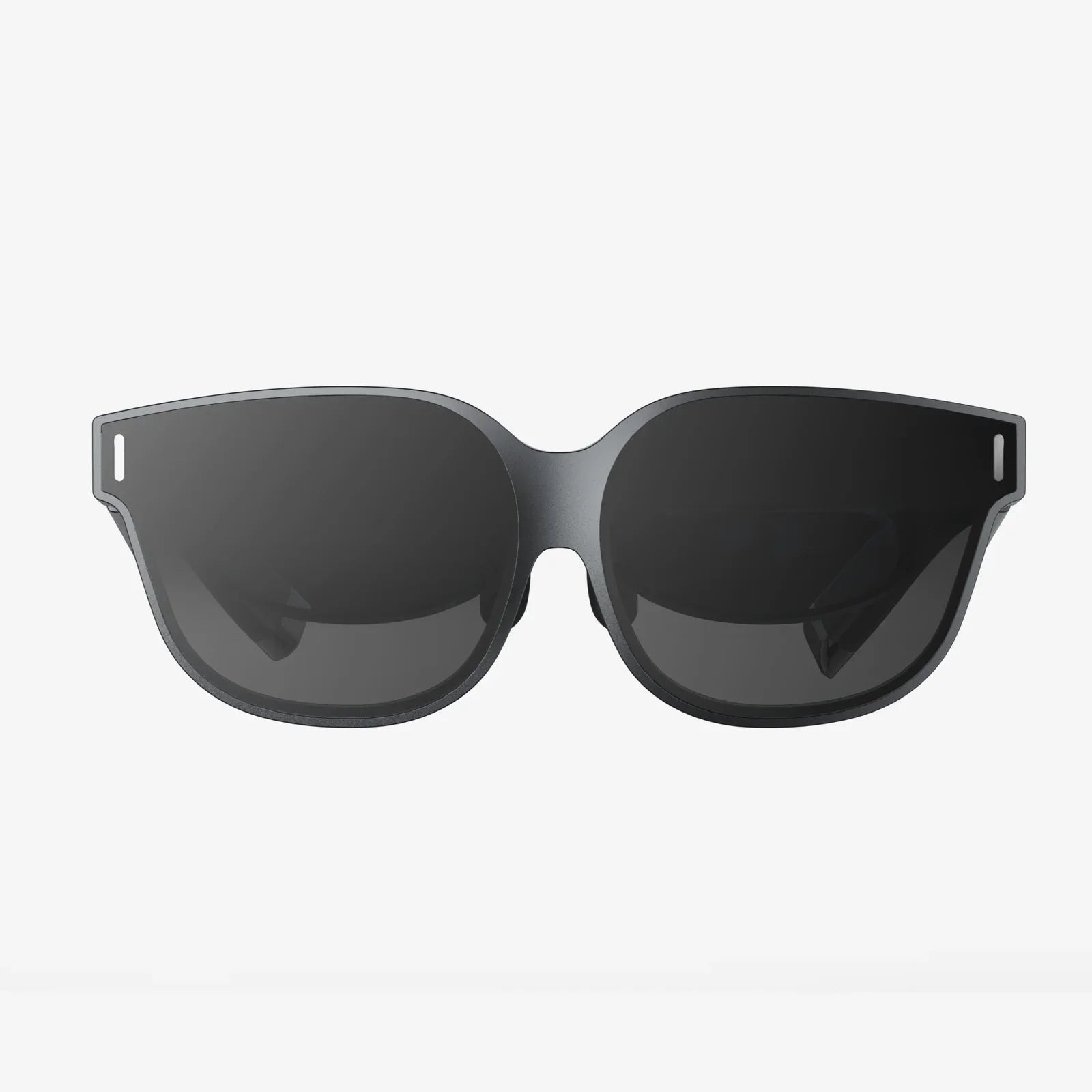
Wireless AR glasses 2025 are quietly becoming the most disruptive devices you are not using yet. While phones and laptops still dominate your daily routine, a new generation of lightweight, wire-free augmented reality glasses is turning the world itself into your screen. If you have ever wanted instant directions floating in front of you, hands-free work dashboards, or games that spill into your living room, the moment you have been waiting for is arriving faster than most people realize.
As we move through 2025, wireless AR glasses are no longer just tech demo prototypes. They are evolving into practical tools for productivity, entertainment, education, and even health. Understanding how they work, what they can do, and where they are headed could change how you think about your next major device purchase.
What Makes Wireless AR Glasses 2025 Different From Earlier Generations
Early augmented reality headsets were bulky, wired, and usually tied to a computer or a separate processing unit clipped to your belt. Wireless AR glasses in 2025 are dramatically different. They are slimmer, lighter, and designed for everyday use, often resembling slightly thicker regular glasses rather than sci-fi helmets.
Several key changes define this new generation:
- Fully wireless operation: No tethers to a PC or console. They connect via Wi-Fi or Bluetooth to your phone or cloud services, or include onboard processors.
- Improved comfort: Better weight distribution, lighter materials, and more ergonomic frames make hours-long wear realistic.
- Higher display quality: Sharper resolution, brighter images, and wider fields of view make digital overlays more natural and less fatiguing.
- Smarter sensors: Enhanced cameras, depth sensors, and eye-tracking allow the glasses to understand your environment and your focus in real time.
- Battery and power efficiency: More efficient chips and displays extend battery life, making them useful beyond short demos.
These improvements transform wireless AR glasses from experimental gadgets into devices that can realistically compete with or complement your phone, laptop, and TV.
Core Technologies Powering Wireless AR Glasses 2025
To understand why wireless AR glasses in 2025 feel so different, it helps to look under the hood at the major technologies that make them work.
Optics and Display Systems
The most critical component of AR glasses is the display system that overlays digital content onto the real world. In 2025, several types of optical technologies are common:
- Waveguide displays: Thin transparent layers that channel light from a tiny projector near the temple into your field of view. They allow sleek designs that look close to standard eyewear.
- MicroLED and micro-OLED panels: Ultra-small, bright, and energy-efficient displays that produce vivid colors and high contrast, even in daylight.
- Birdbath optics and other hybrid approaches: Used in some devices to balance cost, image quality, and field of view.
Resolution is steadily improving, often reaching levels where text is easily readable and small UI elements are clear. Field of view is also expanding, reducing the “postage stamp” effect and making AR overlays feel more immersive and natural.
Spatial Mapping and Environmental Understanding
Wireless AR glasses 2025 rely on advanced spatial computing to know where you are, what you are looking at, and how the world around you is arranged. This typically involves:
- RGB cameras: Capture the real world in color for pass-through visuals and object recognition.
- Depth sensors or time-of-flight sensors: Measure distance to objects, enabling accurate placement of virtual content in 3D space.
- IMU sensors (accelerometer, gyroscope, magnetometer): Track head movement to keep virtual objects stable as you move.
Using these sensors, the glasses build a dynamic 3D map of your environment, often referred to as a spatial mesh. This allows digital objects to sit on real tables, hide behind real walls, and respond to your movement in a realistic way.
On-Device Processing and Cloud Offloading
To stay lightweight, wireless AR glasses cannot carry the same processing power as a full laptop. Instead, they use a combination of:
- Low-power, high-efficiency processors: Specialized chips designed for graphics, AI, and sensor fusion.
- Edge and cloud computing: Heavy tasks like complex rendering, voice recognition, or large AI models can be offloaded to the cloud when connectivity allows.
This hybrid approach lets the glasses feel responsive while keeping heat and weight under control. As 5G and Wi-Fi standards improve, cloud-assisted AR experiences become smoother and more reliable.
Interaction: Hands, Voice, Eyes, and Controllers
Traditional screens rely on touch or a mouse. Wireless AR glasses 2025 expand interaction to include:
- Hand and gesture tracking: Cameras detect your hands and recognize pinch, tap, swipe, and grab gestures in mid-air.
- Voice commands: Microphones and speech recognition allow you to open apps, search, or control playback hands-free.
- Eye tracking: Sensors follow your gaze, enabling gaze-based selection and foveated rendering that sharpens only what you are looking at.
- Optional controllers or rings: Small accessories offer precise input for gaming or professional tasks.
The result is a more natural, intuitive way of interacting with digital content that feels closer to interacting with real objects than tapping on glass.
Everyday Use Cases for Wireless AR Glasses in 2025
Technologies only matter if they change what you can do. Wireless AR glasses in 2025 are beginning to reshape everyday activities across work, entertainment, travel, and communication.
Productivity and Remote Work
One of the most compelling uses is turning any space into a multi-monitor workstation without physical screens. With wireless AR glasses, you can:
- Pin multiple virtual screens around your desk, each showing documents, chat windows, dashboards, or code.
- Join video calls where participants appear as life-sized windows or avatars anchored in your room.
- Overlay notes, diagrams, and task lists directly in your field of view while you work on a physical whiteboard or notebook.
- Use spatial organization to remember where you placed certain apps or files in your virtual workspace.
For remote professionals and digital nomads, this means carrying an entire multi-monitor setup in your bag without extra hardware, just the glasses and perhaps a compact keyboard.
Design, Engineering, and Industrial Work
Wireless AR glasses 2025 are becoming powerful tools in physical industries where 2D screens are limiting. Common scenarios include:
- 3D design review: Architects and engineers can walk around life-sized models of buildings, vehicles, or machines, inspecting details from any angle.
- Maintenance and repair: Technicians can see step-by-step instructions overlaid directly on equipment, reducing errors and training time.
- Quality control: Overlaying digital blueprints onto real products helps spot deviations quickly.
Because the glasses are wireless, workers can move freely around factories, construction sites, or workshops without worrying about cables.
Education and Training
In classrooms, labs, and training centers, wireless AR glasses are turning abstract concepts into tangible experiences. Learners can:
- Explore interactive 3D models of molecules, historical sites, or mechanical systems overlaid onto their desks.
- Practice procedures, such as medical techniques or equipment operation, with guided overlays that respond to their actions.
- Collaborate with remote classmates or instructors who appear as AR avatars in the same virtual space.
Because the glasses do not need wired connections, they are easier to deploy in classrooms and training facilities where mobility matters.
Gaming and Immersive Entertainment
Gaming is one of the most exciting frontiers for wireless AR glasses 2025. Instead of isolating yourself in a fully virtual world, AR games blend digital characters, objects, and effects into your real environment.
Examples include:
- Strategy games laid out on your coffee table, where you can walk around the battlefield.
- Puzzle adventures that use your actual room layout as part of the level design.
- Fitness games that track your movement and overlay goals, targets, or obstacles in your living space.
Streaming technologies allow complex games to run on remote servers while the glasses handle display and input, reducing the need for heavy onboard hardware.
Travel, Navigation, and Tourism
Wireless AR glasses can transform how you move through cities and explore new places. Instead of constantly checking your phone, you can:
- See arrows and markers overlaid on streets as you walk or drive, guiding you to your destination.
- View translation overlays on signs and menus in real time.
- Access historical facts, reviews, or local tips anchored to landmarks and venues as you look at them.
For tourists, this turns the entire city into an interactive guidebook. For commuters, it reduces distraction from looking down at a phone while moving.
Health, Fitness, and Wellbeing
In 2025, wireless AR glasses are also stepping into health-related roles, such as:
- Guided workouts with virtual trainers that appear in your room, correcting your form and pacing.
- Mindfulness and focus aids that gently dim or blur distracting visual elements in your environment.
- Assistance for people with visual or cognitive impairments, such as enhanced contrast, object labels, or navigation cues.
Because the glasses can be worn while moving freely, they are well-suited for indoor and outdoor exercise scenarios.
Design, Comfort, and Social Acceptance
One of the biggest challenges for AR glasses has always been social acceptance. Devices that look like headsets or helmets are difficult to wear in public. Wireless AR glasses 2025 address this with improved design and subtlety.
Form Factor and Weight
Modern AR glasses aim to stay within a weight range that feels similar to heavier prescription eyewear or sunglasses. Strategies to achieve this include:
- Placing batteries near the back of the frame to balance the weight of front optics.
- Using lightweight materials such as advanced plastics, carbon fiber, and magnesium alloys.
- Offering modular designs where prescription lenses can be swapped in.
Comfort is crucial because even a powerful device will not be used daily if it feels heavy or awkward after 30 minutes.
Style and Customization
Wireless AR glasses 2025 increasingly come in multiple frame styles, colors, and lens options to blend into everyday fashion. Some designs are intentionally subtle, hiding cameras and sensors in the frame edges to avoid drawing attention.
Customization options may include:
- Different frame shapes to match face types.
- Tinted lenses for outdoor use.
- Clip-on modules for additional functions.
As the devices become more visually similar to regular glasses, social comfort and adoption are likely to increase.
Social Dynamics and Etiquette
Wearing a device with cameras and displays on your face raises questions about etiquette and trust. In 2025, norms are still evolving, but several patterns are emerging:
- Visible indicators, such as small lights, to show when recording is active.
- Settings that disable cameras in designated private spaces.
- Social expectations to remove or disable AR overlays during certain interactions, similar to taking off headphones.
Users who adopt wireless AR glasses early will play a role in shaping how acceptable and normal these devices feel in public, at work, and at home.
Connectivity, Battery Life, and Performance Trade-Offs
Every wireless device must balance performance, battery life, and connectivity. Wireless AR glasses 2025 are no exception.
Battery Life Realities
Battery life varies widely depending on usage. Typical patterns include:
- Several hours of continuous heavy use with 3D graphics and high brightness.
- Longer durations for lighter tasks such as notifications or simple overlays.
- Standby modes that extend use throughout a workday when active display time is intermittent.
Manufacturers use techniques like dimming unused parts of the display, foveated rendering, and efficient sensors to stretch battery life. Users still need to plan for charging, much like they do with phones or wireless earbuds.
Connectivity and Latency
Wireless AR glasses rely on fast, stable connections to phones, PCs, or cloud services. Performance depends on:
- Local wireless standards such as Wi-Fi 6 and newer versions for high bandwidth and low latency.
- Mobile networks, including advanced 5G deployments, for cloud-based rendering and services on the go.
- Bluetooth for input devices and audio accessories.
Low latency is especially critical for comfortable AR. If virtual objects lag behind your head movement, it can cause discomfort or motion sickness. In 2025, hardware and software optimizations are significantly reducing this issue.
Privacy, Security, and Ethical Considerations
Any device that sees what you see and hears what you hear carries serious privacy implications. Wireless AR glasses 2025 are pushing society to rethink how to handle always-on sensors.
Data Collected by AR Glasses
Typical data streams may include:
- Video and images from front-facing cameras.
- Audio from built-in microphones.
- Location data from GPS and network signals.
- Eye-tracking and interaction patterns.
This data can be used to improve experiences, personalize interfaces, and power AI features, but it must be handled carefully to avoid abuse.
On-Device Processing vs. Cloud Storage
One key design choice is how much processing happens on the device versus in the cloud. Strong privacy-focused designs aim to:
- Process as much as possible locally, sending only anonymized or aggregated data.
- Offer clear controls over what is stored, for how long, and for what purpose.
- Encrypt communications between the glasses and external services.
Users should review privacy settings and understand what their AR glasses are recording and transmitting, especially in sensitive environments.
Impact on Bystanders
Unlike phones, AR glasses can capture information about people around you without them noticing. This raises ethical issues such as:
- Recording conversations without consent.
- Identifying individuals using facial recognition, if enabled.
- Capturing sensitive information from screens or documents in shared spaces.
Regulations and social norms are beginning to address these concerns, but responsible use by owners of wireless AR glasses remains essential.
How Wireless AR Glasses 2025 Compare to VR Headsets and Smartphones
To understand where wireless AR glasses fit in your digital life, it helps to compare them with two familiar devices: VR headsets and smartphones.
Versus VR Headsets
Virtual reality headsets fully immerse you in a digital environment, blocking out the real world. Wireless AR glasses, by contrast, layer digital elements onto your surroundings. Key differences include:
- Use cases: VR excels at deep immersion for gaming, simulations, and virtual meetings. AR is better for tasks that require awareness of the real world, such as navigation, work, and social interaction.
- Wear time: VR headsets are typically used for shorter sessions. AR glasses aim to be wearable for large portions of the day.
- Social presence: AR allows you to maintain eye contact and awareness of people around you, making it more compatible with daily life.
In 2025, many people who use VR for entertainment may adopt AR glasses for productivity and everyday assistance.
Versus Smartphones
Smartphones remain the central hub for communication, apps, and media, but wireless AR glasses 2025 challenge that dominance. Compared to phones, AR glasses offer:
- Hands-free interaction: You can access information without holding or looking down at a device.
- Contextual overlays: Information appears exactly where it is needed, such as labels over real objects or directions on the ground.
- Larger virtual screens: You are not limited by the physical size of a phone display.
However, phones still provide advantages in camera quality, app ecosystems, and battery capacity. In 2025, AR glasses often work alongside smartphones rather than replacing them outright, but the long-term trend points toward more independence.
What to Consider Before Buying Wireless AR Glasses in 2025
If you are thinking about trying wireless AR glasses in 2025, several practical considerations can help you decide whether they are the right fit and which type of device to choose.
Your Primary Use Cases
Start by identifying what you really want from AR glasses:
- Do you want a portable multi-screen workstation for productivity?
- Are you mostly interested in gaming and entertainment?
- Do you need them for professional tasks like design, training, or fieldwork?
- Are you looking for navigation and travel assistance?
Different devices emphasize different strengths, such as display quality, field of view, comfort, or specialized enterprise features.
Comfort and Fit
Because AR glasses are worn on your face, comfort is non-negotiable. When evaluating options, pay attention to:
- Weight and how it is distributed.
- Nose bridge and ear support design.
- Compatibility with prescription lenses if you need them.
- Heat buildup during extended use.
Even the most advanced features will not matter if you cannot comfortably wear the glasses for the length of time your tasks require.
Display Quality and Field of View
Display quality directly affects how enjoyable and useful the glasses feel. Consider:
- Resolution and text clarity.
- Brightness for outdoor use.
- Color accuracy and contrast.
- Field of view size, which influences how immersive the experience is.
If possible, test how it feels to read documents, watch videos, or interact with apps for several minutes, not just a quick glance.
Battery Life and Charging
Check real-world battery estimates for the types of tasks you care about. Ask:
- How long can the glasses run with typical use?
- How long does it take to recharge?
- Is there an option to connect to external battery packs?
Think about whether you plan to use them in situations where frequent charging is inconvenient, such as travel days or long work sessions away from outlets.
Software Ecosystem and Compatibility
The value of wireless AR glasses 2025 depends heavily on the software available. Consider:
- Which operating systems and devices they pair with, such as phones, tablets, or PCs.
- Availability of productivity, communication, and entertainment apps you rely on.
- Support for remote desktop or virtual screen features if you plan to use them for work.
A strong ecosystem can turn AR glasses into a core part of your daily workflow, while a weak one may limit them to occasional novelty use.
The Future Beyond Wireless AR Glasses 2025
While 2025 marks a turning point, wireless AR glasses are still early in their evolution. The next few years are likely to bring:
- Even slimmer designs: Advances in optics and battery tech will push AR glasses closer to the size and weight of regular eyewear.
- Better integration with AI: Context-aware assistants that understand your environment, tasks, and habits will make AR more proactive and helpful.
- Richer shared experiences: Multi-user AR scenarios where friends, coworkers, or classmates see and interact with the same virtual objects in real time.
- Deeper enterprise adoption: More industries will embed AR workflows into training, field service, design, and operations.
As hardware improves and software ecosystems mature, the line between digital and physical workspaces will continue to blur. Many tasks that currently require a phone or computer screen will happen directly in your field of view.
If you are curious about where personal computing is headed, wireless AR glasses 2025 are one of the clearest previews you can experience today. They hint at a future where the world around you becomes your interface, where information appears exactly when and where you need it, and where your next upgrade is not just a faster phone, but a new way of seeing your entire digital life.
共有:
VRの用途とは - 仮想現実の無限の応用を探る
VRの用途とは - 仮想現実の無限の応用を探る