


- by wangfred
xr glasses and the Future of Immersive Everyday Computing
- by wangfred
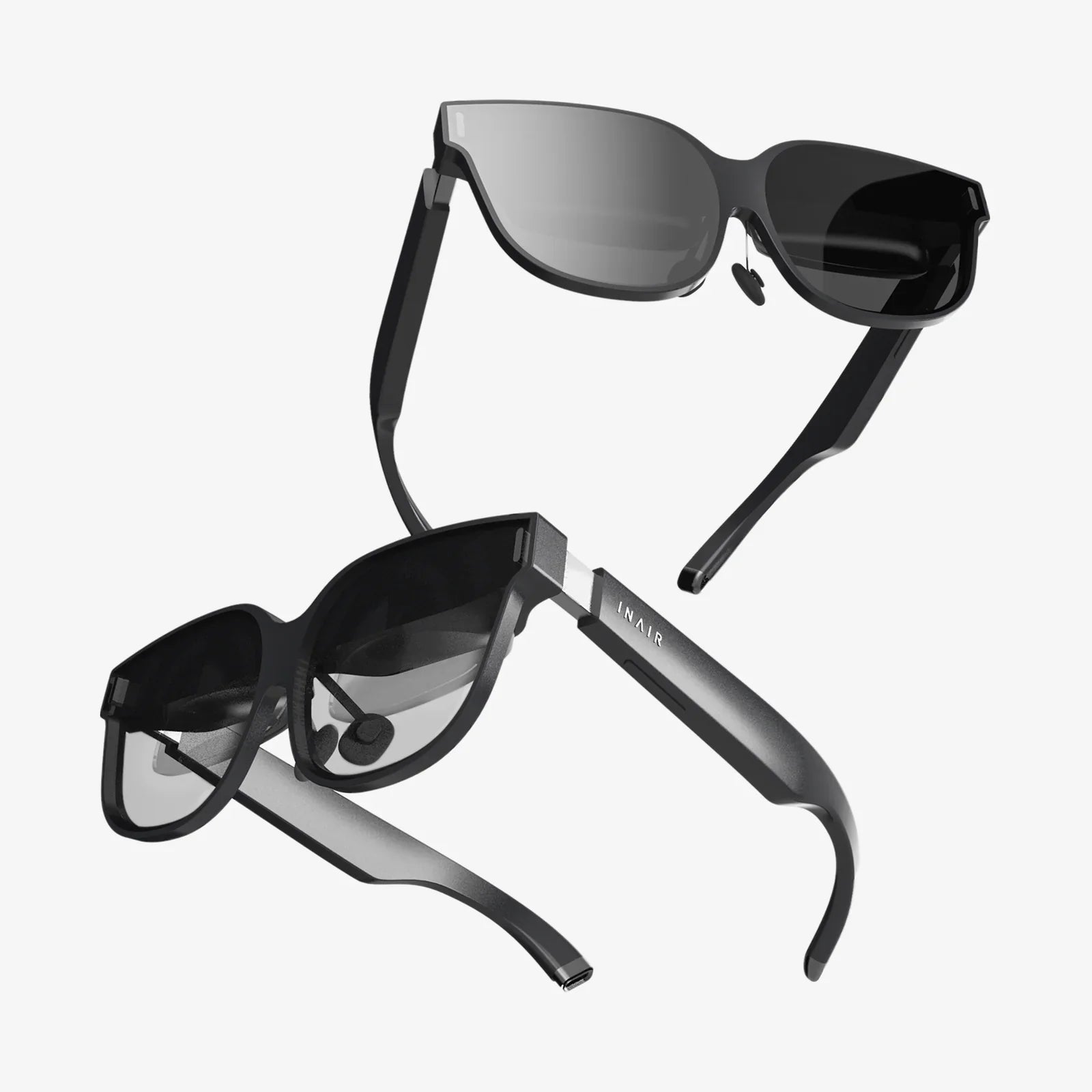
xr glasses are quietly becoming the next big leap in personal technology, promising to blend digital worlds with our physical lives in ways that feel almost magical. Imagine glancing at a building and instantly seeing directions, reviews, or historical facts floating in front of you, or collaborating with a colleague on a 3D model that hangs in the air between you. This is no longer just the stuff of science fiction; it is the emerging reality of extended reality hardware that is starting to reshape how we work, play, learn, and connect.
To understand where this revolution is going, you need to know what xr glasses actually are, how they differ from traditional virtual reality headsets, and why so many industries are racing to adopt them. From immersive entertainment to remote work, from healthcare to education, these devices are poised to become as commonplace as smartphones. Yet they also raise important questions about comfort, safety, privacy, and the way we want to live with technology. This guide walks you through the essentials so you can decide whether xr glasses belong in your future.
xr glasses are wearable devices that place digital content directly into your field of view, creating a spectrum of experiences from slightly enhanced reality to fully immersive virtual worlds. The term "XR" stands for "extended reality" and serves as an umbrella for several related technologies that blend physical and digital spaces.
Unlike traditional screens that you look at from a distance, xr glasses sit on your face like regular eyewear or goggles. They use lenses, displays, sensors, and processors to layer digital images onto the real world, or to replace your view entirely with a computer-generated environment.
To understand xr glasses, it helps to break down the main categories they can support:
Many modern xr glasses aim to support more than one of these modes, allowing you to slide from light overlays to deep immersion when needed.
xr glasses pack a surprising amount of technology into a small form factor. Understanding the main components helps you see why these devices are both powerful and challenging to design.
At the heart of xr glasses are the optics and displays that create virtual images in front of your eyes. Common approaches include:
These elements must work together to create bright, clear, and stable images in a variety of lighting conditions, from dim indoor spaces to bright outdoor environments.
xr glasses need to understand both your movements and your environment to place digital content correctly. They rely on several types of sensors:
By combining this data in real time, xr glasses can anchor virtual objects to specific locations in your room, maintain a stable horizon as you move, and respond to your gaze and gestures.
Rendering 3D graphics, tracking motion, and interpreting sensor data all demand significant computing power. Some xr glasses contain onboard processors, acting as stand-alone devices, while others offload heavy processing to a nearby computer or smartphone via wired or wireless connections.
Fast connectivity, such as high-speed wireless links, is crucial to minimize latency. If there is too much delay between your movement and the system’s response, the experience can feel laggy and uncomfortable. Modern designs aim to keep this latency low enough that virtual content feels stable and responsive.
Because xr glasses sit on your face, traditional input devices like keyboards and mice are not always ideal. Instead, these devices lean on more natural interaction methods:
The goal is to make interacting with digital content as intuitive as reaching out and touching something in the real world.
xr glasses are not just a novelty. They offer concrete advantages that could eventually make them as indispensable as smartphones or laptops for many people.
By filling your field of view with responsive digital content, xr glasses can deliver a level of immersion that flat screens cannot match. Whether you are exploring a virtual museum or standing inside a 3D data visualization, the sense of presence can be powerful and memorable.
Because xr glasses place information directly in your line of sight, you can access maps, instructions, notifications, or translations without pulling out a device. This hands-free capability is especially valuable for tasks that require both hands, such as maintenance, surgery, or cooking.
Traditional screens flatten information into two dimensions. xr glasses can place data and tools in three-dimensional space, making it easier to visualize complex structures, workflows, or environments. This spatial understanding is particularly useful in engineering, architecture, design, and scientific research.
With xr glasses, remote participants can appear as life-sized avatars or floating windows in your space, and you can all interact with shared 3D content. This can make remote meetings feel more natural and productive, reducing the friction of distributed work.
While xr glasses are still emerging, practical use cases are already taking shape across many aspects of daily life.
Entertainment is one of the most obvious applications:
These experiences can be tailored to your environment and preferences, giving you more control over how and where you consume media.
xr glasses have the potential to change how we think about offices and workstations:
By untethering work from physical screens and locations, xr glasses could allow more flexible and efficient workflows.
Learning is more effective when it is active and contextual, and xr glasses are well suited for this:
These experiences can make abstract concepts more concrete and help learners build muscle memory in safe environments.
xr glasses are also finding roles in health-related applications:
While these applications require careful validation and regulation, they show how xr glasses can support both practitioners and patients.
In everyday life, xr glasses can act as a context-aware assistant:
These capabilities can make daily routines smoother and help people navigate unfamiliar environments with confidence.
Despite their promise, xr glasses face significant challenges that designers and engineers are still working to overcome.
Because xr glasses are worn on the face, comfort is critical. Issues include:
Achieving a sleek, glasses-like form factor while housing displays, sensors, and batteries is a delicate balancing act.
High-quality XR experiences demand continuous processing and display output, which can drain batteries quickly. Designers must balance performance with battery size and weight, often leading to trade-offs between immersion and usage time.
Users expect sharp, bright images and a wide field of view that feels natural. Limitations in current optics and displays can lead to narrow viewing angles, visible pixels, or artifacts like blurring and distortion. Improving these aspects without making devices bulky remains a core challenge.
If the visual system and inner ear receive conflicting signals, users may experience motion sickness or discomfort. Reducing latency, improving tracking accuracy, and designing experiences that respect human perception are essential to minimize these issues.
xr glasses not only change how we see the world but also how the world sees us. This raises important questions about privacy, security, and social norms.
To understand the environment, xr glasses often rely on outward-facing cameras and microphones. This can make people around the wearer uneasy, especially if they are unsure whether they are being recorded. Clear indicators, privacy modes, and strong policies are needed to build trust.
xr glasses can collect detailed information about your surroundings, movements, gaze patterns, and interactions. This data can be valuable for improving experiences but also sensitive if misused. Robust encryption, transparent data practices, and user control over what is stored and shared are vital.
As xr glasses become more common, society will need norms for when and how to use them. Just as people learned when it is appropriate to check phones, similar etiquette will develop for immersive devices. Balancing presence in digital spaces with attention to the people around you will be an ongoing challenge.
If you are considering xr glasses for personal or professional use, several factors can help you evaluate different options.
Start with your primary goals:
A strong content ecosystem can make the difference between a device you try once and one you use every day.
Comfort can only be judged by wearing the device for a meaningful period. When evaluating xr glasses, pay attention to:
Even powerful features will not matter if you cannot comfortably wear the device for the sessions you need.
Consider several visual aspects:
Try reading small text, inspecting detailed images, and moving your head around to see how stable the visuals remain.
High-quality tracking is essential for comfort and realism. Test for:
Any noticeable lag or jitter can break immersion and potentially cause discomfort.
Think about your typical usage patterns. If you plan to use xr glasses for long work sessions or travel, battery life and charging convenience are critical. Also consider whether the device is easy to carry, store, and protect when not in use.
Look for options that respect your data and the people around you:
These features help ensure that your adoption of xr glasses aligns with your values and responsibilities.
Even if you are not ready to buy xr glasses today, it is worth thinking about how they may affect your life and work in the coming years. The shift from flat screens to spatial computing will likely be gradual but profound.
As xr glasses become more capable and affordable, new roles and skills will emerge. Opportunities include:
Learning about 3D modeling, game engines, user experience design, and human perception can position you to take advantage of these opportunities.
As with any powerful technology, the value of xr glasses depends on how they are used. Consider these principles as you or your organization experiment with XR:
By approaching xr glasses with intention, you can harness their benefits while minimizing potential downsides.
xr glasses hint at a future where digital information is no longer trapped behind rectangular screens but woven seamlessly into the spaces where we live and work. Instead of glancing down at a phone for directions, you might follow arrows that appear on the sidewalk. Instead of crowding around a laptop to review a design, you might walk around a full-scale virtual prototype in your office. Instead of staring at static charts, you might step inside a dynamic data landscape and explore it from within.
This shift will not happen overnight, and it will not be without friction. Comfort, cost, privacy, and social norms all need time to evolve. Yet the trajectory is clear: as xr glasses become lighter, more capable, and more affordable, they will move from niche devices to everyday tools. Those who understand how to use them thoughtfully will have a head start in shaping the next era of digital life.
If you are curious about the future of computing, xr glasses are one of the most important technologies to watch. They offer a glimpse of a world where the boundary between physical and digital is not a screen but a spectrum, and where your surroundings can become a canvas for information, creativity, and connection. Exploring that world now, even in small ways, can help you decide how you want to see and shape what comes next.
Share:
vr lentes For Immersive Experiences: A Complete 2025 Buyer’s Guide
vr lentes For Immersive Experiences: A Complete 2025 Buyer’s Guide