


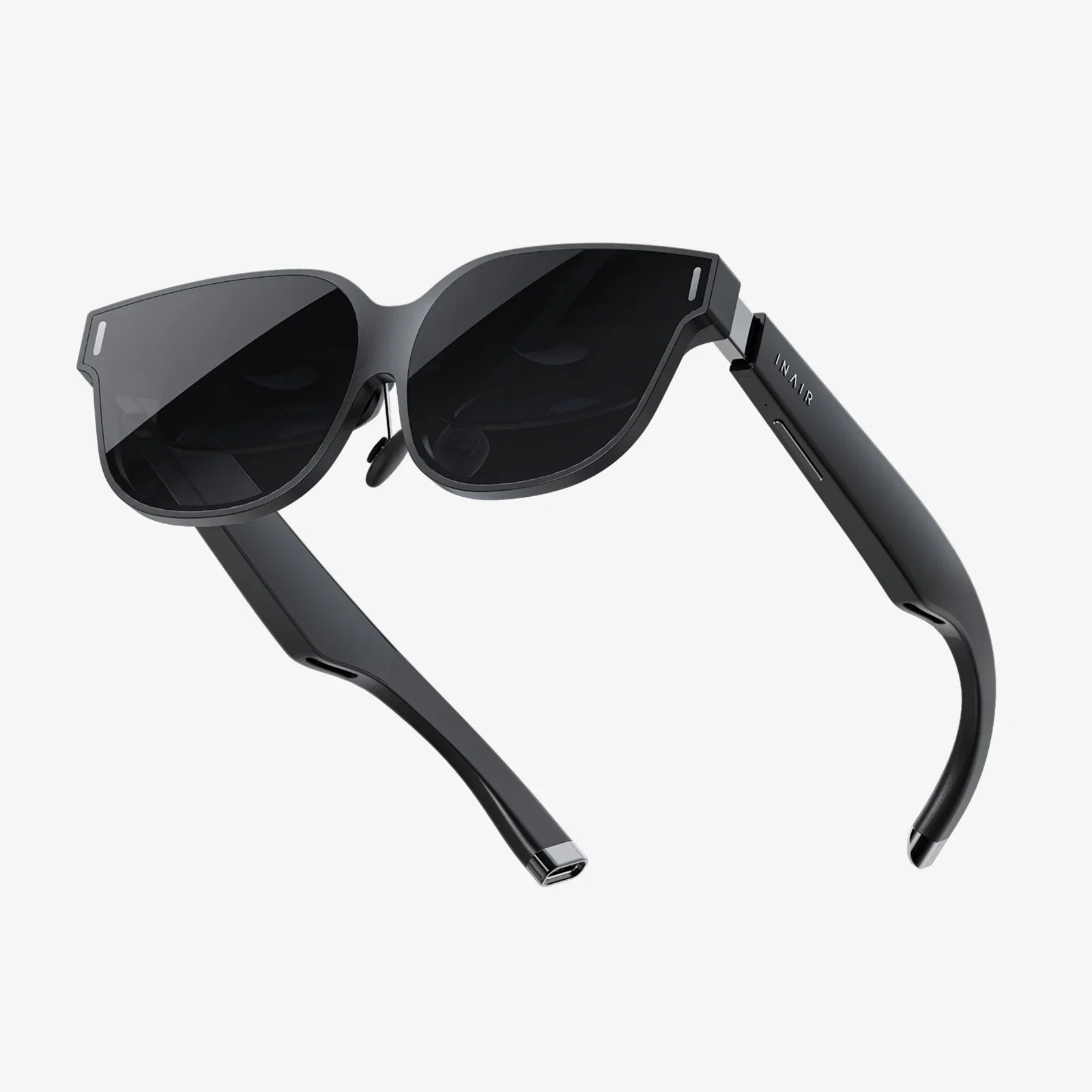
Imagine strapping on a headset and instantly being transported to the summit of Mount Everest, the depths of the Mariana Trench, or the surface of Mars. This is the mesmerizing promise of virtual reality, a technology that has captivated our collective imagination and is rapidly reshaping our world. But how much do you really know about the digital realms being constructed around us? The journey of VR is filled with surprising twists, profound psychological impacts, and a future that stretches far beyond mere entertainment. Prepare to have your perception of reality expanded.
A Journey Through Time: The Origins of an Idea
While VR feels like a 21st-century innovation, its conceptual roots are surprisingly deep. The first seeds were sown not in a tech lab, but in the world of art and literature. In the mid-1930s, a visionary writer named Stanley G. Weinbaum published a short story, "Pygmalion's Spectacles," which described a pair of goggles that could transport the wearer into a fictional world, complete with holographic recordings, smell, and touch. This was arguably the first popular conception of a true virtual reality experience. The technology, however, would take decades to catch up to the imagination.
Fact 1: VR's First Prototype Was a Massive, Cumbersome Machine Called the Sensorama
Long before sleek, wireless headsets, the first functional VR system was a behemoth. In 1962, cinematographer Morton Heilig created and patented the "Sensorama," a mechanical arcade cabinet-style device. Users would sit inside it and experience short films like a motorcycle ride through Brooklyn. It was a multi-sensory marvel for its time, incorporating stereo speakers, a stereoscopic 3D display, oscillating fans to simulate wind, and even scent emitters to provide smells. Despite its brilliance, Heilig failed to secure funding, and the Sensorama remained a fascinating, yet commercially unsuccessful, prototype.
Fact 2: The Term "Virtual Reality" Was Coined by a Tech Pioneer in the 1980s
The phrase we now use ubiquitously has a specific origin. Jaron Lanier, a computer scientist and visual artist, is widely credited with popularizing the term in the early 1980s. His company, VPL Research, was one of the first to sell VR goggles and haptic feedback gloves, essentially creating the first commercial VR products. Lanier's work moved VR from academic and military research labs into the public consciousness, framing it as a new medium for human experience and interaction.
Fact 3: VR is a Powerful Tool for Treating Phobias and PTSD
One of the most significant applications of VR is in the field of mental health, specifically exposure therapy. Therapists can use controlled virtual environments to safely and gradually expose patients to the sources of their anxiety or trauma. For someone with a fear of heights (acrophobia), they can practice standing on virtual balconies that get progressively higher. For a veteran dealing with PTSD, a therapist can recreate elements of a traumatic event in a manageable way, allowing the patient to process their memories in a safe clinical setting. The efficacy of this treatment has been demonstrated in numerous clinical studies.
Fact 4: "Presence" is the Magic Word – The Feeling of Actually Being There
The ultimate goal of any VR experience is to achieve "presence" – the uncanny and powerful sensation of actually being in the virtual environment, not just observing it. This is a psychological state where the brain, tricked by consistent visual, auditory, and sometimes haptic cues, suspends its disbelief. Achieving presence requires high-resolution displays, a wide field of view, precise head-tracking with low latency (to prevent motion sickness), and high-quality spatial audio. When all these elements align, the effect is profound and transformative, making a virtual experience feel startlingly real.
Fact 5: VR Can Literally Change Your Brain (Through Neuroplasticity)
The human brain is remarkably adaptable, a quality known as neuroplasticity. Studies have shown that immersive VR experiences can actively rewire neural pathways. For instance, researchers have used VR to help stroke victims regain motor control by having them practice movements in a virtual space, which encourages the brain to form new connections. Similarly, VR meditation apps can train the brain to be more mindful. This demonstrates that VR is not just a passive consumption device; it's an interactive tool that can shape our neural architecture.
Fact 6: There's a Phenomenon Called "VR Hangover" or Dissociation
After an extended period in a compelling virtual world, some users report a strange sensation upon returning to the real one. This is often called a "VR hangover" or dissociation. It can manifest as a fleeting feeling that your hands don't quite belong to you, a slight disconnect from your physical surroundings, or a lingering sense of being in the simulation. This occurs because the brain has spent a significant amount of time accepting a new, artificial reality. It typically fades quickly but highlights the potent effect VR has on our perception.
Fact 7: Architects and Designers Use VR to Walk Through Buildings Before They're Built
The architecture, engineering, and construction industries have embraced VR as an indispensable tool. Instead of relying on blueprints and 3D models on a screen, architects and their clients can now don a headset and take a full-scale, immersive walkthrough of a building design long before the foundation is ever poured. This allows for unparalleled understanding of spatial relationships, lighting, and ergonomics. Potential design flaws can be identified and corrected in the virtual model, saving enormous amounts of time and money during the actual physical construction phase.
Fact 8: The Global VR Market is Projected to Be Worth Hundreds of Billions
What was once a niche technology for enthusiasts is now a major global industry. Market analysis consistently projects the VR market, encompassing hardware, software, and enterprise solutions, to grow into a multi-hundred-billion-dollar industry within the next several years. This explosive growth is fueled by advancements in hardware that make it more affordable and comfortable, the expansion of its use in enterprise training (from Walmart to Boeing), and the continuous development of compelling content for education, social connection, and healthcare.
Fact 9: Social VR Platforms Are Creating Entirely New Digital Societies
VR is evolving into a powerful social platform. Applications exist that allow people from across the globe to meet, interact, play games, attend virtual concerts, and even work together in shared digital spaces. Users are represented by customizable avatars, enabling a form of communication that feels far more personal and embodied than a traditional video call. These platforms are becoming the groundwork for the "metaverse," a hypothesized persistent network of shared 3D virtual spaces, suggesting that the future of social interaction may be deeply intertwined with virtual reality.
Fact 10: The Future of VR is Moving Beyond Headsets to Haptics and Full-Body Immersion
The headset is just the beginning. The next frontier of VR is about engaging the rest of the body to create true full immersion. This includes advanced haptic feedback suits that can simulate the feeling of touch, impact, and temperature change. Research into neural interfaces aims to create systems that can read signals from the brain and translate intent into action within the virtual world, potentially bypassing controllers altogether. Other innovations like omnidirectional treadmills allow users to physically walk and run in any direction within an infinite virtual landscape, breaking the physical constraints of a room.
From its humble beginnings in a writer's mind to its current status as a world-altering technology, virtual reality is a testament to human ingenuity. It’s a mirror reflecting our deepest desires to explore, connect, and understand—even if that means constructing entirely new worlds to do it in. The ten facts explored here are merely a glimpse into a revolution that is still writing its own history. The true potential of VR lies not in escaping our reality, but in enhancing it, educating us, healing us, and connecting us in ways we are only just beginning to imagine. The door to these new worlds is now open, and the journey inside is limited only by our collective creativity.
Share:
2D Image to 3D Animation: The Revolutionary Transformation Reshaping Visual Media
3D Virtual Reality Glasses Price - A Comprehensive Guide to Navigating the Market