


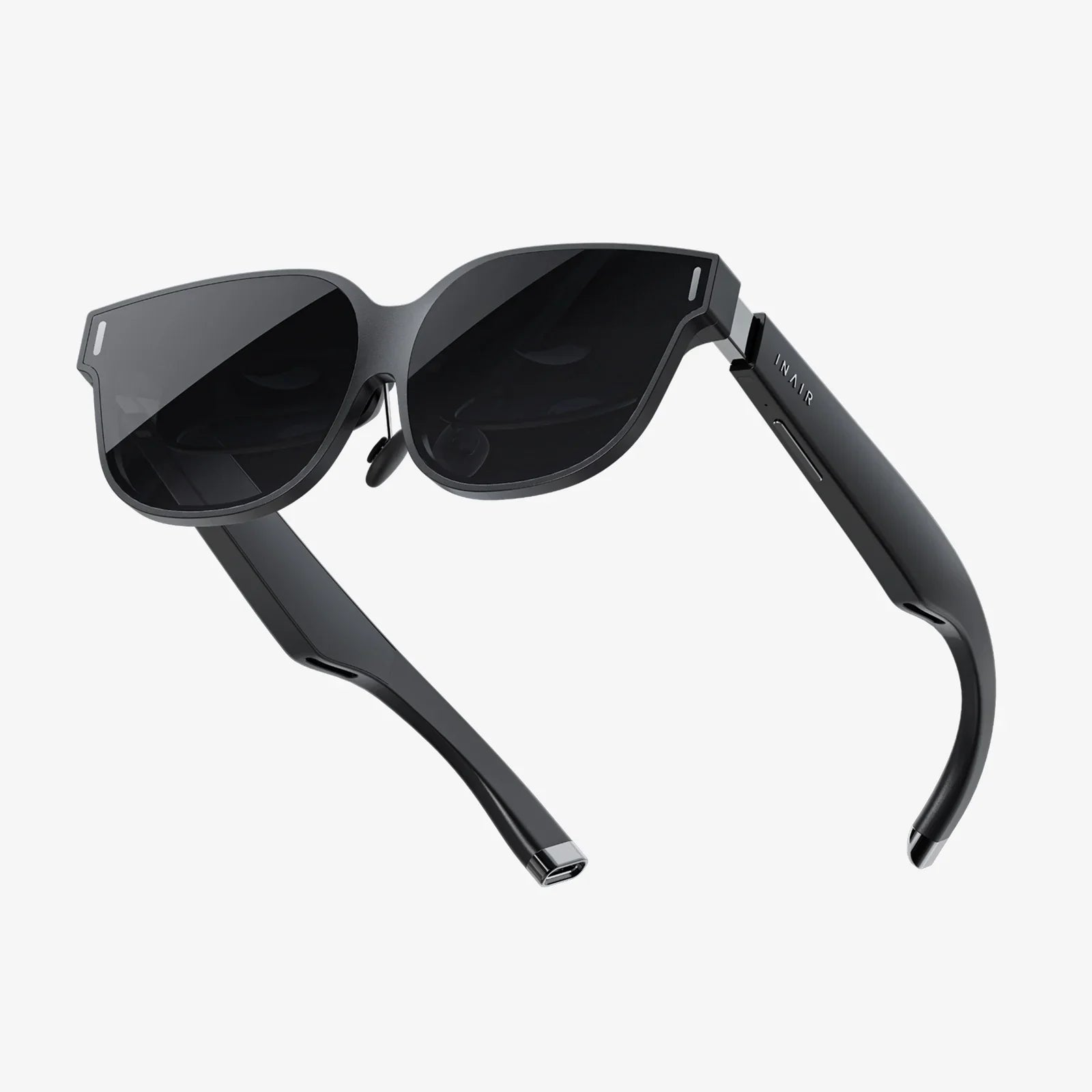
Imagine settling into your favorite armchair, the lights dim, the screen flickers to life, and suddenly, the action doesn't just happen on the screen—it leaps out into your living room. A dragon's wing seems to brush your face, a speeding car roars past your ear, and you are no longer a passive observer but an active participant in a breathtaking three-dimensional world. This is the promise that captivated millions, and at the heart of this immersive experience lies a pivotal piece of technology: 3D television glasses. These ingenious devices are the literal key to perceiving depth, texture, and wonder from a flat panel, transforming ordinary content into an extraordinary spectacle. The journey of these glasses is a tale of innovation, competition, and the relentless pursuit of bringing cinematic magic into our homes.
The Core Principle: How We See in Three Dimensions
To understand how 3D television glasses work, one must first grasp the fundamental way humans perceive depth. Our two eyes are spaced approximately two-and-a-half inches apart. This means each eye sees a slightly different image, a phenomenon known as binocular disparity. The brain seamlessly merges these two distinct two-dimensional images into a single, coherent three-dimensional picture, calculating depth and distance based on the variance between them.
3D technology cleverly mimics this natural process. Instead of displaying one flat image, a 3D-capable television or projector presents two separate images simultaneously—one intended for the left eye and one for the right. The role of the glasses is to act as a filter, ensuring that each eye only sees the image meant for it. This tricks the brain into processing the two streams of visual information as a single, deep, three-dimensional scene. The methods by which these glasses achieve this separation have evolved significantly, leading to the primary types of glasses available to consumers.
A Journey Through Time: The Evolution of 3D Viewing
The concept of stereoscopic 3D is far from new. Its roots stretch back to the 19th century with the invention of the stereoscope, a device that presented two nearly identical photographs to each eye, creating the illusion of depth. The anaglyph system, using the classic red and cyan paper glasses, became a cultural icon in the mid-20th century, famously used in comic books and B-movies. While revolutionary for its time, the anaglyph method suffered from significant drawbacks, most notably poor color reproduction and a tendency to cause eye strain and headaches.
The modern era of 3D television glasses began in earnest in the late 2000s, driven by a wave of high-profile 3D films and a subsequent push by manufacturers to bring the technology into the home. This period saw the rise of two dominant, competing technologies: active shutter and passive polarized systems. This divide created a format war reminiscent of Betamax vs. VHS, with each camp boasting distinct advantages and fervent supporters.
Active Shutter Glasses: The Technological Powerhouse
Active shutter 3D glasses represent a feat of precision engineering. These are electronic devices, often requiring charging via a USB cable. Each lens is essentially a liquid crystal shutter that can become opaque or transparent in a fraction of a millisecond.
Here is how the system works in perfect synchronization:
- The television displays the image for the right eye.
- At the exact same moment, the glasses receive a wireless signal (usually via infrared or Bluetooth) instructing the left lens to darken and block the view.
- The TV then rapidly switches to display the image for the left eye.
- The glasses receive another signal, darkening the right lens and clearing the left.
This cycle repeats at an incredibly high speed—typically 120 times per second (60Hz per eye)—faster than the brain can consciously perceive. The viewer's visual system fuses the alternating images into a smooth, continuous 3D picture. The primary advantage of active shutter technology is its ability to deliver full high-definition 1080p resolution to each eye, resulting in a exceptionally detailed and high-quality image with minimal ghosting or crosstalk (where the left eye faintly sees the right eye's image, and vice versa).
However, this performance comes with trade-offs. The glasses themselves are heavier, more expensive to replace, and require power. The constant charging can be an inconvenience. Furthermore, some users are sensitive to the rapid flickering of the lenses, which can lead to fatigue during extended viewing sessions. There were also issues with the infrared sync signals being blocked if the viewer turned their head or if sunlight flooded the room.
Passive Polarized Glasses: The Lightweight Challenger
Passive polarized 3D glasses operate on a completely different, and elegantly simpler, principle. They contain no electronics, batteries, or shutters. Instead, they use specially treated lenses, much like the polarized sunglasses used to reduce glare.
The television screen has a specialized polarizing filter applied to it. This filter displays the two images simultaneously, but each is projected with light waves oriented at different angles—often one at 45 degrees and the other at 135 degrees. The lenses in the glasses are polarized to match these angles. The left lens only allows light polarized at the angle of the left-eye image to pass through, and the right lens does the same for the right-eye image.
The benefits of this system are immediately apparent. The glasses are:
- Lightweight and comfortable, nearly identical to the glasses worn in modern 3D cinemas.
- Inexpensive, making it easy and affordable to outfit an entire family or group of friends.
- Never need charging.
- Generally considered to cause less eye strain and flicker-related fatigue.
The historical compromise with passive systems was a resolution trade-off. Early implementations used a technology called line-by-line or checkerboard patterning, which effectively halved the vertical resolution for each eye. While the overall image could still appear high definition, it could lack the fine detail of its active shutter counterpart, especially when viewed up close. Later advancements and higher-resolution displays have largely mitigated this issue for most viewers.
Beyond the Binary: Other Technologies on the Horizon
While active and passive systems dominated the market, the quest for the perfect 3D experience continued. Research and development explored other avenues, most notably autostereoscopy—the holy grail of 3D viewing that requires no glasses at all.
Autostereoscopic displays use techniques like parallax barriers or lenticular lens sheets placed over the screen to direct different images to each eye based on the viewer's position. This technology powers the novelty 3D displays on some handheld gaming devices and digital photo frames. However, for large-screen television applications, it has faced immense challenges. These systems typically have very specific "sweet spots" where the 3D effect works perfectly, limiting the number of people who can view the screen comfortably at one time and requiring the viewer to remain in a fairly fixed position. Image quality and brightness can also suffer. While progress continues, a consumer-friendly, glasses-free 3D television for the living room remains a technology for the future.
The User Experience: Comfort, Compatibility, and Considerations
Choosing between the different types of 3D glasses was never just a technical decision; it was deeply personal and practical. Comfort is paramount for enjoying a two-hour film. The heavy, electronic active glasses could feel cumbersome for some, while others found the lightweight passive glasses to be flimsy. Compatibility was another major hurdle. Unlike the universal nature of polarized cinema glasses, the active shutter market was initially fragmented, with different brands often using proprietary, incompatible wireless protocols. A glasses from one manufacturer would not work with a television from another, creating consumer confusion and frustration.
Furthermore, a segment of the population cannot perceive 3D effects due to various visual conditions, such as strabismus (a misalignment of the eyes) or amblyopia (lazy eye). Even for those with typical vision, 3D viewing can sometimes induce headaches, nausea, or vertigo, a phenomenon sometimes called cybersickness. It was crucial for viewers to take breaks and not overexert their visual systems, especially when the technology was new.
The Rise and Apparent Fall: The Market Reality
The initial launch of 3D televisions was met with great fanfare and industry hype. Major blockbuster films were being released in 3D, and manufacturers were eager to provide a way to replicate that experience at home. For a few years, 3D capability became a premium feature on high-end television models.
However, several factors converged to halt its mainstream momentum. The necessity of glasses remained a significant psychological and practical barrier for many consumers. People found it inconvenient to wear them over prescription eyewear and disliked the idea of having to use a special accessory just to watch TV. The lack of widespread, high-quality 3D content beyond a selection of movies was also a critical failing. Broadcast television never meaningfully adopted 3D, with most channels that launched closing down due to lack of viewership. The much-touted 3D gaming experience also remained a niche within a niche.
As consumer interest waned, manufacturers pivoted their marketing efforts towards other emerging technologies that offered a tangible improvement for all content, such as 4K Ultra HD resolution, High Dynamic Range (HDR), and smart TV platforms. One by one, major brands ceased production of 3D televisions. The era of 3D as a flagship TV feature had ended, seemingly as quickly as it had begun.
The Lasting Legacy and Niche Resurrection
To declare 3D television glasses a complete failure, however, would be a mistake. The technology found a lasting and passionate home in another domain: projectors. High-quality 3D-capable projectors remain popular and widely available for home theater enthusiasts. In a dedicated, light-controlled home cinema room, a large projected image combined with active shutter glasses can deliver a truly spectacular and immersive 3D experience that many argue surpasses that of a commercial cinema. For these dedicated hobbyists, 3D is very much alive and well.
Furthermore, the technological advancements driven by the 3D television boom had ripple effects. The research into higher refresh rates, reduced motion blur, and improved image processing for 3D directly benefited the overall quality of 2D television displays. The legacy of 3D glasses lives on in the incredibly smooth, clear motion handling found on modern high-end TVs.
A Glimpse into the Future: Where Do We Go From Here?
The story of 3D television glasses is not a closed book. The core technology and the human desire for immersion are merely transitioning. The concepts of stereoscopic viewing and depth perception are fundamental to the next great technological frontier: virtual reality (VR) and augmented reality (AR) headsets.
Modern VR headsets are, in essence, the ultimate evolution of active shutter 3D glasses. They contain high-resolution screens for each eye, precise motion tracking, and advanced optics to create a completely convincing and immersive three-dimensional world that surrounds the user. The lessons learned from consumer comfort, resolution requirements, and minimizing latency to prevent nausea are all being directly applied to make VR and AR experiences more compelling and accessible. In this sense, the spirit of 3D television glasses has not died; it has been reborn in a new, more powerful, and infinitely more immersive form.
So, the next time you see a pair of those sleek, dark 3D glasses tucked away in a drawer, don't just see a relic of a forgotten trend. See a key—a key that unlocked a new dimension of storytelling and visual wonder for a generation of viewers. They were a bold, albeit imperfect, step on the continuous path toward more immersive entertainment. They proved that the living room could be a gateway to other worlds, and they paved the way for the even more astonishing virtual realities that are now at our fingertips, waiting for us to put on a new generation of headsets and dive in.
Share:
AI Wearable: The Invisible Revolution Reshaping Health, Work, and Daily Life
At Home VR: The Ultimate Gateway to Boundless Virtual Worlds