


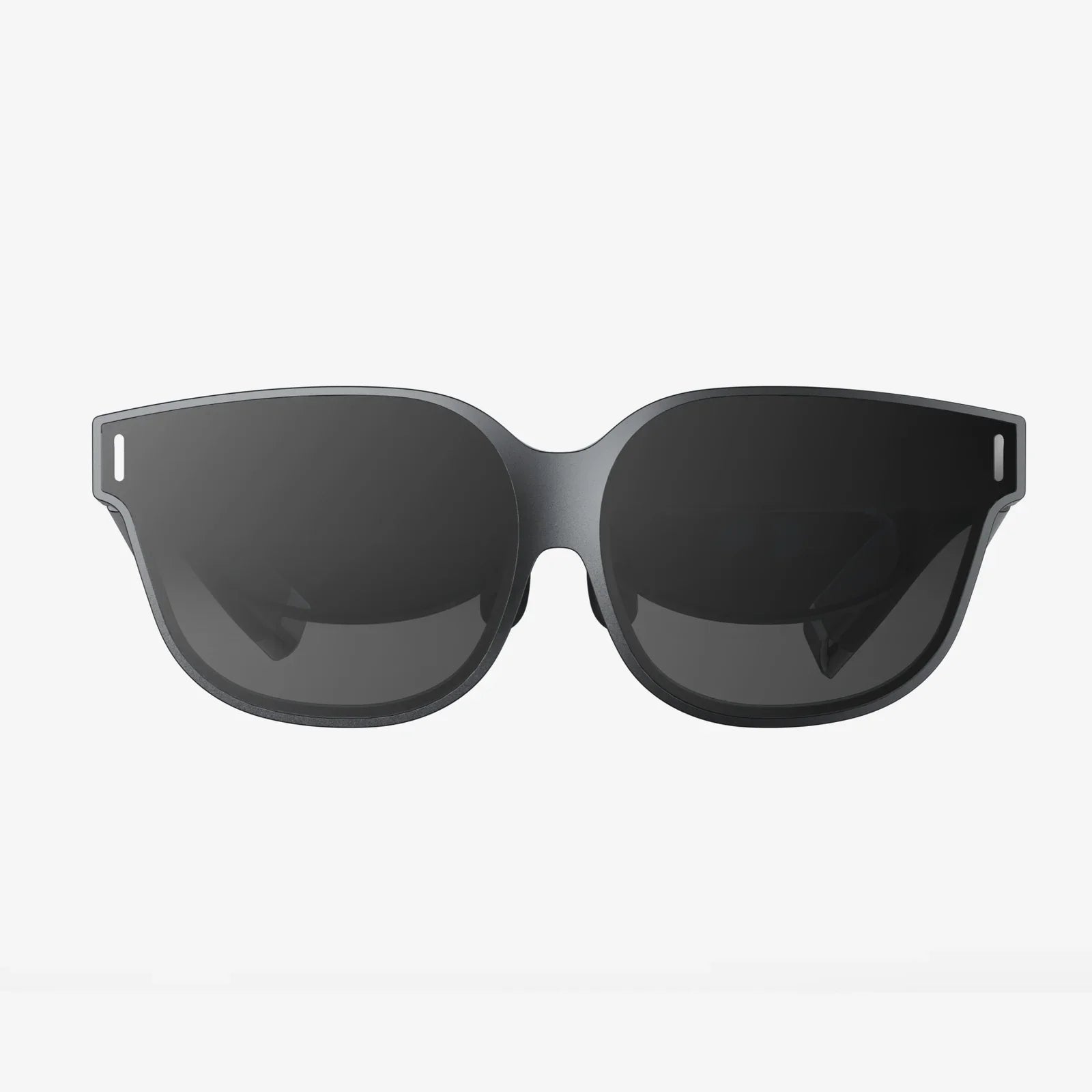
Imagine a world where digital information doesn't just live on a screen but is seamlessly woven into the fabric of your reality, accessible not from your pocket but from a pair of sleek, affordable glasses. This is no longer the stuff of science fiction. A quiet revolution is underway, and it’s being powered by a new class of accessible technology: affordable augmented reality headsets under $500. For years, AR was a promise tethered to high price tags and enterprise-grade hardware, a glimpse of the future reserved for developers and corporations with deep pockets. But the dam has broken. A convergence of technological innovation, manufacturing efficiencies, and a growing software ecosystem has finally brought functional, compelling augmented reality within reach of the average consumer, student, and creator. This isn't just a price drop; it's an invitation for millions to step into the next era of computing, to experiment, to build, and to redefine how we interact with the digital and physical worlds simultaneously. The gateway to the metaverse, to a more informed reality, and to a new canvas for human creativity is now open, and it’s astonishingly affordable.
The Driving Forces Behind the Price Revolution
The journey to sub-$500 capable AR hardware is a story of relentless miniaturization and smart engineering. Several key factors have aligned to make this possible.
First, the smartphone industry is the unsung hero. The massive investment in mobile processors, high-resolution micro-displays, compact batteries, and miniaturized cameras for phones has created a robust supply chain of powerful, tiny, and cost-effective components. Manufacturers of these new headsets are not building from scratch; they are leveraging this ecosystem, integrating Qualcomm's purpose-built XR chipsets and repurposing OLED displays to create visually impressive experiences without the R&D overhead of creating entirely new component categories.
Second, the design philosophy has evolved. Instead of aiming for a all-encompassing, standalone device that does everything (which drives cost and complexity), many successful affordable models embrace a hybrid approach. They act as a high-resolution display and sensor hub, while a powerful device in your pocket—your smartphone or a dedicated compute puck—handles the heavy number crunching. This bifurcation is a masterstroke in cost-saving, allowing the headset itself to be lighter, more comfortable, and far less expensive.
Finally, increased competition and a growing market have spurred innovation in manufacturing. As more companies enter the space, efficiencies of scale begin to kick in, and the cost of producing waveguide combiners (the transparent lenses that project images onto your retina) and other AR-specific optics continues to fall. What was a laboratory curiosity a decade ago is now a mass-produced component.
What Can You Realistically Expect for Under $500?
Setting a budget naturally involves compromise. You won't find a holodeck in this price range, but you will find genuinely impressive technology that offers a clear window into the future. The key is to manage expectations and understand the trade-offs.
The most significant differentiator in this category is often the display technology. Most headsets in this bracket utilize see-through displays, often based on waveguide or BirdBath optics. These project images onto transparent lenses, allowing you to see the real world with digital overlays. The field of view (FOV)—how much of your vision the digital image occupies—is typically narrower than in high-end models, often ranging from 30 to 50 degrees. It's like looking at a large floating screen rather than having your entire periphery filled. Resolution is generally high, with many offering 1080p equivalent per eye or better, resulting in sharp text and clear images.
Tracking and input are another area of variation. Inside-out tracking, using onboard cameras to map your environment and understand your head's position, is standard. This allows you to move freely without external sensors. Hand tracking, which lets you use your natural gestures as a controller, is a common and incredibly immersive feature. Many headsets also support simple Bluetooth controllers for more traditional input, which is ideal for gaming. The accuracy is sufficient for most consumer applications, though it may not match the millimeter precision of professional systems costing ten times more.
In terms of form factor, the sub-$500 category is dominated by headsets that resemble large glasses. They are not yet the size of regular sunglasses, but they are a far cry from the bulky, helmet-like devices of the past. Comfort for extended wear is a major focus, with lightweight materials and adjustable headbands. Many are designed for tethering to a computer or smartphone, while some are fully standalone, with all the compute power built-in, though this often pushes the price toward the very top of the $500 limit.
A World of Applications: Beyond Novelty
The true value of this technology is revealed not in the specs sheet but in its applications. Affordable access is fueling creativity across numerous domains.
Immersive Entertainment and Gaming
This is the most obvious and immediately enjoyable use case. Imagine playing a strategy game where the battlefield is laid out on your living room table, or watching a movie on a virtual 100-foot screen projected onto your wall. Multiplayer AR experiences allow friends to share the same digital space, interacting with virtual objects as if they were really there. It transforms passive consumption into active, spatial experiences.
Practical Productivity and Remote Collaboration
AR is poised to revolutionize the way we work. With an affordable headset, you can have multiple virtual monitors floating in your workspace, effectively giving you a portable, limitless desktop. For remote collaboration, colleagues can join a call as avatars and interact with 3D models, diagrams, or schematics that are anchored to a physical space, making design reviews and brainstorming sessions vastly more intuitive and effective than a flat video call.
Enhanced Learning and Skill Development
Education is a killer app for affordable AR. Students can dissect a virtual frog, explore the solar system in their classroom, or walk through ancient historical sites reconstructed in 3D. For vocational training, mechanics can see repair instructions overlaid on the engine they are working on, and medical students can practice procedures on virtual patients. This hands-on, visual learning dramatically improves comprehension and retention.
Navigation and Contextual Information
Imagine walking through a new city with directional arrows painted on the sidewalk, or looking at a restaurant and instantly seeing its reviews and menu highlights. AR can provide a contextual information layer over the entire world, making navigation effortless and enriching our understanding of our immediate environment.
Navigating the Limitations and Considerations
While the potential is enormous, it's crucial to approach this emerging technology with a clear-eyed view of its current limitations. Battery life can be a constraint, with many standalone or processing-heavy units offering 2-3 hours of use. The field of view, while adequate, still creates a "looking through a window" effect rather than true immersion. The digital passthrough on some models—where you see the world through camera feeds—can introduce latency and a lower visual fidelity compared to optical see-through.
Furthermore, the software ecosystem, while growing rapidly, is still in its adolescence. There is not yet a single unifying platform, and app availability can be fragmented across different hardware. Users must also consider privacy implications, as these devices often use cameras and sensors to map their surroundings, raising important questions about data collection and security.
The Future is Now, and It's Accessible
The arrival of capable augmented reality headsets for less than the price of a high-end smartphone is a watershed moment. It marks the transition of AR from a specialized tool to a potential mainstream medium. This accessibility is the catalyst the industry needed. It empowers a generation of developers, artists, educators, and entrepreneurs to experiment and discover the true "killer apps" that will define spatial computing. It democratizes the creation of the metaverse, ensuring it is built by a diverse set of voices rather than a few large corporations. The barriers to entry have crumbled, inviting us all to not just imagine the future, but to actively build it with our own hands. The next great AR application might not be conceived in a Silicon Valley lab; it might be dreamed up in a college dorm, a local workshop, or your very own living room, all thanks to the power of affordable technology.
This isn't just about buying a new gadget; it's about purchasing a ticket to the front row of the next digital revolution. The tools to blend our realities are now on the shelf, waiting for you to pick them up and see what's possible when the line between what's real and what's digital finally, beautifully, begins to blur.
Share:
AR Glasses Prescription Lenses Compatible: The Ultimate Guide to Merging Vision Correction with Augmented Reality
4K AR Glasses 2025: The Year Reality Gets a High-Definition Upgrade