


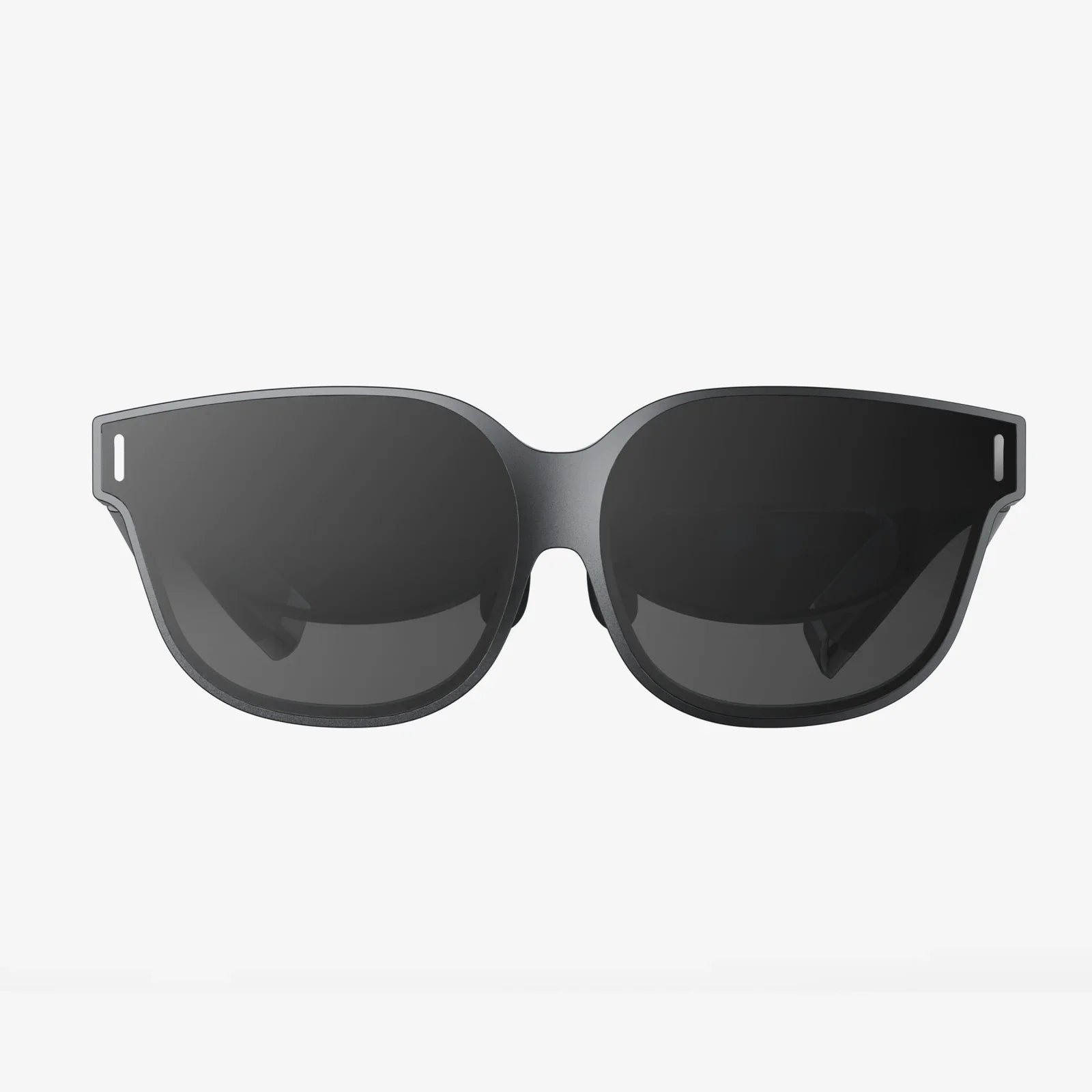
Imagine a world where finding the perfect pair of glasses feels less like a frustrating chore and more like a thrilling, personalized shopping experience curated just for you. The days of squinting into a mirror, holding up frame after frame, and desperately seeking a second opinion from a bored store clerk are rapidly fading into oblivion. We are standing at the precipice of a new era in eyewear, powered not by guesswork, but by data, algorithms, and sophisticated artificial intelligence. The quest for the ideal frames—those that harmonize with your bone structure, complement your personal style, and elevate your confidence—has finally met its match. This is the revolution of AI-powered facial analysis, and it's here to ensure you never make another underwhelming eyewear choice again.
The Complex Geometry of Your Face: Beyond Simple Shape Matching
For decades, the standard advice for choosing glasses revolved around identifying your basic face shape: oval, round, square, heart, or diamond. While this is a starting point, it's a woefully incomplete picture. Human faces are not simple geometric templates; they are complex, multidimensional structures with unique proportions, angles, and features. What works for one person with a "round" face might not work for another because of differences in cheekbone prominence, brow line, chin shape, or the width of their nose.
This is where human intuition falls short and AI precision excels. Advanced algorithms are trained on vast datasets of countless facial images and corresponding frame success stories. They don't just categorize; they analyze. They measure precise ratios and distances that the human eye would never consciously notice:
- Pupillary Distance (PD) and Frame Proportion: Ensuring the optical centers of the lenses align perfectly with your pupils for optimal vision and comfort.
- Nose Bridge Fit: Analyzing the width and height of your nose bridge to recommend frames that will sit comfortably without sliding down or pinching.
- Cheekbone and Brow Alignment: Determining how the top and bottom of the frames interact with your most prominent facial features to create balance.
- Facial Width and Frame Size: Calculating the ideal frame width so the glasses are neither too narrow nor too wide for your face, avoiding a squeezed or overwhelming look.
- Jawline and Frame Angle: Assessing the angle of your jawline to recommend frames that either soften or accentuate it for a harmonious effect.
This granular level of analysis means the technology can understand that two people with similarly "round" faces might need entirely different frame styles based on the subtle nuances of their features. It moves beyond basic rules and into the realm of hyper-personalized design.
The Engine Behind the Curtain: How AI Sees What You Can't
So, how does this technological magic actually work? The process is a fascinating blend of computer vision, machine learning, and augmented reality.
It typically begins with your smartphone camera. A sophisticated algorithm prompts you to position your face within a guide on the screen. As it captures your image, computer vision technology maps over 100 distinct data points on your face. It identifies the corners of your eyes, the tip of your nose, the outline of your lips, the curve of your jaw, and the arch of your eyebrows. This creates a precise, digital 3D model of your unique visage—a virtual avatar that serves as your digital twin for trying on glasses.
Machine learning is the brain that makes sense of this map. These algorithms have been trained on millions of images of people wearing glasses, learning which frame attributes (shape, size, color, material) are rated most favorably on which types of facial structures. It has learned the complex, often non-intuitive, relationships between facial features and frame aesthetics. It doesn't just know that angular frames can add definition to a round face; it knows the exact angle and thickness needed to achieve the most flattering result for your specific round face.
Finally, augmented reality brings the recommendations to life. Using the 3D model it created, the technology can superimpose virtual renditions of thousands of frames onto your face in real-time. You can turn your head from side to side, tilt it up and down, and see exactly how the frames look from every angle, all from the comfort of your home. The realism is stunning, accounting for how light reflects off different materials and how the frames sit on the bridge of your nose.
Beyond Aesthetics: The Functional Brilliance of AI Recommendations
While looking great is a primary goal, the benefits of AI-driven frame selection extend far deeper into functionality and comfort—aspects that are often overlooked in a traditional store setting.
- Personalized Comfort Forecasting: By analyzing your nose bridge data, AI can predict which frames will be comfortable for all-day wear, eliminating the painful pinching that can lead to headaches. It can also recommend styles with adjustable nose pads if you have a unique bridge structure.
- Lifestyle Integration: Many advanced platforms now incorporate lifestyle questionnaires. By telling the AI you're an active runner, a dedicated professional who wears their glasses 16 hours a day, or someone who needs computer blue light filtering, the algorithm can factor durability, weight, lens technology, and frame grip into its recommendations.
- Vision Performance Optimization: For those with strong prescriptions, the thickness and curvature of the lenses are a major concern. AI can recommend frame shapes and sizes that minimize lens bulge and distortion, ensuring you get the best possible optical performance from your new glasses.
This holistic approach ensures the glasses you choose are not just a beautiful accessory, but a perfectly integrated tool for your daily life.
Navigating the New Landscape: A User's Guide to AI Eyewear Tools
Ready to embark on your AI-powered eyewear journey? The process is designed to be intuitive and empowering.
- Find a Reputable Platform: Seek out services known for their robust technology and large frame inventory. The best ones partner with a wide range of designers and manufacturers.
- Prepare for Your Scan: Ensure you are in a well-lit environment with your hair pulled back from your face. This allows the algorithm to get the clearest possible view of your facial contours.
- Trust the Process: Follow the on-screen instructions to complete the facial mapping. Hold still as directed to ensure accuracy.
- Refine Your Preferences: Most tools will allow you to set filters for your preferred style (e.g., classic, bold, minimalist), material (acetate, metal, titanium), and color. This helps the AI narrow down its suggestions to align with your taste.
- Experiment and Compare: Don't just settle on the first recommendation. Use the AR try-on to test the top suggestions. Save your favorites and compare them side-by-side. Share screenshots with friends and family for a second opinion.
- Consider the Final Fit: Remember that while AI can predict physical comfort with remarkable accuracy, reading user reviews on the specific fit of a model can provide an extra layer of confidence before you purchase.
The Human Touch in an AI World: The Enduring Role of Opticians
With all this incredible technology, one might wonder if the role of the professional optician is obsolete. Quite the opposite. The ideal future of eyewear is a powerful synergy between AI efficiency and human expertise.
AI excels at processing vast amounts of data to narrow down thousands of options to a handful of perfect candidates. It is unparalleled in its ability to analyze structural fit and aesthetic harmony. However, a skilled optician brings irreplaceable value in final fitting adjustments, verifying precise measurements for complex prescriptions, and providing nuanced style advice that accounts for your personality and profession in a way an algorithm still cannot fully grasp.
Think of AI as your personal stylist who curates a stunning rack of options tailored just for you. The optician is the master tailor who ensures each piece fits you flawlessly. The two working together create an unbeatable combination for the consumer.
A Vision of the Future: What's Next for AI and Eyewear?
The technology is already impressive, but it is continuously evolving. The future holds even more personalized and immersive experiences. We can anticipate AI that can analyze your skin undertones and hair color to recommend frame colors that truly make your complexion glow. Imagine algorithms that can scan your entire photo album to understand your personal style history or even suggest bold, new styles that are just outside your comfort zone but perfectly suited to your face, encouraging fashion growth.
Integration with other health tech is also on the horizon. Glasses could become a health-monitoring hub, and the AI that helps you choose them could also factor in sensor placement and comfort for continuous wear. The possibilities are as vast as the technology is powerful.
Your search for the perfect glasses is no longer a game of chance played in a department store aisle. It is a precise science, an art form powered by data, and a deeply personal journey of discovery. The algorithm has analyzed the contours of a million faces to find the patterns of perfection, and it's ready to decode the unique geometry of yours. The frames that will make you look and feel your best are no longer hidden; they are waiting to be revealed by a intelligence that sees you, truly sees you, and knows exactly what you need.
Share:
What Is The Definition Of Augmented Reality: Bridging Our Digital and Physical Worlds
AR and VR Examples: Transforming Industries and Redefining Reality