


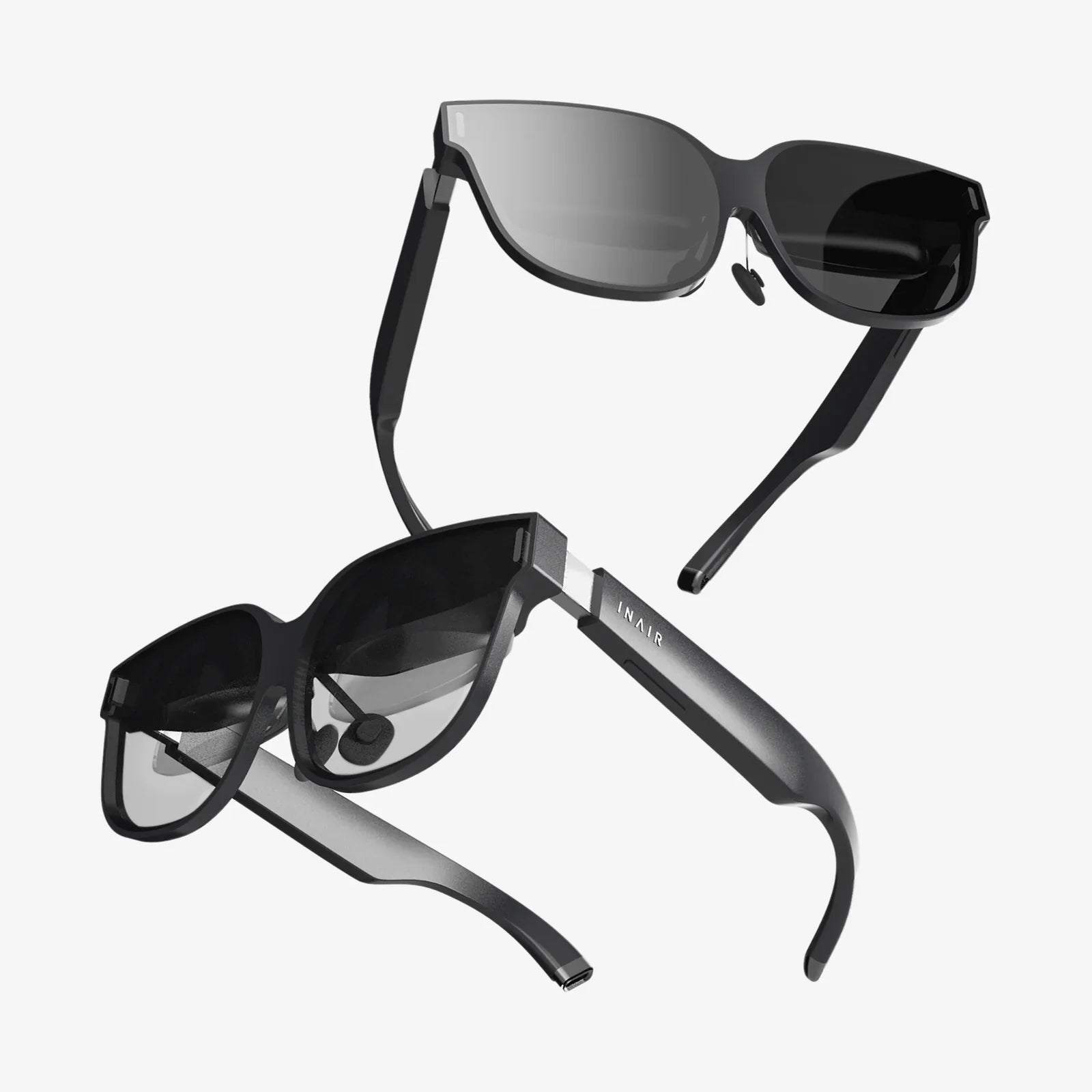
The world is on the cusp of a visual computing revolution, and it will be framed right before our eyes. The nascent market for AI-powered glasses, once a futuristic concept confined to science fiction, is rapidly accelerating toward mainstream adoption. By 2025, this sector is poised to explode, transitioning from niche prototypes and developer kits to indispensable tools for both enterprise and consumers. This isn't just about adding a digital overlay to our reality; it's about fundamentally reshaping how we interact with information, our environment, and each other. The convergence of artificial intelligence, advanced micro-optics, and edge computing is creating a perfect storm of innovation, promising a future where our field of view becomes the ultimate user interface. The journey to 2025 will be defined by specific, powerful trends that will determine the winners, the use cases, and the very fabric of this new technological paradigm.
The Convergence of Enabling Technologies
The dramatic evolution of the AI glasses market is not happening in a vacuum. It is the direct result of several critical technologies finally reaching a maturity and cost point that makes mass-market devices feasible. The most significant of these is the advancement in miniaturized AI processors capable of on-device machine learning. Unlike earlier smart glasses that relied heavily on a paired smartphone for computational heavy lifting, the 2025 generation will feature powerful, yet incredibly efficient, dedicated Neural Processing Units (NPUs). This shift is paramount. On-device AI enables real-time object recognition, spatial mapping, and natural language processing with near-zero latency, all while preserving battery life and user privacy by processing data locally instead of streaming it to the cloud.
Simultaneously, breakthroughs in waveguide and holographic optics are solving the longstanding challenge of displaying bright, high-resolution digital information onto transparent lenses without obstructing the user's natural vision. These micro-displays are becoming smaller, more efficient, and significantly cheaper to manufacture. Furthermore, improvements in spatial audio and bone conduction technology allow for discrete, immersive auditory experiences without earbuds, enabling users to hear digital content while remaining fully aware of their surroundings. Finally, the rollout of more robust and low-latency 5G and Wi-Fi 6/6E networks will provide the necessary bandwidth for those instances where cloud-based AI augmentation is required, ensuring a seamless and continuous user experience. It is this symphony of technologies—powerful chips, clear displays, intuitive audio, and ubiquitous connectivity—that will orchestrate the market's growth by 2025.
The Enterprise-Led Charge to Mainstream Adoption
While consumer applications often capture the public's imagination, the roadmap to 2025 will be undeniably paved by enterprise and industrial adoption. Businesses are driven by clear ROI—increased efficiency, reduced errors, and enhanced worker safety—making them the ideal early adopters for this technology. In logistics and warehousing, AI glasses are already being piloted to provide workers with hands-free order picking instructions, inventory management data, and optimal navigation through vast facilities. By 2025, this will be standard practice for major logistics firms, with AI vision algorithms capable of automatically verifying items, detecting shipping damage, and managing stock levels in real-time.
The field service and repair sector represents another massive opportunity. Imagine a technician repairing a complex piece of machinery with a schematic overlay perfectly aligned to the physical components in their view, guided by a remote expert who can see what they see and annotate their field of vision. This use case drastically reduces downtime, minimizes training time for new technicians, and elevates the skill ceiling of the entire workforce. In healthcare, surgeons could access vital patient statistics and imaging data without looking away from the operating table, and medical students could learn complex procedures through immersive AR guidance. The enterprise market's willingness to invest in productivity-enhancing tools will provide the initial revenue and real-world testing grounds needed to refine the technology for the broader consumer market later in the decade.
Beyond Novelty: The Rise of Contextual and Ambient Computing
The early iterations of smart glasses often felt like solutions in search of a problem, offering gimmicky features like the ability to take photos or display notifications—functions already handled perfectly well by smartphones. The trend for 2025 moves decisively away from this novelty approach toward a vision of contextual and ambient computing. The true power of AI glasses lies not in replicating smartphone features but in providing a continuous, intuitive stream of contextually relevant information that enhances the user's immediate situation.
This means the device's AI will act as a perceptive companion. For instance, while walking through a foreign city, the glasses could automatically translate street signs and restaurant menus in real-time, superimposed directly over the text. In a social setting, they could discreetly display the name and key details of a person you've just met (with appropriate privacy safeguards and permissions). For a student in a museum, the glasses could bring exhibits to life with historical data and 3D reconstructions. The core idea is that the information comes to you; you don't have to go looking for it on a screen. This shift requires immense advances in AI's understanding of context—where you are, what you're looking at, what you're trying to do, and even your intent—making the user experience feel less like using a tool and more like having a heightened sense of awareness.
The Form Factor Revolution: From Geek to Chic
A critical, and historically difficult, trend is the intense focus on design and social acceptability. For AI glasses to become a mass-market consumer product, they must first become something people actually want to wear. The bulky, awkward, and overtly technical designs of the past are giving way to a new generation of frames that prioritize style, comfort, and normalcy. The goal for manufacturers by 2025 is to create devices that are virtually indistinguishable from traditional high-end eyewear.
This necessitates a relentless drive toward miniaturization. Batteries, processors, speakers, and sensors must be ingeniously embedded within the arms and hinges of the frames. We will see a proliferation of partnerships between technology companies and renowned eyewear and fashion brands, leveraging their design expertise and cultural cachet. Different styles will emerge for different contexts: sleek, minimalist frames for professionals, durable and safety-rated designs for field workers, and sporty, wraparound options for outdoor activities. Overcoming the social stigma of wearing a camera on your face is another hurdle, likely addressed through clear physical indicators like LED lights when recording and robust privacy-centric features that give users full control over their data. The success of the consumer market hinges entirely on this trend—the technology can be revolutionary, but if it isn't fashionable, it will remain a niche product.
Navigating the Inevitable Challenges: Privacy, Health, and Regulation
The path to 2025 is not without significant obstacles. The most profound challenge lies in the realm of privacy and ethics. A device that sees what you see and hears what you hear inherently collects a staggering amount of sensitive data. The market's growth is contingent on building an unshakable foundation of trust. Manufacturers will need to implement transparent data policies, employ state-of-the-art encryption, and champion on-device processing to ensure that personal biometric and environmental data does not become a commodity. Societal norms and laws will need to evolve to address concerns about surreptitious recording and the very nature of consent in public spaces where such devices are present.
Furthermore, health and safety concerns, particularly regarding prolonged use, eye strain (vergence-accommodation conflict), and potential effects of long-term exposure to displays close to the eye, will be subject to increased scrutiny and research. Regulatory bodies will likely step in to establish safety standards for both the physical hardware and the software experiences, especially for applications like driving. Navigating this complex web of privacy, health, and regulatory issues will be just as important as the technological innovations themselves. Companies that proactively address these concerns with transparency and user-centric design will gain a critical competitive advantage.
The Ecosystem War: Platforms, Developers, and Killer Apps
No hardware category succeeds in a vacuum. The ultimate victors in the AI glasses market of 2025 will not be those who simply create the best hardware, but those who successfully build the most vibrant and compelling ecosystem. This trend is about the creation of a robust software platform and developer toolkit that empowers third-party creators to build the "killer apps" that will drive consumer demand.
We can expect a replay of the mobile app store wars, but in three dimensions. Tech giants will vie to establish the dominant operating system for spatial computing. The key will be providing developers with powerful and easy-to-use APIs for computer vision, spatial mapping, and user interaction. The most successful applications will likely be those that are uniquely enabled by the form factor—things that are impossible or clunky to do on a phone. This could be anything from immersive interactive gaming that transforms your living room into a digital battlefield to a navigation app that paints directions onto the sidewalk in front of you. The company that can attract the most creative developer talent and foster a thriving economy of spatial applications will ultimately control the gateway to this new computing platform.
The year 2025 is not the endpoint; it's the launchpad. It represents the moment AI glasses shed their prototype skin and emerge as a mature, defined product category with clear value propositions. The trends are clear: a technological convergence enabling powerful, discrete devices; an enterprise-driven market validating core use cases; a shift from novelty to indispensable contextual computing; a design revolution ensuring social acceptance; a careful navigation of ethical minefields; and a fierce battle to build the defining software ecosystem. The companies and consumers who understand these trends today will be the ones shaping—and benefiting from—the augmented world of tomorrow. The future is looking bright, and it’s being displayed right in front of us.
Share:
Are VR Glasses Worth It? A Deep Dive Into the Virtual Future
What Is Meant By Augmented Reality - Bridging Our Digital and Physical Worlds