


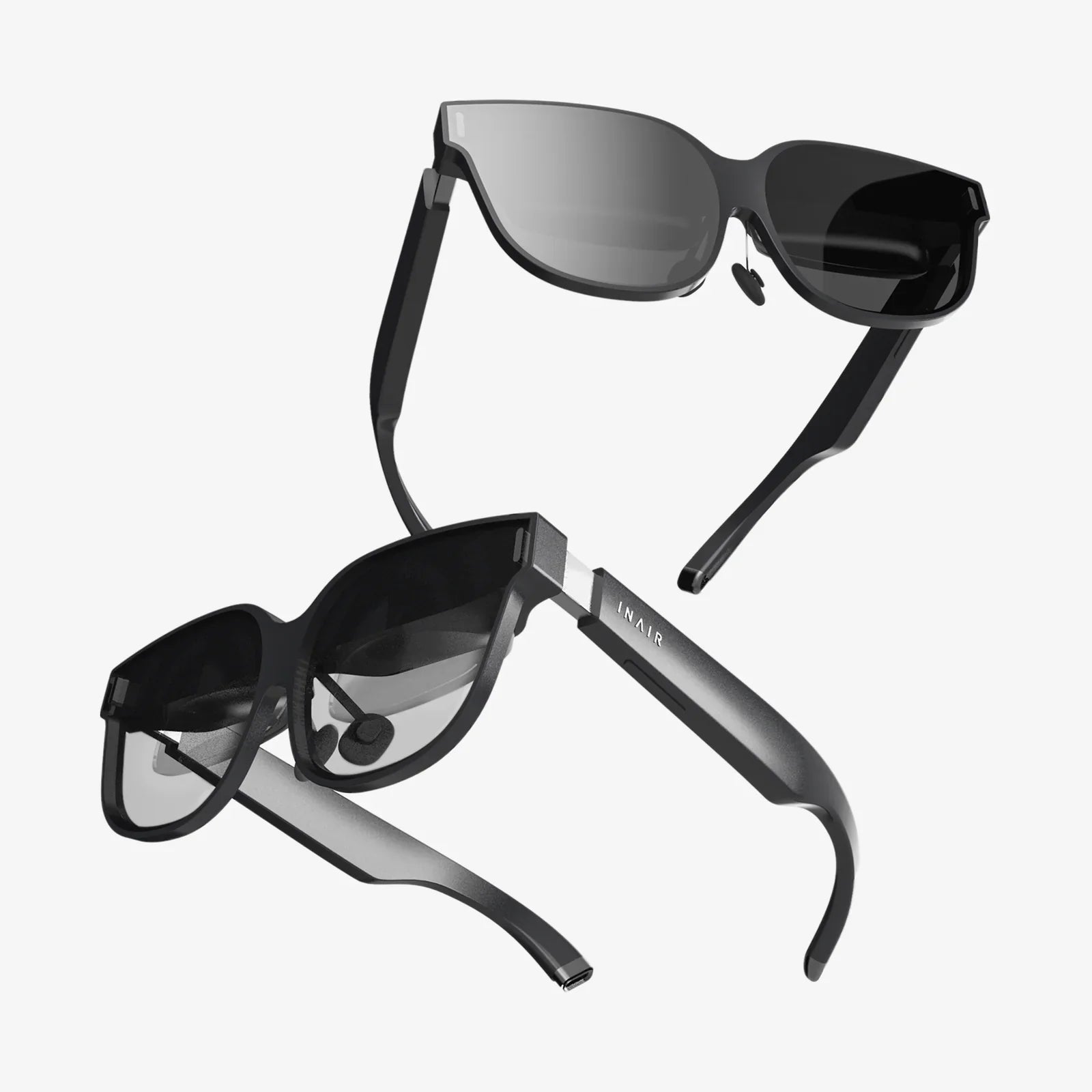
Imagine a world where information flows seamlessly into your field of vision, where language barriers dissolve before your eyes, and where the digital and physical universes merge into a single, enhanced reality. This isn't a scene from a science fiction blockbuster; it's the imminent future being built today in research labs and tech workshops around the globe. The race to perfect intelligent eyewear is heating up, promising to fundamentally alter how we perceive and interact with the world around us. The next major computing platform might not be in your pocket or on your desk, but perched right on your nose.
The Evolution of a Vision: From Concept to Consumer Reality
The dream of augmented vision has captivated inventors for decades. Early prototypes were often bulky, expensive, and limited to industrial or military applications, requiring powerful external computers and offering a narrow field of view. They were impressive proofs of concept but far from practical for everyday use. The turning point came with the miniaturization of core technologies. Advances in micro-displays, such as LED and LCoS, and later the development of waveguide optics, allowed digital images to be projected directly into the user's eye without obstructing their natural vision. Simultaneously, the exponential growth in processing power, coupled with the rise of sophisticated machine learning algorithms, meant that complex computations could be handled by smaller, more efficient chipsets. This convergence of optics, processing, and artificial intelligence has finally brought AI glasses from the realm of fantasy to the cusp of mainstream adoption.
Seeing the World Through an AI Lens: Core Functionalities
So, what exactly can a modern pair of AI glasses do? The capabilities are as diverse as they are powerful, moving far beyond simple notification displays.
Real-Time Translation and Transcription
One of the most immediately impactful features is real-time language translation. Imagine walking through a foreign airport and seeing signs, menus, and conversations instantly translated into your native language, overlaid directly onto your visual field. Advanced natural language processing models embedded within the glasses can listen to a conversation and provide subtitles or audio translations, effectively breaking down communication barriers in real-time. This extends to live transcription of meetings or lectures, providing a constant, searchable stream of text for everything you hear.
Advanced Computer Vision and Object Recognition
Powered by sophisticated computer vision algorithms, AI glasses can identify and provide information on countless objects. A user can look at a complex piece of machinery and see step-by-step repair instructions floating beside it. A gardener can point their gaze at a plant and receive instant identification and care tips. In a supermarket, a glance at a product could reveal its nutritional information, allergens, and even ethical sourcing details. This contextual, visual search powered by AI turns the entire world into an interactive database.
Augmented Reality Navigation and Information Overlays
Forget looking down at a phone map. With AI glasses, navigation arrows and directions can be painted onto the sidewalk itself, guiding you turn-by-turn through an unfamiliar city. Landmarks can be tagged with historical facts, and restaurants can have their reviews and ratings visible as you walk past. This seamless overlay of digital information onto the physical world creates a rich, contextual layer of understanding that enhances every journey.
Accessibility and Assistive Features
Perhaps the most profound application is in the field of accessibility. For individuals with visual impairments, AI glasses can describe scenes, read text aloud from books or documents, identify currency, and even recognize faces and facial expressions, providing a new level of independence. For those with hearing difficulties, speech can be converted to real-time captions, making group conversations significantly more accessible. This technology has the potential to be genuinely life-changing.
Under the Hood: The Technology Powering Intelligent Vision
The magic of AI glasses is enabled by a sophisticated symphony of hardware and software components working in perfect harmony.
- Optics and Displays: Modern systems use micro-OLED displays for vibrant colors and deep blacks, paired with waveguide or holographic optical elements to bend light and project the image onto the retina. This creates a bright, clear digital overlay that appears to exist in the real world.
- Sensors: A suite of sensors is crucial for understanding the environment. This typically includes high-resolution cameras for computer vision, depth sensors (like LiDAR or time-of-flight sensors) for mapping 3D space, inertial measurement units (IMUs) for tracking head movement, and microphones for audio input.
- Processing: A dedicated AI accelerator or neural processing unit (NPU) is the brain of the operation. This specialized chip is designed to efficiently run the massive machine learning models required for tasks like object detection and natural language understanding without draining the battery.
- Connectivity: While some processing is done on-device for speed and privacy, many complex tasks are offloaded to more powerful cloud servers via high-speed 5G or Wi-Fi connections, with results beamed back to the glasses almost instantly.
- Battery Technology: All-day battery life remains a significant challenge. Innovations in low-power components and efficient power management are critical, often supplemented by a compact external battery pack that can be stored in a pocket.
Navigating the Hurdles: Challenges on the Path to Adoption
Despite the exciting potential, the path to ubiquitous AI glasses is fraught with significant challenges that developers must overcome.
The Privacy Paradox
This is arguably the single biggest societal hurdle. Glasses with always-on cameras and microphones understandably raise profound privacy concerns. The potential for unauthorized recording, facial recognition, and constant environmental data collection is a legitimate fear. Manufacturers will need to implement clear, physical privacy indicators—like a guaranteed bright LED that activates with recording—and robust, transparent data handling policies. Building trust will be essential, requiring a cultural shift as much as a technological one.
Design and Social Acceptance
For people to wear them all day, AI glasses must first and foremost be stylish, comfortable, and lightweight. The infamous failure of early smart glasses was due in no small part to a clunky design that screamed "tech geek" rather than "fashion accessory." The goal is to create devices that people want to wear, indistinguishable from traditional eyewear. Achieving this while packing in advanced sensors and batteries is a monumental feat of engineering and design.
Battery Life and Performance
Running powerful AI models is computationally intensive and drains battery life quickly. The ideal pair of glasses must last a full waking day on a single charge to be practical. This requires a delicate balance between performance and power efficiency, pushing the boundaries of battery chemistry and chip design.
Developing a Killer App
For any new platform to succeed, it needs a "killer app"—a use case so compelling that it drives mass adoption. For smartphones, it was the combination of the web, email, and later, the app store. For AI glasses, it could be seamless real-time translation, hyper-contextual information, or a revolutionary new form of social interaction. Identifying and perfecting this core experience is the key to moving beyond a niche product.
The Future in Focus: What's Next for AI Eyewear?
The current generation of AI glasses is just the beginning. Looking ahead, several trends are poised to define the next chapter.
We are moving towards increasingly autonomous devices that rely less on smartphones and more on their own integrated capabilities. AI models will continue to shrink and become more efficient, enabling more complex on-device processing, which enhances speed and privacy. We will also see the rise of contextual and predictive intelligence, where the glasses learn from user behavior and environment to proactively offer relevant information before it's even requested. Furthermore, the development of more advanced neural interfaces could eventually lead to control mechanisms based on subtle eye movements or even neural signals, making interaction completely seamless and hands-free.
From healthcare and engineering to education and entertainment, the potential applications are boundless. Surgeons could access vital patient data and imaging without looking away from the operating table. Engineers could collaborate with remote experts who see their view and annotate the real world in real-time. The very nature of work and social connection is set for a dramatic transformation.
The revolution in vision is not a distant promise; it's unfolding right before our eyes. The convergence of artificial intelligence, advanced optics, and miniaturized computing is creating a new layer of reality, one that is interactive, informative, and intelligent. While questions of privacy, design, and utility remain, the trajectory is clear. The next time you put on a pair of glasses, they might not just help you see the world more clearly—they might help you understand it.
Share:
AI Powered Glasses: The Invisible Revolution Reshaping Human Experience
Augmented Reality Statistics: The Data Behind the Digital Revolution Reshaping Our World