


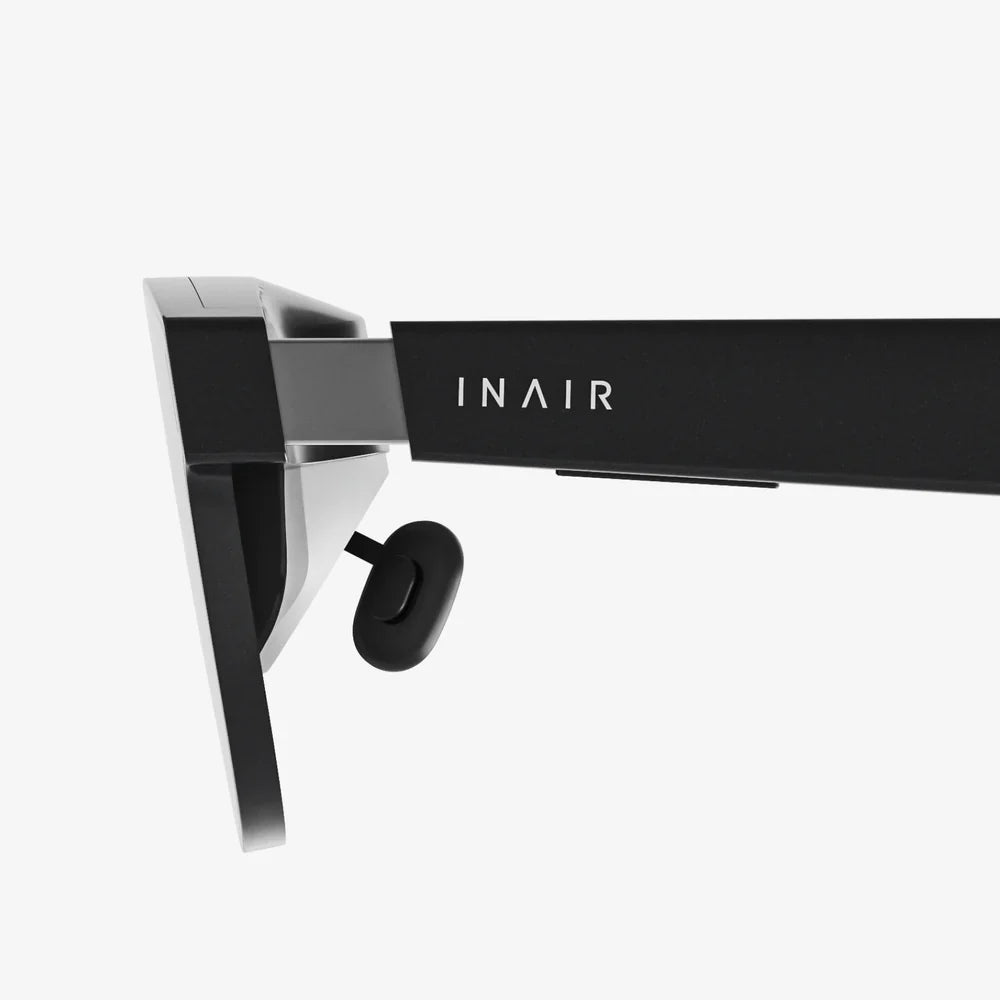
Imagine a world where information flows seamlessly into your field of vision, where language barriers dissolve before your eyes, and where the digital and physical realms are no longer separate but intertwined. This is not a distant science fiction fantasy; it is the rapidly emerging reality powered by artificial intelligence integrated directly into our eyewear. The potential of this technology stretches far beyond a simple heads-up display, promising to fundamentally alter how we interact with information, our environment, and each other. The journey into this augmented future is already underway, and it’s being viewed through a new lens.
Beyond the Screen: The Core Technology Powering AI Eyewear
At its heart, AI eyewear is a symphony of miniaturized technology working in concert. Unlike traditional wearable devices that require users to look down at a screen, this technology projects information directly into the user's line of sight. This is achieved through micro-displays and advanced optical systems, often using waveguides or holographic elements to overlay digital graphics onto the real world. This augmented reality (AR) overlay is the canvas upon which the AI paints its most useful applications.
The true intelligence stems from a combination of onboard sensors and powerful, often cloud-connected, AI algorithms. A typical pair is equipped with high-resolution cameras, microphones, inertial measurement units (IMUs) for tracking movement, and sometimes depth sensors or LiDAR. These components act as the eyes and ears of the device, constantly feeding data about the user's environment. The onboard AI processor, or a connected smartphone, then acts as the brain, interpreting this data in real-time. It performs complex tasks like object recognition, spatial mapping, speech-to-text conversion, and natural language processing. This seamless integration of sensing, computation, and display is what transforms simple glasses into a powerful contextual computer.
Revolutionizing Navigation and Spatial Awareness
One of the most immediate and impactful uses of AI glasses is in the realm of navigation. Gone are the days of clumsily holding up a phone, trying to follow a blue dot on a map. With AI glasses, directions are superimposed onto the real world. A virtual path can be drawn onto the sidewalk in front of you, arrows can appear floating above the correct turn, and points of interest can be highlighted as you glance down a street. This allows users to navigate complex urban environments or large indoor spaces like airports and museums while keeping their heads up and hands free, significantly enhancing both convenience and safety.
This spatial intelligence extends beyond simple turn-by-turn directions. For professionals, it can mean visualizing complex data in situ. An engineer walking through a construction site could see structural schematics overlaid on the beams and conduits. A facilities manager could see the maintenance history of a piece of equipment simply by looking at it. The glasses understand the geometry of the space, allowing digital information to be pinned to physical locations, creating a persistent layer of knowledge about the world.
Shattering Language Barriers in Real-Time
Perhaps one of the most profound social applications of this technology is its ability to break down language barriers. Imagine traveling to a foreign country and being able to read menus, street signs, and documents instantly. The AI glasses use their camera to capture text, the onboard AI to translate it, and the display to project the translation directly over the original words. This seamless process, known as augmented reality translation, effectively allows the user to see the world in their native language.
The innovation goes beyond text. With advanced speech recognition and synthesis, the glasses can also facilitate real-time conversational translation. As someone speaks to you in another language, their words can be transcribed and translated into subtitles in your field of view. You can then respond in your own language, and the glasses can speak your translated response aloud or display it for the other person to read. This technology has the potential to revolutionize global business, travel, and diplomacy, fostering understanding and connection on an unprecedented scale.
Transforming Accessibility and Empowering Users
The assistive capabilities of AI glasses represent a monumental leap forward for accessibility. For individuals with visual impairments, the technology can act as a powerful visual prosthesis. By using AI to describe the world audibly through bone-conduction speakers or a connected earpiece, the glasses can narrate the environment. They can identify currency denominations, recognize faces and describe a person's expression, read aloud text from a book or a computer screen, and even identify obstacles on a path, providing a new level of independence.
Similarly, for those who are hard of hearing, the glasses can provide real-time captioning of conversations. As people speak, their words are converted into text and displayed within the user's vision, making group discussions and lectures far more accessible. This application extends to translating sign language into speech or text, further bridging communication gaps. The contextual awareness of the AI ensures that this assistance is provided discreetly and relevantly, integrating smoothly into the user's daily life without being overly intrusive.
Supercharging Professional and Industrial Workflows
In the professional sphere, AI glasses are moving from experimental gadgets to essential tools, driving efficiency and reducing errors across numerous industries. In healthcare, surgeons can access vital patient statistics, ultrasound images, or surgical guidance without breaking sterility by looking away from the operating field. Medical students can observe procedures with anatomical labels and notes overlaid on their view, enhancing the learning experience.
In field service and manufacturing, technicians can perform complex repairs with digital instruction manuals and annotated diagrams superimposed on the machinery they are fixing. A remote expert can see what the on-site technician sees and draw arrows or highlight components directly in their field of view, enabling expert guidance from anywhere in the world. This "see-what-I-see" remote assistance drastically reduces downtime, minimizes travel costs, and helps resolve issues faster. For logistics and warehouse workers, AI glasses can display picking lists, direct them to the exact bin location, and verify items using barcode or object recognition, streamlining the entire fulfillment process.
Enhancing Learning and Creative Expression
The educational potential of AI glasses is vast. They can transform passive learning into an interactive, immersive experience. A student studying astronomy could look up at the night sky and see constellations outlined and labeled. A history student walking through a historical site could see a digital reconstruction of the ancient buildings overlaid onto the ruins. Chemistry students could manipulate virtual 3D molecules in their hands, and mechanics-in-training could see transparent, labeled overlays of an engine's internal components.
For creators and designers, this technology offers a new medium. Architects and interior designers can walk through a physical space and visualize their 3D models within it, allowing them to assess scale, lighting, and design choices in context. Artists can use the world as their canvas, creating AR sculptures and paintings that exist in a specific location. The glasses become a tool for blending creative vision with physical reality, opening up new frontiers for artistic expression.
Navigating the Ethical and Social Landscape
With such transformative power comes significant responsibility and a host of ethical questions. The always-on cameras and microphones raise immediate and serious concerns about privacy. The potential for surreptitious recording in both public and private spaces necessitates robust ethical frameworks and clear, transparent consent mechanisms. Social norms will need to adapt to a world where someone might be recording or looking up information about you without your knowledge.
Furthermore, the constant flow of information poses a risk of cognitive overload and distraction. The potential for a new digital divide is also evident, where access to this powerful assistive technology could create further inequality. There are also concerns about data security and ownership—who has access to the immense amount of visual and auditory data collected by these devices? Addressing these challenges proactively through thoughtful design, clear regulation, and public discourse is crucial to ensuring that this technology develops in a way that benefits society as a whole, rather than creating new problems.
The true power of AI glasses lies not in replacing reality, but in enhancing it. They offer a glimpse into a future where technology is more intuitive, contextual, and integrated into the fabric of our daily existence. From granting sight to the blind and voice to the isolated, to empowering experts and educating the next generation, the applications are as diverse as they are profound. We are standing at the precipice of a new sensory paradigm, one where our own vision is augmented by artificial intelligence, forever changing what it means to see the world.
Share:
Top 5 AI Glasses: The Future on Your Face is Here
Using VR with Glasses: A Complete Guide to Comfort and Clarity