


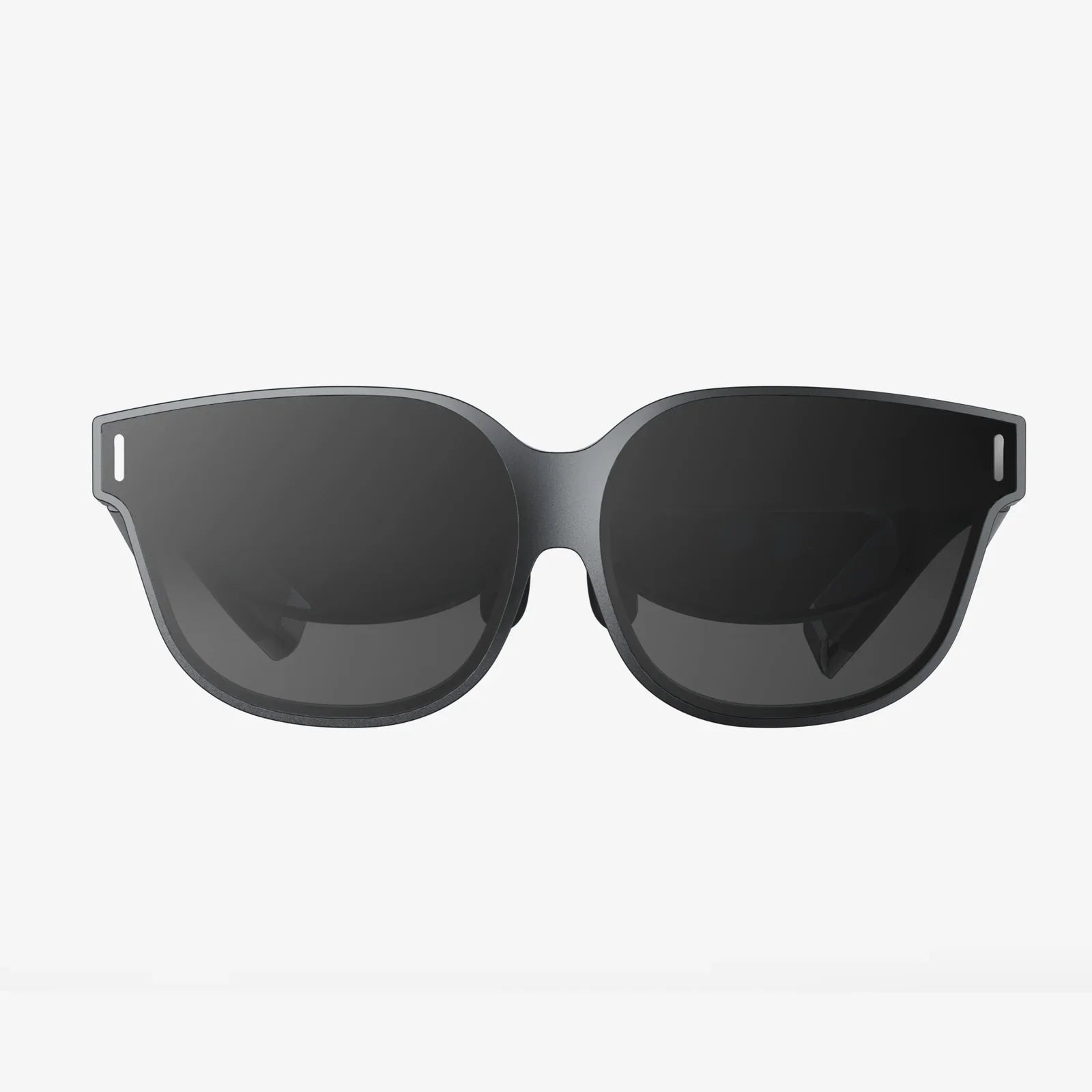
Imagine a day where your most brilliant ideas, spontaneous conversations, and crucial meetings are captured effortlessly, from sunrise to well past sunset, without a single thought about a charging cable. This isn't a glimpse into a distant future; it's the reality made possible by the latest generation of AI recording glasses, engineered not just for smart features, but for unparalleled endurance. The quest for the perfect wearable device often focuses on resolution, field of view, or connectivity, but a silent revolution has been happening in the realm of power management, pushing the boundaries of what's possible in a form factor no larger than your everyday eyewear. For professionals, students, journalists, and creatives, this single feature—extended battery life—transforms a novel gadget from an occasional tool into a seamless, always-available extension of their cognitive process. The true power of continuous, ambient intelligence is unlocked not when the device is charged, but when the anxiety of it dying is completely eliminated.
The Critical Role of Battery Life in Wearable Technology
In the world of wearable technology, and specifically with audio-visual recording devices, battery capacity is far more than a simple specification on a datasheet; it is the foundational pillar that supports every other function. A device can boast the highest resolution sensor or the most sophisticated neural processing unit, but if it cannot remain powered through a full day of use, its utility is severely compromised. For AI recording glasses, this is especially true. Their value proposition is rooted in discretion, convenience, and hands-free operation. Constantly worrying about battery percentage or needing to recharge midway through a lecture, interview, or site visit completely negates these core benefits. The user is forced back into the paradigm of managing a device instead of focusing on their task, thereby defeating the purpose of a seamless wearable.
Long battery life shifts the user experience from reactive to proactive. Instead of deciding when to record based on remaining power, the user can capture moments as they happen, trusting the device to perform. This fosters a more natural and intuitive interaction, allowing the technology to fade into the background. This endurance enables truly all-day use cases: a medical professional on rounds, an architect inspecting a construction site from dawn to dusk, a student moving between lectures and library sessions, or a journalist covering a day-long event. The device becomes a reliable companion, a persistent digital memory, rather than a tool that needs constant babysitting.
How the Longest Battery Life is Achieved: A Symphony of Engineering
Creating AI recording glasses that can last an entire day on a single charge is a complex engineering challenge that requires innovation across multiple disciplines. It is not simply a matter of stuffing a larger battery into the frame; it is a holistic approach to power efficiency.
Advanced Cell Chemistry and Strategic Placement
The most obvious starting point is the battery cell itself. Manufacturers are moving beyond traditional lithium-ion formulations to utilize newer chemistries like lithium-polymer, which can offer higher energy densities. This allows for more power storage within the same confined physical space of the glasses' arms (temples). The placement of these cells is also critical. Weight distribution is paramount for comfort during extended wear. Engineers meticulously design the frames to integrate the battery cells along the length of the temples, balancing the weight to avoid pressure points on the nose or ears. This often involves using the battery's mass as a counterweight to the forward-mounted cameras and processors.
Low-Power Components and Intelligent Processing
Hardware selection is the next critical battleground. Every component, from the image sensor and microphone to the Bluetooth and Wi-Fi chips, is chosen not just for its performance but for its power draw. Ultra-low-power image sensors that can capture high-quality video with minimal energy are essential. Furthermore, the integration of a dedicated AI processing unit (APU or NPU) is a game-changer. These specialized chips are designed to handle complex AI tasks like speech-to-text translation, object recognition, and scene analysis far more efficiently than a general-purpose processor. By offloading this work to a purpose-built, efficient chip, the overall system power consumption is dramatically reduced.
Sophisticated Software and Power Gating
The software and firmware that run on the glasses are just as important as the hardware. Intelligent power management algorithms are employed to put components into low-power sleep states the instant they are not in use. For example, the camera sensors might only be fully powered during active recording, spending the rest of the time in a near-zero-power standby mode. Similarly, the AI processors can be activated on-demand, processing audio or video in bursts rather than running continuously. Features like motion activation—where raising the glasses or a specific gesture wakes the device—ensure power is not wasted when the glasses are sitting on a table. This constant, intelligent micromanagement of every milliwatt is what separates devices with good battery life from those with exceptional endurance.
Beyond Recording: The AI Features Enabled by Enduring Power
With the power anxiety removed, the full suite of AI-driven features can truly shine, transforming the glasses from a simple recorder into a powerful real-time intelligence platform.
Real-Time Transcription and Translation
One of the most powerful applications is real-time transcription and translation. Imagine attending a conference or meeting conducted in a foreign language and seeing a live transcript or translation directly in your field of view (via a connected app) or hearing it through discreet bone conduction speakers. This requires constant audio processing and powerful AI models, tasks that are incredibly power-intensive. Only with a robust battery can this function be offered for extended periods without crippling the device's lifespan.
Contextual Awareness and Object Recognition
Extended power enables persistent contextual awareness. The AI can continuously, yet efficiently, analyze the environment. For a technician, this could mean recognizing a specific part number and pulling up the relevant schematic. For a traveler, it could mean identifying a landmark and providing historical information. For a professional meeting new clients, it could subtly display talking points based on recognized faces (with appropriate privacy safeguards). These features require the sensors and AI processors to be frequently active, a drain on resources that only a long-lasting battery can sustain.
Intelligent Highlight Reel and Summarization
Rather than manually sifting through hours of footage, the AI can work in the background to identify and tag key moments based on audio cues (e.g., changes in tone, keywords), visual cues (e.g., whiteboards being filled, new slides presented), or even physiological cues like user focus. At the end of the day, the glasses or their paired application can provide an automated summary or highlight reel of the most important events. This background processing is a continuous task that benefits immensely from a device that doesn't need to conserve its last 10% of charge.
Practical Implications for the User
The difference between glasses that last four hours and those that last twelve or more is not merely quantitative; it is a qualitative shift in how the technology integrates into daily life.
- Uninterrupted Workflows: A researcher can conduct back-to-back interviews without a break to charge. A filmmaker can scout locations from morning to night. The flow of work is never interrupted by a low-battery warning.
- Reduced Device Management: The mental load of remembering to charge yet another device is lifted. For many, a single overnight charge is all that's needed, mirroring the simple routine of charging a smartphone.
- Enhanced Reliability: In critical situations where every moment counts, the fear of the device failing is eliminated. The user has confidence that their tool will perform when needed.
- Travel and Mobility: For those constantly on the move, access to power outlets can be unpredictable. Long battery life provides freedom and flexibility, reducing the need to carry bulky power banks or hunt for charging stations in airports, trains, or remote sites.
The Future is Long-Lasting and Unobtrusive
The trajectory of this technology points toward even greater integration and efficiency. We are moving toward a future where the battery life of such wearables is measured not in hours, but in days or weeks, achieved through advancements in solid-state battery technology, ultra-low-power displays for augmented reality, and even more efficient edge-computing AI chips. Solar cell integration into frames and kinetic energy harvesting from movement are also being explored as methods to provide trickle charges, further extending operational time. The goal is complete ambient computing—intelligence that is always available yet never a burden.
The evolution of AI recording glasses is a testament to the principle that the most impactful technology is often the one you don't have to think about. It works silently, efficiently, and reliably in the background, empowering you to be more present, more productive, and more creative. While features like video quality and audio clarity are the showpieces, it is the unglamorous, relentless pursuit of longer battery life that truly unlocks their transformative potential. It is the key that turns a pair of smart glasses from a fascinating gadget into an indispensable personal assistant, ready to capture your world from the first coffee to the last thought before sleep.
Share:
3D to 2D Perspective Projection: The Digital Alchemy of Seeing
Full Stream Wireless: The Invisible Revolution Reshaping Our Digital Lives