


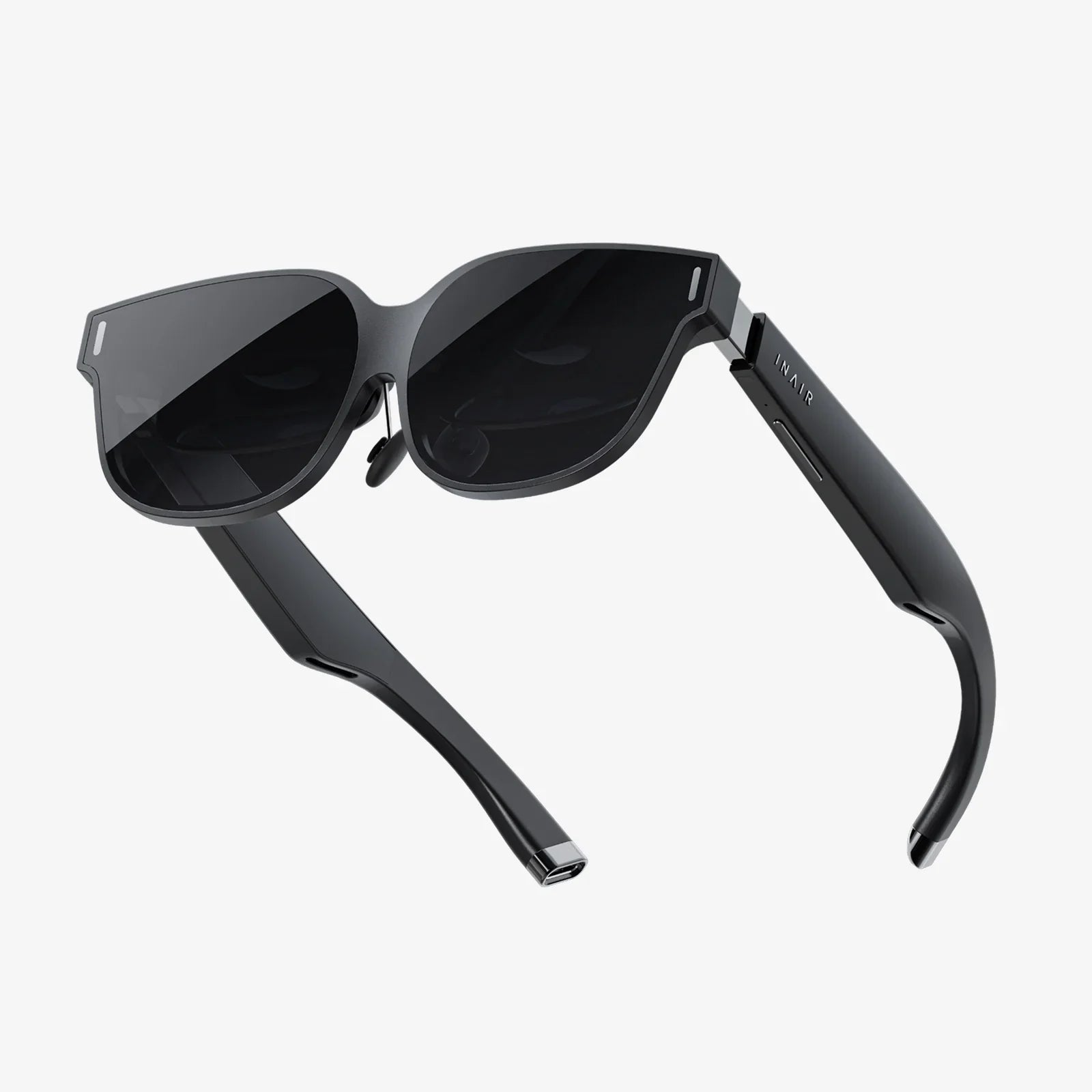
Imagine a world where information doesn't live on a screen you hold in your hand, but floats effortlessly in the space around you. Where your digital assistant isn't a voice from a speaker but a persistent, intelligent layer over your perception of reality, capable of not only answering questions but also altering what you see and hear. This is not a distant sci-fi fantasy; it is the imminent future being forged at the convergence of two of the most powerful technological trends of our time: artificial intelligence and virtual reality. The fusion of these technologies into a single, wearable form factor—AI smart glasses with VR integration—promises to be the most personal and profound computing revolution yet, fundamentally reshaping how we work, learn, connect, and experience the world itself.
The Architectural Symphony: How the Technology Converges
At its core, this new class of device is an architectural marvel, a symphony of advanced hardware and sophisticated software working in concert. Understanding its components is key to appreciating its potential.
The Eyes and Ears: Sensors and Cameras
These glasses are equipped with a sophisticated array of sensors that act as their eyes and ears. High-resolution cameras continuously capture the user's environment, while depth sensors (like LiDAR or time-of-flight sensors) map the world in three dimensions, understanding the geometry and distance of objects. Microphones listen to ambient sound and user commands, while inertial measurement units (IMUs)—including accelerometers and gyroscopes—track the precise movement and orientation of the user's head. This constant, multimodal data stream is the raw material upon which the entire system operates.
The Brain: On-Device AI and Neural Processing
The raw sensor data is meaningless without interpretation. This is where the artificial intelligence comes in. A dedicated neural processing unit (NPU) within the glasses performs real-time AI inference directly on the device. This on-device processing is crucial for several reasons: it minimizes latency (preventing the disorienting lag between your head movement and the visual response), preserves battery life by not constantly streaming data to the cloud, and enhances user privacy by keeping sensitive visual and auditory data local.
This AI brain is constantly running powerful algorithms: Computer Vision (CV) to identify objects, people, text, and gestures; Simultaneous Localization and Mapping (SLAM) to understand and remember the user's position within a space; and Natural Language Processing (NLP) to parse voice commands and conversations. It can overlay helpful labels on a machine part you're trying to repair, translate a street sign in real-time, or identify a plant species during a walk in the park.
The Canvas: Advanced Display Systems
Interpreting the world is only half the battle; the device must also be able to change the user's perception of it. This is where VR integration separates these glasses from their simpler augmented reality (AR) predecessors. Using either waveguide technology, which projects light onto transparent lenses, or more immersive micro-OLED displays that can switch between transparent and opaque modes, these glasses can offer a spectrum of experiences.
On one end is pure AR: digital holograms anchored perfectly to the real world. On the other end is full VR: the ability to occlude the physical world entirely and transport the user to a completely digital environment. The true magic of "integration" is the seamless blending of these states—a virtual meeting room that uses passthrough video to place your physical desk and keyboard into the virtual space, or a game that transforms your living room into a fantasy landscape while still allowing you to see your sofa to sit down.
Beyond Novelty: Transformative Applications
The power of this technology is not in the specs, but in its applications. It promises to dissolve the barriers between tasks and contexts, creating a fluidity of experience previously impossible.
Revolutionizing Professional Fields
In enterprise and specialized professions, the impact will be immediate and profound. A surgeon could see a patient's vital stats and a 3D model of their anatomy superimposed directly over the operating field, guided by an AI that highlights critical structures. An engineer could stand before a complex engine and see animated repair instructions, with parts visually highlighted step-by-step. An architect could walk through a full-scale, holographic model of a building not yet built, making changes in real-time with voice commands. This moves information from manuals and screens directly into the context of action, drastically reducing error and increasing efficiency.
The Future of Social Connection and Remote Work
Video calls are a poor facsimile of presence. AI smart glasses with VR integration aim to solve this. Imagine a remote meeting where digital avatars of your colleagues, driven by eye-tracking and facial expression capture, sit around your physical table, or where you collaborate on a 3D holographic model as if you were in the same room. This technology could make geography irrelevant, creating a sense of shared presence that fosters deeper collaboration and connection than a grid of video feeds ever could. It promises to be the ultimate tool for the distributed workforce, blending the physical comfort of one's home with the social dynamics of a shared office.
A New Paradigm for Learning and Training
Education will transition from passive observation to active immersion. Instead of reading about ancient Rome, history students could walk through a digitally reconstructed Forum, with an AI guide narrating its history. Medical students could practice complex procedures on hyper-realistic virtual patients without risk. This experiential learning, guided by an intelligent assistant, caters to different learning styles and creates indelible memories, making knowledge stickier and more engaging.
Redefining Entertainment and Gaming
Entertainment will escape the television and colonize our living spaces. A horror game could use the layout of your own home to create a uniquely terrifying experience. A film could be experienced not on a rectangle but as a 360-degree narrative unfolding around you. Live sports events could place you in a virtual courtside seat or even overlay player stats and visualizations onto your view of the actual game on your TV. The line between audience and participant will blur forever.
The Double-Edged Sword: Ethical and Societal Challenges
Such a powerful technology does not arrive without significant risks and challenges. The very features that make it transformative also make it potentially disruptive to societal norms and personal privacy.
The Privacy Paradox
A device that sees what you see and hears what you hear is the ultimate surveillance tool. The privacy implications are staggering. Continuous environmental recording raises critical questions: Who owns the data captured by your glasses? How is it stored and used? Could it be subpoenaed as evidence? Could someone else be recording you without your knowledge in a public space? The potential for misuse by corporations, governments, and malicious actors is immense, demanding new legal frameworks and robust, transparent data governance models that prioritize user consent and anonymity.
The Reality Divide and Social Etiquette
As these devices become widespread, we risk creating a new digital divide—not just in who can afford them, but in how we experience shared reality. If one person in a conversation is seeing an entirely different augmented layer, are we truly sharing the same moment? New social etiquette will be required. When is it appropriate to be immersed? Will it be considered rude to wear glasses that are recording during a private conversation? Navigating these new norms will be a complex societal challenge.
Psychological and Physical Health Impacts
The long-term effects of persistently overlaying digital information onto our visual field are unknown. Could it lead to increased anxiety, attention deficits, or a diminished ability to be present in the un-augmented world? There are also physical concerns: eye strain from focusing on stereoscopic 3D imagery, potential effects of long-term exposure to display light, and the risk of accidents if immersion leads to a lack of awareness of physical obstacles. These potential health impacts require rigorous, independent long-term study.
The Road Ahead: From Prototype to Paradigm
The journey to perfecting and adopting this technology is just beginning. Several hurdles remain before they can become a mainstream consumer product.
Overcoming Technical Hurdles
Current prototypes often struggle with battery life, processing power, and form factor. The ideal device needs to be lightweight, comfortable to wear all day, and have the battery endurance to match. The visual fidelity must be high enough to make text legible and virtual objects indistinguishable from real ones, all without causing nausea or eye fatigue. Solving these challenges requires breakthroughs in battery technology, chip miniaturization, and display efficiency.
The Imperative of Intuitive Design
The user interface cannot be a clunky menu system. Interaction must be seamless and intuitive, primarily through voice commands, gesture control (like subtle finger movements), and ultimately, brain-computer interfaces. The AI must be anticipatory and context-aware, providing information before it's asked for, but without becoming annoying or intrusive. It must feel less like a tool and more like a natural extension of our own cognition.
Building the Ecosystem
Hardware is nothing without software. A thriving ecosystem of developers and creators is essential to build the applications that will make these glasses indispensable. This requires robust and accessible software development kits (SDKs), powerful creation tools, and a viable business model for developers. The success of the platform will hinge on this digital economy.
The era of looking at a digital world is ending. We are entering an age of living in a blended reality, where intelligence is ambient and context is everything. AI smart glasses with VR integration are the key to this new frontier, offering a glimpse of a future where our digital and physical lives are not competing for our attention, but are finally woven into a single, seamless tapestry of human experience. The question is no longer if this future will arrive, but how quickly we can navigate the profound challenges and opportunities it presents to build a world that is not only more connected and efficient, but also more human.
Share:
Everyone Making Smart Glasses: The Inevitable Fusion of Human and Machine
Best Practices for Attending Virtual Meetings: A Comprehensive Guide to Professionalism and Productivity