


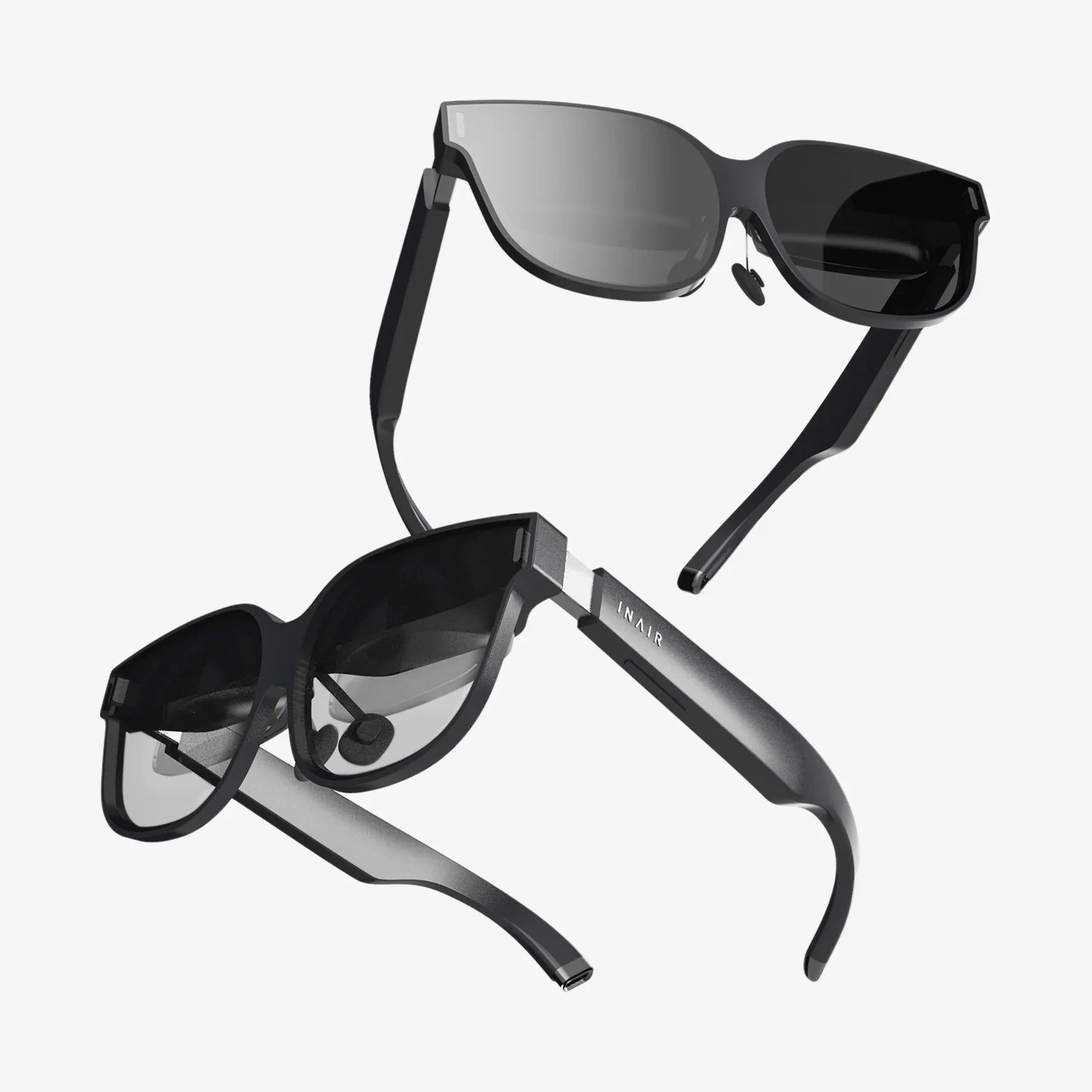
Imagine a world where your watch doesn't just tell time but tells you you're about to get sick, where your ring knows you're stressed before you do, and where your glasses translate foreign street signs in real-time. This isn't science fiction; it's the present reality, powered by an explosive category of technology rapidly integrating artificial intelligence into the very fabric of our daily lives. The burgeoning AI wearables list is growing at a staggering pace, moving far beyond simple step counting into the realm of predictive health, contextual awareness, and seamless human-computer interaction. This comprehensive guide will navigate the vast and exciting landscape of intelligent wearables, exploring the categories defining the market, the groundbreaking capabilities they offer, and the profound implications they hold for our future.
The Evolution of Wearables: From Passive Tracking to Active Intelligence
The journey to today's sophisticated AI wearables began with simple, data-logging devices. Early pedometers and basic heart rate monitors were novelties, collecting information but offering little in the way of actionable insight. They were digital logbooks, passive recorders of our physical state.
The paradigm shift occurred with the infusion of artificial intelligence and machine learning. Suddenly, these devices transformed from passive collectors into active analysts. AI algorithms could sift through mountains of biometric data—heart rate variability, skin temperature, sleep patterns, activity levels—to identify subtle correlations and patterns invisible to the human eye. This moved the value proposition from what you did to why it matters and, most importantly, what's likely to happen next.
This evolution is powered by several key technological advancements. The miniaturization of sensors has allowed for more robust data collection in smaller form factors. Improvements in battery technology and power efficiency have enabled these data-hungry devices to run for longer periods. Crucially, the development of tiny, ultra-low-power microprocessors capable of running complex AI models directly on the device—a concept known as edge computing—has unlocked real-time analysis without constant reliance on cloud servers, enhancing both speed and privacy.
Decoding the Categories: A Breakdown of the Modern AI Wearables List
The term "wearable" now encompasses a diverse ecosystem of devices, each with a unique function. An accurate AI wearables list must be organized by both form factor and primary intelligence.
Wrist-Worn Powerhouses: Smartwatches and Advanced Bands
These remain the most popular and recognizable entries on any AI wearables list. They have evolved into health and wellness hubs on your wrist.
- Advanced Health Monitoring: AI algorithms now provide detailed sleep stage analysis, stress tracking through HRV, and even warnings for potential atrial fibrillation (AFib) or irregular heart rhythms.
- Predictive Health Insights: By establishing personalized baselines, these devices can detect anomalies. A elevated resting heart rate coupled with a lower HRV might signal the onset of an illness like a cold or flu, often before symptoms appear.
- Fitness Coaching: AI can tailor workout recommendations in real-time, analyze running form, provide personalized recovery advice, and even predict race finish times based on current performance.
Discreet Intelligence: Smart Rings
For those seeking continuous monitoring without a screen on their wrist, smart rings offer a minimalist alternative. Their small size belies their powerful capabilities.
- Unobtrusive Sleep Tracking: Worn on the finger, they are ideal for collecting precise sleep data without the bulk of a watch.
- Continuous Vital Sign Monitoring: They track core metrics like body temperature, heart rate, and respiratory rate 24/7, creating a comprehensive picture of one's health baseline.
- Gesture and Control: Some are experimenting with using AI to interpret hand gestures, allowing for subtle control of other connected devices.
Audio and Augmentation: Smart Hearables and Glasses
This category moves beyond health into augmentation, enhancing our senses and interaction with the world.
- Intelligent Noise Control: Earbuds use AI to dynamically filter out unwanted noise while amplifying important sounds like conversations or traffic, adapting to your environment in real-time.
- Real-Time Translation: Perhaps one of the most futuristic applications, some hearables can translate spoken foreign languages directly into your ear almost instantaneously.
- Augmented Reality (AR) Glasses: While still emerging, AI-powered glasses overlay digital information onto the physical world. This can range from navigation arrows on the sidewalk to contextual information about a landmark or real-time transcription of a conversation for the hearing impaired.
Next-Generation Apparel: Smart Clothing and Patches
Here, the device disappears entirely, woven into the fabric of what we wear.
- Biometric Shirts and Garments: These contain integrated sensors that can track muscle activity, breathing efficiency, and overall workout intensity with greater accuracy than a wrist-worn device because they are closer to the core of the body.
- Medical-Grade Patches: Used in both clinical and remote patient monitoring settings, these disposable or reusable patches can continuously stream ECG data, monitor glucose levels, or track other vital signs, sending alerts to patients and doctors if concerning patterns are detected.
The Engine Room: How AI Actually Works in These Devices
The magic phrase "powered by AI" can seem abstract. In practice, it involves a sophisticated interplay of hardware and software.
At the most basic level, sensors generate raw data streams—an electrical signal for heart rate, a accelerometer reading for movement, etc. This data is often noisy and imperfect. Machine learning models, trained on vast datasets, are deployed to clean this data, identify the signal amidst the noise, and extract meaningful features.
For example, an optical heart rate sensor on a watch can be confused by vigorous movement. An AI model trained on countless hours of activity data learns to distinguish between the signal of a pulse and the noise of a arm swinging. This is sensor fusion, where AI combines data from multiple sources (e.g., accelerometer, gyroscope, and optical sensor) to generate a more accurate reading than any single sensor could alone.
Furthermore, AI enables personalization. Instead of comparing your heart rate to a generic population average, the device uses algorithms to learn your personal baseline over time. It understands what a normal night of sleep looks like for you, what your heart rate typically is during a lunchtime walk, and what your stress responses feel like. This allows it to detect meaningful deviations that signify a change in your health status.
Beyond the Hype: Critical Considerations and Ethical Implications
As with any transformative technology, the rise of AI wearables comes with a set of complex challenges and questions that users must consider.
Data Privacy and Security
These devices collect the most intimate data possible: information about the inner workings of your body. Where is this data stored? Who owns it? How is it being used? While companies tout anonymization, sophisticated AI can often re-identify individuals from seemingly anonymous data sets. There is also the risk of data breaches, potentially exposing highly sensitive health information. The regulatory landscape, like GDPR in Europe and various state laws in the U.S., is still catching up to these risks.
Medical Accuracy and Regulatory Status
It is crucial to understand that most consumer wearables are classified as general wellness devices, not medical devices. This means they are not intended to diagnose, cure, mitigate, treat, or prevent any disease. Their algorithms are designed for health and wellness motivation, not clinical diagnosis. While a device might alert you to an irregular heart rhythm, it is not a replacement for medical-grade equipment or a doctor's opinion. Users must be aware of this distinction to avoid false alarms or, worse, a false sense of security.
The Psychological Impact
The constant monitoring of one's every biological function can lead to a phenomenon known as "cyberchondria" or heightened health anxiety. Seeing a dip in a sleep score or a spike in stress can itself become a source of stress. Furthermore, an over-reliance on data can cause individuals to ignore their own innate bodily feelings and intuition, outsourcing their sense of well-being to an algorithm.
The Future Horizon: What's Next for AI Wearables?
The current AI wearables list is merely a preview of what is to come. The next decade will see even deeper integration and more powerful applications.
- Multi-Modal Sensing: Future devices will incorporate a wider array of sensors, perhaps using low-power radar to detect subtle breathing patterns or spectroscopy to non-invasively analyze blood composition.
- Proactive and Prescriptive Health: The shift from predictive to prescriptive will be key. Instead of just warning you of an oncoming migraine, a device may suggest a specific intervention—a breathing exercise, a change in lighting, or a reminder to take medication.
- Seamless Human-Computer Interaction: We will move beyond touchscreens and voice commands. Brain-computer interfaces (BCIs), though in early stages, aim to allow control of devices through thought alone. AI will be essential in decoding neural signals.
- True Contextual Awareness: Devices will become true digital assistants that understand not just your body, but your environment and intentions. Your glasses could recognize a person you met last week and discreetly display their name, or your earbuds could dampen sound when it detects you are trying to focus.
The AI wearables list is no longer a niche catalog for tech enthusiasts; it is a map to a new frontier of human experience. These devices are becoming the bridge between our biological selves and the digital world, offering unprecedented insights into our health, enhancing our capabilities, and reshaping how we interact with information. The promise is a future of personalized, proactive, and empowering technology that works silently in the background to improve the foreground of our lives. The question is no longer if you will own a device from this list, but which one will become an indispensable part of your story.
Share:
AI Tools for Meeting Notes: The Ultimate Guide to Unlocking Productivity and Insight
AR AR Project Ideas: From Beginner to Advanced Immersive Creations