


You've seen it in blockbuster movies, heard it in tech keynotes, and maybe even experienced it through your smartphone—but what does the AR abbreviation truly mean, and why is it poised to revolutionize everything from how we shop and learn to how we work and play? This isn't just another tech buzzword; it's a gateway to a new layer of reality, and understanding it is the first step into that future. The journey beyond the screen starts here.
Decoding the AR Abbreviation: More Than Just Two Letters
At its most fundamental level, the AR abbreviation stands for Augmented Reality. This simple two-letter acronym belies a profoundly complex and transformative technology. Unlike its cousin, Virtual Reality (VR), which seeks to replace the user's environment with a completely digital one, AR aims to enhance the real world by superimposing computer-generated perceptual information onto it. This digital overlay can include a vast array of data types: images, text, 3D models, animations, and even auditory cues. The core promise of AR is to serve as a seamless bridge between the digital and physical realms, providing contextually relevant information exactly when and where it is needed.
The Foundational Pillars: How AR Technology Works
The magic of AR doesn't happen by chance; it's the result of a sophisticated interplay of hardware and software components working in concert. To truly grasp the AR abbreviation, one must understand the technological pillars that support it.
Sensing the World: Cameras and Sensors
The eyes and ears of any AR system are its sensors. High-resolution cameras capture the user's surroundings in real-time. But vision alone isn't enough. Advanced sensors, including accelerometers, gyroscopes, and magnetometers, work together to understand the device's precise orientation and movement in space—a concept known as 6DoF (Six Degrees of Freedom). More sophisticated systems employ LiDAR (Light Detection and Ranging) scanners to create a detailed depth map of the environment, allowing digital objects to understand and interact with the physical geometry of a room, occluding behind real-world objects and sitting convincingly on surfaces.
Processing and Perception: The AR Brain
The raw data from the sensors is fed into a processing unit, which performs the critical task of scene understanding. This involves several key processes:
- SLAM (Simultaneous Localization and Mapping): This is the cornerstone technology for most modern AR. SLAM algorithms allow a device to both map an unknown environment and simultaneously track its own location within that map without any prior knowledge. It's what allows a digital dinosaur to stay in one spot on your living room floor as you walk around it.
- Object Recognition: Using machine learning and computer vision, AR systems can be trained to identify specific objects, surfaces, or images. This triggers the placement of relevant AR content, like a 3D model springing to life from a textbook diagram.
- Tracking: Continuous tracking ensures that the digital overlays remain locked in place, adhering to the real world with rock-solid stability, which is essential for a believable experience.
Displaying the Illusion: Projection and Optics
Once the digital content is properly positioned, it must be displayed to the user. This is achieved through various methods:
- Smartphone and Tablet Screens: The most accessible form of AR, using the device's screen as a viewport into the augmented world.
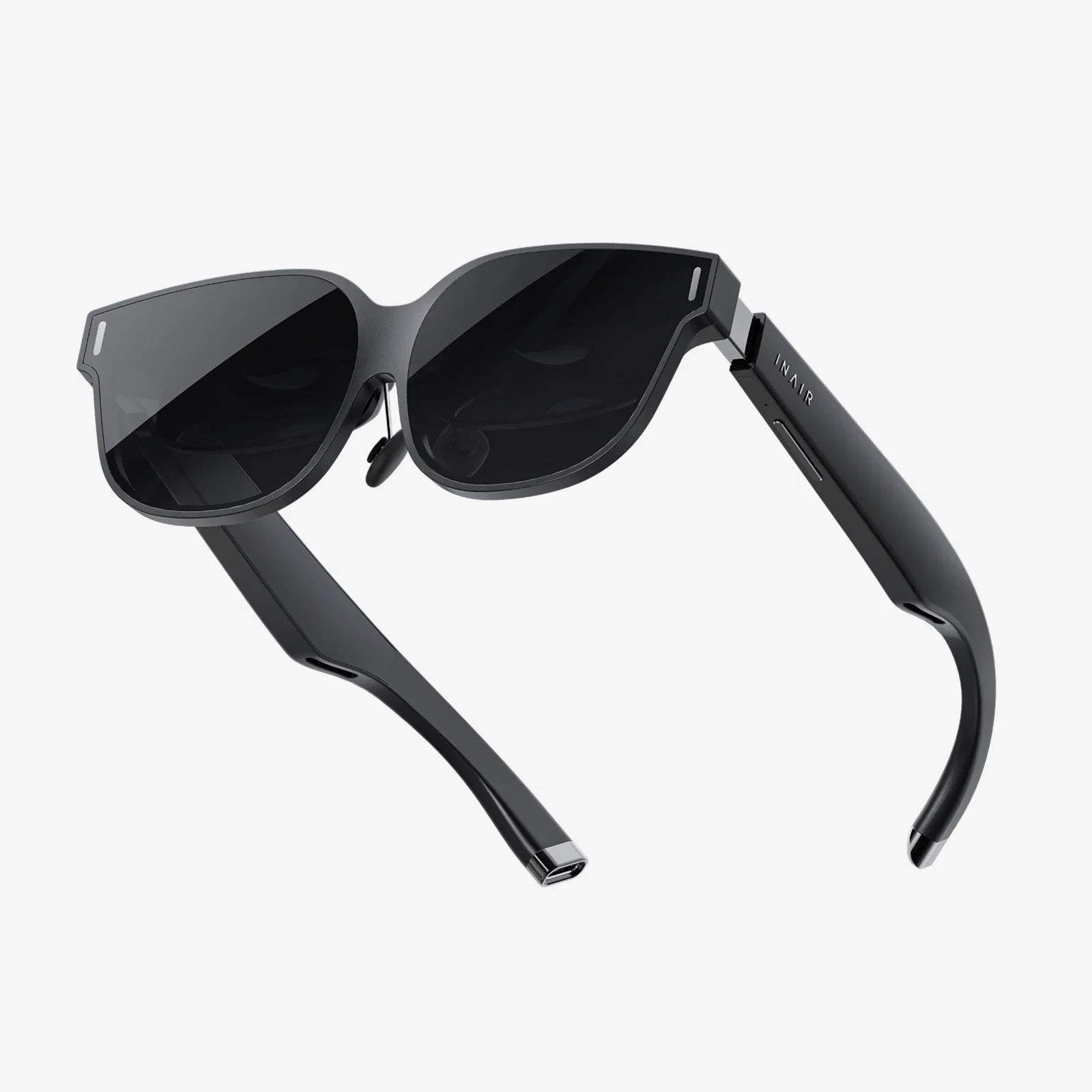
- Smart Glasses and Headsets: These wearable devices use miniature projectors and waveguides or holographic optical elements to beam light directly into the user's eyes, creating the illusion that digital objects exist in the space around them. This offers a hands-free, immersive experience that is considered the future of the technology.
AR in Action: Transformative Applications Across Industries
The power of the AR abbreviation is revealed not in theory, but in its practical, world-changing applications. Nearly every sector of the economy is finding innovative uses for this technology.
Revolutionizing Retail and E-Commerce
AR is solving one of online shopping's biggest problems: the inability to try before you buy. Now, shoppers can use their phone cameras to see how a new sofa would look in their actual living room, accurately scaled to the room's dimensions. They can virtually try on watches, glasses, and makeup, or see how a new shade of paint would transform their walls. This drastically reduces purchase uncertainty and returns while creating an engaging and interactive shopping experience.
Transforming Education and Training
The AR abbreviation is becoming synonymous with immersive learning. Textbooks are evolving into interactive portals where historical figures can give speeches from the page or the human heart can be explored layer by layer, beating in 3D. In corporate and industrial training, AR provides invaluable on-the-job guidance. A technician repairing a complex machine can see animated instructions overlaid directly onto the equipment, highlighting which wire to cut or which bolt to turn. Medical students can practice procedures on virtual patients, and surgeons can have vital patient data, like MRI scans, projected onto their field of view during an operation.
Empowering Industry and Manufacturing
In factories and on construction sites, AR is driving a new era of efficiency and safety. Warehouse workers wearing AR glasses can have the most efficient picking route displayed on their retina, with digital arrows guiding them to the correct shelf. Architects and engineers can walk through full-scale 3D models of their designs before a single brick is laid, identifying potential clashes and problems. assembly line workers receive real-time visual instructions, reducing errors and speeding up complex assembly processes.
Enhancing Navigation and Wayfinding
Forget looking down at a blue dot on a map. The future of navigation is AR. By holding up a smartphone or wearing smart glasses, users can see digital arrows and directions painted onto the sidewalk in front of them, guiding them turn-by-turn through a city. Inside large venues like airports or museums, AR can highlight the quickest path to your gate or the entrance to a specific exhibit, transforming a confusing maze into an intuitive journey.
The AR Landscape: From Marker-Based to Markerless
Not all AR experiences are created equal. The technology has evolved through several distinct stages, each offering different levels of immersion and complexity.
The Beginning: Marker-Based AR
Early AR systems relied on fiducial markers—distinct, predefined patterns (like QR codes or specific images) that the camera must recognize to trigger and anchor the digital content. The experience is entirely dependent on the presence of this marker. While limited in scope, it provided a stable and reliable foundation for the technology's initial development.
The Modern Standard: Markerless AR (SLAM)
This is the technology that unlocked AR's true potential. As discussed, SLAM allows devices to understand and augment the environment without any predefined markers. It can place a virtual pet on your carpet or a new chair in your office simply by understanding the geometry of the space. This is the form of AR that powers most modern mobile apps and is the basis for wearable devices.
The Cutting Edge: Projection-Based and Superimposition-Based AR
Beyond screen-based experiences, more advanced forms are emerging. Projection-based AR uses projectors to beam light directly onto physical surfaces, creating interactive displays that can, for example, turn any tabletop into a touchscreen. Superimposition-based AR replaces the original view of an object with an augmented one, such as using an AR app to see the different color options for a new car model directly on the vehicle itself.
Challenges and The Road Ahead
Despite its rapid advancement, the journey for the AR abbreviation is far from over. Significant hurdles remain before it achieves ubiquitous adoption. The hardware, particularly smart glasses, needs to become lighter, more socially acceptable, and offer all-day battery life. Network capabilities like widespread 5G are crucial for streaming complex AR experiences without latency. Perhaps the most pressing concerns are those of privacy and security, as AR devices with always-on cameras and microphones collecting vast amounts of environmental data raise serious questions about data ownership and user consent. Furthermore, creating a universal standard for the "AR cloud"—a persistent, shared digital layer over the world—is a monumental technical challenge that companies are still grappling with.
The Future is Augmented
Looking forward, the trajectory of the AR abbreviation points toward a world where digital information is seamlessly interwoven with our physical existence. We are moving toward always-available, context-aware computing where your environment becomes the interface. The smartphone will likely cease to be the primary portal, replaced by stylish, lightweight glasses that offer continuous access to an information layer that enhances our perception, memory, and abilities. This technology, often called the Spatial Web or Web 3.0, promises to be as transformative as the original internet, changing the fundamental way we interact with information and with each other.
The AR abbreviation is your key to understanding the next major computing platform. It’s no longer a futuristic fantasy confined to science fiction; it’s a tangible, accelerating technology that is already reshaping industries and beginning to redefine human-computer interaction. The blurring line between our physical reality and the digital universe is the most exciting frontier in technology today, and those who understand the principles behind these two simple letters will be best equipped to navigate, innovate, and thrive in the world that is coming. The question is no longer if AR will become mainstream, but how quickly you will integrate it into your life and work.
Share:
Human Computer Interaction Disadvantages: The Hidden Costs of Our Digital Dependence
Good Digital Products: The Anatomy of Excellence in a Connected World