


Imagine pointing your device at a static, black-and-white diagram in a textbook and watching it burst into life, a intricate, three-dimensional human heart now beating and rotating before your eyes, its chambers and valves labeled and explained in real-time. This is not a scene from a science fiction film; it is the immediate, tangible power of an AR demonstration, a technology that is rapidly dissolving the barrier between the digital and the physical, and it’s poised to change everything.
The Core Technology: How an AR Demonstration Actually Works
At its essence, an AR demonstration is a sophisticated orchestration of hardware and software designed to seamlessly blend computer-generated perceptual information with the user's real-world environment. Unlike its cousin, Virtual Reality (VR), which creates a completely artificial digital experience, AR enhances reality by superimposing data, images, and 3D models onto what we already see.
The Pillars of AR Functionality
The magic of a convincing AR demo rests on three critical technological pillars:
- Sensing: The system must first understand the environment. This is achieved through a combination of cameras, sensors like GPS, accelerometers, and gyroscopes, and increasingly, LiDAR scanners. These components work in concert to map the physical space, track surfaces, and understand depth and scale.
- Processing: The raw sensor data is then processed by sophisticated algorithms. Computer vision, a field of artificial intelligence, is crucial here. It enables the device to recognize objects, track surfaces (a process called SLAM – Simultaneous Localization and Mapping), and understand lighting and perspective. This step is what allows a virtual character to convincingly sit on your real-world coffee table, casting a realistic shadow.
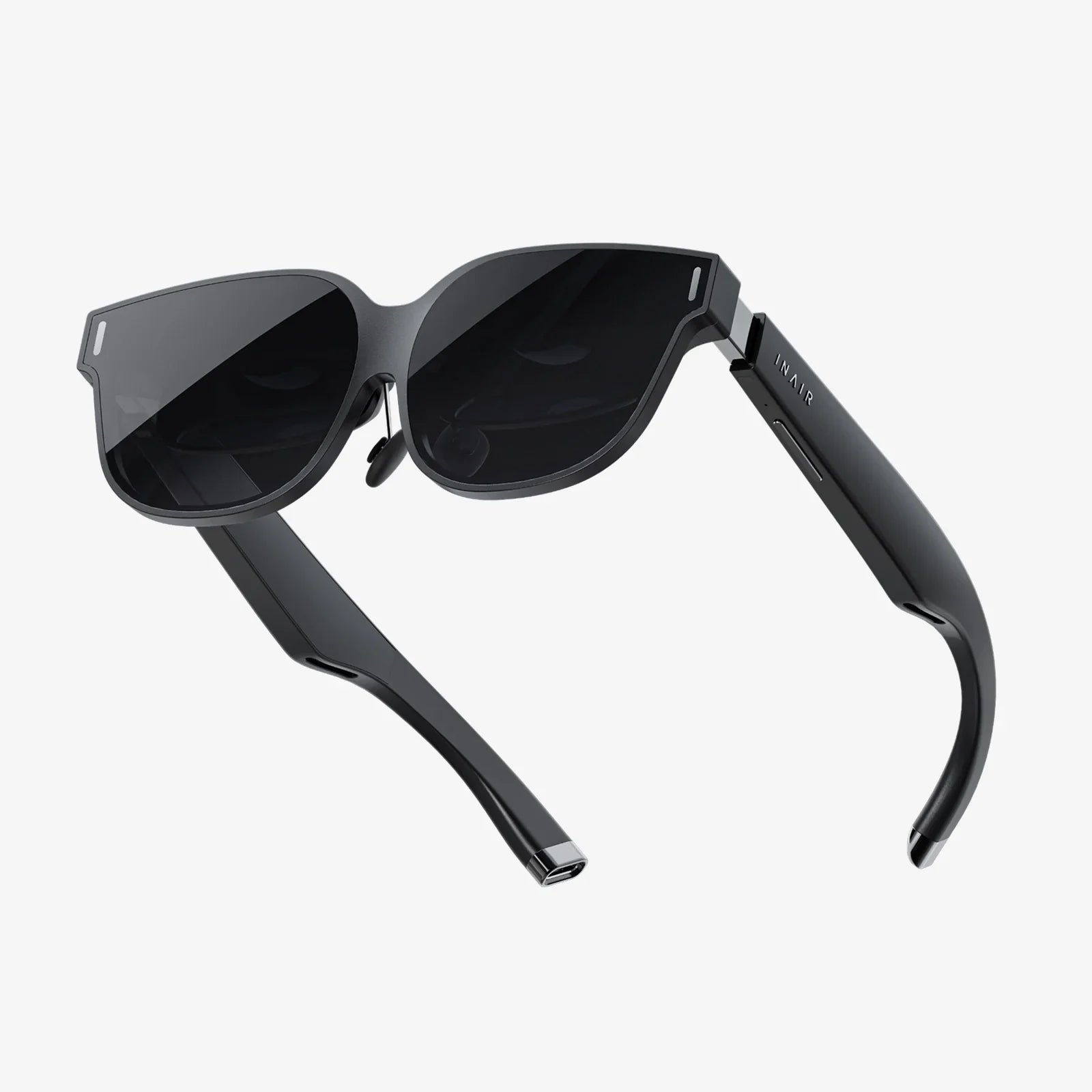
- Display: Finally, the processed digital content is rendered and displayed to the user. This can happen through various means: on the screen of a smartphone or tablet (known as marker-based or markerless AR), through specialized smart glasses that project images directly onto the retina, or via head-up displays (HUDs) in vehicles and aircraft.
Transforming Education and Training: The Interactive Classroom
Perhaps the most profound impact of AR demonstration is in the realm of education and professional training. It moves learning from a passive, two-dimensional activity to an active, immersive, and deeply engaging experience.
Revolutionizing STEM Education
Complex scientific concepts that were once difficult to grasp from textbooks alone become intuitively understandable. Students can dissect a virtual frog without the ethical concerns or logistical challenges, explore the solar system with planets orbiting around them in the classroom, or witness historical events unfold on their desk. This kinesthetic learning approach caters to diverse learning styles and dramatically improves knowledge retention.
Elevating Professional and Medical Training
In high-stakes fields, the value of an AR demonstration is immeasurable. Medical students can practice intricate surgical procedures on hyper-realistic, virtual patients, receiving real-time feedback and guidance without any risk. Mechanics-in-training can see an exploded-view diagram of an engine layered over the physical engine block, identifying parts and following repair instructions step-by-step. This hands-on, mistake-forgiving practice environment is revolutionizing skill acquisition and competency assurance.
Redefining Retail and E-Commerce: The 'Try Before You Buy' Paradigm
The retail sector has been utterly transformed by AR, solving one of online shopping's biggest drawbacks: the inability to physically interact with a product. An AR demonstration bridges this gap with stunning efficacy.
Shoppers can now use their smartphones to see how a new sofa would look in their living room, accurately scaled to their space and available in different fabric options. They can virtually "try on" glasses, makeup, or even see how a new shade of paint would transform their walls. This powerful visualisation tool drastically reduces purchase uncertainty, minimizes returns, and enhances consumer confidence, creating a more satisfying and efficient shopping journey.
Supercharging Industrial Design and Manufacturing
On factory floors and in design studios, AR demonstrations are becoming indispensable tools for prototyping, assembly, maintenance, and collaboration.
Prototyping and Design Review
Instead of investing vast sums of time and money into building physical prototypes, engineers and designers can create and manipulate full-scale 3D models of their products within a real-world context. They can walk around a virtual car chassis, inspect the fit of internal components, and make changes in the digital realm before a single piece of metal is cut. This accelerates the design iteration process and slashes development costs.
Assembly, Maintenance, and Remote Assistance
Technicians wearing AR smart glasses can have digital work instructions, wiring diagrams, or safety information overlaid directly onto the machinery they are repairing. An expert located thousands of miles away can see what the on-site technician sees and annotate their field of view with arrows, circles, and notes to guide them through a complex procedure. This "see-what-I-see" remote assistance drastically reduces downtime, improves first-time fix rates, and allows a single expert to support a global workforce.
Enhancing Navigation and Public Information
AR is beginning to change how we navigate and interact with our cities. Imagine holding up your phone in a dense urban area and seeing directional arrows and distance markers painted onto the sidewalk, guiding you to your destination. Or pointing your camera at a historic building and instantly seeing its history, architectural details, and past inhabitants displayed like a digital plaque. This contextual, location-based layer of information turns the entire world into an interactive, informative interface.
The Future is Augmented: What Lies Ahead
The trajectory of AR demonstration technology points towards even greater integration into our daily lives. The future will likely be dominated by lightweight, socially acceptable smart glasses that will eventually replace smartphones as our primary gateway to digital information. The convergence of AR with 5G connectivity, which offers ultra-low latency and high bandwidth, will enable more complex and shared experiences in real-time. Furthermore, advances in Artificial Intelligence will make AR systems more contextually aware and predictive, anticipating our needs and providing information before we even ask for it.
Navigating the Challenges: Privacy and the Digital Divide
This exciting future is not without its challenges. The pervasive nature of AR, especially with always-on cameras and sensors, raises significant questions about data privacy, security, and digital consent. There is also a risk of a "digital divide," where access to this transformative technology is limited to those who can afford it, potentially exacerbating existing social and economic inequalities. For AR to reach its full potential as a force for good, these ethical and societal considerations must be addressed proactively by developers, policymakers, and society as a whole.
The true power of an AR demonstration lies not in the complexity of its code but in its profound simplicity: it makes the invisible visible and the unimaginable tangible. It is a bridge between abstract data and human understanding, a tool that empowers us to see the world not just as it is, but as it could be. From the student exploring the cosmos to the surgeon perfecting a life-saving technique, this technology is already unlocking human potential in ways we are only beginning to comprehend. The next time you look at the world around you, remember—you’re only seeing half the picture. The rest is waiting to be revealed.
Share:
Best VR Goggles for Movies: Your Ultimate Guide to Cinematic Immersion
Best VR Goggles for Under 100: A Comprehensive Guide to Affordable Immersion