


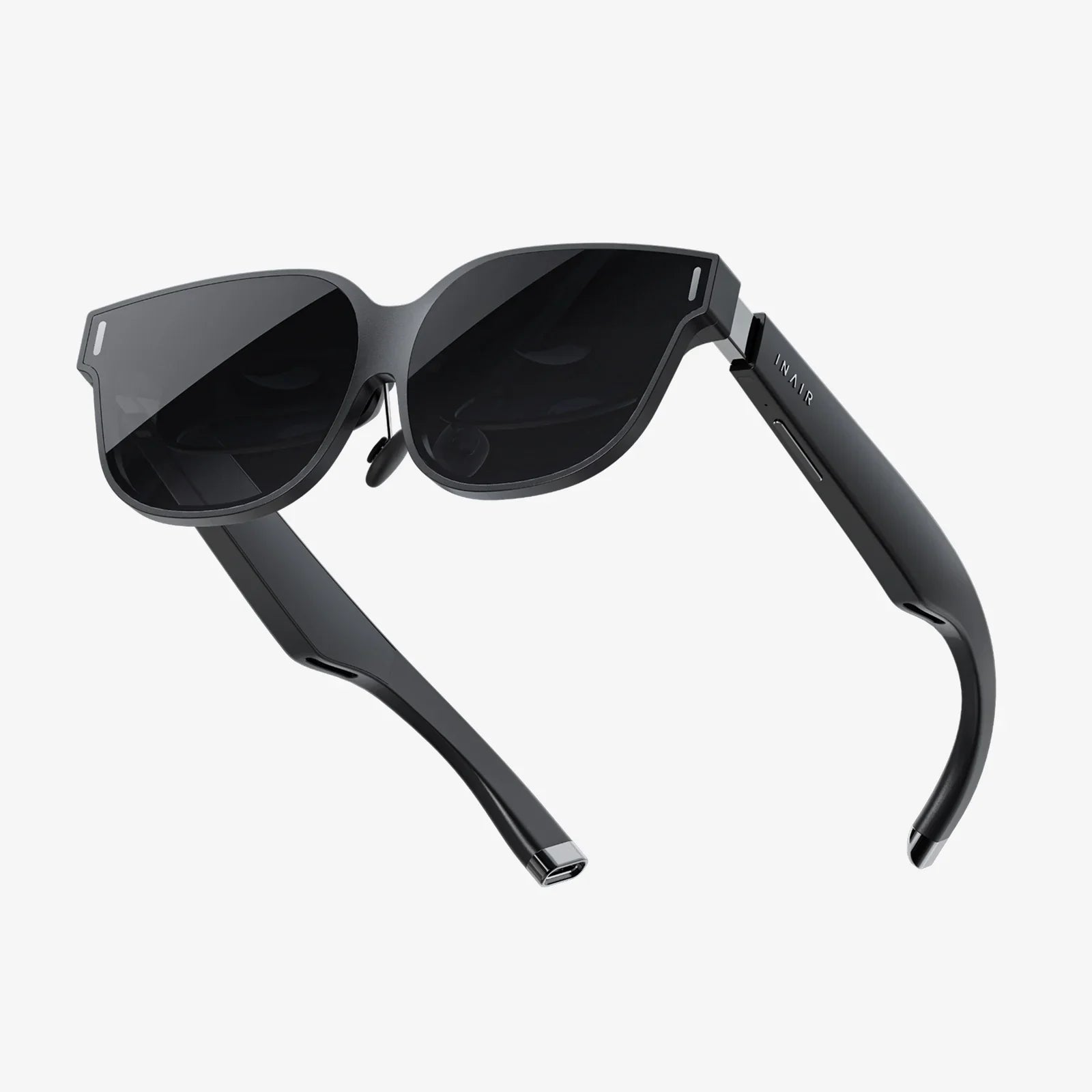
Imagine gliding down the highway, not with your eyes darting between the road, your dashboard, and a mounted navigation device, but with all the information you need seamlessly painted onto the world itself. The next turn in your route is not a tiny arrow on a screen but a vibrant, glowing path superimposed on the asphalt ahead. The speedometer and fuel gauge hover transparently just above the hood of your car. A warning highlights a pedestrian obscured by a parked vehicle long before your naked eye could perceive them. This is not a scene from a science fiction film; it is the imminent future of mobility, a revolution ushered in by the advent of AR Drive technology. This transformative integration of augmented reality into the automotive experience promises to redefine safety, efficiency, and our entire interaction with the journey.
The Core Technology: More Than Just a Heads-Up Display
At its essence, AR Drive refers to the integration of augmented reality technology into vehicles to enhance the driver's perception of reality with a contextual, computer-generated overlay. While often conflated with traditional Heads-Up Displays (HUDs), true AR Drive systems represent a significant evolutionary leap.
Traditional HUDs project basic, monochromatic data like speed and turn-by-turn arrows onto a small section of the windshield, creating a flat image that appears to float in the driver's line of sight. While useful, this information is not integrated with the real world. An AR Drive system, in contrast, is dynamic, immersive, and spatially aware. It utilizes a sophisticated suite of technologies:
- Advanced Sensors and Cameras: A network of LiDAR, radar, ultrasonic sensors, and high-resolution cameras constantly scans the vehicle's environment in 360 degrees. This creates a real-time, high-definition digital map of the surroundings, identifying other vehicles, pedestrians, road markings, traffic signs, and static obstacles.
- Powerful Onboard Computing: The raw data from the sensors is processed by a powerful computer system. This system performs complex tasks like simultaneous localization and mapping (SLAM), object recognition and classification, and motion prediction. It understands not just what objects are, but where they are in relation to the vehicle and where they are likely to be in the next few seconds.
- Precise Projection and Display Systems: The processed information is then projected onto the windshield or a dedicated AR display. Crucially, this is not a static projection. Using head or eye-tracking technology, the system ensures the digital graphics are perfectly anchored to specific points in the real world, regardless of the driver's head movement. A highlighted pedestrian will appear to move with that pedestrian, and a navigation arrow will appear fixed to the actual road surface.
This combination of sensing, processing, and precise display is what separates a simple information projector from a true AR co-pilot, transforming the windshield into a contextual command center.
A Multifaceted Revolution in Safety
The most profound impact of AR Drive technology will be on vehicular safety. Human error, from distraction to misjudgment, is a factor in a vast majority of accidents. AR systems are designed to mitigate these errors by enhancing situational awareness in an intuitive, non-distracting manner.
- Enhanced Hazard Perception: By fusing sensor data, the AR system can identify potential hazards that are outside the driver's immediate field of vision or are difficult to see. For example, if a child's ball rolls out from between two parked cars, the system could predict the possibility of a child following and highlight the area with a cautionary graphic. Similarly, a vehicle in the blind spot could be persistently outlined in the driver's view until the lane change is complete or aborted.
- Intuitive Collision Warnings: Instead of a generic beep or a flashing light on the dashboard, an AR warning can be directly tied to the threat. An imminent forward collision warning could project a pulsating red highlight on the rear of the car you are approaching too quickly, making the source and urgency of the threat immediately clear.
- Guidance in Low-Visibility Conditions: Driving in heavy fog, rain, or snow is notoriously dangerous. AR Drive can use its sensor suite to "see" through the obscuration and project a virtual representation of the road's edges, lane markings, and even the tail lights of the car ahead onto the windshield, effectively granting the driver a form of synthetic vision and dramatically reducing stress and accident risk.
By presenting critical information contextually within the environment, AR technology allows the driver to process threats and necessary actions faster and with less cognitive load, keeping their focus on the road itself.
Transforming Navigation and Efficiency
Beyond safety, AR Drive promises to make the act of navigating and operating a vehicle vastly more efficient and less stressful. The days of squinting at a small screen or missing a turn because the instruction was unclear will become a relic of the past.
- Intuitive Route Guidance: As mentioned, the classic example is the virtual path laid onto the road. This eliminates any ambiguity about which lane to be in or where exactly to turn, especially in complex multi-lane intersections or unfamiliar roundabouts. The system can highlight the correct exit well in advance, guided by real-time traffic data to suggest optimal routing.
- Point-of-Interest Integration: Looking for a specific storefront, restaurant, or parking garage? The AR system can highlight the building with a floating marker and provide key information like distance, user ratings, or parking availability, all without the driver ever having to look down or interact with a separate device.
- Driving Efficiency Metrics: For the efficiency-conscious driver, AR can provide real-time feedback on driving habits. Gentle, glowing cues on the road could suggest the optimal moment to lift off the accelerator for a approaching traffic light, promoting smoother, more fuel-efficient driving. Data on energy consumption and projected range can be displayed contextually, alleviating range anxiety for drivers of electric vehicles.
This layer of intelligent information turns every journey into a more informed, streamlined, and ultimately more enjoyable experience, reducing driver fatigue and cognitive workload.
The In-Car Experience: A New Digital Ecosystem
The interior of the car is set to become the next major platform for digital interaction, and AR Drive is the key that unlocks this potential. The technology will fundamentally change how passengers and drivers consume information and entertainment.
- An Immersive Passenger Experience: While safety systems are primarily for the driver, passengers will benefit from a rich AR environment. They could use their side windows as interactive displays, pointing at landmarks to get historical information, playing games that interact with the passing scenery, or watching a movie that appears to be floating in the space ahead of them.
- Seamless Connectivity: AR interfaces will allow for more natural interaction with the vehicle's infotainment system. Instead of tapping through menus on a central screen, drivers could use gesture or voice control to interact with virtual buttons and displays that appear to be part of the dashboard. Important notifications from a connected smartphone could be briefly displayed in the periphery without being overwhelming.
- Personalized Environments: The AR system could learn driver preferences, automatically displaying the most relevant information for a given trip—whether it's the fastest route to the office, a highlight of scenic points on a weekend drive, or the location of available electric charging stations.
This transforms the cabin from a static compartment into a dynamic, responsive, and personalized space, enhancing comfort and connectivity for everyone on board.
Overcoming the Roadblocks: Challenges to Adoption
Despite its immense potential, the path to ubiquitous AR Drive is not without significant hurdles. Overcoming these challenges is critical for the technology to move from a premium novelty to a mainstream standard.
- Technological Hurdles and Cost: The sensor suites and computing power required for accurate, low-latency AR are currently expensive. Bringing this cost down through economies of scale and technological advancement is essential. Furthermore, the systems must be incredibly robust and reliable, functioning perfectly in all weather conditions and lighting scenarios, from blinding sun to pitch-black nights.
- Human Factors and Driver Distraction: The greatest irony is that a technology designed to reduce distraction could potentially become one itself. If the AR display is poorly designed—too cluttered, too bright, or incorrectly calibrated—it can overwhelm the driver. The interface must adhere to strict principles of human-centered design, presenting only the most critical information in the least obtrusive way possible. Extensive user testing and the establishment of industry-wide safety standards will be paramount.
- Data and Cybersecurity: An AR Drive system is a data-generating powerhouse. It collects immense amounts of information about the vehicle's surroundings and, by extension, its occupants. This raises serious questions about data privacy, ownership, and usage. Furthermore, like any connected system, it is a potential target for cyberattacks. A compromised AR system could display malicious misinformation, creating extreme danger. Developing unbreachable security protocols and transparent data policies is non-negotiable.
- Regulatory and Standardization Challenges: Governments and international regulatory bodies will need to develop new frameworks to certify the safety of these systems. There must be standards for display brightness, information prioritization, and fail-safe mechanisms. Without global standardization, development could be fragmented and slow.
The Societal Shift: Beyond the Individual Driver
The implications of AR Drive extend far beyond the individual behind the wheel. Its widespread adoption could catalyze a broader societal transformation in how we design our infrastructure and share our roads.
- Synergy with Autonomous Vehicles: AR Drive is not a competitor to self-driving technology; it is its perfect partner. In semi-autonomous vehicles, AR is the ideal interface for communicating the car's intentions and perception to the human driver (e.g., "I am changing lanes now" or "I am stopping for that pedestrian"). It builds crucial trust between human and machine. In a fully autonomous future, the AR-enabled windshield becomes a vast entertainment and productivity portal for occupants who are no longer drivers.
- Smart City Integration: Imagine AR systems receiving direct data from smart traffic lights, which communicate their phase timing. Your windshield could display a countdown to green, encouraging efficient driving. Roadwork zones could transmit digital signage directly to nearby vehicles, alerting them to lane closures and hazards long before they are visible. This vehicle-to-infrastructure (V2I) communication, mediated through AR, would create a seamlessly integrated and far safer transportation network.
- Redefining Automotive Design: As the primary interface shifts from physical dials and screens to a expansive AR display, automotive interior design will be liberated. Dashboards can become simpler, cleaner, and more minimalist, using materials and forms previously impossible. The focus of design will shift to software and user experience as much as hardware and leather trim.
The journey toward mainstream AR Drive is already underway, with prototypes and early-stage systems hinting at a future that is safer, more efficient, and undeniably more connected. It represents a fundamental shift from simply operating a machine to collaborating with an intelligent system that enhances your perception of the world. The road ahead is not just asphalt and signage; it is a canvas, waiting to be painted with the data that will guide us into a new era of mobility.
The horizon of driving is no longer a distant line where the sky meets the road; it is an interactive interface, a layer of intelligent light waiting to illuminate your path. The promise of AR Drive is a world where every journey is safer, every destination easier to find, and the very act of travel is transformed from a task into an experience. The technology to turn your windshield into the most sophisticated display you've ever used is accelerating toward reality, ready to redefine not just your car, but your entire perception of the road ahead.
Share:
What Does AR Means? A Deep Dive Into Augmented Reality
What Does AR Means? A Deep Dive Into Augmented Reality