


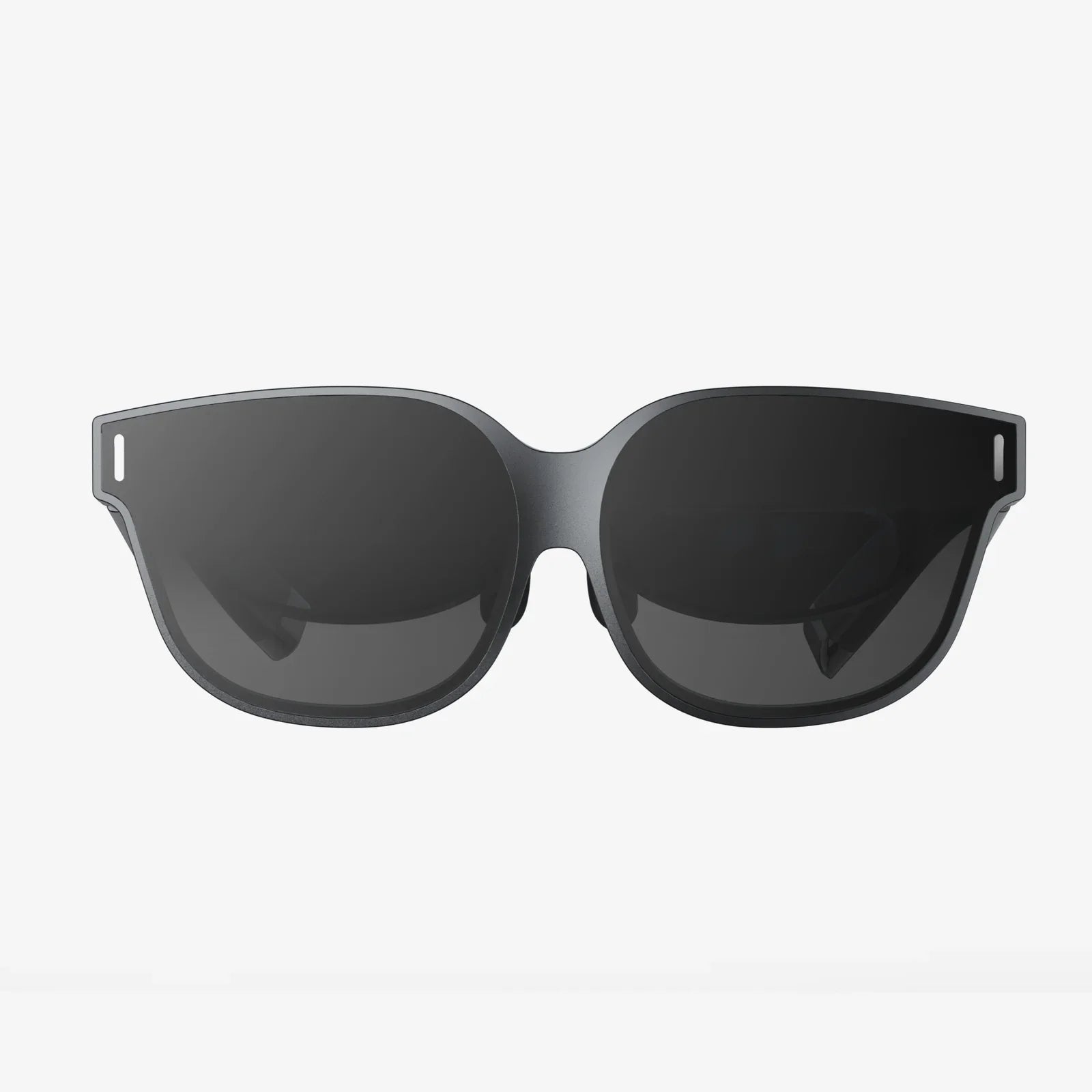
Imagine a world where a factory floor supervisor in Frankfurt can see real-time operational data hovering over machinery, a trainee surgeon in Tokyo can practice a complex procedure on a hyper-realistic holographic heart, and a field engineer in a remote wind farm receives expert guidance from a colleague thousands of miles away, visually overlaid onto the faulty turbine component they are repairing. This is not a glimpse into a distant science fiction future; this is the emerging reality of the modern enterprise, powered by the rapid and relentless advancement of Augmented Reality. AR is shedding its skin as a consumer-facing gimmick for gaming and social media filters and is being embraced as a serious, strategic technology that promises to redefine productivity, enhance safety, unlock new levels of expertise, and fundamentally reshape how businesses operate from the ground up.
The Foundation: Understanding AR in an Enterprise Context
At its core, Augmented Reality is a technology that superimposes a computer-generated image, data, or a three-dimensional model onto a user's view of the real world, thus providing a composite, enhanced perspective. Unlike Virtual Reality, which creates a completely immersive, digital environment that shuts out the physical world, AR enhances the real world by adding a digital layer of information onto it. For the enterprise, this distinction is critical. It’s not about escape; it’s about augmentation. It’s about making the existing physical world—the factory floor, the warehouse aisle, the patient, the engine—smarter, more informative, and more interactive.
The technological stack that enables this experience is sophisticated and multifaceted. It begins with a device, which can range from familiar smartphones and tablets to more advanced, hands-free wearables like smart glasses. These devices are equipped with a suite of sensors—cameras, accelerometers, gyroscopes, and depth sensors—that work in concert to understand and map the physical environment. This spatial mapping is the canvas upon which digital content is painted. Powerful software platforms and development tools then allow enterprises to create, manage, and deploy custom AR experiences tailored to specific workflows, from visualizing a new product design at scale to providing animated assembly instructions for a complex piece of equipment.
Revolutionizing Training and Onboarding
One of the most immediate and impactful applications of AR in the enterprise is in the realm of training and skill development. Traditional training methods often rely on bulky physical manuals, expensive and static training rigs, or video tutorials that are difficult to contextualize. AR transforms this process into an interactive, immersive, and highly effective experience.
New employees can be guided through complex procedures with digital step-by-step instructions overlaid directly onto the equipment they are learning to use. This "see-what-I-see" guidance drastically reduces the learning curve and minimizes errors. For high-stakes industries like manufacturing, aviation, and healthcare, the implications are profound. Trainees can practice on digital twins—exact virtual replicas of physical assets—allowing them to make mistakes and learn from them in a consequence-free environment. A technician can practice disassembling a jet engine turbine, with AR highlighting each component, displaying torque specifications, and warning of potential missteps, all without touching a multi-million dollar physical asset. This not only slashes training costs but also dramatically improves retention and comprehension, creating a more competent and confident workforce faster than ever before.
Transforming Remote Assistance and Collaboration
The concept of the "expert in your pocket" has been taken to a whole new level with AR-powered remote assistance. Geographical barriers to expertise are crumbling. When a field service technician encounters a problem they cannot solve, they no longer need to wait days for a specialist to fly out. Instead, they can don a pair of AR glasses and initiate a live video call with an expert located anywhere in the world.
This expert can see exactly what the technician sees, in real-time. Using AR annotation tools, the remote expert can draw arrows, circles, and instructions directly into the technician's field of view, pinpointing exact components, highlighting wiring sequences, or illustrating the correct movement for a repair. The technician's hands remain free to work, enhancing both safety and efficiency. This application has proven invaluable during recent global events that restricted travel, ensuring business continuity and minimizing equipment downtime. It democratizes expertise, allowing a single subject matter expert to support dozens of field operatives across the globe simultaneously, resolving issues in minutes that might have previously taken days.
Enhancing Design, Prototyping, and Complex Assembly
The journey from concept to physical product is long, expensive, and often fraught with revisions and errors. AR is injecting agility and precision into this process. Designers and engineers can now project life-size, interactive 3D models of their creations into a physical space. They can walk around a full-scale model of a new automobile engine, inspect the fit and form of a new piece of furniture in a real living room, or visualize how a new industrial pump will look and fit within an existing plant layout long before any metal is cut or any concrete is poured.
This capability, often referred to as spatial computing, eliminates costly misunderstandings and enables rapid iteration. Stakeholders can provide feedback on a tangible hologram rather than trying to interpret a 2D blueprint or a screen-based model. In complex assembly operations, such as in aerospace or advanced electronics, AR workstations can guide technicians through thousands of steps with pinpoint accuracy. Digital instructions are superimposed onto the physical task, showing exactly which part to pick, where to place it, and which tool to use for each fastener. This reduces cognitive load, virtually eliminates assembly errors, improves throughput, and ensures consistent quality, especially crucial for high-mix, low-volume production lines.
Powering the Intelligent Warehouse and Logistics
The warehouse is a hub of activity where speed and accuracy directly translate to bottom-line results. AR is rapidly becoming the ultimate tool for supercharging logistics operations. Warehouse operatives equipped with AR smart glasses can be visually guided along the most efficient pick path, with digital arrows displayed on the floor and navigation cues appearing in their periphery. When they arrive at a location, the exact bin and item are highlighted, and the required quantity is displayed, minimizing search time and preventing mis-picks.
This "vision picking" streamlines the entire order fulfillment process, leading to dramatic increases in productivity—often cited in the range of 25-35%—and a near-elimination of errors. Furthermore, AR can assist in restocking, inventory management, and shipping verification. A worker can simply look at a shelf, and the system can instantly display stock levels, identify items that need replenishment, and even flag potential discrepancies. This seamless integration of digital information with the physical task creates a more fluid, intuitive, and intelligent workflow, transforming the warehouse from a cost center into a strategic asset.
Navigating the Challenges: Implementation and Integration
Despite its immense potential, the path to enterprise-wide AR adoption is not without its significant hurdles. The first and most prominent challenge is the hardware. While improving rapidly, AR wearables must overcome issues related to battery life, comfort for all-day wear, field of view, and overall robustness for demanding industrial environments. The total cost of ownership, including the devices, software development, and ongoing maintenance, must also demonstrate a clear and compelling return on investment.
Perhaps the most complex challenge is integration. For AR to deliver on its promise, it cannot exist as a siloed application. It must be deeply integrated with the existing enterprise technology ecosystem—seamlessly connecting to Enterprise Resource Planning (ERP) systems for live inventory data, Product Lifecycle Management (PLM) software for accurate 3D models, and Customer Relationship Management (CRM) platforms for service history. This requires robust APIs, secure data pipelines, and a strategic approach to digital transformation. Furthermore, businesses must develop new protocols for data security and user privacy, as these devices often capture sensitive visual and operational data. Developing a skilled workforce capable of creating, managing, and supporting these complex AR solutions is another critical piece of the puzzle.
The Future is Augmented: What Lies Ahead
The evolution of AR in the enterprise is accelerating, driven by advancements in enabling technologies. The rollout of high-speed, low-latency 5G networks will untether AR experiences from Wi-Fi, enabling complex, data-heavy applications in the field. Artificial Intelligence and machine learning will make AR systems more context-aware and intelligent. An AR system will not only show an instruction but will also be able to recognize objects automatically, predict the next logical step in a workflow, and even detect anomalies or potential safety hazards in real-time by comparing the live view against a digital standard.
We will see the rise of the "enterprise metaverse," where persistent digital layers are anchored to physical locations, creating smart factories and offices that are continuously aware of their state and can interact with and guide the humans within them. As the technology matures and becomes more accessible, it will shift from being a tool for specific use cases to a ubiquitous computing platform, as integral to the modern worker as a laptop or smartphone is today.
The question for business leaders is no longer if AR will impact their industry, but when and how. The early adopters are already reaping the rewards in the form of unprecedented efficiencies, drastic reductions in errors, and empowered workforces. The transition requires careful planning, a clear-eyed view of the challenges, and a commitment to a new way of working. But the destination is clear: a future where the digital and physical realms are seamlessly fused, where information is presented contextually and intuitively, and where human potential is amplified by intelligent augmentation. The enterprise of tomorrow will not just use technology; it will exist within it, enhanced and transformed by the power of Augmented Reality.
The blueprints are no longer confined to paper; they are springing to life in the air around us, and the most forward-thinking companies are already reading them, ready to build the future.
Share:
What Does Artificial Intelligence Mean? Unpacking the Engine of the Modern World
Infinite VR: The Uncharted Frontier of Human Experience and Connection