


Imagine stepping out of your front door and seeing the world not just as it is, but as it could be. Navigation arrows painted seamlessly onto the sidewalk guide you to your destination. The name and next meeting time of a colleague approaching you floats discreetly beside them. The cafe on the corner has a virtual "Today's Special" sign shimmering in the air, and a critical news alert from a source you trust flashes gently in the corner of your vision without ever requiring you to look down at a screen. This isn't a scene from a distant science fiction film; this is the tangible future being built today, a future that will arrive in full force by 2026. The humble beginnings of augmented reality are rapidly giving way to a paradigm shift, and the AR glasses of 2026 will be the vehicle that merges our digital and physical lives into one cohesive, intelligent, and astonishing experience.
The Perfect Storm: Converging Technologies Reaching Maturity
The journey to the AR glasses of 2026 has been a long one, fraught with prototypes that were too bulky, displays that were too dim, and batteries that died too quickly. The breakthrough won't come from a single miraculous invention, but from the harmonious convergence of several critical technologies finally hitting their stride simultaneously.
The Visual Revolution: Displays You Forget Are There
For AR to become pervasive, the technology must disappear. The key lies in waveguide and holographic optics. By 2026, these systems will have evolved to project high-resolution, full-color, and brilliantly bright images directly onto the retina. The effect will be digital objects that are locked firmly in the real world, regardless of how you move your head, with a field of view that approaches our natural human vision. The dreaded "hologram-in-a-box" effect will be a relic of the past. Furthermore, these displays will be incredibly power-efficient and manufactured at scales that bring costs down significantly. Advanced electrochromic lenses will also become standard, allowing the glasses to transition instantly from a clear state to a tinted one, functioning as both an AR device and a pair of stylish sunglasses.
The Intelligence Within: On-Device AI and Spatial Processing
The brains behind the glasses will be a sophisticated blend of specialized processing units. A powerful NPU (Neural Processing Unit) will handle the immense task of real-time computer vision, object recognition, and spatial mapping entirely on the device. This is crucial for both responsiveness and privacy; your surroundings won't need to be uploaded to a remote server to be understood. A dedicated Spatial Processor will continuously analyze data from a suite of advanced sensors—including high-resolution RGB cameras, depth sensors, and LiDAR—to create a millisecond-accurate, 3D understanding of your environment. This digital twin of the physical world is the canvas upon which all AR experiences are painted.
Form Meets Function: The Aesthetics of Wearability
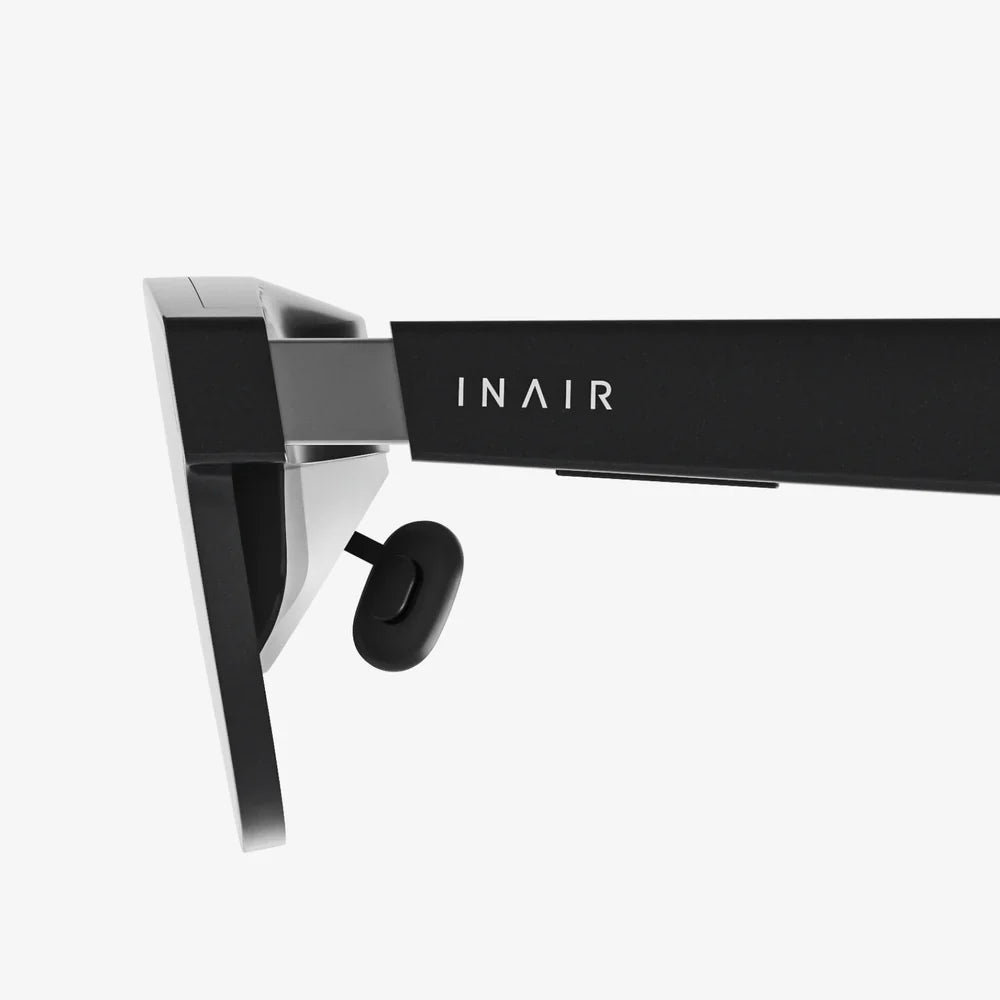
The chunky, geeky aesthetic of early prototypes will be completely abandoned. The AR glasses of 2026 will prioritize a form factor that is indistinguishable from high-end eyewear. They will be lightweight, comfortable for all-day wear, and come in a variety of styles to suit personal taste. This normalization of design is not a superficial concern; it is the primary barrier to social acceptance and mass adoption. Battery technology will also see significant improvements. While we may not see a 10x increase in energy density, a combination of more efficient components and innovative solutions—such as a compact battery case that slips into a pocket, providing a full day's charge—will solve the endurance problem.
Beyond Novelty: The Killer Applications of 2026
Technology is only as valuable as what it enables. The hardware advancements will unlock a new class of applications that move beyond gaming filters and simple information overlays, solving real-world problems and creating new forms of value.
Redefining the Workspace: The End of the Static Screen
The concept of the office will be utterly transformed. Knowledge workers will no longer be tethered to physical monitors. Instead, they will be able to summon multiple large, virtual screens anywhere they choose—in a coffee shop, on a train, or in a quiet corner of their home. Complex 3D models, from architectural plans to molecular structures, will be able to be manipulated and examined from every angle by colleagues scattered across the globe, all seeing and interacting with the same holographic object in real time. Remote assistance will reach a new level of fidelity; a senior engineer will be able to see through the eyes of a field technician and literally draw repair instructions onto the malfunctioning machinery in front of them.
The Immersive Classroom: Learning by Doing and Seeing
Education will undergo a revolution in engagement and accessibility. History students won't just read about ancient Rome; they will walk through a digitally reconstructed Forum, witnessing historical events unfold around them. Medical students will practice complex surgical procedures on hyper-realistic holographic patients, receiving instant feedback on their technique without any risk. Anatomy lessons will involve exploring a life-sized, interactive human body. This hands-on, visual learning paradigm will cater to diverse learning styles and democratize access to experiences that were previously impossible or prohibitively expensive.
Seamless Urban Navigation and Contextual Computing
Getting around a complex city will become effortless. AR navigation will project a path onto the real world, guiding you through subway transfers, indicating the correct bus stop, and even highlighting the specific aisle in a grocery store where your next item is located. The world itself will become context-aware. Look at a restaurant, and see its reviews and today's menu. Look at a landmark, and get a brief historical overview. This ambient, just-in-time information layer will reduce cognitive load, allowing us to be more present in our surroundings while simultaneously being more informed.
Enhanced Social Connection and Presence
Remote communication will strive to replicate the feeling of physical presence. Video calls will be replaced by volumetric avatars or lifelike holograms of participants, who can sit on the couch next to you as if they were really there. Friends watching a sports game from different cities could share a virtual living room, experiencing the event together. This technology holds the promise of profoundly reducing the feeling of distance and isolation, creating a new, more human form of digital connection.
The Inevitable Challenges: Privacy, Security, and the Attention Economy
This always-on, sensory-augmenting technology does not arrive without significant societal questions that must be addressed head-on.
The Privacy Paradox: Seeing and Being Seen
A device that is constantly capturing its environment presents an unprecedented privacy challenge. How do we prevent unauthorized recording in private spaces? How is the immense amount of visual data processed and stored? The solution will likely involve a combination of hardware and software safeguards. Physical indicator lights that are impossible to disable will signal when recording is active. On-device processing will ensure that most sensitive data never leaves the glasses. Furthermore, a robust digital etiquette and potentially new legal frameworks will need to emerge to define boundaries in this new augmented world.
Security in an Augmented World
If our perception of reality is mediated by technology, that technology becomes a prime target for malicious actors. Imagine the danger of a hacker overlaying false navigation instructions onto a busy highway or altering critical safety information on industrial equipment. The security of these devices will need to be paramount, built on hardware-rooted trust and unbreachable encryption from the ground up.
The Battle for Your Attention
Today's battle for screen time will escalate into a battle for eyeballs in the real world. Advertisers will clamor to place virtual billboards in your field of view. Notifications could become even more pervasive. The defining feature of successful AR platforms in 2026 will be their focus on user-controlled, contextually relevant, and minimally intrusive experiences. The ability to easily dial the digital world up or down—or shut it off completely—will be critical for maintaining mental well-being and human connection.
The New Ecosystem: Developers, Creators, and an Open World
The success of AR glasses will hinge on the creation of a vibrant ecosystem. Developers will need powerful and accessible tools to build for a spatial, context-aware environment. This goes beyond traditional app development; it involves designing experiences that understand and interact with the geometry and semantics of the physical world. We will see the rise of a new class of "spatial creators" who design digital artifacts, experiences, and worlds meant to be overlaid onto our own. The question of an open versus a closed metaverse will also come to a head. Will we have a single, unified digital layer, or a fragmented landscape of competing platforms? The most likely outcome is a web-like structure of interoperable experiences, governed by open standards that allow digital objects and information to persist across different devices and applications.
The path to 2026 is not without its hurdles, but the momentum is undeniable. The convergence of mature technologies, the clear value proposition for enterprise and consumer alike, and the immense investment pouring into the space all point to a single inevitability: the AR glasses of 2026 will mark the moment this technology sheds its skin as a promising prototype and emerges as an indispensable tool for modern life. They won't replace smartphones overnight, but they will begin to redefine why we reach for our devices in the first place, moving computing from something we hold in our hand to something that enhances the very world we live in. The line between the digital and the physical is set to blur beyond recognition, and the view through these new lenses will change everything.
Share:
Virtual Reality Glasses Bluetooth: The Untethered Evolution of Immersive Technology
Future Calls Technology: The Next Evolution in Human Connection