


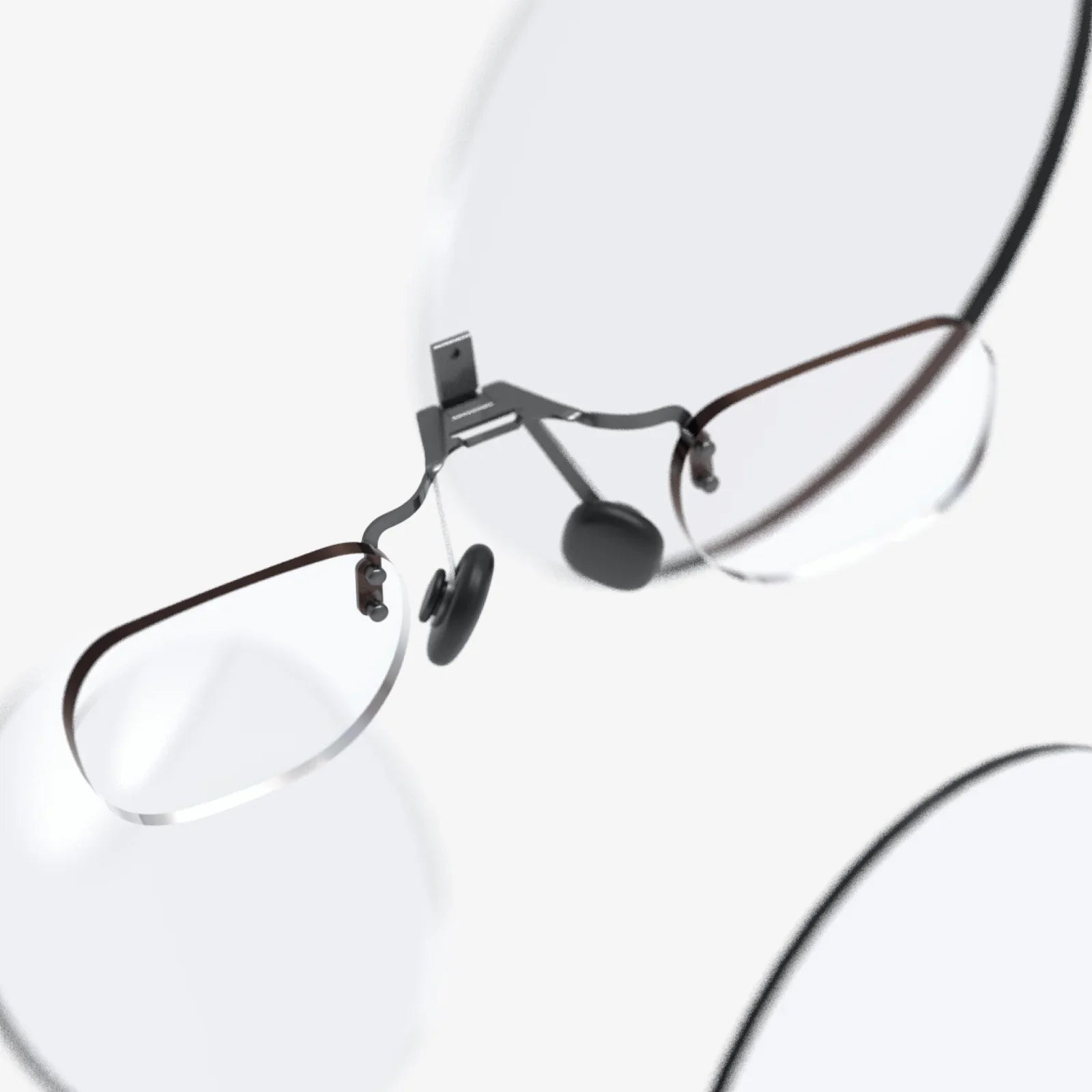
Imagine sitting on your couch, a long-haul flight, or even a sun-drenched beach, and with a simple gesture, a pristine 100-inch high-definition screen materializes before your eyes. The world around you dims, the speakers of a premium theater seem to encircle you, and you are utterly alone with the story unfolding in breathtaking clarity. This is no longer a scene from science fiction; it is the present-day reality offered by AR glasses for watching movies. This technology is poised to fundamentally reshape our relationship with entertainment, untethering the cinematic experience from the physical constraints of our living rooms and local multiplexes. The era of the personal, portable, and profoundly immersive cinema has arrived.
The Technology Behind the Magic: How AR Glasses Create a Cinema
At their core, AR glasses designed for cinematic viewing are sophisticated optical computers. Unlike Virtual Reality (VR) headsets that completely occlude your vision and transport you to a digital world, AR glasses for movies often employ a technique called video passthrough or sophisticated waveguides to blend digital content with your physical environment. The key components that make this possible are miniature micro-displays, incredibly precise optics, and advanced spatial audio systems.
The micro-displays, often OLED or MicroLED for their deep blacks and high contrast, project the image. These tiny screens are then magnified and focused by a complex system of lenses and waveguides—essentially clear glass or plastic that channels light directly to your pupils. This creates the illusion that the screen is floating several feet away from you, large enough to fill a significant portion of your field of view without causing eye strain. This virtual screen remains fixed in space; you can look around it, see your coffee mug on the table below it, and then effortlessly return your gaze to Tom Cruise hanging off the side of a virtual cliff.
An Unmatched Cinematic Experience: Immersion and Privacy
The primary allure of using AR glasses for films is the unparalleled level of immersion. By effectively replacing your entire field of vision with the movie, distractions are minimized. There is no phone screen glowing in your periphery, no partner asking questions during the crucial plot twist, and no one kicking the back of your seat. You are in your own bubble of narrative bliss. The sense of scale is transformative; watching a epic space opera or a sweeping landscape shot on a perceived giant screen is an experience that even large flat-panel displays struggle to match without dominating an entire wall.
Furthermore, this technology offers ultimate privacy. You can watch a cheesy rom-com, a intense horror film, or a niche documentary without a hint of judgment from anyone else in the room. The audio, delivered through bone conduction or personal, directional speakers built into the glasses' arms, ensures that only you hear the soundtrack and dialogue. This makes AR glasses perfect for shared spaces—allowing one person to watch a movie while another reads a book in silence, or for enjoying content on a plane or train without disturbing fellow passengers.
Setting Up Your Personal Theater: Content and Compatibility
The beauty of most modern AR glasses for media consumption is their simplicity. They often function as a wireless external display for your existing devices. Compatibility is broad:
- Smartphones and Tablets: Many models connect wirelessly via dedicated protocols, mirroring your device's screen or launching a dedicated media environment.
- Laptops and Computers: They can act as a private monitor, perfect for watching downloaded films or streaming services on a computer.
- Media Streamers: Some dedicated media players and gaming consoles can connect directly, often via a small wireless dongle.
Accessing content is as simple as using your favorite streaming apps—services like Netflix, Disney+, Max, and Apple TV are all accessible either through a connected device or sometimes via native apps within the glasses' own operating system. The key is ensuring a stable, high-bandwidth connection to stream high-resolution, high-bitrate content to do justice to the advanced displays.
Beyond the Living Room: The Portability Revolution
This is where AR glasses truly redefine "movie night." Their portable nature liberates the big-screen experience from the confines of the home. Imagine these scenarios:
- Travel: Long flights or train journeys are transformed. Your cramped seat becomes a first-class cabin with personal entertainment. The drone of the engines fades away, replaced by a cinematic soundtrack.
- Commuting: A bus or subway ride becomes an opportunity to escape into a episode of your favorite show on a massive screen, all while remaining aware of your surroundings for your stop.
- Bedtime Viewing: For those who share a bed with a partner, AR glasses are a game-changer. You can watch a movie lying down without keeping anyone else awake with light or sound, eliminating the awkward phone-held-above-your-face maneuver.
- Hotels and Temporary Spaces: Any room instantly becomes equipped with a perfect television, regardless of the quality or size of the actual TV provided.
Weighing the Experience: Considerations and Current Limitations
While the technology is revolutionary, it is not without its considerations. For a technology centered on comfort during long viewing sessions, the physical design is paramount. Early models could feel front-heavy or exert pressure on the nose bridge. Modern iterations are increasingly lightweight, often weighing less than a pair of sunglasses, and distribute weight more evenly for multi-hour comfort.
Battery life is another crucial factor. Powering high-resolution displays and audio requires a robust battery, which is typically housed in a separate pack that connects to the glasses via a thin, soft cable and can be tucked into a pocket. Most offer 3-5 hours of continuous video playback, sufficient for the majority of films.
Finally, there is the matter of visual fidelity. While the technology is astounding, the experience is not yet a perfect 1:1 replacement for a top-tier 4K OLED television. Factors like the perceived resolution (known as pixels-per-degree), color accuracy, and lens clarity (such as the potential for slight chromatic aberration at the edges) are areas of continuous and rapid improvement. For most users, the immense benefits of portability and immersion far outweigh these minor technical compromises.
The Future of Film: How AR Glasses Will Change Entertainment
The evolution of AR glasses points toward a future far beyond simply mimicking a flat screen in space. We are moving towards truly three-dimensional and interactive entertainment. Filmmakers could create scenes that occupy your entire living room, with characters and events happening around you. Imagine a thriller where the villain appears to be standing behind your sofa, or a nature documentary where a blue whale slowly glides through the space of your apartment.
Social viewing is also set for a revolution. Instead of just seeing avatars of friends in a virtual theater, future AR could allow you to watch a movie with a friend who is physically miles away, and see their photorealistic hologram reacting on the couch next to you, sharing the experience as if you were in the same room. This technology will not just change how we watch movies; it will expand the very language of storytelling, creating new, deeply personal, and spatially-aware narratives.
Your favorite film is about to get a lot more personal. The boundaries of your screen are dissolving, replaced by a limitless canvas that can transform any space, no matter how mundane, into a private IMAX theater. The popcorn, however, is still your responsibility.
Share:
Windows Service Desktop Interaction: The Invisible Bridge Powering Modern Computing
2D to 3D Render: The Complete Guide to Transforming Concepts into Photorealistic Worlds