


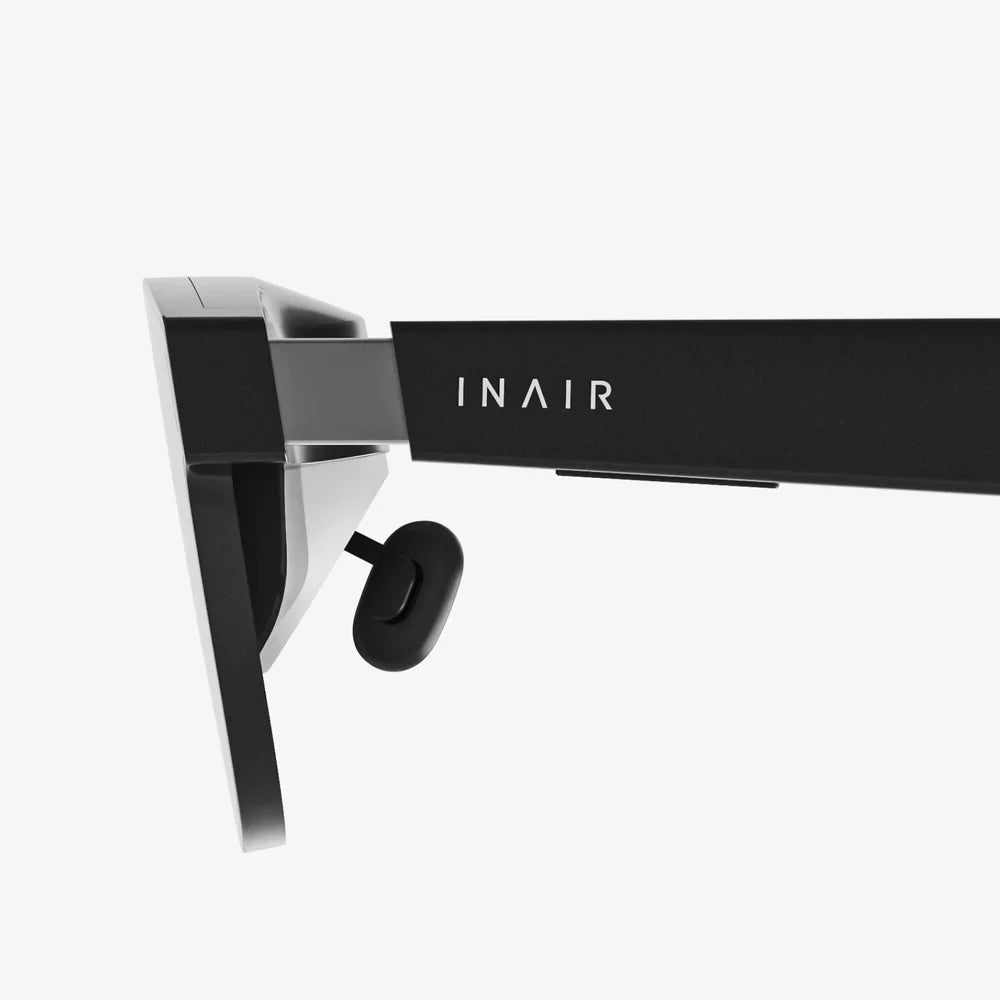
Imagine a world where your vision correction isn't a barrier to experiencing the digital future, but a seamless part of it. For the billions who rely on prescription lenses, the emergence of AR glasses with diopter adjustment isn't just a technological nicety—it's the key that unlocks the door to true augmented reality immersion. This innovation promises to shatter the longstanding divide between those who need corrective eyewear and those who don't, finally making advanced AR an inclusive technology for all.
The Vision Problem: A Barrier to Digital Immersion
Augmented Reality aims to blend the digital and physical worlds seamlessly. However, for a significant portion of the global population, this seamless blend hits a literal snag: their prescription eyeglasses. Traditional AR wearables are designed for users with 20/20 vision. For everyone else, the experience is often clunky, uncomfortable, and frankly, inaccessible. Users faced a frustrating dilemma: awkwardly wearing their AR device over their existing glasses, which can be heavy, cause pressure points, and look conspicuous, or squint through a blurry digital world, completely missing the point of a high-definition augmented experience. This fundamental design flaw excluded a massive market and hindered the widespread adoption of AR technology.
What Are Diopter Adjustments? The Science of Sight
To understand the breakthrough, we must first understand diopters. A diopter is the unit of measurement for the optical power of a lens. It quantifies the degree to which the lens bends light to correct refractive errors in the eye. Essentially, it's a number that tells an optometrist how strong your prescription needs to be.
- Negative Diopter Values: Correct for myopia (nearsightedness). These lenses are concave and help focus light onto the retina.
- Positive Diopter Values: Correct for hyperopia (farsightedness). These lenses are convex.
- Astigmatism: Requires a more complex correction involving cylinder and axis values, which has been a greater challenge to integrate.
Integrating this precise optical science into the complex waveguide and projector systems of AR glasses is a formidable engineering challenge. It’s not merely about placing a physical lens in front of a digital display; it's about ensuring the digitally projected light and the real-world light both focus correctly on the user's retina simultaneously.
Engineering the Future: How Diopter Integration Works
Manufacturers have developed several ingenious methods to tackle the challenge of vision correction in AR wearables. Each approach has its own advantages and trade-offs.
1. Mechanical Diopter Wheels
This method involves a physical adjustment mechanism, often a small wheel or slider on the frame of the glasses. When the user turns the wheel, it mechanically adjusts the position of the internal optical elements or a dedicated corrective lens inside the device. This changes the focal length, allowing the user to dial in the precise diopter strength they need until the digital content appears sharp. It's a direct, analog solution that doesn't require power and offers a continuous range of adjustment.
2. Customizable Inserts and Magnetic Attachments
Some systems adopt a modular approach. The AR glasses themselves have a standard optical setup. Users then obtain custom prescription lenses, similar to their everyday glasses, which magnetically or physically clip into the device, sitting between the display and their eyes. This offers a highly personalized and optically pure correction, as the inserts are made to the user's exact prescription, including complex astigmatism and prism corrections. It mirrors the familiar process of ordering prescription sunglasses.
3. Adaptive Liquid Lenses (The Holy Grail)
The most futuristic approach utilizes liquid lens technology. These lenses are made from a flexible membrane filled with optical fluid. By applying an electrical current, the shape—and therefore the optical power—of the lens can be altered dynamically. This allows for software-controlled diopter adjustment. A user could theoretically open a companion app and slide a digital bar to perfect their focus, or even have the glasses automatically adapt to different tasks (e.g., reading a digital manual vs. viewing a distant AR navigation arrow). This technology, while still emerging, promises the ultimate in convenience and personalization.
Beyond Convenience: The Transformative Impact
The value of built-in diopter correction extends far beyond simple convenience. It has profound implications for accessibility, user experience, and even safety.
- True Accessibility: This is the foremost benefit. It democratizes AR technology, ensuring that individuals with vision impairments are not left behind in the next computing revolution. It empowers them in professional, educational, and recreational contexts.
- Superior Comfort and Ergonomics: A single, lightweight device is always more comfortable than two pairs of glasses stacked on the nose. It eliminates pressure points, reduces weight, and improves overall wearability for extended periods.
- Optimized Optical Performance: When vision correction is integrated into the initial optical path design, engineers can optimize the entire system for clarity and a wider field of view. Clip-on solutions can sometimes cause minor distortions or reduce brightness, whereas integrated solutions are designed holistically.
- Enhanced Safety in Professional Settings: For field technicians, surgeons, or mechanics using AR for guidance, having a clear, hands-free, and secure view of digital instructions is not just about efficiency—it's a critical safety feature. There's no risk of glasses slipping or becoming dislodged.
Navigating the Current Landscape: Challenges and Considerations
While the technology is promising, it is not without its current limitations. Prospective users should be aware of the trade-offs.
- Limited Prescription Range: Many current mechanical adjustment systems cover a common range (e.g., -5.0 to +2.0 diopters) but may not serve those with very strong prescriptions or high astigmatism. Custom inserts are often needed for these cases.
- The Astigmatism Hurdle: Correcting astigmatism requires not just spherical power but also cylindrical power and axis alignment. This is incredibly difficult to achieve with a simple mechanical wheel. Custom inserts or advanced adaptive lenses are currently the only solutions.
- Bifocals and Progressive Lenses: Users who require multifocal lenses present a unique challenge. Some AR solutions are exploring "digital progressive" features where the display can show content in different focal planes, but this remains a complex area of development.
- Cost and Complexity: Integrating sophisticated optical systems inevitably increases manufacturing cost and complexity compared to standard AR devices.
A Glimpse Into the Crystal Ball: The Future of Corrected AR
The integration of diopter adjustment is merely the first step on a longer road toward truly bio-integrated visual computing. The future points toward even more personalized and adaptive systems.
We are moving toward devices that don't just correct known refractive errors but actively measure and adapt to the user's vision in real-time using embedded eye-tracking and wavefront sensors. Imagine glasses that can detect eye strain and automatically adjust focus to reduce fatigue, or that can compensate for changing vision throughout the day. Furthermore, the combination of vision correction and advanced display technologies like varifocal and light field displays will finally solve the vergence-accommodation conflict—a major technical hurdle that causes discomfort in current VR/AR headsets—making long-term immersion not only possible but comfortable for everyone.
This technology is rapidly evolving from a niche feature into a standard expectation. The future of augmented reality is not just about overlaying information onto the world; it's about ensuring that world is in perfect focus for every single user, regardless of their visual acuity. The era of struggling with a dual-glasses setup is coming to a close, making way for a more accessible, comfortable, and visually stunning digital horizon that everyone can experience clearly.
Share:
AR Glasses Waveguide News: The Invisible Tech Revolutionizing Our View of Reality
Future Breakthroughs in Technology: The Next Decade of Radical Innovation