


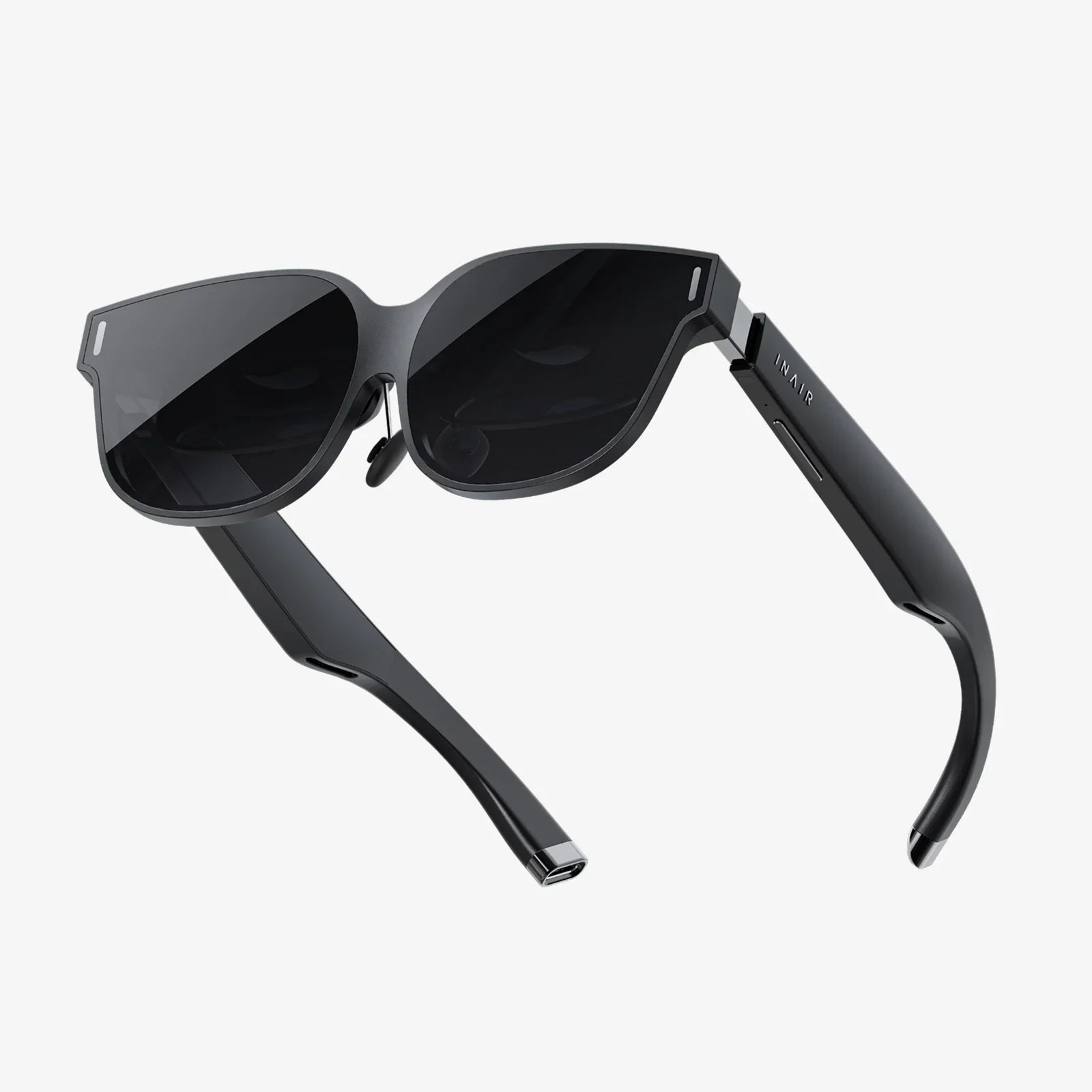
Imagine a digital world so flawlessly interwoven with your physical surroundings that you can no longer distinguish where reality ends and the simulation begins. This is the ultimate promise of augmented reality, a promise that hinges not on processing power or pixel density alone, but on a single, critical metric often hidden in the technical specifications: the refresh rate. For those seeking the most immersive, comfortable, and responsive AR experience, the pursuit of AR glasses with the highest refresh rate is not a niche interest—it's a quest for the very foundation of believable digital interaction.
The Unseen Engine of Immersion: Demystifying Refresh Rate
At its core, refresh rate, measured in Hertz (Hz), is the number of times per second a display updates its image. A standard of 60Hz means the picture is redrawn 60 times every second. In the world of AR, this concept is elevated from a mere performance stat to the very backbone of user experience. Unlike a static television screen, AR is dynamic, interactive, and directly mapped to a user's movements. A low refresh rate in this context doesn't just look choppy; it breaks the fragile illusion of the digital overlay, creating a laggy, disconnected, and often nauseating experience.
The human visual system is exceptionally sensitive to motion and latency. When you turn your head, your brain expects the entire visual field to move in perfect synchrony. AR glasses with a low refresh rate introduce a perceptible delay between your head movement and the update of the digital image. This discrepancy, however slight, can cause significant discomfort, eye strain, and even motion sickness, effectively ruining the experience. High refresh rates, often targeting 90Hz, 120Hz, and beyond, are engineered to minimize this latency to imperceptible levels, ensuring the digital world moves exactly as your brain expects it to.
Beyond Smoothness: The Multifaceted Impact of a High Refresh Rate
While eliminating latency is the primary goal, the benefits of pushing refresh rates to their technological limits extend far beyond simple smoothness. This pursuit touches every aspect of AR functionality.
Enhanced Realism and Depth Perception
For digital objects to feel truly present in our space, they must exhibit realistic motion parallax and stability. A high refresh rate ensures that as a user moves around a virtual object, it remains locked in place without jitter, judder, or a ghost-like trail. This stability is paramount for depth perception, allowing our brains to accurately judge the distance and solidity of a hologram. A stuttering image instantly shatters this illusion, revealing it as a flat, graphical overlay. The highest refresh rates contribute to a phenomenon known as "presence," the convincing feeling that digital content is an authentic part of the user's environment.
Revolutionizing Interaction and Input
AR is moving beyond passive viewing to active manipulation. We are beginning to control interfaces with our eyes, gestures, and voice. These input methods demand an incredibly responsive system. A high refresh rate is crucial for low-latency hand-tracking. When you reach out to "touch" a virtual button, the system must render the movement of your hand and the resulting interaction with near-instantaneous feedback. Any lag makes the interface feel sluggish and unresponsive, hindering productivity and breaking the sense of direct manipulation. For enterprise applications like remote surgery or complex machinery repair, where precision is measured in millimeters, this responsiveness is not a luxury—it is an absolute necessity.
Comfort for Prolonged Use
As AR aims to become an all-day computing platform, replacing phones and laptops, user comfort is paramount. Visual fatigue is a major barrier to adoption. The flicker and strain caused by low refresh rates are significant contributors to this fatigue. By providing a stable, flicker-free image that perfectly tracks the real world, glasses with high refresh rates significantly reduce the cognitive load on the user's visual system. This allows for extended sessions of work, entertainment, or social interaction without the accompanying headache or nausea, making the technology truly viable for all-day wear.
The Technological Hurdles in the Race for Higher Hertz
Achieving a high refresh rate is not simply a matter of inserting a faster display panel. It represents a complex systems engineering challenge that pushes against the limits of several technologies simultaneously.
The Processing Power Dilemma
Rendering complex 3D graphics at 90 or 120 frames per second requires immense computational power. This is a challenge for any device, but it is especially acute for AR glasses, which are constrained by strict size, weight, and thermal budgets. A powerful processor generates heat, and dissipating that heat from a device sitting on a user's face is a formidable obstacle. Engineers must develop incredibly efficient system-on-chips (SoCs) and rendering pipelines that can deliver high fidelity without melting the device or draining the battery in minutes. This often involves sophisticated techniques like foveated rendering, which leverages eye-tracking to render only the user's central focal point in high detail, saving precious processing cycles.
The Display Technology Conundrum
The type of microdisplay used is intrinsically linked to its potential refresh rate. Waveguide-based systems, common in many AR glasses, have their own optical limitations that can affect motion clarity. MicroLED displays, hailed as the future for their brightness and efficiency, are being engineered to support higher and higher refresh rates. Each display technology, from LCoS to OLEDoS, presents a unique set of trade-offs between resolution, brightness, power consumption, and achievable refresh rate. Pushing the boundaries in one area often means making concessions in another, requiring careful balancing to create a viable consumer product.
Battery Life: The Eternal Trade-off
Perhaps the most direct trade-off is with battery life. Driving a display at 120Hz consumes significantly more power than driving it at 60Hz. For untethered, standalone AR glasses, this creates a critical dilemma: offer a breathtakingly smooth experience that lasts for one hour, or a passable experience that lasts for a full workday? Innovations in battery technology, power management, and display efficiency are all critical to solving this puzzle. The goal is to create a system so efficient that a high refresh rate becomes the standard, not a power-hungry optional mode.
The Future is Fluid: Where High Refresh Rate AR is Taking Us
The relentless drive toward higher refresh rates is paving the way for AR applications that are currently the domain of science fiction.
The Social and Collaborative Metaverse
For truly convincing social interaction in AR, avatars must exhibit nuanced, real-time expressions and movements without any uncanny valley effect. A high refresh rate is essential for capturing and rendering subtle eye movements, smiles, and gestures with perfect fidelity, making remote conversations feel genuinely face-to-face. In collaborative design and engineering, teams will be able to manipulate 3D models together in real time, with every rotation and adjustment rendered with zero perceived lag, fostering a true sense of shared presence.
Advanced Training and Simulation
From medical students practicing complex procedures to mechanics learning to repair new engines, AR training requires absolute visual accuracy. A high refresh rate ensures that every movement of a virtual tool is perfectly aligned with the user's hand, providing realistic haptic and visual feedback. This precision builds muscle memory and confidence in a risk-free environment, revolutionizing professional training across countless industries.
Seamless Contextual Computing
The ultimate goal of AR is to fade into the background, providing information and interfaces exactly when and where they are needed. Imagine navigation arrows painted perfectly onto the road as you walk, or real-time translations hovering seamlessly over foreign text. These applications require the digital overlay to be rock-solid and instantly responsive to your gaze and environment. This level of seamless integration is only possible with the ultra-low latency granted by the highest refresh rates, making the technology an invisible, yet indispensable, part of our daily lives.
The search for AR glasses with the highest refresh rate is far more than a spec-sheet competition. It is a fundamental pursuit to close the gap between the digital and the physical, to build a medium that respects the intricacies of human perception. This relentless push for smoother, more responsive, and more comfortable experiences is what will finally transform augmented reality from a promising novelty into the primary lens through which we will work, play, and connect with the world. The future of computing isn't just in your hand or on your desk; it's being painted onto your reality, one flawless frame at a time.
Share:
How to Stream Video Wirelessly: The Ultimate Guide to Seamless Viewing
How to Stream Video Wirelessly: The Ultimate Guide to Seamless Viewing