


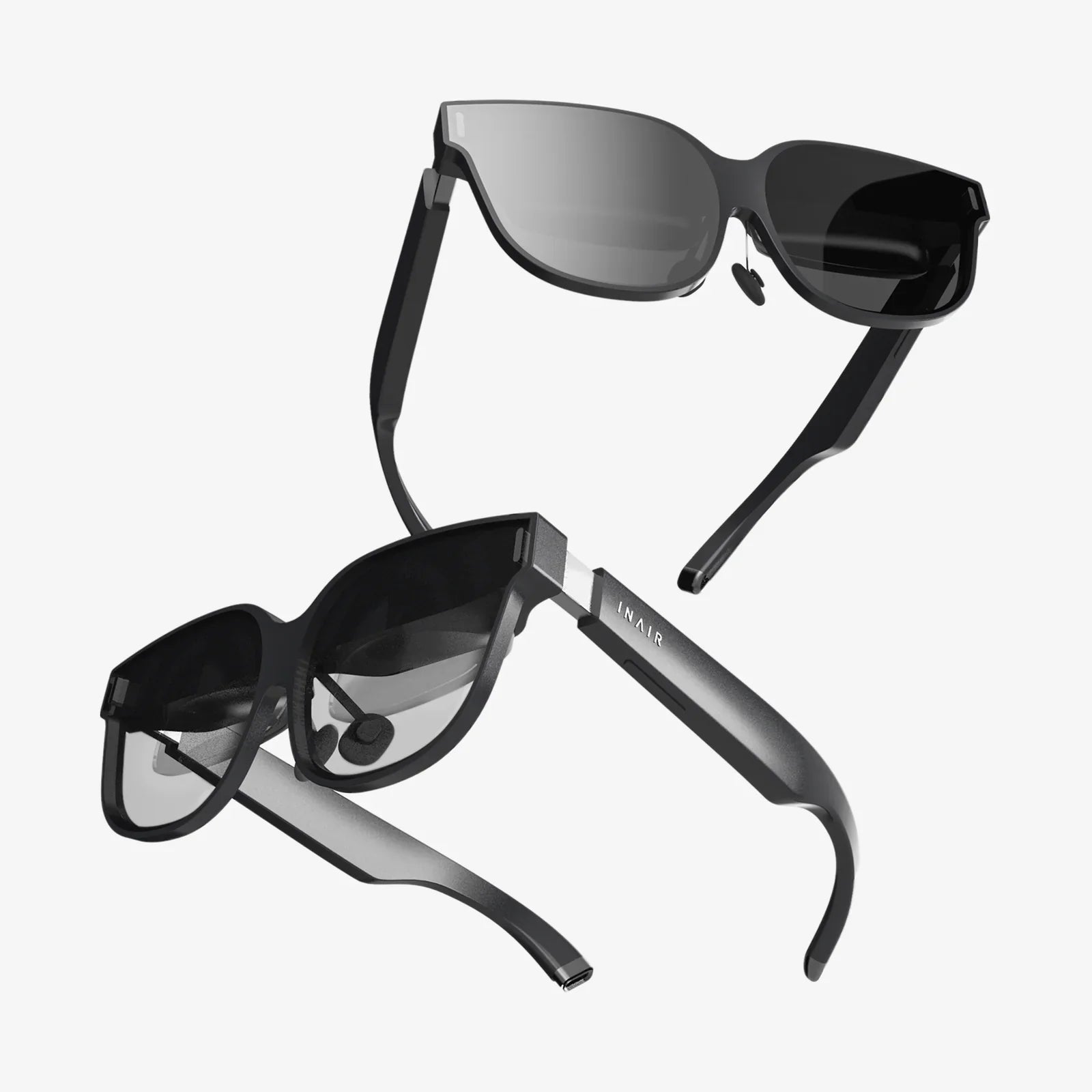
Imagine a world where your morning coffee is accompanied by a live news feed hovering just above the rim of your cup, where navigating a foreign city requires nothing more than a glance at a street sign for instant translation, and where complex repair instructions are overlaid directly onto the machinery you’re fixing. This isn’t a distant sci-fi fantasy; it’s the imminent future being built today, and it all hinges on a revolutionary technology known as AR optical systems. This invisible revolution, moving from the drawing board to your face, promises to fundamentally alter our perception of reality itself, blending the digital and physical into a single, seamless experience.
The Core Challenge: Bridging the Digital and Physical Realms
At its heart, the goal of any AR optical system is deceptively simple: to project computer-generated imagery (CGI) into a user’s field of view in such a way that it appears to coexist with the real world. The monumental challenge lies in the execution. The ideal system must be visually comfortable, socially acceptable, informationally rich, and, above all, optically precise. Early attempts often resulted in bulky headsets with limited field-of-view, causing eye strain and a distinct lack of immersion. The modern pursuit is for something indistinguishable from a regular pair of glasses, a goal that has driven innovation across multiple scientific disciplines.
Waveguides: The Magic Conduits of Light
If there is a star technology in the AR optical arena, it is the waveguide. Think of a waveguide as a sophisticated highway for light, a thin, transparent substrate—often glass or plastic—that guides light from a micro-display on the temple of the glasses to the user’s eye. This is the cornerstone of sleek, glasses-like form factors.
The magic happens through several principles:
- Geometric Waveguides: These use traditional, miniature optical elements like prisms and mirrors to reflect and direct light. While effective, they can be thicker and more complex to manufacture at scale.
- Diffractive Waveguides: This is where the true sorcery lies. These waveguides use microscopic grating structures, etched onto the lens surface, to diffract and couple light into the waveguide, guiding it via total internal reflection before finally ejecting it towards the eye. Technologies like Surface Relief Gratings (SRG) and Volume Holographic Gratings (VHG) fall into this category, enabling incredibly thin and lightweight designs.
The advantages are profound: waveguides allow for a large eyebox (the sweet spot where the image is visible), they free up designers to create stylish frames, and they enable true see-through functionality, ensuring user safety and environmental awareness.
Beyond Waveguides: A Symphony of Optical Technologies
While waveguides dominate current R&D, they are part of a broader optical orchestra. Other significant technologies include:
- Free-Space Combiners: Often used in more specialized, industrial-grade headsets, these systems use a series of free-form optical elements and partially reflective mirrors to fold the optical path and project the image. They can offer exceptional image quality and a wide field of view but often at the cost of a bulkier form factor.
- Light Field Displays: This emerging technology aims to solve a critical issue known as the vergence-accommodation conflict (VAC)—where your eyes struggle to focus on a virtual image fixed at a specific depth. Light field displays project a field of light rays that mimic how light behaves in the real world, allowing the eye to naturally focus at different depths. This technology promises unparalleled visual comfort and realism, though it remains computationally intensive.
- Liquid Crystal on Silicon (LCoS) & MicroLED: On the display side, these micro-display technologies are crucial. LCoS offers high resolution and excellent color fidelity, while MicroLED is the great hope for the future, providing incredible brightness, efficiency, and pixel density—essential for creating vivid imagery visible even in bright sunlight.
The Software That Sees: Spatial Computing and Computer Vision
A perfect optical system is useless without a brain to power it. This is where spatial computing and computer vision come in. These software layers are responsible for understanding the world around the user. Using a suite of sensors—cameras, depth sensors (LiDAR), and inertial measurement units (IMUs)—the system must:
- Map the Environment: Create a real-time 3D mesh of the room, understanding the geometry of floors, walls, and objects.
- Track Position and Movement: Precisely know the user’s head position and orientation in six degrees of freedom (6DoF) to anchor digital objects stably in the real world.
- Understand Content: Recognize surfaces (is this a table or a wall?), identify objects (this is a specific model of car engine), and even track hands for intuitive interaction.
This constant, real-time dialogue between the sensors and the software is what makes the digital content feel physically present, responding to the user’s movement and changes in the environment.
Transforming Industries: The Professional Playground
While consumer applications capture the imagination, the most immediate and impactful adoption of AR optical technology is happening within enterprise and industry. Here, the value proposition is clear: increased efficiency, reduced errors, and enhanced safety.
- Manufacturing and Field Service: Technicians can see schematics, torque values, and animated assembly instructions overlaid directly on the equipment they are servicing. Remote experts can see what the on-site technician sees and annotate their field of view in real time, drastically reducing downtime and the need for travel.
- Healthcare and Medicine: Surgeons can visualize patient vitals, 3D scans, and guidance data without looking away from the operating field. Medical students can learn anatomy on a virtual cadaver, and nurses can find veins more easily with overlayed imagery.
- Design and Architecture: Architects and clients can walk through a full-scale, virtual model of a building long before ground is broken. Interior designers can place virtual furniture in a real room to visualize different options instantly.
- Logistics and Warehousing: Warehouse workers receive picking and packing instructions directly in their line of sight, with digital arrows guiding them to the correct aisle and shelf, optimizing fulfillment routes and minimizing errors.
The Road to Consumer Adoption: Barriers and Breakthroughs
For AR glasses to become as ubiquitous as smartphones, several significant hurdles must be cleared. The journey from specialized tool to everyday companion is fraught with challenges.
- The Social Acceptability Hurdle: Design is paramount. Current prototypes from leading innovators are aggressively targeting a form factor that is indistinguishable from high-end eyewear. The technology must be invisible to the user and, just as importantly, to everyone else. No one wants to wear a conspicuous device that marks them as a "cyborg" in social settings.
- The Battery Life Conundrum: Processing high-fidelity graphics, running multiple sensors, and powering bright displays is incredibly energy-intensive. Packing a full day’s worth of battery into the slim arms of glasses requires breakthroughs not just in battery density, but also in ultra-low-power chipsets and display efficiency.
- The Killer App Question: What is the compelling, everyday use case that drives mass adoption? While navigation and notification previews are helpful, the true "killer app" for consumer AR might not yet exist. It could be a new form of social interaction, a revolutionary gaming experience, or an AI assistant that feels truly present in the world with you.
- Privacy and the Ethical Landscape: A device that is always-on, always-sensing, and potentially always-recording raises profound privacy concerns. The industry will need to establish clear, transparent, and user-centric norms around data collection, usage, and security. The specter of unauthorized recording and facial recognition in public spaces presents a societal challenge that must be addressed through technology, policy, and public discourse.
A Glimpse Into the Future: From Assistive to Transformative
Looking beyond the next generation of hardware, the long-term trajectory of AR optical technology points toward something even more transformative. We are moving toward a world of contextual and ambient computing, where technology fades into the background of our lives.
Future systems will be powered by advanced artificial intelligence that understands not just the environment, but also user intent and context. Your glasses could automatically translate a restaurant menu as you look at it, highlight the name of a person you’ve met before as they approach you at a party, or remind you that you need milk when you walk past the grocery aisle. It will be a shift from pulling out a device for information to having relevant information presented to you precisely when and where you need it.
The ultimate endpoint could be the complete abandonment of physical screens. Why need a television, a monitor, or a smartphone display when any wall or surface can become a high-resolution screen at a moment’s notice? This would represent a fundamental rewiring of our relationship with information and our built environment.
The development of AR optical systems is more than just a technical pursuit; it is a journey to create a new layer of human experience. It’s about enhancing our natural capabilities without isolating us from the world and each other. The companies and engineers solving these immense challenges are not just building a product; they are crafting the lens through which we will all someday perceive and interact with a richer, more informed, and deeply interconnected reality. The future is not just in front of our eyes—it’s about to be projected directly onto them.
Share:
XR Headset 2025: The Year Reality Gets a Major Upgrade
Cost of Augmented Reality Headset - A Comprehensive Investment Breakdown