


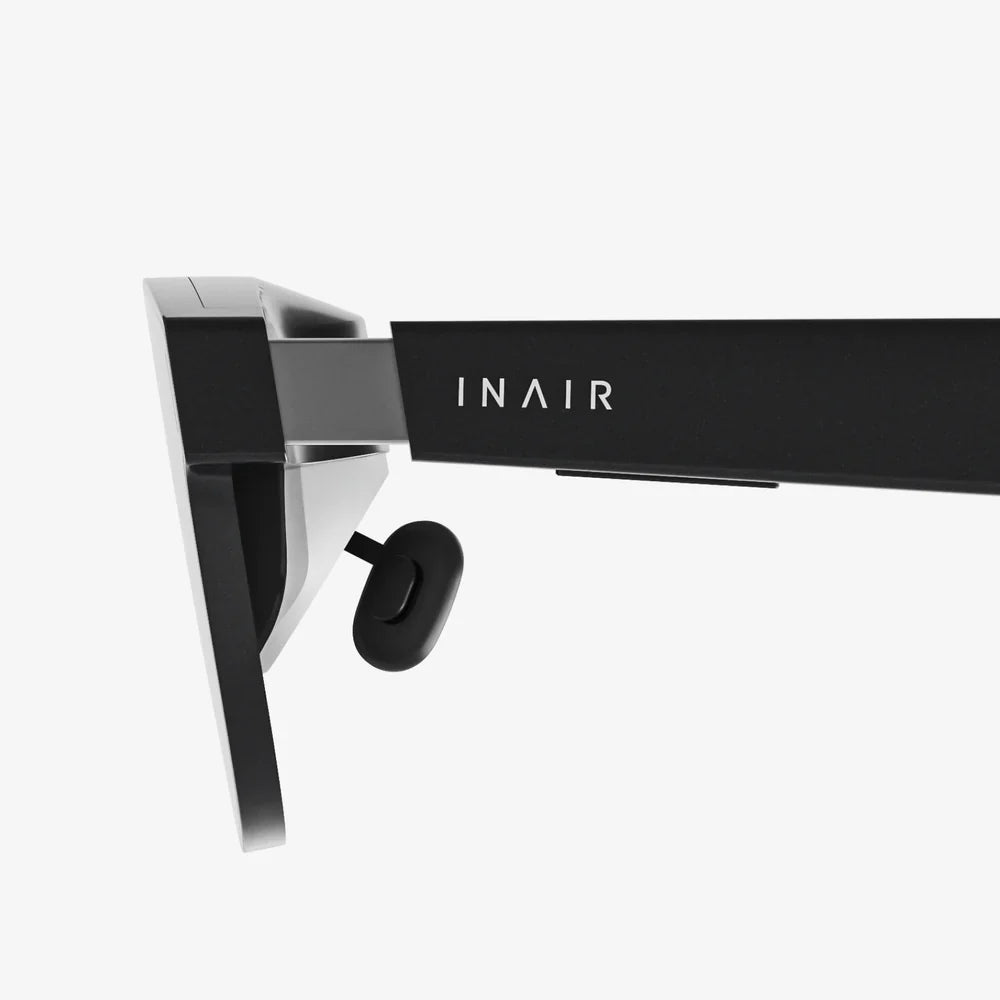
Imagine a world where your optic doesn’t just magnify your target but actively enhances your entire perception of the environment, overlaying critical data onto reality itself, turning every shot into a calculated, informed decision. This is no longer the realm of science fiction; it is the present and future promised by Augmented Reality scopes, a technological leap so profound it is redefining the very concept of aiming.
The Core Technology: Beyond Glass and Reticles
At its heart, an AR scope is a sophisticated wearable computer designed for the shooter. Unlike traditional optical scopes, which rely solely on etched glass reticles and lenses to magnify an image, AR systems synthesize the real world with a digital overlay. This requires a complex interplay of several advanced components.
The Optical Engine and Waveguide
The magic of projecting a digital image onto a transparent lens, all while allowing the user to see the real world clearly behind it, is achieved through a combination of miniature projectors and optical waveguides. Think of a waveguide as a futuristic prism. A micro-display, often an LCD or OLED, generates the digital reticle and data interface. This image is then injected into the waveguide, a piece of ultra-clear composite glass or plastic, which guides the light through internal reflection until it is directed into the user’s eye. The result is a crisp, bright reticle that appears to be floating in space, superimposed over the target, regardless of the light conditions in the environment.
Sensors: The Digital Nervous System
An AR scope is packed with an array of sensors that act as its digital nervous system, constantly gathering data about the environment and the shooter’s position.
- Inclinometer: Measures the angle of the shot relative to horizontal, critical for long-range ballistic calculations.
- Magnetometer (Digital Compass): Provides heading and orientation data.
- GPS: Pinpoints the shooter's exact location on the globe.
- Barometric Pressure Sensor: Measures air density, a key variable for bullet trajectory.
- Thermometer: Records ambient air temperature, which also affects ballistic performance.
- Accelerometers and Gyroscopes: Track the scope’s movement, detect cant, and can even integrate shot detection.
The Ballistic Computer: The Brain
Raw sensor data is useless without interpretation. The onboard ballistic computer is the brain of the operation. It takes the inputs from all sensors—range, angle, environmental conditions—and cross-references them with a pre-programmed ballistic profile for the specific cartridge and load being used. Within milliseconds, it calculates the exact holdover needed for a first-round hit. This calculated aiming point is then displayed through the optical engine, telling the shooter precisely where to aim to compensate for all variables. This effectively democratizes expert-level marksmanship, making complex shots achievable for a much broader audience.
Tangible Benefits: Why Make the Switch?
The technological marvel is impressive, but the real value of AR scopes lies in the concrete advantages they offer in the field.
Unprecedented First-Shot Accuracy
The primary and most significant advantage is a dramatic increase in first-shot hit probability at extended ranges. Traditional shooting requires memorizing holdover tables, dialing elevation turrets, or using complex reticles with subtensions—all processes prone to human error, especially under stress. An AR scope automates this entirely. The shooter simply places the digitally generated aiming dot on the target and fires. The system has already done all the math, accounting for drop, wind (if a wind sensor is integrated or manually input), and environmental factors. This is a game-changer for hunters pursuing elusive game where a missed or poorly placed first shot often means a lost opportunity, or for tactical operators where mission success and safety depend on precision.
Enhanced Situational Awareness
Traditional high-magnification scopes often create tunnel vision, forcing the shooter to focus intently downrange and obscuring peripheral vision. AR scopes, particularly those with a heads-up display (HUD) style or lower magnification settings, allow for both-eyes-open shooting. The digital reticle remains visible, enabling the user to maintain full environmental awareness while aiming. This is critical for tracking moving targets, observing the surroundings for other threats or animals, and generally operating more safely and effectively. Furthermore, the display can show data like range, compass heading, and GPS coordinates without the user ever needing to look away from the sight picture.
Data Recording and Connectivity
Many advanced AR scopes offer Bluetooth or Wi-Fi connectivity, pairing with a mobile device. This enables a suite of powerful features: zeroing and configuring the scope via an app, creating and storing multiple ballistic profiles for different rifles and loads, and even recording video of the shot directly through the optic. This recorded video, often with the reticle and data overlay included, is invaluable for training, analysis, and simply sharing the experience. For military and law enforcement, it provides documented evidence of engagements.
Low-Light and Nighttime Capability
While not night vision devices themselves, AR scopes integrate seamlessly with external night vision and thermal imaging systems. The digital reticle can be projected over the top of a night vision image, providing an aiming solution in total darkness. Furthermore, the ability to digitally control the reticle's brightness, color, and style means it can be perfectly optimized for any light condition, from bright desert sun to deep twilight, without blooming or washing out like a traditional illuminated reticle might.
Considerations and Current Limitations
Despite their revolutionary potential, current-generation AR scopes are not without their trade-offs, and they are not the perfect tool for every situation.
The Dependency on Power
The most obvious drawback is their absolute dependence on electrical power. A traditional riflescope is a passive mechanical device; it will work for a lifetime without ever needing a battery. An AR scope is a dead weight without a charge. While battery life has improved dramatically, often lasting for entire multi-day hunting trips, it remains a critical point of failure that users must manage diligently. For a multi-week expedition in remote backcountry, this can be a significant logistical consideration.
Weight and Bulk
Housing all the required electronics, sensors, and a larger objective lens for light transmission inevitably adds weight and size compared to a traditional scope of similar magnification. Manufacturers are constantly working to miniaturize components, but the form factor is still generally larger. This can affect the balance and handling of a lightweight hunting rifle, potentially making it less desirable for a spot-and-stalk hunter who covers many miles on foot.
Cost and Complexity
Cutting-edge technology commands a premium price. AR scopes represent a significant investment, often costing several times more than a high-quality traditional scope. Furthermore, they introduce a layer of complexity. Instead of just twisting turrets, users must navigate menus, input data, ensure Bluetooth connections, and update firmware. For a user who values simplicity and absolute reliability above all else, this complexity can be a barrier.
Durability and Environmental Hardening
A key tenet of riflescope design is ruggedness: holding zero under heavy recoil, maintaining waterproof and fog-proof integrity in harsh conditions, and surviving accidental impacts. Engineering an array of delicate electronic sensors and glass waveguides to meet these same brutal standards is an immense challenge. While top-tier models are built to military specifications, the question of long-term durability under extreme abuse remains for some purists.
The Future Trajectory of AR Scopes
The technology underlying AR scopes is on an exponential growth curve. The next decade will see innovations that today seem like fantasy.
Integration with Artificial Intelligence
Future systems will move beyond simple ballistic calculation into predictive analytics powered by AI. Imagine an optic that uses a micro-camera to visually track the target, predict its movement path, and automatically adjust the aiming point for a lead calculation. AI could also analyze the scene to identify and highlight potential targets based on shape recognition, a controversial but inevitable development for tactical applications.
Networked Battlefields and Hunting Parties
With secure data links, AR scopes will become nodes in a networked ecosystem. Fire teams could share target data, seeing each other's aiming points and designated threats within their own scopes. A hunter could receive GPS waypoints or alert notifications from other members of their party, all visible within their field of view. This would create a level of coordinated awareness previously impossible.
Advanced Display Technologies
Waveguide technology will improve, leading to wider fields of view, full-color displays, and even the ability to project complex images and video feeds. The distinction between a scope and a tactical information system will blur completely. Holographic displays and retinal projection are also on the horizon, potentially eliminating the need for a physical eyepiece altogether.
Miniaturization and New Form Factors
As components shrink, the classic tube-shaped scope may become obsolete. AR technology could be integrated into smaller red-dot sight form factors, eyeglasses, or even contact lenses, providing ubiquitous augmented information without a bulky optical device.
The line between the shooter, the weapon, and the environment is blurring, creating a new paradigm where information is the ultimate advantage. AR scopes are not merely an upgrade; they are the gateway to a transformed experience, offering a glimpse into a future where every shot is informed, calculated, and enhanced by the seamless marriage of real-world skill and digital intelligence. The question is no longer if this technology will become the standard, but how quickly you will adapt to see the world through a new, augmented lens.
Share:
Looking Starts 8K Holographic Display: The Dawn of a New Visual Era
Looking Starts 8K Holographic Display: The Dawn of a New Visual Era